

 |
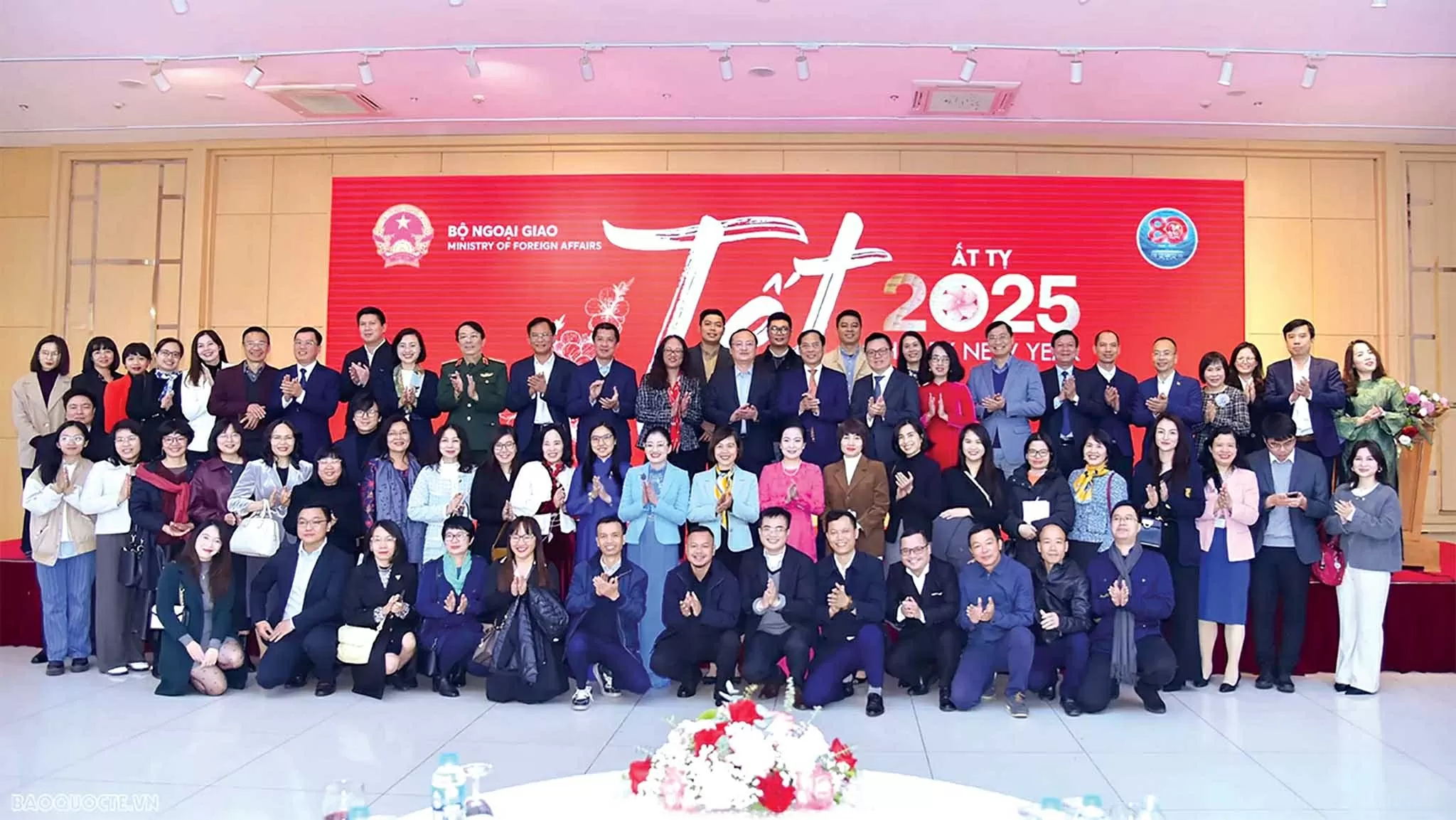
| Deputy Prime Minister and Minister of Foreign Affairs Bui Thanh Son meets with reporters and journalists on the occasion of the Lunar New Year 2025 (Year of the Snake). (Photo: Nguyen Hong) |
As someone directly involved in external information work, you must have many concerns about constructing the "storyline" for the narrative of Vietnam in the new era that you want to tell to international friends? What key details, in your opinion, should external media highlight most prominently when telling the story of Vietnam's aspirations?
External communication plays a crucial role in enhancing Vietnam's standing, showcasing the image of Vietnam and its people to the world , and bringing the world closer to the Vietnamese people. You asked about the "plot," and yes, a "story" always needs a "plot," just like the saying, "you need flour to make dough."
Our country, our people, our culture, and our achievements are the material, the "plot," for the story of Vietnam. The challenge is how to tell that story in a truly captivating way.
You asked about the most valuable details, and I think they're always the simplest, most heartfelt, and most natural things. These days, we are moved to witness the emotions and pride of the Vietnamese people bursting forth in the atmosphere of Independence Day. That's a very natural story, one that doesn't need to be told, yet it's a very valuable and beautiful communication material about the patriotism and love for peace of the Vietnamese people. We are also moved to see the feelings of the Vietnamese people towards the Cuban people as the number of supporters for Cuba increases every hour. This will be a wonderful story about a loyal and compassionate Vietnam, unlike any other in the world.
As someone working in external information, I have many thoughts and concerns about building compelling, authentic, and insightful media narratives about Vietnam in this new era for our nation and country. We are living in an age where information is not just data, but also emotions, connections, identity, and branding.
Therefore, the story of Vietnam should not be limited to dry statistics and information, but should also include stories about culture, people, aspirations, resilience, efforts to rise up, and the spirit of integration.
Vietnam should also be considered a country undergoing a powerful transformation, with many significant changes. From a country heavily devastated by war, then subjected to blockade and embargoes, our country has become a developing, middle-income nation, deeply integrated into the global community, assuming many important international responsibilities, and playing an active role in many important multilateral organizations and forums.
After 80 years since the founding of the nation and nearly four decades of Doi Moi (Renovation), under the leadership of the Communist Party of Vietnam, we have achieved tremendous, historically significant accomplishments. Never before have we possessed such a foundation, potential, internal strength, position, and international prestige as we do today, along with a young generation full of energy and aspirations. This narrative must reflect the connection between the past, present, and future, and the overarching message of a peaceful, harmonious, resilient, innovative, and integrated Vietnam.
I hope that the story of Vietnam will not only be told through the language of the government and media outlets, but also by each individual citizen, from entrepreneurs, scientists, artists, young people and students, to farmers who are applying technology to production.
Each person is a "character" in Vietnam's development story. It is they who make that story vibrant, authentic, and inspiring.
What's new about foreign affairs journalism today compared to foreign affairs journalism in the past? Are these new aspects more advantages or challenges?
Perhaps one of the fastest-changing sectors in recent times has been information technology-related work, and journalism is one of them. From the Thanh Nien newspaper founded by Leader Nguyen Ai Quoc in 1925 to today's modern, multimedia journalism, revolutionary journalism and foreign affairs journalism in Vietnam have undergone profound changes.
Today, the most prominent new features of foreign press are speed, multi-platform capabilities, and global interaction. With the emergence of the Internet, social media, artificial intelligence (AI), and supporting tools and software, the journalism and media industry, including foreign press, is constantly moving and developing.
Previously, information was primarily one-sided, disseminated through traditional channels such as television, radio, and online newspapers. Now, we can simultaneously transmit images of solemn welcoming ceremonies for high-ranking delegations, hold online press conferences, and update the situation regarding citizen protection in hotspots via Facebook, X, YouTube, etc. Therefore, diplomatic messages reach the public faster, in a more diverse and vibrant way.
Some argue that journalism and media will soon be "replaced" by machines and artificial intelligence (AI), but in my opinion, no matter how advanced machines become, they cannot replace humans. In particular, the team working in foreign affairs journalism is even more important and difficult to replace, because this field demands political acumen, information gathering, understanding of current events, and the skillful diplomacy specific to Vietnam's foreign policy.
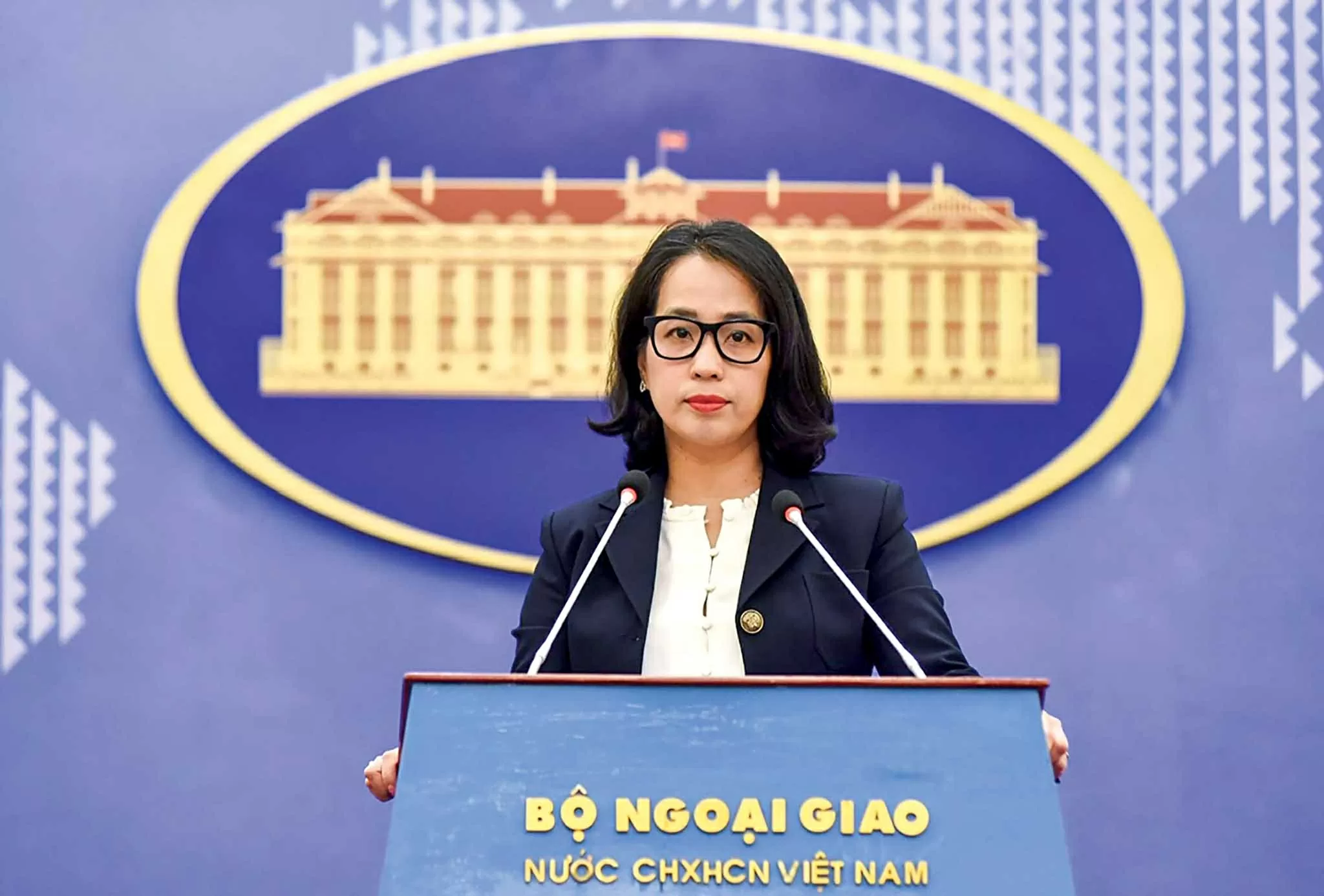 |
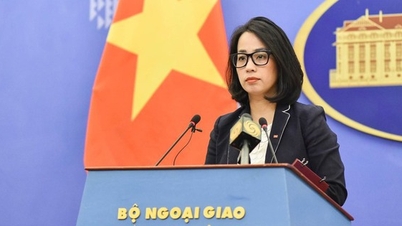
| Ministry of Foreign Affairs spokesperson, Director of the Press and Information Department Pham Thu Hang. (Photo: Nguyen Hong) |
I believe that these new developments will bring both advantages and difficulties, as well as challenges, to journalism in general and foreign affairs journalism in particular. The important thing is whether we can turn these challenges into opportunities.
On the positive side, the development of technology, artificial intelligence (AI), and social media tools helps information spread instantly, reaching every individual regardless of time and space; it helps journalists improve the quality of their journalistic products and innovate to meet the increasingly high demands of readers.
Regarding challenges, the speed and openness of the online environment also test the mettle of journalists and those working in foreign affairs. Foreign affairs journalists face greater difficulties, having to "compete" with social media; information must be fast, engaging, and attractive, but still accurate and authoritative. The pressure to respond quickly, accurately, and promptly is immense.
Furthermore, foreign affairs journalism must be meticulous in every word and precise in every image. This is a crucial factor in helping readers choose reliable sources of information amidst the proliferation of unverified information on social media, including many fake and distorted news stories.
What message would you like to share regarding the mission and contribution of foreign affairs journalism to Vietnamese diplomacy in the future?
In his speech at the 100th Anniversary of the Vietnamese Revolutionary Press, General Secretary To Lam emphasized: “The press is the main force in promoting the image of Vietnam and its people to the world, demonstrating Vietnam's solidarity and responsibility towards friends, progressive forces, and the development of the world; the press is a means to spread national cultural values, awaken patriotism, aspirations for development, and affirm Vietnamese cultural identity in the era of integration.” I believe this has been, is, and will continue to be the mission of the press and foreign press towards the country.
Along with diplomacy, the press will continue to write the story of Vietnam in an authentic and vivid way, inspiring both Vietnamese people and international friends.
On the occasion of the 80th anniversary of the establishment of the Ministry of Foreign Affairs, we sincerely express our gratitude to the generations of foreign information and foreign press professionals, journalists, and reporters who have always accompanied the Ministry of Foreign Affairs in its journey of serving the country and its people. Together, we will continue to spread stories about Vietnam and its people to the world.
Source: https://baoquocte.vn/cot-cua-cau-chuyen-viet-nam-trong-ky-nguyen-moi-326161.html


![[Photo] Prime Minister Pham Minh Chinh attends the Conference summarizing and implementing tasks of the judicial sector.](/_next/image?url=https%3A%2F%2Fvphoto.vietnam.vn%2Fthumb%2F1200x675%2Fvietnam%2Fresource%2FIMAGE%2F2025%2F12%2F13%2F1765616082148_dsc-5565-jpg.webp&w=3840&q=75)



























































Comment (0)