

Representative Trinh Xuan An suggested that the Party, the State, and the National Assembly should continue to focus on supporting income and salary systems so that officers and soldiers can serve with peace of mind.
Speaking at the National Assembly's discussion session on socio -economic issues on the afternoon of May 31st, delegate Trinh Xuan An (Dong Nai delegation) assessed that, based on government data, the overall picture of the country's socio-economic situation in recent times shows a mix of bright and dark aspects, with many noteworthy achievements but also many concerns and worries.
"It can be seen that the last months of 2022 and the beginning of 2023 were a very difficult and challenging period for our country," the delegate said, emphasizing that the results achieved show the unity and joint efforts of the entire political system, including the significant support of the National Assembly, the efforts of the people and businesses, and especially the ability to steer, strive, and make efforts of the Government and the Prime Minister in managing and governing the state during a period of immense difficulties.
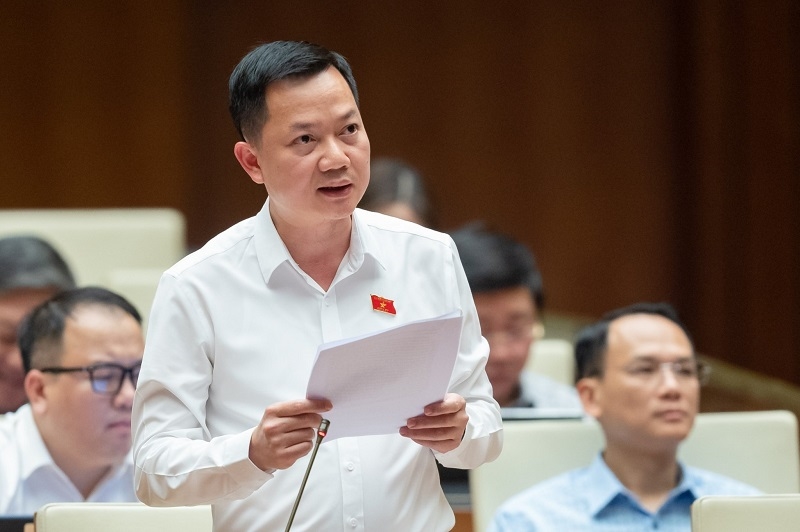 |
Representative Trinh Xuan An: I propose that the Party, the State, and the National Assembly continue to focus on supporting income and salaries so that officers and soldiers can serve with peace of mind. |
We propose continued focus on providing support in terms of income and salaries for officers and soldiers of the Army.
Representative Trinh Xuan An proposed that the National Assembly continue to pay attention to the field of national defense and security in light of the changes, especially the Russia-Ukraine conflict and non-traditional security challenges. This shows that we need to continue to make appropriate investments early and far-reaching to build up the armed forces, to build a stronger People's Army, creating conditions for the Army to effectively perform its three functions: a fighting force, a working force, and a production force, participating in socio-economic development while ensuring the task of defending the Fatherland, ready to fight and win.
Concerned about the salary system for officers and soldiers of the Vietnam People's Army, delegate Trinh Xuan An cited the example of a professional soldier driving a tank whose monthly salary is only half that of a Grab driver – this is a significant disadvantage.
"In the current context, as the entire army is striving to implement Resolution No. 05-NQ/TW of the Politburo on the organization of the Vietnam People's Army for the period 2021-2030 and beyond, based on the economic, political, and social situation, in addition to focusing on investing in equipment, I propose that the Party, State, and National Assembly should continue to prioritize support in terms of income and salaries so that officers and soldiers can serve with peace of mind," the delegate suggested.
To ensure that capital reaches the right place, at the right time, and directly to businesses.
Furthermore, delegate Trinh Xuan An also expressed concern, listing "from the report of the Fatherland Front, I counted 11 instances of the phrase 'voters and the people are worried and anxious'." The Economic Committee's verification report also stated that "the Vietnamese economy is in an extremely difficult phase."
Representative Trinh Xuan An pointed out figures showing that Vietnam's GDP in the first quarter of 2023 reached 3.32%; arguing that with such a low rate, achieving the 6.5% growth target for the whole year requires strong determination and effort. This includes the need for urgent, even unprecedented, solutions to rescue and support the business system.
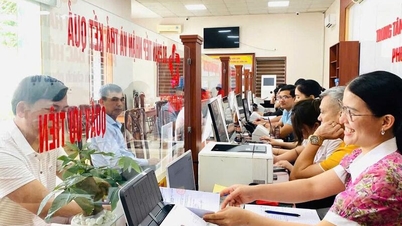
Representative Trinh Xuan An stated that the data shows the business system is currently in a truly difficult phase. The four bottlenecks that businesses are facing are: a shortage of orders, a blockage of capital flow; inadequate institutions, overwhelming administrative procedures; and potential legal risks encountered during production and business operations.
Analyzing further, the delegates stated that businesses are currently "thirsty" for credit but cannot access capital, or even if they can, it is very difficult to disburse due to the loan conditions and procedures.
The government has had to resort to administrative orders to demand a reduction in interest rates (although they remain high). However, according to Representative Trinh Xuan An, reducing interest rates is not as important as ensuring access to capital and channeling that capital into production and business. Reducing interest rates and simplifying loan conditions and procedures needs to be substantive so that capital reaches the right businesses directly and effectively.
"Along with credit, we need to continue opening up other capital channels such as bonds and securities. At the same time, we need to continue reviewing institutions, simplifying administrative procedures in a more substantive way, and especially changing the culture of 'businesses having to beg and plead'."
Accordingly, the government and managers need to demonstrate a "service to businesses" attitude, proactively and sincerely reaching out to businesses to resolve difficulties. Things that need to be done to develop the business system should be done immediately, decisions should be made promptly, reducing lengthy consultations and exchanges between agencies and ministries, so that by the time problems are solved, businesses are already on the verge of collapse.
According to delegate Trinh Xuan An, in the current difficult context, it is necessary to reduce the number of inspection and auditing procedures that burden businesses, avoiding the situation where businesses have to go through endless explanations. Furthermore, concrete and practical solutions are needed to prevent the "virus of fear of responsibility and the disease of reluctance to act."
On the other hand, according to delegate Trinh Xuan An, an important issue is that in management, it is necessary to strengthen the role and responsibilities of ministries and agencies, clarify their leading roles, and limit the shifting of responsibility to higher levels. Not every issue requires the Prime Minister to issue a directive or the Government to issue a resolution to resolve difficulties.
"In reality, the way we've handled issues like queuing for gasoline, vehicle inspections, and struggling with fire safety regulations shows that the coordination among ministries and agencies has been very low," the representative said, suggesting that coordination should be strengthened in the future.
NGUYEN THAO
Source


![[Photo] Closing Ceremony of the 10th Session of the 15th National Assembly](/_next/image?url=https%3A%2F%2Fvphoto.vietnam.vn%2Fthumb%2F1200x675%2Fvietnam%2Fresource%2FIMAGE%2F2025%2F12%2F11%2F1765448959967_image-1437-jpg.webp&w=3840&q=75)

![[Photo] Prime Minister Pham Minh Chinh holds a phone call with the CEO of Russia's Rosatom Corporation.](/_next/image?url=https%3A%2F%2Fvphoto.vietnam.vn%2Fthumb%2F1200x675%2Fvietnam%2Fresource%2FIMAGE%2F2025%2F12%2F11%2F1765464552365_dsc-5295-jpg.webp&w=3840&q=75)
































![[OFFICIAL] MISA GROUP ANNOUNCES ITS PIONEERING BRAND POSITIONING IN BUILDING AGENTIC AI FOR BUSINESSES, HOUSEHOLDS, AND THE GOVERNMENT](https://vphoto.vietnam.vn/thumb/402x226/vietnam/resource/IMAGE/2025/12/11/1765444754256_agentic-ai_postfb-scaled.png)











































Comment (0)