

 |
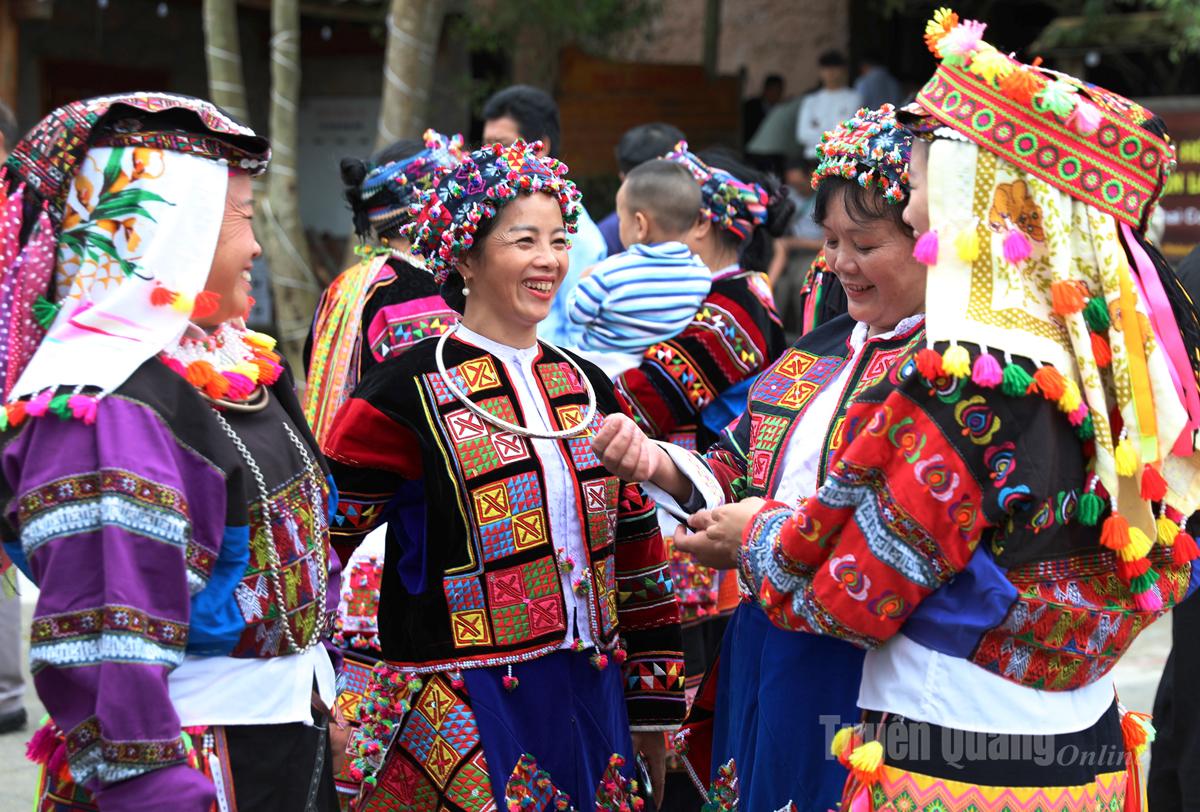
| Lolo women in vibrant traditional costumes socialize at the Lolo Chai cultural festival. |
The singing voice echoed amidst the vast expanse of gray rocks.
For generations, the Lo Lo people have lived concentrated in the communes of Lung Cu, Pho Bang, Meo Vac, and Son Vi in the newly merged Tuyen Quang province. The Lo Lo people are divided into two main branches: the Black Lo Lo and the Flower Lo Lo, each with its own distinct cultural characteristics, yet both preserving their pristine and rich ethnic identity.
According to researchers, the Lolo people are descendants of the inhabitants who once lived in the ancient Nanzhao region, gradually migrating southward thousands of years ago. Through countless historical changes, they have brought with them a rich cultural heritage – from vibrant costumes and sacred harvest festivals to folk songs that rise from the heart of the mountains.
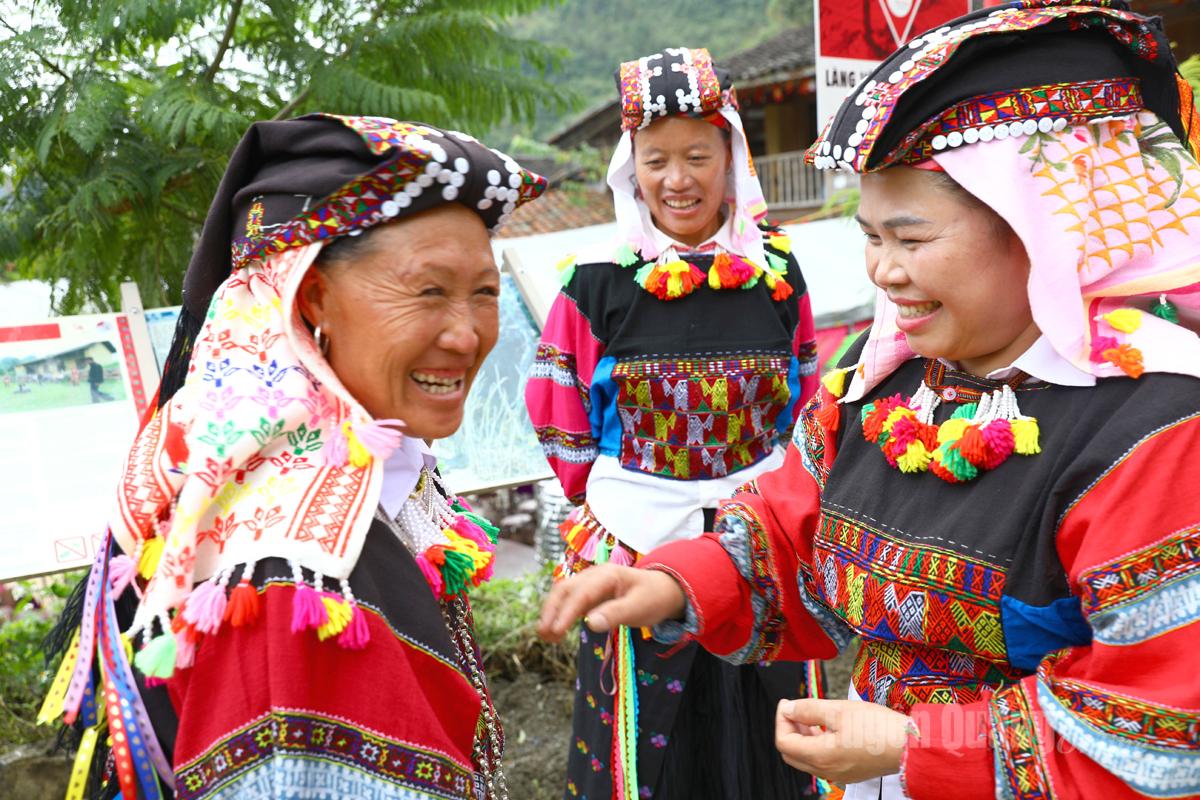 |
| The smiles on the faces of the Lolo women – the simple and warm beauty of the highlands. |
In the life of the Lolo people, singing is not just lyrics but also the "soul of the nation." They sing when working in the fields, when weaving, when welcoming guests, during festivals, and to express their feelings. In Lolo Chai village, Lung Cu commune – known as the "village of the national flag" – visitors often hear the echoes of ancient songs during festivals, beside flickering fires in the highland nights. The singing seems to blend into the mountain rocks, becoming a rhythm of life that endures through time.
Comrade Tran Duc Chung, Chairman of the People's Committee of Lung Cu commune, shared: "Lo Lo folk songs are the soul of the people's culture, a thread connecting generations. Lung Cu commune is coordinating with artisans to collect, teach, and integrate folk songs into community cultural and tourism activities, helping the voices of the Lo Lo people continue to resonate far and wide."
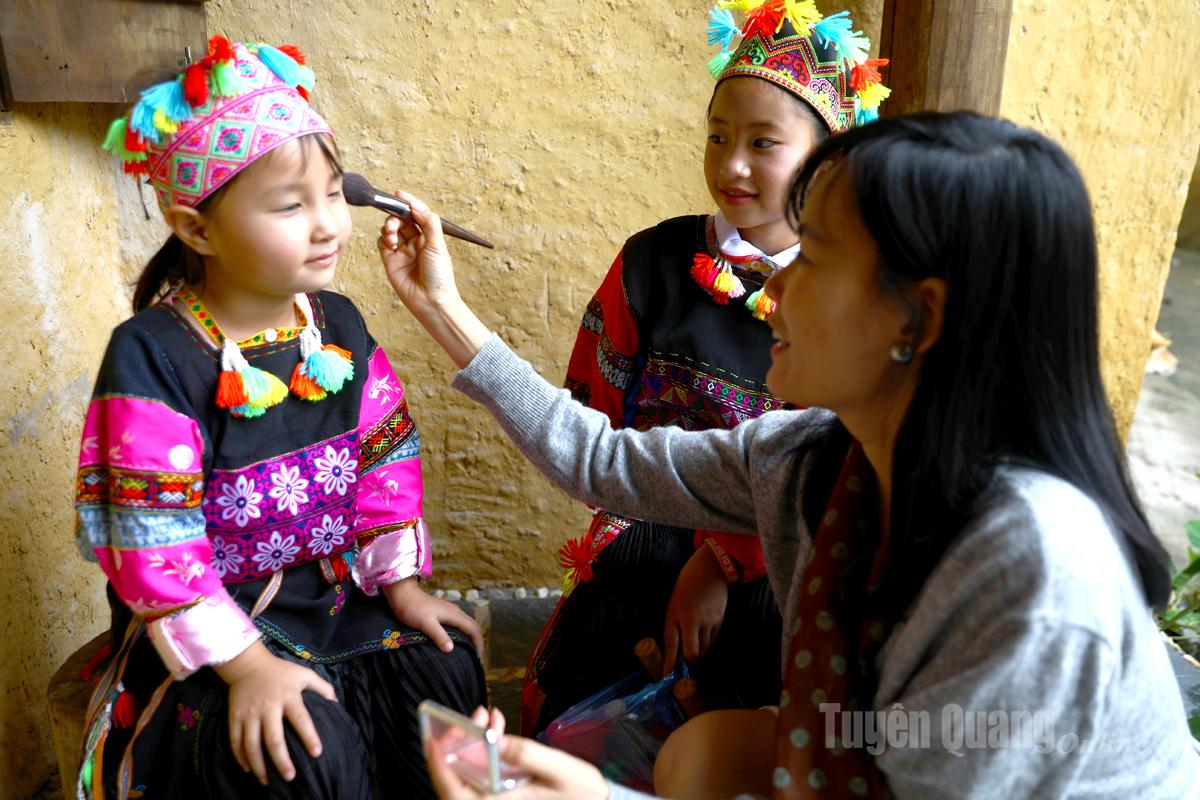 |
| Lolo children are dressed up to participate in folk song and traditional dance performances at the festival. |
A song of love and village pride.
The Lolo people have many folk songs closely associated with their lives – from lullabies, wedding songs, songs for praying for a good harvest, love songs, and farewell songs. On moonlit nights on the plateau, a young man calls out to his beloved: “My dear, don’t rush home, the moon hasn’t set yet, we haven’t finished singing our words of love…” And the girl’s voice, clear as mist, replies: “If your words were a stream, I would be a cloud drifting with the water, to fly with you to the ends of the earth for the rest of my life.”
The songs are simple and uncomplicated, yet they contain a rich and profound soul. Lolo folk songs don't need elaborate musical accompaniment; sometimes, just the sound of clapping, the clashing of stones, or the wind rustling through the cliffs is enough to create their distinctive sound – deep yet bright, strong yet gentle.
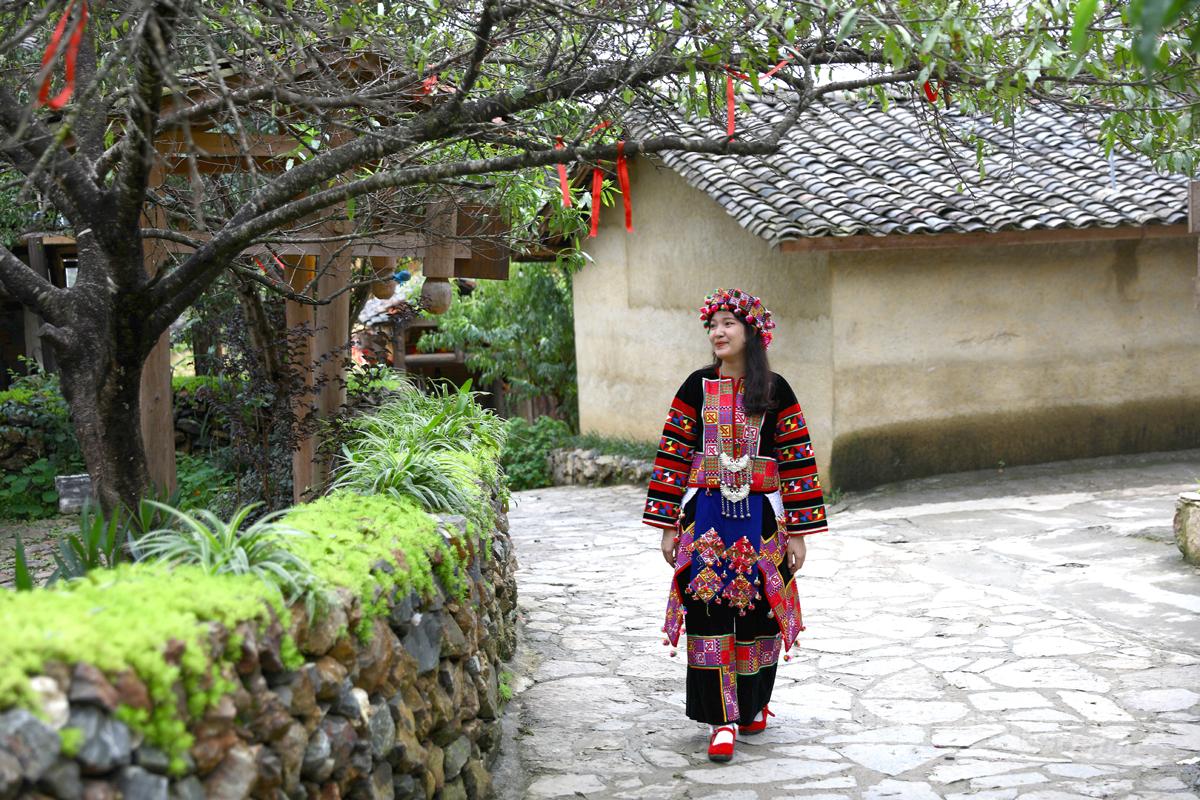 |
| Lolo girl in traditional costume. |
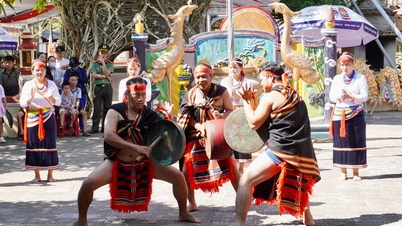
In particular, during rituals, the Lolo people use bronze drums – sacred treasures of their ethnic group. For them, bronze drums are not only musical instruments but also the "voice of ancestors," connecting the living with the spirit world . In harvest festivals, New Year's dances, ancestor worship ceremonies, etc., the sound of bronze drums resonates along with folk songs, creating a sacred and mystical atmosphere. The drum rhythm initiates the songs, like a source that awakens ancestral memories in the hearts of the Lolo people.
Mr. Sinh Di Gai, the village head of Lo Lo Chai and a respected figure in the community, shared: "The sound of bronze drums and folk songs are the soul of our village. In the past, only during festivals or when welcoming distinguished guests would the elders sing and beat drums to pray for a good harvest. Now, everyone knows the lyrics, and young men and women practice singing and dancing to introduce them to tourists. We consider this a source of pride and a responsibility to preserve the songs of our ancestors."
Lolo folk songs are often associated with labor and daily life. The songs inviting guests during harvest season, the lullabies sung in the afternoon rain, or the call-and-response at weddings all contain subtle and humanistic elements. Each melody and tune not only tells of love between couples but also conveys gratitude to heaven and earth, ancestors, and hopes for a bountiful harvest and a peaceful life.
Keep the song from the heart of the stone alive forever.
In the folklore of the Lo Lo people, folk songs and bronze drums are two precious legacies, reflecting the romantic spirit and rich spiritual life of the community in this rocky region. Folk songs are considered the voice of emotion, while bronze drums are the voice of belief – together they create the unique identity of this ethnic group.
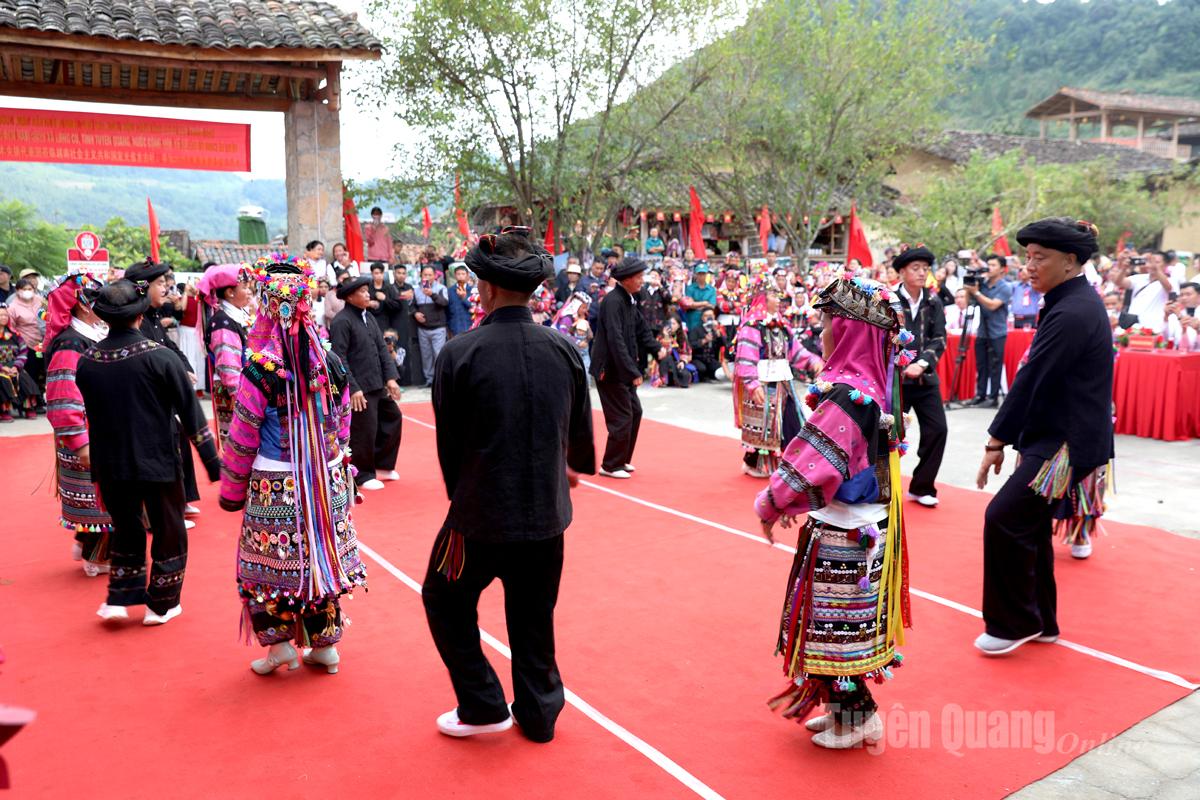 |
| The space for performing traditional folk songs and dances of the Lo Lo ethnic group attracts a large number of tourists and locals. |
Every year, when spring arrives in the villages of the far north, the Lo Lo people hold a harvest festival, setting up drums and singing songs of thanksgiving to heaven and earth. In the flickering firelight, the songs and drums blend together, transporting listeners back to the ancient cultural roots of the ethnic group. These songs are both a memory and an aspiration – an aspiration to preserve their spirit amidst modern life.
Visitors to Lo Lo Chai village (Lung Cu commune) are always moved when they hear the locals sing:
"Remember, keep the memories in your heart."
Remember, send your memories day and night.
Remember the rocky hillside in your heart.
"Remember, always remember yourself..."
The song is simple yet heartfelt, making anyone who listens feel a sense of calm.
Ms. Tran My Linh, a tourist from Can Tho City, said emotionally: "The singing of the Lo Lo people is truly moving. Simple, genuine, and full of emotion. Their voices transport me back to pristine values, making me appreciate the simple things in life even more."
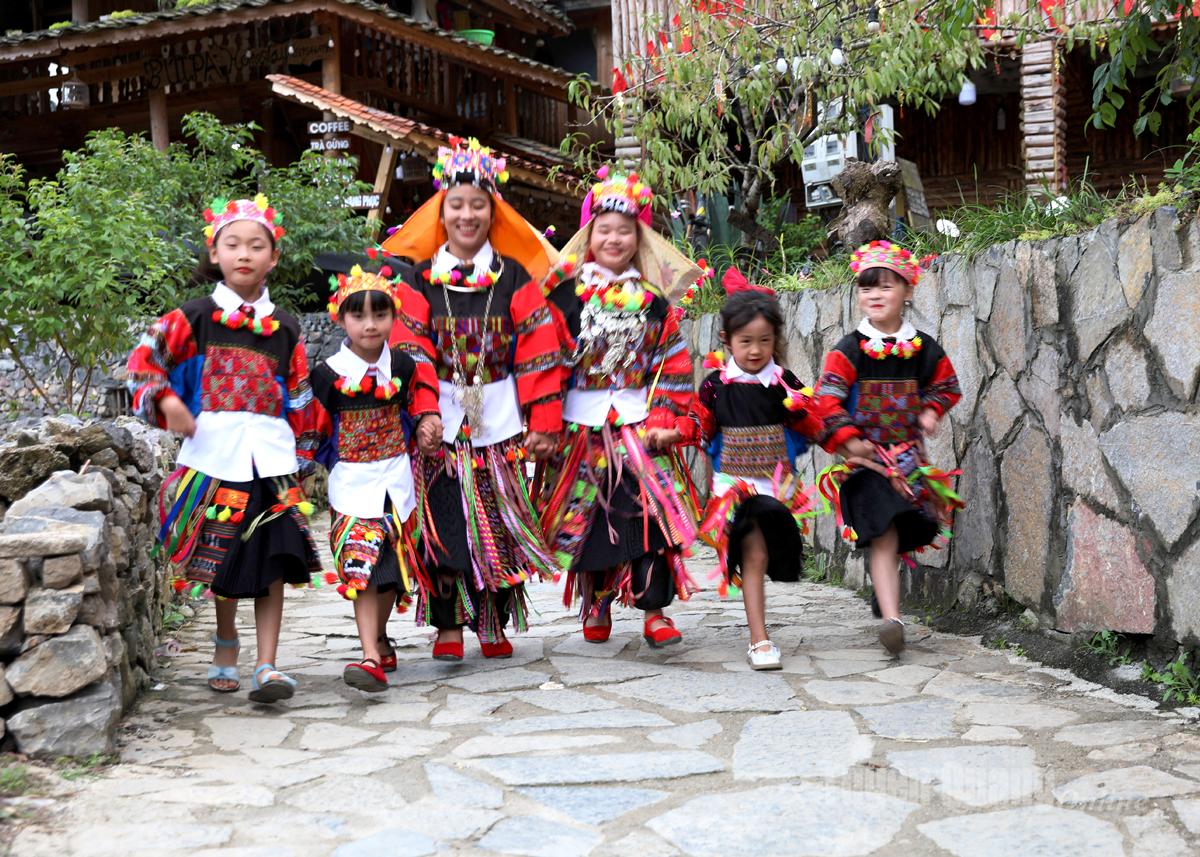 |
| Lolo children, resplendent in their traditional costumes, attend the Lolo ethnic cultural festival. |
Today, along with the development of community tourism, the government and people are making efforts to preserve and promote Lo Lo folk songs. Many classes teaching traditional singing have been opened in villages and schools. Folk song performances for tourists have become a unique cultural highlight of the Cao Nguyen Da Global Geopark.
Comrade Tran Duc Chung, Chairman of the People's Committee of Lung Cu Commune, affirmed: Lung Cu Commune is coordinating with specialized agencies to turn folk songs, bronze drums, and the Lo Lo festival into typical tourism products. Because these are not only cultural aspects, but also the pride of the entire rocky plateau region.
Amidst the rustling mountain winds and endless gray rocks, the folk songs of the Lo Lo people still resonate like the voice of the vast forest – gentle yet powerful, simple yet profound. These songs have transcended the passage of time, becoming the "soul of the rocks" of the plateau, an endless melody of love, faith, and the enduring vitality of the people of the far north of Tuyen Quang today.
Text and photos: Duc Quy
Source: https://baotuyenquang.com.vn/van-hoa/du-lich/202511/dan-ca-lo-lo-thanh-am-di-san-giua-cao-nguyen-da-d7c3fb5/





















![[Photo] Reception to welcome General Secretary and President To Lam and his wife on their State visit to the Philippines](https://vphoto.vietnam.vn/thumb/1200x675/vietnam/resource/IMAGE/2026/06/01/1780295488620_vna-potal-chieu-dai-chao-mung-tong-bi-thu-chu-tich-nuoc-to-lam-va-phu-nhan-tham-cap-nha-nuoc-toi-philippines-8798060-7855-jpg.webp)


















































Comment (0)