

Patient PLS (38 years old, residing in Trinh Tuong commune, Bat Xat district, Lao Cai province) presented with abdominal pain and fatigue, and upon examination, was diagnosed with the following condition: Right lobe tumor. The patient has a history of hepatitis B and alcoholism.
The patient was admitted to the Oncology and Nuclear Medicine Center for treatment. Doctors conducted examinations and completed paraclinical tests to assess the stage of the disease and held consultations to find a suitable treatment plan.
Magnetic resonance imaging (MRI) revealed a large liver tumor located in the center of the liver, pressing against the hepatic hilum. The MRI images showed malignant characteristics (HCC), and all liver cancer markers were at high levels.
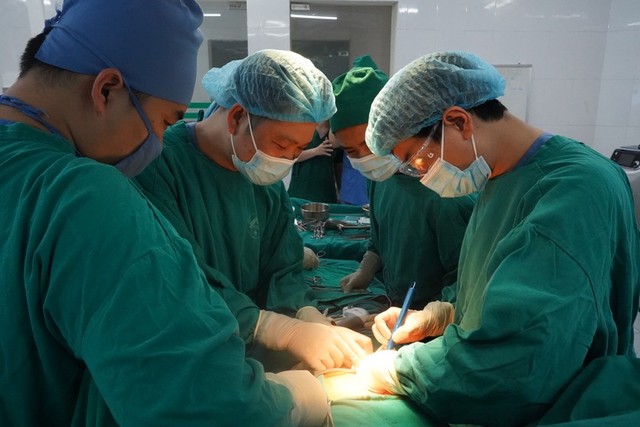
After consulting with experts at the central level, the doctors concluded that liver resection surgery was the most effective treatment method. The patient then underwent central liver resection (lower lobes VIII and IV).
The surgery went smoothly. After three hours, the patient underwent central hepatectomy, and their vital signs were stable.
Dr. To Minh Hung, Director of the Center for Oncology and Nuclear Medicine, said: "Liver resection surgery is a difficult technique, and central liver resection increases the difficulty many times over. The main challenge in this case is that the tumor is located in the middle of the liver, is quite large, and is centrally located in an area rich in blood vessels and bile ducts. The risk of bleeding and bile leakage during and after surgery is very high."
The surgical procedure requires extreme caution to avoid damaging the blood vessels supplying the remaining liver tissue. Furthermore, the anterior approach to liver resection, which involves not mobilizing the liver, helps limit the spread of cancer cells and maintain the stability of the left lobe of the liver.”
What should people with hepatitis B do to prevent complications?
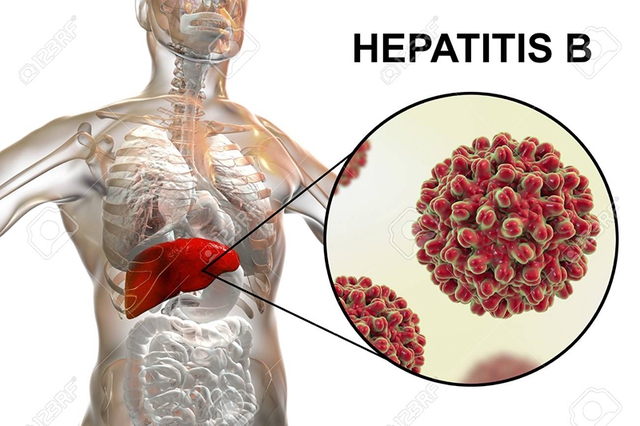
Illustrative image
Hepatitis B and C viruses are among the causes of cirrhosis and liver cancer. Therefore, people with hepatitis B and C must receive intensive treatment according to the treatment plan prescribed by a specialist. In addition, they should be fully vaccinated against hepatitis B and C viruses.
In addition, patients need to maintain a healthy lifestyle to improve their condition and prevent complications. Specifically, patients should have a balanced diet, supplementing with foods rich in good protein (fish, fresh milk, legumes, etc.), whole grains, green vegetables, and fruits, and should choose soft, easily digestible foods.
Patients should also strictly avoid foods that are harmful to the liver and digestive tract, such as fried foods, foods high in fat, foods high in cholesterol like animal organs, egg yolks, shrimp, etc., and foods with a "heating" nature like goat meat, turtle meat, dog meat, etc. They should also avoid foods that are too sugary, too salty, too spicy, or undercooked. Most importantly, patients must absolutely abstain from alcohol and stimulants because they will directly harm the liver.
Source























![[Photo] Prime Minister Pham Minh Chinh holds a phone call with the CEO of Russia's Rosatom Corporation.](/_next/image?url=https%3A%2F%2Fvphoto.vietnam.vn%2Fthumb%2F1200x675%2Fvietnam%2Fresource%2FIMAGE%2F2025%2F12%2F11%2F1765464552365_dsc-5295-jpg.webp&w=3840&q=75)













































Comment (0)