

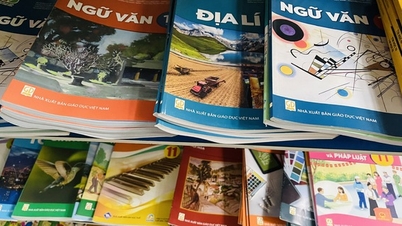
The Supervisory Delegation and the Culture and Education Committee of the National Assembly expressed the view that the Ministry of Education and Training should compile its own textbooks; this would both ensure proactive textbook supply in all situations and demonstrate the state's responsibility.
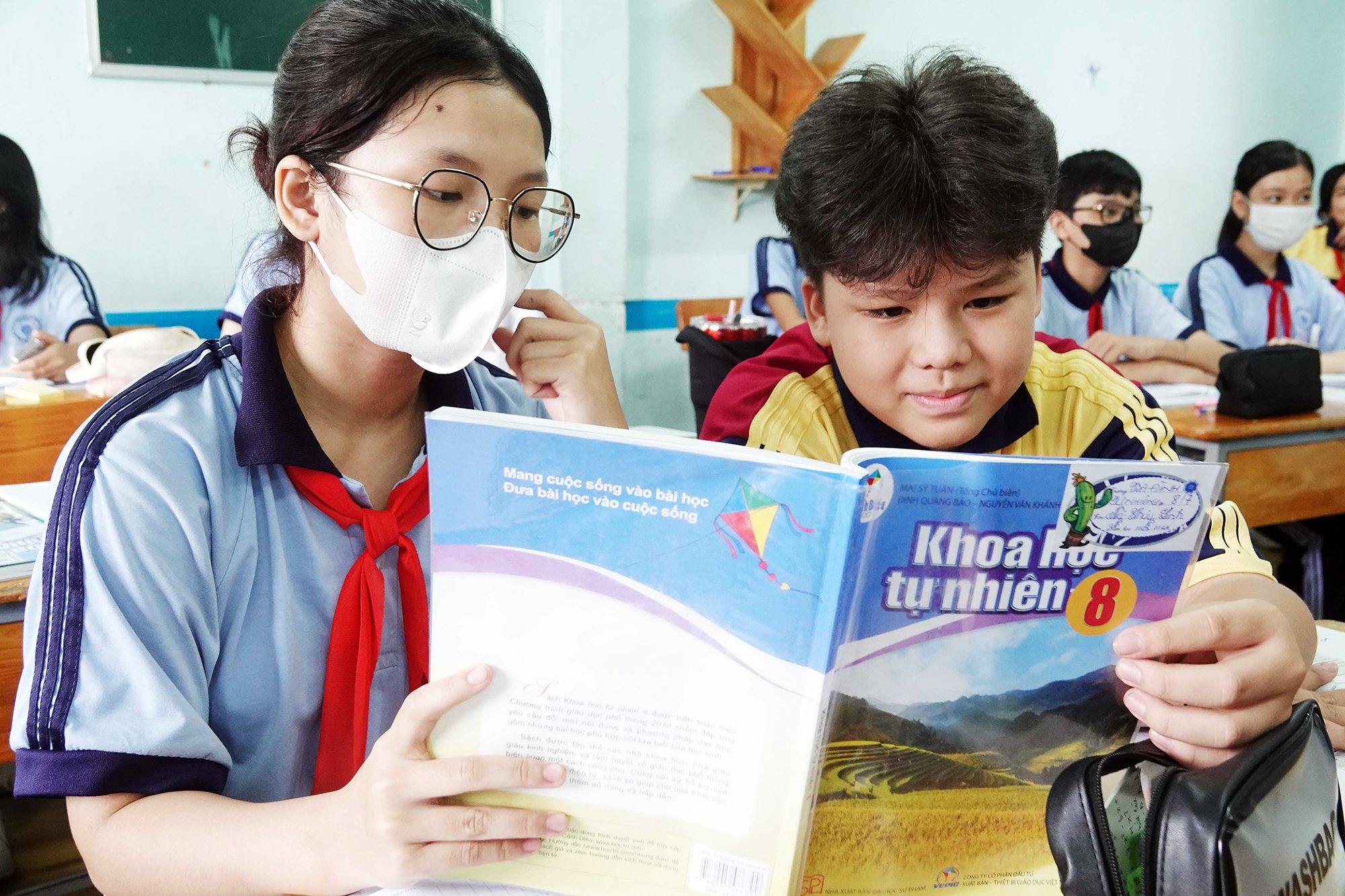
Integrated teaching and learning is a sticking point in the reform of the general education curriculum.
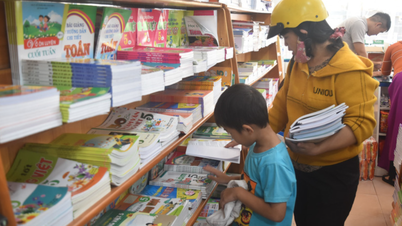
However, many opinions from National Assembly representatives, experts, and educators suggest that with multiple sets of privately-funded textbooks already available, the Ministry of Education and Training compiling a new set of textbooks would not only be costly for the state budget but could also create unfair competition, as schools and localities would likely only choose the textbooks provided by the Ministry of Education and Training.
Recently, on December 25th, Deputy Prime Minister Tran Hong Ha signed Directive No. 32/CT-TTg of the Prime Minister on continuing to promote fundamental and comprehensive reform of general education. This directive requires the Ministry of Education and Training to summarize the implementation of the 2018 general education curriculum and textbook reform, and based on that, propose a plan and report to the Government for submission to the National Assembly regarding the organization of the compilation of a set of textbooks as stipulated in Resolution No. 88 in 2025.
Public opinion, both within and outside the education sector, continues to show interest, offer suggestions, and await to see what proposals and reports the Ministry of Education and Training will present regarding this task, which was once considered impossible.
The 2023-2024 school year marks the third year of implementing the 2018 General Education Program at the lower secondary level. However, shortcomings in integrated subjects remain a challenge for schools. This issue has once again become more pressing than ever, as Mr. Nguyen Xuan Khang, Principal of Marie Curie School (Hanoi), expressed his opinion in Thanh Nien Newspaper, suggesting that the Ministry of Education and Training should directly address the difficulties and shortcomings of integrated teaching that schools are facing, which are directly threatening the quality of teaching this subject; he proposed abolishing integrated subjects and returning to the old single-subject approach. This opinion has received widespread support.
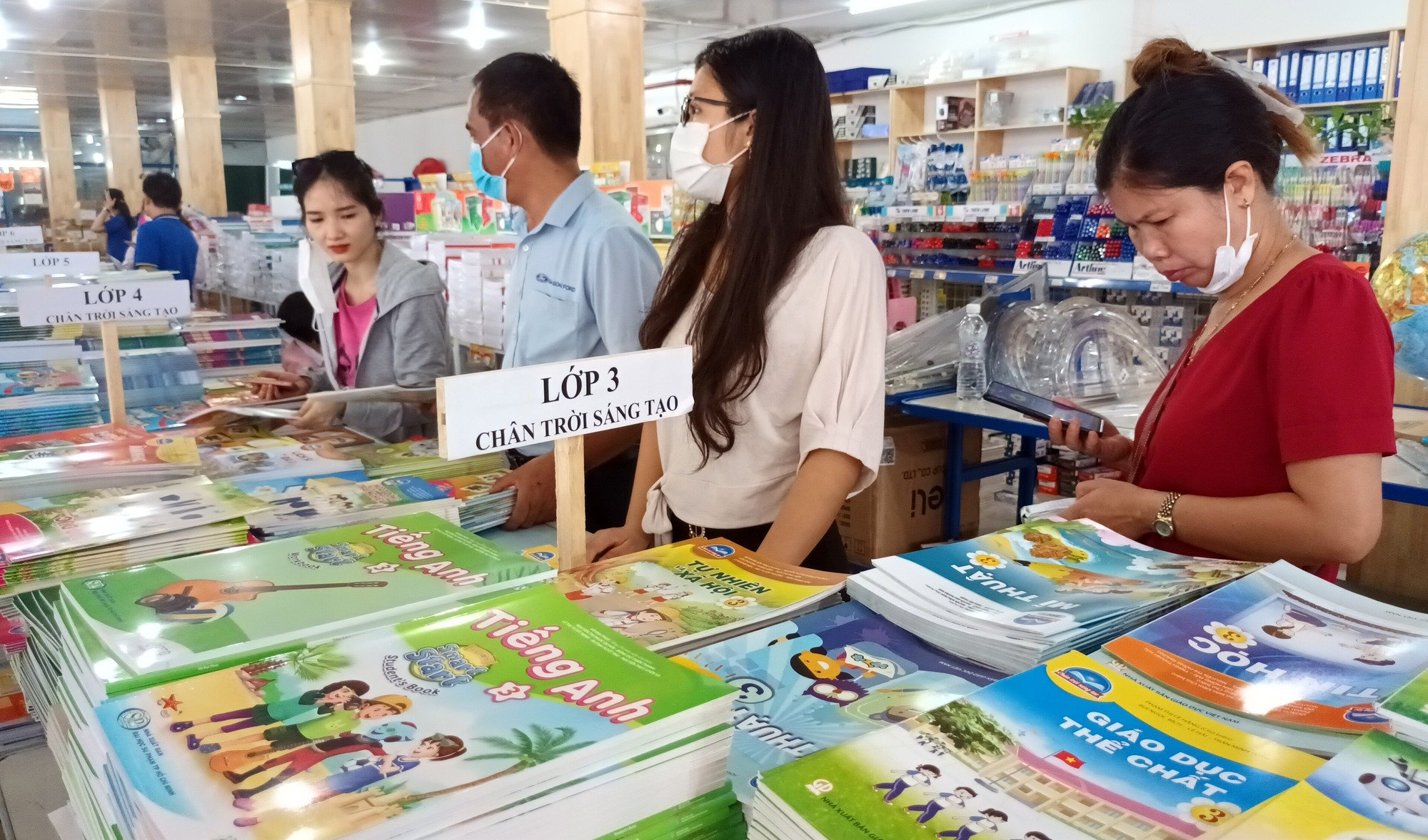
Whether the Ministry of Education and Training should compile another set of textbooks in accordance with Resolution 88, after many textbooks have already been privatized, is a matter that continues to spark debate.
Later, when reporting to the National Assembly's supervisory delegation and engaging in dialogue with teachers, the Minister of Education and Training also referred to integration as the "biggest obstacle, difficulty, and bottleneck" in this reform of the general education curriculum and promised "major adjustments."
In November, the Ministry of Education and Training issued a document guiding integrated teaching, not adjusting the curriculum. Many opinions suggest that this guidance is not new, and many localities have been implementing it since the first year. The most important issue is that the difficulties regarding teachers for integrated teaching and the curriculum remain unchanged; the question of when there will be enough teachers properly trained to teach integrated subjects is still open. This means that the issue of not having enough teachers for integrated teaching or single-subject teachers having to undergo training to teach integrated subjects seems to have no end in sight. However, according to the head of the education sector, "this is an issue that requires a process of implementation, not a deadline or a specific month for completion."
Source link


![[Photo] Prime Minister Pham Minh Chinh attends the Conference summarizing and implementing tasks of the judicial sector.](/_next/image?url=https%3A%2F%2Fvphoto.vietnam.vn%2Fthumb%2F1200x675%2Fvietnam%2Fresource%2FIMAGE%2F2025%2F12%2F13%2F1765616082148_dsc-5565-jpg.webp&w=3840&q=75)














































































Comment (0)