

Sepon Group currently has 14 subsidiaries, including 7 factories producing cassava starch, rubber, and energy pellets. All of Sepon Group's factories are located in areas where raw materials are cultivated by farmers in Quang Tri province. Sepon Group identifies agriculture as its core activity and always uses the "bottlenecks" in agriculture as a topic for its production and business operations.
Since then, Sepon Group has focused on developing organic and circular agriculture; environmentally friendly products that ensure consumer health…
In organic, circular agricultural production, Sepon Group has proactively created a "closed loop." Specifically, from the beginning of planting to harvesting rice and cassava, all by-products from rice, cassava, and other crops are utilized by Sepon Group as raw materials for processing animal feed, fertilizers, etc., serving organic agricultural production; creating environmentally friendly products that ensure consumer health.
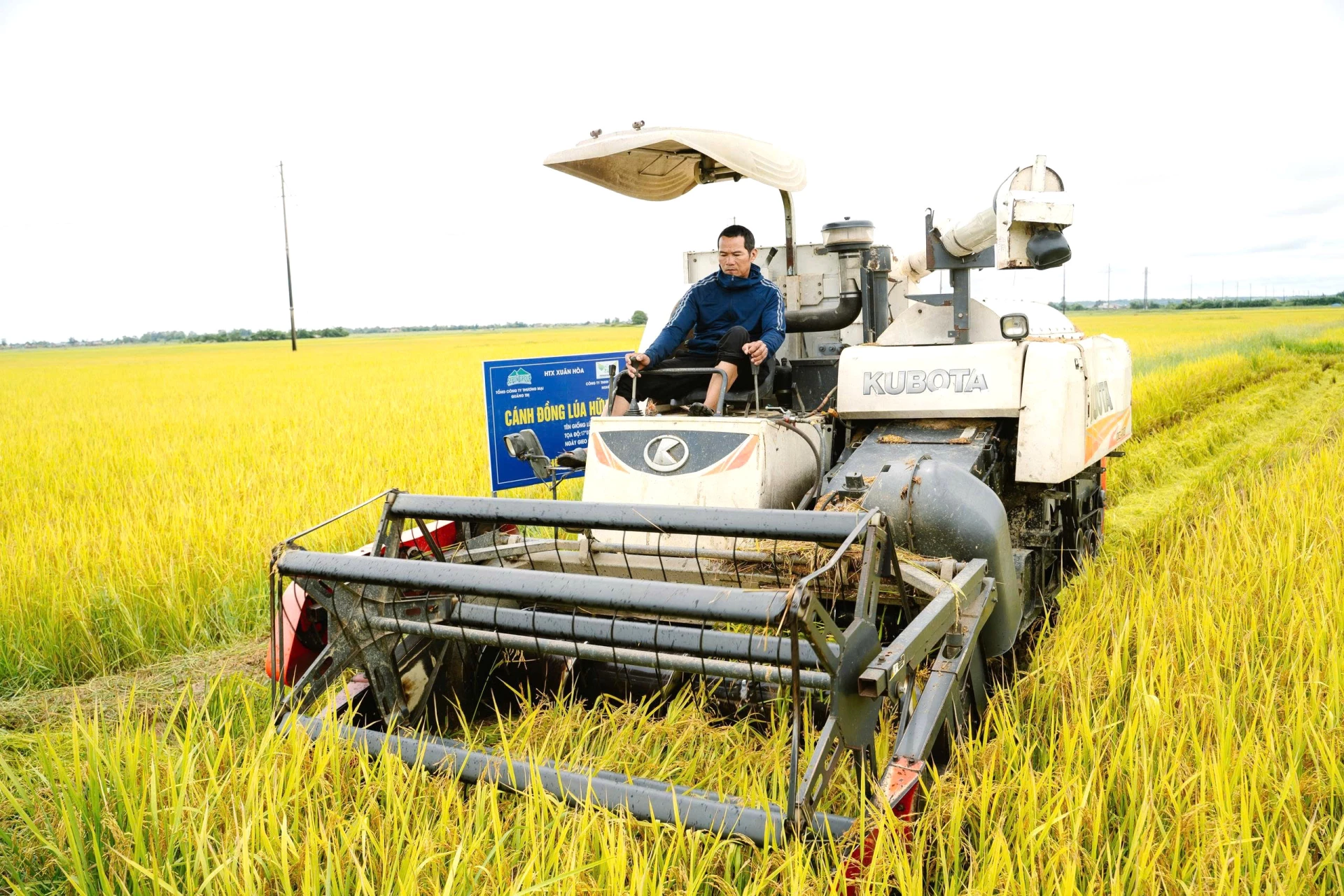 |
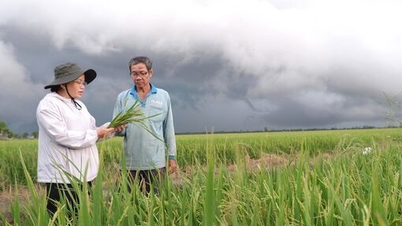
| Harvesting organic rice during the 2025 summer-autumn crop season at Xuan Hoa Cooperative, Ben Hai commune - Photo: HC |
In the delta region, Sepon Group implements a "closed loop" from farm to table. Sepon Group uses rice bran and husks produced from its rice mills to produce animal feed for its farms raising cattle, pigs, chickens, and ducks. They use straw and chaff as biological bedding in livestock farming. Animal waste from the farms is used to produce organic fertilizer for rice cultivation. Sepon Group supplies its livestock products to supermarkets, hotels, and restaurants, as well as selling them to the market.
For mountainous regions, Sepon Group implements a "closed-loop" system at its Huong Hoa cassava starch factory (part of Sepon Group), with a raw material area of over 12,000 hectares. Factory waste such as wastewater, pulp, and garbage are thoroughly treated, contributing to high economic efficiency. For example, dried cassava pulp is used as animal feed; wastewater is treated to produce biogas for use in furnaces instead of coal and is recycled for reuse; and waste from cassava peels is used to produce fertilizer for cassava plants.
Thanks to this, in organic agricultural production, Sepon Group has transformed losses into profits, maximizing the utilization of human and material resources. The economic benefits for Sepon Group and the people are constantly increasing. By 2025, the total area of organic rice production and rice grown using organic methods by Sepon Group will reach over 500 hectares.
Sepon Group has identified green and sustainable agriculture as its long-term direction; focusing on developing organic rice production linkage models in communes throughout Quang Tri province; strengthening support for farmers from seeds, biological products, mechanization, harvesting to product consumption; promoting the implementation of the circular model "straw into fertilizer - fertilizer to nourish soil - soil to nourish rice" in linked production areas, aiming to minimize burning straw and rice stalks that cause environmental pollution; and reusing by-products to enhance the economic value for farmers.
Sepon Group aims to achieve 3,000 hectares of organic rice by 2030. In addition, products such as pepper, cassava starch, and FSC-certified plantation timber are being developed by Sepon Group into key export products.
Sy Hoang
Source: https://baoquangtri.vn/kinh-te/202512/doanh-nghiep-huong-den-nong-nghiep-xanh-ben-vung-8501b23/

























































Comment (0)