

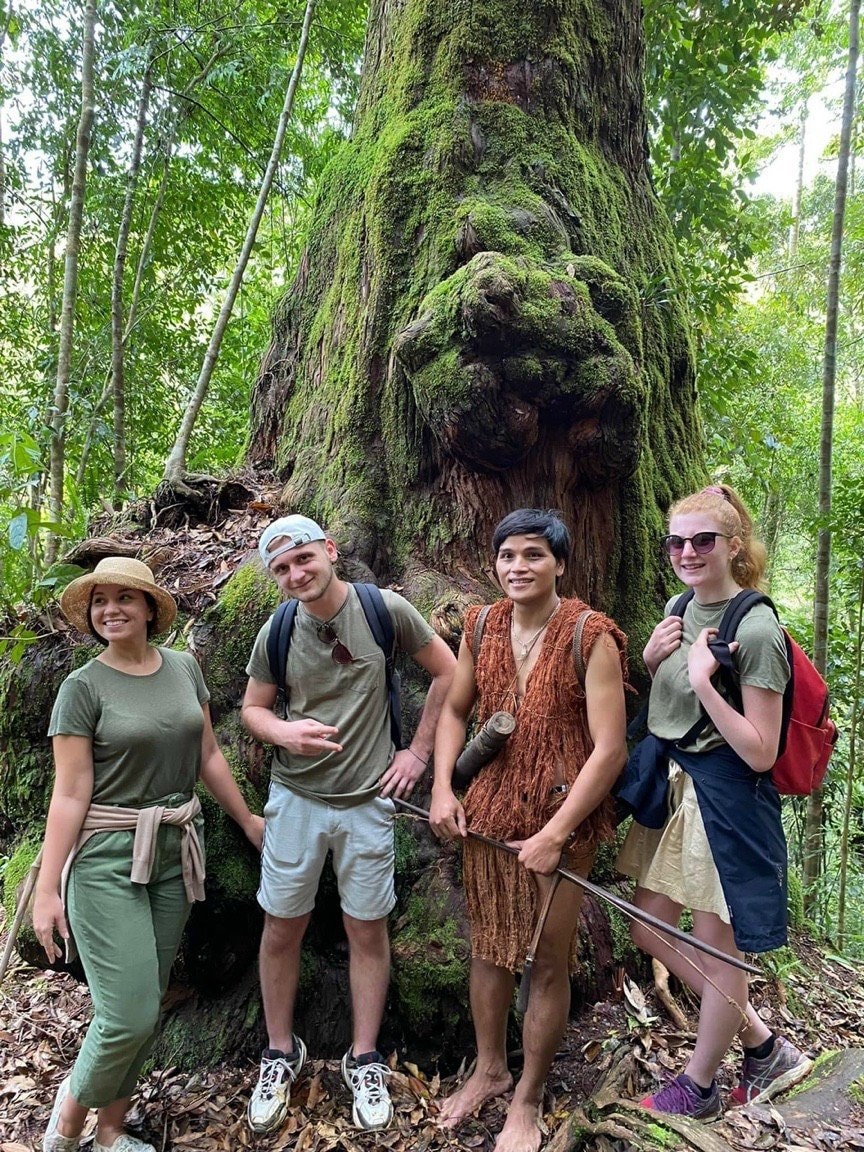
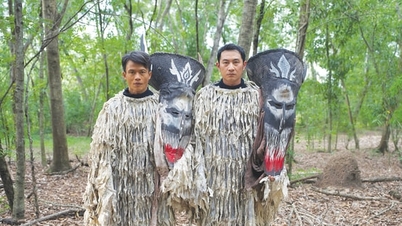
In the old days, before the existence of cotton plants and the art of weaving, the Co Tu people had to go deep into the forest to find the bark of trees such as ta-duih, a-mot, ta-rong… (trees with lots of sap and thick bark) to make clothing and jewelry for themselves, their families, and to give as gifts to relatives and friends.
Besides being skilled at hunting, building houses, wood carving, and farming, Katu men must also be adept at crafting musical instruments, performing them, and reciting and singing folk songs. In particular, they must be skilled at making clothing and jewelry from forest plants to give as gifts to their loved ones.
The Co Tu people usually choose the bark of trees such as a-muot, ta-duih, ta-rong, and po-pleem..., which are woody plants that grow abundantly in the Truong Son mountain range, to make loincloths and skirts; for shirts and hats, they choose the zilang vine, a vine with a diameter of about 5cm that grows in clumps. This plant has a fragrant scent and is a medicinal herb that can be sliced thinly and made into tea, which is good for health.
Finding the right trees to make clothing is not easy; it requires traversing high mountains, crossing streams, and climbing passes for one or two days. But making shirts, skirts, loincloths, and blankets from forest trees is even more difficult. After the bark of the Pơ-pleem, Amơt, and Zilang trees is formed into large, long sheets, they must be soaked in streams and rivers for three to four days to extract all the sap, then dried for one to two days.
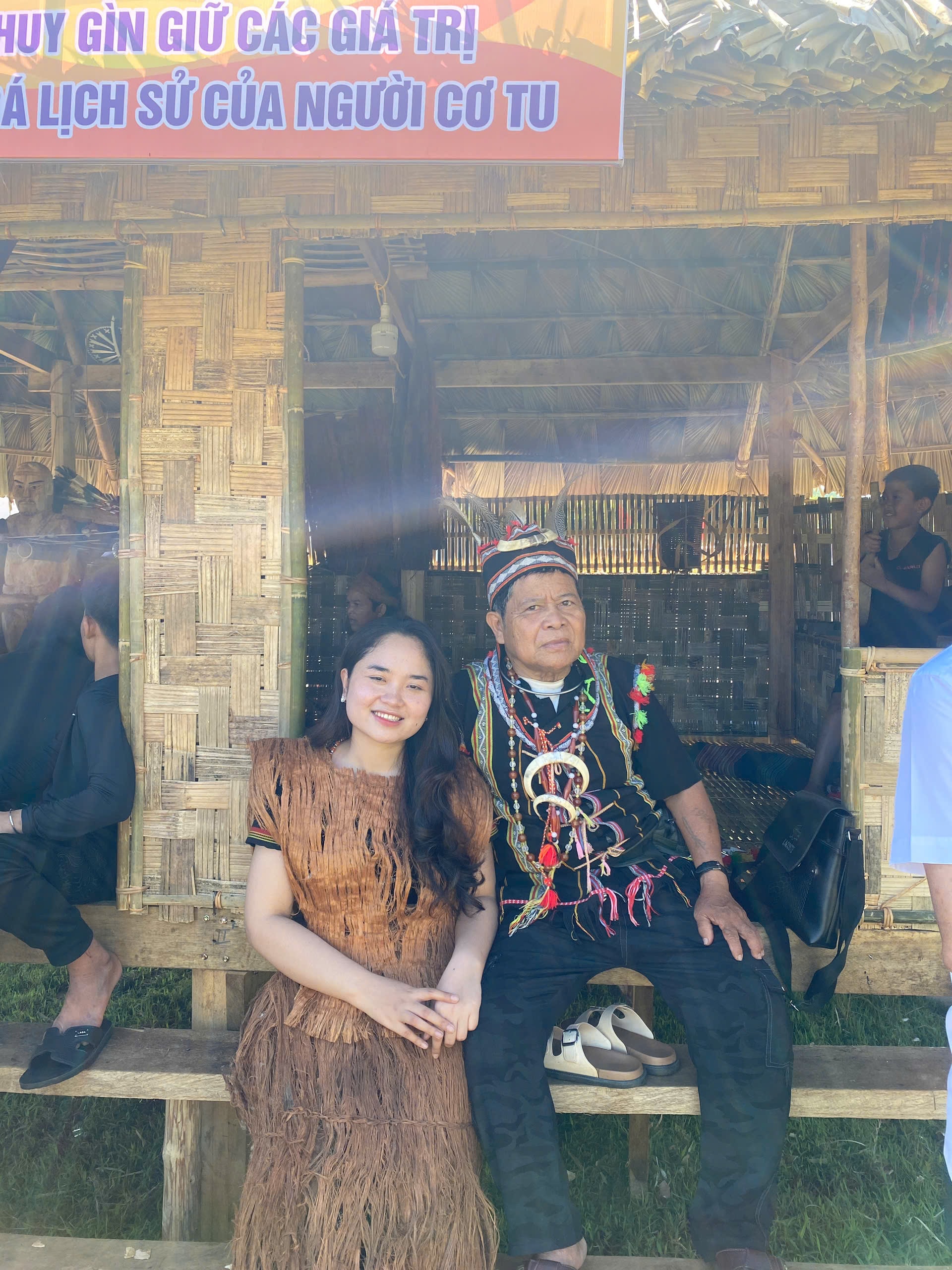
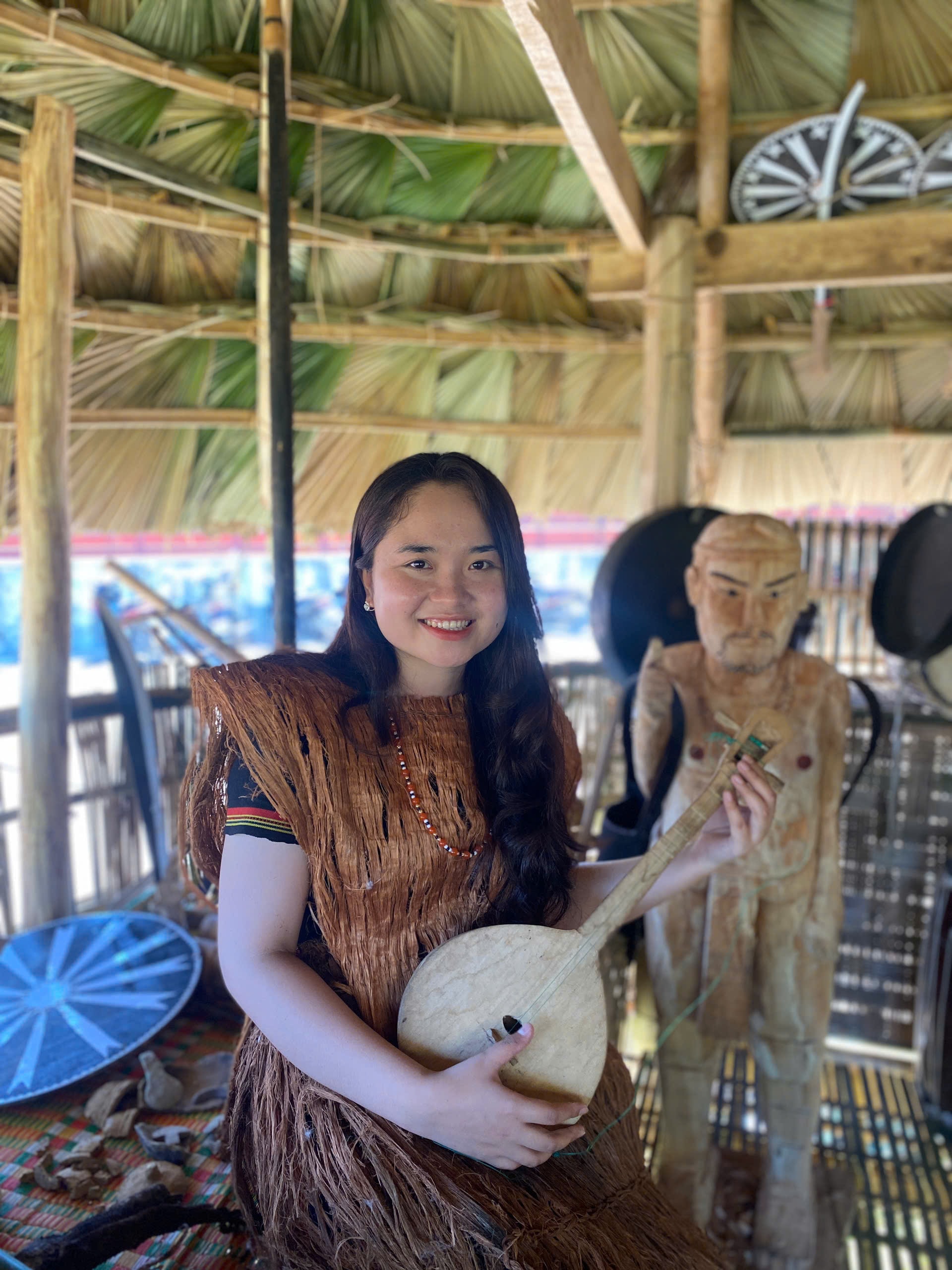
Once dried, the bark pieces are cut into shirts, loincloths, skirts, and hats according to the wearer's size. To join the pieces of bark together, the Co Tu people use hemp rope and bhơ-nương plant (a very flexible and strong plant) as thread. If there is a large piece of bark, they simply cut holes to make a collar, then attach additional strings to the edges of the garment so that when worn, they can be tied together instead of buttons.
Despite having lived through more than 80 farming seasons, Bhling Hanh (from Cong Don village, Nam Giang commune) remains sharp-minded and skillful. He not only crafts and performs Co Tu musical instruments well, but also goes into the forest to find plants that can be used to make traditional clothing.
When asked about the value of clothing made from tree bark, the old man smiled kindly and said, "In the old days, a tree bark garment made by our ancestors could be exchanged for a pig measuring 3 to 5 handspans. Now, I make them mainly to preserve the identity and traditions of my forefathers and to teach the younger generation not to lose the beautiful cultural identity of our nation."
Clothing in general, including ancient costumes made from forest plants and traditional brocade, is not simply for covering and protecting the body for the Co Tu people, but also contains many cultural values, reflecting the formation and development of the entire ethnic group. Ancient costumes made from tree bark, still remaining in the mountainous areas of the Co Tu people, also reflect the spirit of solidarity and love between people, between people and the mountains, forests, nature, and clear green streams...
Source: https://baodanang.vn/doc-dao-trang-phuc-tu-vo-cay-rung-3264990.html


![[Photo] General Secretary and President visit the China-ASEAN AI Application Cooperation Center](https://vphoto.vietnam.vn/thumb/1200x675/vietnam/resource/IMAGE/2026/04/17/1776404277677_vna-potal-tong-bi-thu-chu-tich-nuoc-tham-trung-tam-hop-tac-ung-dung-ai-trung-quoc-asean-8706616-2286-jpg.webp)


























![[Photo] National Assembly Chairman Tran Thanh Man attends the policy seminar to promote Vietnam-Türkiye cooperation.](https://vphoto.vietnam.vn/thumb/1200x675/vietnam/resource/IMAGE/2026/04/16/1776351415367_vna-potal-chu-tich-quoc-hoi-tran-thanh-man-du-toa-dam-chinh-sach-thuc-day-hop-tac-viet-nam-tho-nhi-ky-8705791-jpg.webp)


























































Comment (0)