

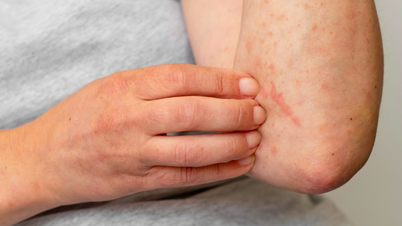
The 19-year-old boy suffers from ectodermal dysplasia, which reduces sweat secretion, prevents him from going out in the sun, keeps his skin dry, and he has no teeth, so he has had to wear dentures for the past 8 years.
The disease caused the young man to lose his hair and eyebrows, and his fingernails and toenails were also affected; treatment in many places was ineffective. His grandfather, father, and older brother also had similar symptoms.
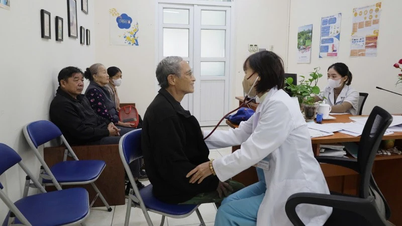
He went to the Central Dermatology Hospital for examination, where Professor Tran Hau Khang diagnosed him with hypohidrotic ectodermal dysplasia (HED). Normally, when exposed to sunlight or high temperatures, the body regulates temperature by sweating. However, this young man either lacked sweat glands or had atrophied sweat glands, making him unable to tolerate the heat, causing his body temperature to rise and leading to general discomfort.
Patients receive symptomatic treatment; a cure is not possible.
HED is a genetic disease caused by gene mutations, with an incidence rate of 1 in 10,000 to 1 in 20,000. This disease was included by Professor Khang in his book "Rare Skin Diseases ," published by the Central Dermatology Hospital on February 29th.
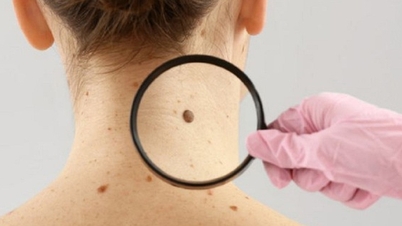
Over more than 40 years of work, Professor Khang has discovered dozens of rare and unusual diseases in Vietnam and around the world . According to him, rare skin diseases fall into four groups. The first group is hereditary, accounting for the highest percentage (60-80% of all rare skin diseases) and appearing earliest in life (about 80% appear from childhood). This group is the most difficult to treat, persistent, and causes the most serious complications.
The second group is due to infections (bacteria, viruses, fungi). The third group consists of neurological and psychiatric disorders, which are often overlooked because the symptoms are visible on the skin but go undetected. These include conditions such as trichotillomania, Morgellons syndrome, and hematohidrosis (currently only 3 cases have been detected in Vietnam)... Manifestations of this group include compulsive disorder, hair pulling, and hair eating leading to intestinal obstruction... Diagnosis and treatment of these conditions require collaboration between dermatology, neurology, and psychiatry specialists.
The fourth group is very complex, with unknown causes, encompassing many different disease aspects, and is difficult to treat. Treatment protocols only address symptoms, and the condition often recurs.
Le Nga
Source link



![[Photo] Prime Minister Pham Minh Chinh holds a phone call with the CEO of Russia's Rosatom Corporation.](/_next/image?url=https%3A%2F%2Fvphoto.vietnam.vn%2Fthumb%2F1200x675%2Fvietnam%2Fresource%2FIMAGE%2F2025%2F12%2F11%2F1765464552365_dsc-5295-jpg.webp&w=3840&q=75)
![[Photo] Closing Ceremony of the 10th Session of the 15th National Assembly](/_next/image?url=https%3A%2F%2Fvphoto.vietnam.vn%2Fthumb%2F1200x675%2Fvietnam%2Fresource%2FIMAGE%2F2025%2F12%2F11%2F1765448959967_image-1437-jpg.webp&w=3840&q=75)










































![[OFFICIAL] MISA GROUP ANNOUNCES ITS PIONEERING BRAND POSITIONING IN BUILDING AGENTIC AI FOR BUSINESSES, HOUSEHOLDS, AND THE GOVERNMENT](https://vphoto.vietnam.vn/thumb/402x226/vietnam/resource/IMAGE/2025/12/11/1765444754256_agentic-ai_postfb-scaled.png)












































Comment (0)