

Students' concerns
Concerns that making English a compulsory subject from grade 1, and introducing English into preschool, will weaken children's Vietnamese language skills are not unfounded. This is because preschool and primary school are the early years of a child's life when they become acquainted with language and develop their language skills.
Teaching both Vietnamese and English simultaneously creates pressure, and the quality of instruction certainly cannot be guaranteed compared to teaching only Vietnamese. Furthermore, teaching Vietnamese still presents many challenges regarding spelling, grammar, and writing style.
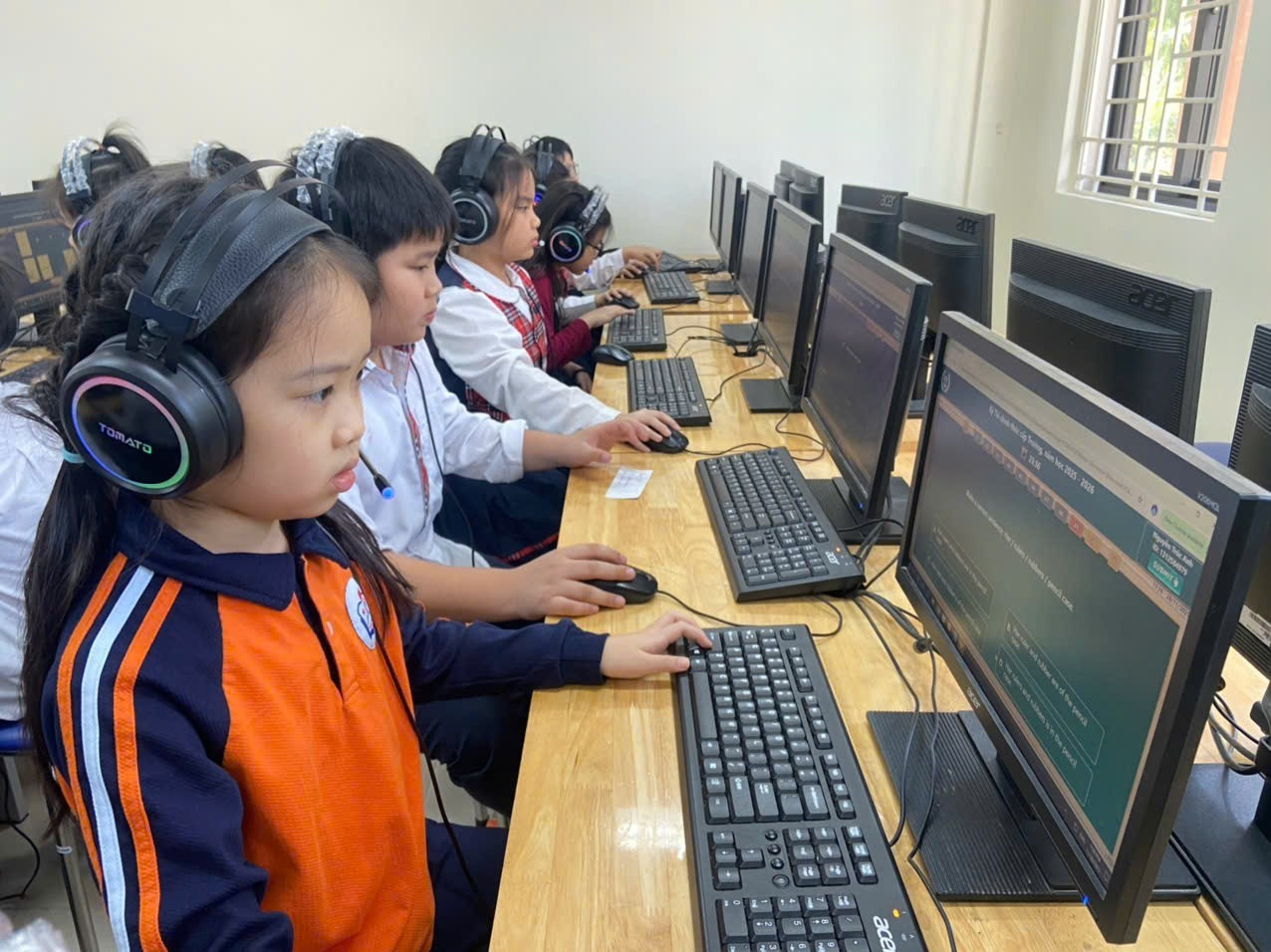
At the workshop "Creating Bilingual Education - Vietnamese Identity, Global Competence," Dieu Anh, a 10th-grade student from Olympia School in Hanoi, shared that, having been born and raised amidst technology and international integration, and in the strong interplay between tradition and modernity, she and her classmates can easily connect with friends all over the world. However, sometimes they forget seemingly simple yet profound things – like a folk song or simply saying "yes, sir/ma'am."
According to Dieu Anh, even though she studied in a bilingual environment, thanks to the lessons, activities, and experiences about Vietnamese culture, history, and living environment, she discovered the value of her national culture not only through books but also through reflection and lessons learned from reality.
Languages like English, Chinese, and Korean have become a familiar part of students' lives. The use of foreign languages is increasingly common in public spaces. Foreign languages are key to unlocking future career and educational opportunities; they are tools that enable us to study abroad in developed countries, work, and collaborate in international environments.
"However, the popularity of these languages also significantly impacts individual identity. Many young people today prefer to speak English in everyday conversations rather than Vietnamese, gradually forgetting the beauty and richness of their mother tongue," Dieu Anh stated.
Many young people worry that if they are not careful, they may lose their cultural identity - the thing that makes Vietnam different in a globalized world . The young generation in the context of rapid technological development understands that they need to be good at foreign languages to reach out to the world, but at the same time, they must preserve and be proud of the Vietnamese language, culture and national history.
When traditional values are combined with creative thinking and integration, Vietnamese culture will not only be preserved but also develop, spread, and become more vibrant than ever before.
Global integration through Vietnamese values
Dr. Nguyen Nam, a Fulbright lecturer, believes that when using English, national identity and global competence are not contradictory but complementary. He asserts that being good at English is valuable, but keeping the Vietnamese language is a source of pride.
According to Dr. Nguyen Nam, Vietnamese is a mirror reflecting the national soul. Vietnamese people can speak English to communicate internationally but cannot lose the ability to express emotions in their mother tongue.
National identity is not a solitary journey. The family sows the seeds, the school nurtures and trains, and the students blossom. Learning Vietnamese helps us understand our country, fostering love for Vietnam and instilling in us a patriotic spirit and national pride. Being a global citizen means bringing national identity into this colorful tapestry.
Dr. Nam asserted that preserving the Vietnamese language is a way to safeguard the Vietnamese worldview. "English is for integration, but it needs to be accompanied by a Vietnamese spirit. The Vietnamese spirit is the language," said Dr. Nguyen Nam.
Dr. Nguyen Chi Hieu, Academic Director of Olympia, shared that during his 12 years of studying abroad, the most memorable moments were the 11 New Year's Eves away from home, eating instant noodles, watching the Tet comedy show, and imagining Tet at home, which brought tears to his eyes.
"It's more deeply etched in my memory than the glorious moments of winning a gold medal or graduating as valedictorian. That's also why, even with opportunities to work abroad, I still return to Vietnam. What sets us apart from the rest of the world is Vietnam," Dr. Hieu confided.
Mr. Hieu believes that education is like putting pebbles in a bag; when faced with adversity, one can simply reach in and grab them, and those pebbles will help people navigate through difficult times. English, a global skill, helped Dr. Hieu win scholarships.
Based on his own experience and 17 years of teaching in Vietnam, Dr. Hieu hopes that young people will develop alongside the flow of the times, mastering technology, English, and global knowledge to engage in equal dialogue with global learning, research, and work opportunities; while preserving Vietnamese identity, language, culture, spirit, and values.
But life's challenges (for example, parents going bankrupt within a month, having to work to support them...), English proficiency, and global skills are not lifelines. What helps Dr. Hieu stand firm in life are the Vietnamese values that his teachers and parents have instilled in him over many years.
Dr. Nguyen Chi Hieu emphasized that preserving Vietnamese identity begins with daily conversations between parents and children about stories of previous generations, family history, or memorable milestones in their lives. Through these conversations, children gradually understand their origins, roots, and family cultural values, and no matter what other languages they learn, Vietnamese remains in their blood.
Teacher training and standardization
One of the key goals of the education sector in the coming years is to make English the second language in preschool and primary education institutions, aiming for 30% by 2030 and 100% by 2035.
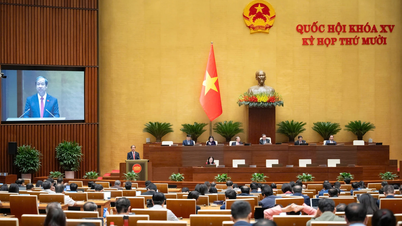
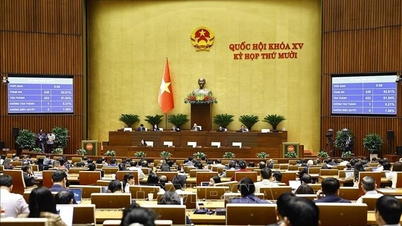
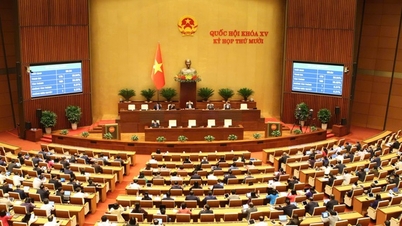
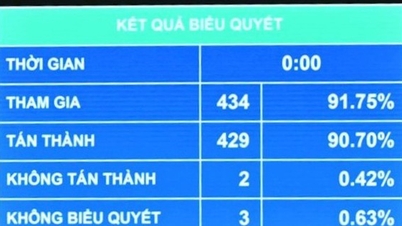
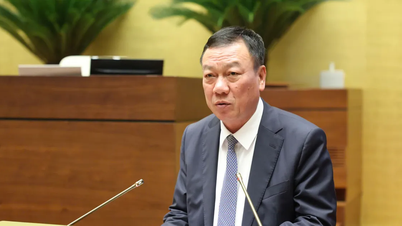
During discussions at the 10th session of the 15th National Assembly, delegates agreed that making English the second language in the education system by 2035 is a correct and urgent vision. However, achieving this goal requires strong and coordinated investment; standardization of the teaching staff; and a roadmap tailored to the realities of each region and locality.
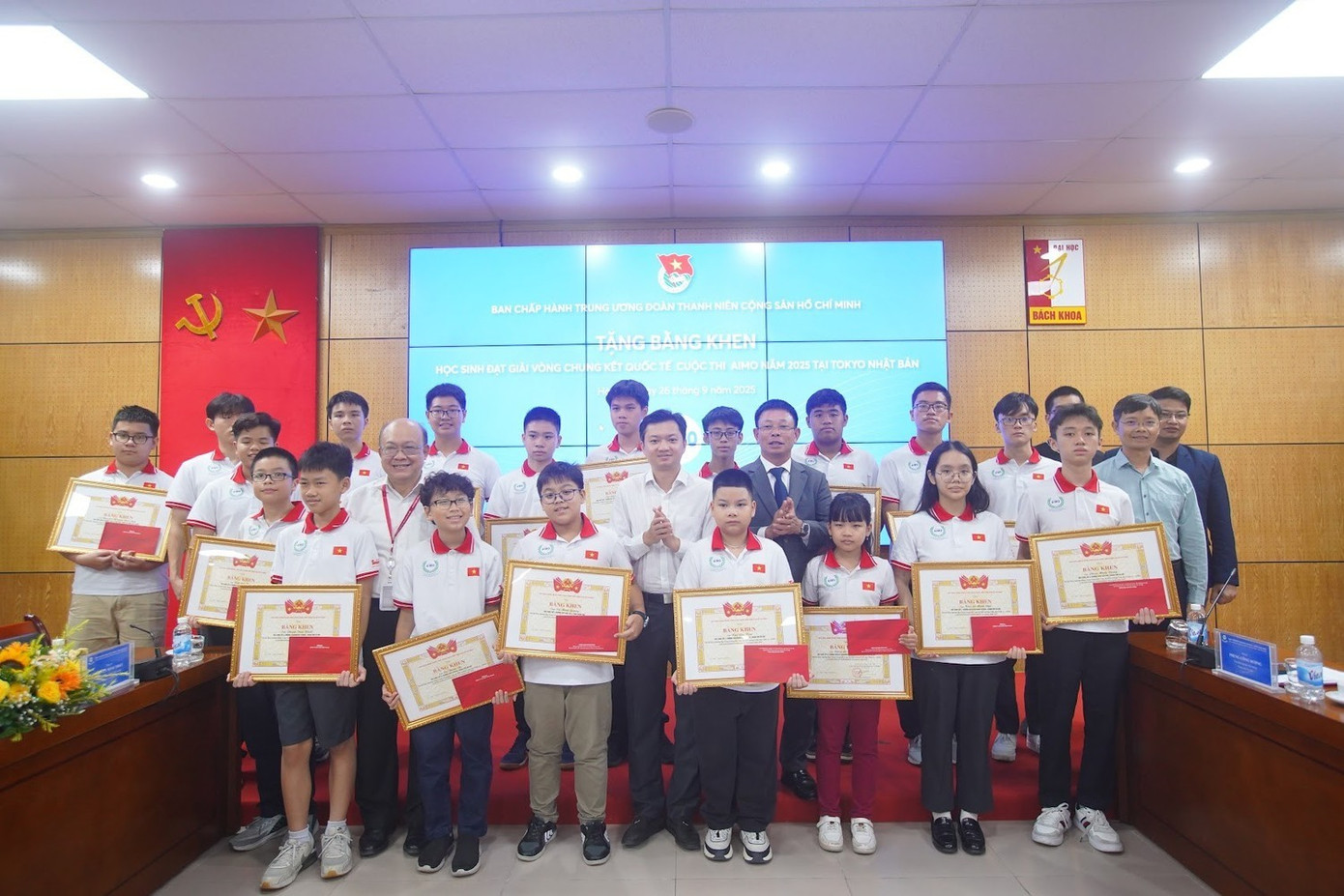
Delegate Doan Thi Le An (Cao Bang delegation) expressed that this is a major direction, demonstrating a determination to integrate deeply into the international community. However, to successfully implement it, a frank assessment of the conditions and challenges regarding infrastructure, human resources, and the implementation environment is needed, focusing on several key issues.
Regarding infrastructure, delegates noted a disparity in investment between regions. Favored areas (cities directly under the central government) already have many advanced schools, international schools, and models for teaching natural science subjects in English.
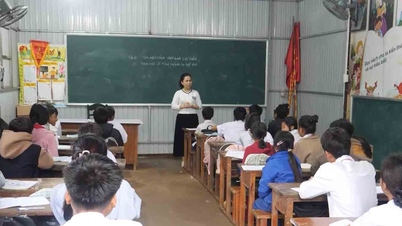
In rural areas of the plains, approximately 25-35% of schools still lack standard subject-specific classrooms to implement online English language teaching. In mountainous areas, nearly 70% of secondary schools, when assessed, still do not meet the standards for technological equipment to support foreign language learning…
Delegates also pointed out that a major bottleneck currently is the severe shortage of English teachers, with many localities lacking thousands of qualified foreign language teachers. Therefore, the target of 100% by 2035 is achievable in terms of policy, but it requires a major reform in teacher training, recruitment, and remuneration, especially for teachers who teach subjects in English.
Delegate Bui Sy Hoan (from Hai Phong City delegation) pointed out a challenge related to cultural identity, thus requiring a profound shift in social awareness.
Delegate Nguyen Thi Lan Anh (Lao Cai Delegation) suggested that instead of a uniform rate, the allocation should be based on the actual conditions of each region: 20% for particularly difficult areas, 25% for difficult areas, 30% for other areas, and potentially more for urban areas. The delegate also proposed that the State should prioritize supporting the training and professional development of English teachers and providing funding for equipment purchases in difficult areas.
Source: https://tienphong.vn/dua-tieng-anh-thanh-ngon-ngu-thu-hai-bai-toan-hoi-nhap-va-ban-sac-post1801911.tpo


![[Photo] Explore the US Navy's USS Robert Smalls warship](/_next/image?url=https%3A%2F%2Fvphoto.vietnam.vn%2Fthumb%2F1200x675%2Fvietnam%2Fresource%2FIMAGE%2F2025%2F12%2F10%2F1765341533272_11212121-8303-jpg.webp&w=3840&q=75)






















![[Video] The craft of making Dong Ho folk paintings has been inscribed by UNESCO on the List of Crafts in Need of Urgent Safeguarding.](https://vphoto.vietnam.vn/thumb/402x226/vietnam/resource/IMAGE/2025/12/10/1765350246533_tranh-dong-ho-734-jpg.webp)
















































Comment (0)