

Limited recruitment sources
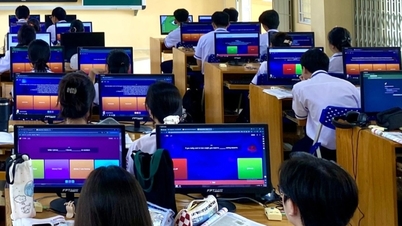
Teacher recruitment according to Decree 85/2023/ND-CP is causing difficulties for many mountainous localities in Son La , especially in the subjects of English and Information Technology.
According to the instructions in Document 5239/UBND-NC, the Provincial People's Committee requires communes and wards that meet the conditions to urgently develop recruitment plans, send them to the Department of Home Affairs for appraisal and complete them in the fourth quarter of 2025.
Communes that do not meet the conditions will propose the Department of Education and Training to recruit instead to ensure timely staffing for the new school year. The Provincial People's Committee also assigned the Department of Education and Training to compile statistics, synthesize, and propose specific staffing numbers for each subject, send them to the Department of Home Affairs for appraisal, and submit them to the Provincial People's Committee for consideration and decision to ensure uniform recruitment and meet actual needs.
Mr. Nguyen Van Chien - Director of the Department of Education and Training of Son La said that decentralizing recruitment to the commune level helps reduce intermediary steps, and is more proactive in arranging and organizing staff. The recruitment process is also faster than through exams, helping localities promptly supplement teachers at urgent times. Flexible policies such as special recruitment or short-term contracts also significantly support recruitment in difficult areas.
However, the biggest difficulty currently facing the Son La Education sector in recruiting comes from the source of applicants. The number of pedagogical students working in remote areas is still limited. Difficult travel conditions, low income, and work pressure make many people not choose the highlands as a place to settle down.
In particular, the supply of English and IT teachers is almost insufficient, while Decree 85 only allows candidates to register for a single wish, causing many positions to be in demand but not recruiting suitable people. This is the reason why the shortage of teachers in some localities has lasted for many years.
Need long-term solutions
According to Mr. Nguyen Van Chien, to ensure effective recruitment, the recruitment mechanism needs to be adjusted in an open direction, allowing candidates to register for their second or third wishes. This will increase the possibility of finding suitable candidates, reducing the risk of leaving positions vacant due to lack of application documents.
In addition, the requirement for practical pedagogical exams in some localities also puts great pressure on the organizing units; especially in places with thousands of candidates, the arrangement of the council, setting up questions, and grading practical exams is almost overloaded and unfeasible.
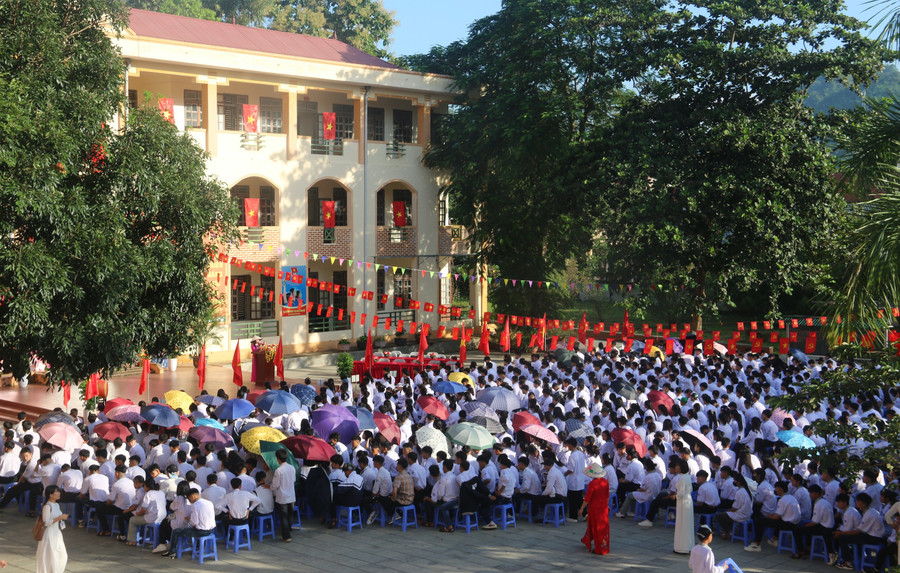
Since the locality switched to a two-tier government model, the recruitment of preschool, primary and secondary school teachers has gradually been unified under the management of the Department of Education and Training. This helps to streamline the focal point, avoid the situation where each place has its own way of doing things, and at the same time overcome the problem of shortages and surpluses among communes and wards. However, for communes with sufficient capacity, the province can still consider decentralization to shorten the recruitment time, meeting the human resource needs arising from time to time.
Mr. Dang Van Hieu - Director of Mai Son Continuing Education Center, said that many schools in remote areas are lacking staff in both general and specialized subjects. Although recruitment notices have been widely distributed, the rate of successful candidates is low. The number of students trained in specialized subjects is already small, and it is difficult to meet the requirements of the entrance exam according to regulations.
This has caused many schools to have a long-term shortage of teachers. According to Mr. Dang Van Hieu, selection is a flexible solution but it is necessary to develop clear criteria to select truly capable people who are suitable for the highland environment.
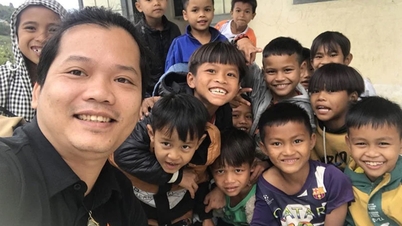
The reality in the mountainous areas of Son La shows that the shortage of teachers is not only related to the number of recruitments, but also related to the ability to retain teachers after recruitment. Difficult living conditions, degraded public housing, and income not commensurate with the pressure of work have caused many young teachers to ask to move to more favorable places after a few years, making it challenging to stabilize the team in the mountainous areas.
To overcome this situation, Son La needs to synchronously deploy many solutions. First of all, flexibly combining recruitment and examination will help increase the ability to recruit enough teachers for each subject and suit the local characteristics. For specific subjects with few candidates, recruitment will be the appropriate choice, while examination can be applied to general subjects with many applications, ensuring input quality.
In addition, the province needs to have practical support policies for teachers in disadvantaged areas such as public housing, housing allowances or travel support. These are factors that have a direct impact on teachers' decisions to stay. Preferential policies on allowances and benefits according to the characteristics of each locality also need to be adjusted to be closer to reality to motivate the team.
Another long-term solution is to encourage local students to study pedagogy and return to serve their hometowns. These students have advantages in language, culture and living conditions, helping them adapt quickly and stabilize their jobs compared to teachers from other places. Recruitment policies or job placement commitments after graduation will contribute to creating a sustainable human resource for the highlands.
At the same time, investment in building school facilities, public housing, solid classrooms, and modern teaching equipment is also an important factor. Improved teaching and learning conditions not only help improve the quality of education, but also create a favorable environment, helping teachers feel secure in their work and stay with schools in the highlands for a long time.
In the context of many difficulties, Son La province's efforts in recruiting and retaining teachers for the highlands are commendable. However, to completely solve the teacher shortage, more synchronous intervention in terms of mechanisms, policies and resources is needed. When the barriers are removed, the team of teachers in the highlands will have more conditions to contribute, contributing to improving the quality of education and creating positive changes for ethnic minority and mountainous areas.
Source: https://giaoducthoidai.vn/tuyen-dung-giao-vien-ket-nguon-nhan-luc-post759819.html
























![[Video] The craft of making Dong Ho folk paintings has been inscribed by UNESCO on the List of Crafts in Need of Urgent Safeguarding.](https://vphoto.vietnam.vn/thumb/402x226/vietnam/resource/IMAGE/2025/12/10/1765350246533_tranh-dong-ho-734-jpg.webp)











































Comment (0)