

In 2024, the agricultural sector achieved record results in both agricultural exports and a trade surplus. However, recent warnings from importing markets are bad news for the sector.
A mix of sadness and joy
According to the Ministry of Agriculture and Rural Development , in 2024, overcoming many difficulties and challenges, the agricultural sector achieved spectacular results with many new records in the export of agricultural, forestry and aquatic products.
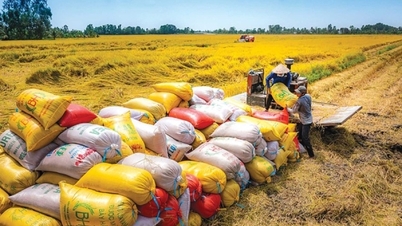
Specifically, total exports of agricultural, forestry, and aquatic products are estimated to reach a record high of 62.5 billion USD, an increase of 18.7% compared to 2023, and the trade surplus continues to reach a new record high of 17.9 billion USD, an increase of 46.8%.
The market for agricultural, forestry, and aquatic products continues to expand in both product categories and types, with a focus on the domestic market; trade promotion, opening new markets, removing trade barriers, and strengthening exports of agricultural, forestry, and aquatic products amidst challenging global market conditions. Among these, the Chinese market stands out as a bright spot, importing nearly $4.1 billion worth of fruits and vegetables alone, accounting for 66.52% of Vietnam's total fruit and vegetable exports.
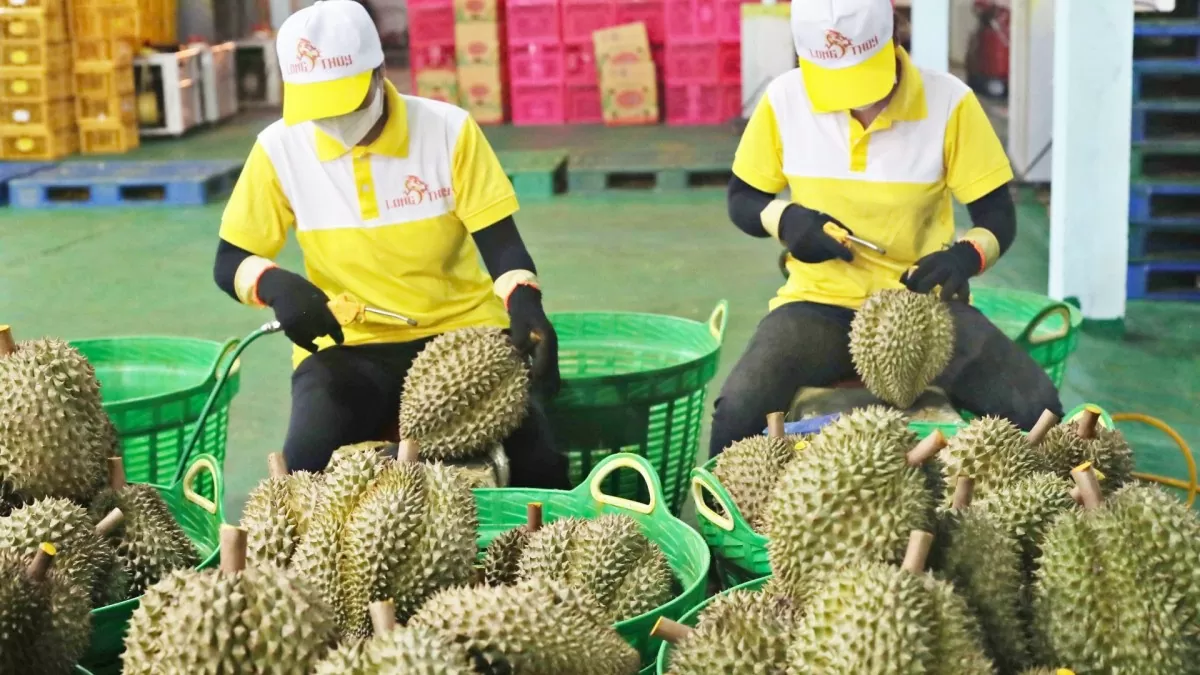 |
| The EU has temporarily increased the frequency of durian inspections at the border from 10% to 20% (Photo: VNA). |
However, alongside these achievements, there are some less bright spots in the agricultural export picture. Recently, the Vietnam SPS Office (Ministry of Agriculture and Rural Development) sent a notice to the Plant Protection Department and the Vietnam Fruit and Vegetable Association regarding the amendment of Regulation (EU) 2019/1793 on the temporary strengthening of official controls and emergency measures governing the importation of certain goods from certain third countries into the EU. Accordingly, for Vietnamese durian, the EU will temporarily increase the frequency of border inspections from 10% to 20%.
The reason for this change is that Vietnamese durian does not comply with regulations on pesticide residue levels. Accordingly, EU authorities have detected high levels of pesticide residues in durian, including: Carbendazim, Fipronil, Azoxystrobin, Dimethomorph, Metalaxyl, Lambda-cyhalothrin, and Acetamiprid. The EU has stipulated maximum residue limits (MRLs) for these substances ranging from 0.005-0.1 mg/kg depending on the type.
For dragon fruit, chili and okra, the EU maintains the same frequency of border inspections. Of which, the inspection frequency for dragon fruit is 30%, chili and okra are 50%. These three products, when imported into the EU market, must be accompanied by pesticide residue analysis results.
Earlier this year, in August, the head of the National Notification and Inquiry Point Office on Sanitary and Phytosanitary Measures (Vietnam SPS Office, under the Ministry of Agriculture and Rural Development) also reported that in the first half of 2024, the EU sent 57 warnings to Vietnamese authorities due to antibiotic residues and banned substances in Vietnamese agricultural products.
In China – one of the biggest markets for Vietnamese fruits and vegetables – the country has repeatedly warned about the failure of Vietnamese fruits, especially durian, to meet permitted quality standards for export.
In June of this year, the General Administration of Customs of China announced the discovery of 77 shipments of durian from Vietnam exported to China that were contaminated with heavy metals (cadmium). These shipments were identified as being linked to 33 packing plants and 40 growing areas in Vietnam.
At the same time, China also decided to ban durian imports from 15 packing plants and 18 growing areas in Vietnam. This was because these plants and growing areas did not comply with the regulations of the Protocol on Plant Quarantine Requirements signed between the Ministry of Agriculture and Rural Development of Vietnam and the General Administration of Customs of China.
Standardization is essential for maintaining market share.
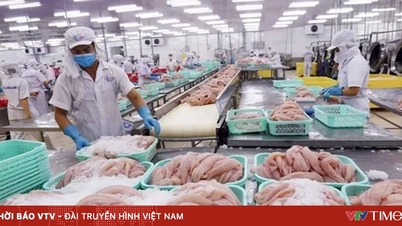
At a recent conference on promoting agricultural exports organized by the Ministry of Agriculture and Rural Development, Mr. Nong Duc Lai, Vietnam's Commercial Counselor in the Chinese market, stated that Vietnam is among the top 10 countries (territories) with the highest number of agricultural and food products subject to warnings. Specifically, seafood, fruit juices (excluding coffee and dairy products), and various types of confectionery received the most warnings.
Therefore, the solution to maintaining the growth rate of agricultural exports is for Vietnamese authorities to strengthen the management and supervision of export quality. At the same time, they should regularly update and disseminate information to businesses regarding regulations, quality standards, and food safety and hygiene standards of importing countries.
In fact, according to statistics from the Vietnam SPS Office, in 2024, markets issued 1,029 notifications regarding food safety. This means that, on average, the Vietnam SPS Office received 3 notifications per day, some of which were hundreds of pages long. For example, in November 2024, Japan issued 10 notifications regarding pesticides, with some pesticides having their active ingredients reduced by up to 10 times. The majority of these notifications came from WTO members with whom we currently trade, such as the EU, South Korea, Japan, and China, which also experienced some changes.
To meet increasingly stringent market standards, growing and farming regions have no choice but to comply with regulations in both Vietnam and importing markets. In addition, it is necessary to strengthen the links between raw material areas and packaging, preliminary processing, and processing facilities; and to establish mechanisms for joint quality control and management.
On June 19, 2024, the Prime Minister issued Decision No. 534/QD-TTG approving the project: “Improving the effectiveness of implementing the Agreement on the Application of Sanitary and Phytosanitary Measures (SPS) of the World Trade Organization and SPS commitments within the framework of free trade agreements”.
Accordingly, the target orientation for 2030 is: 100% of national standards and technical regulations on food safety and quality for agricultural, forestry, and aquatic products will be equivalent to international standards; Strengthening the database for interactive information exchange between cooperatives, businesses, associations, local management agencies, and Vietnam's SPS system; 100% of food safety and animal and plant quarantine management officials at all levels will receive annual training and updates on professional knowledge and skills. Once this goal is achieved, agricultural exports are expected to be smoother and achieve the major targets set.
Source: https://congthuong.vn/xuat-khau-nong-san-dung-de-vet-o-lam-hong-buc-tranh-sang-mau-366382.html





























![[Video] The craft of making Dong Ho folk paintings has been inscribed by UNESCO on the List of Crafts in Need of Urgent Safeguarding.](https://vphoto.vietnam.vn/thumb/402x226/vietnam/resource/IMAGE/2025/12/10/1765350246533_tranh-dong-ho-734-jpg.webp)























































Comment (0)