

Technological solutions to support farmers
Pests and diseases that harm crops are always a concern in agricultural production. Insects such as brown planthoppers, green planthoppers, leaf-rolling caterpillars, stink bugs, armyworms, etc., appear seasonally, causing significant damage, especially in areas growing rice, vegetables, and fruit trees.
Traditionally, farmers have to regularly inspect their fields by direct observation, relying on experience, or spraying pesticides according to a fixed schedule. This method is not only costly in terms of expenses and labor but also causes environmental pollution and pesticide residue on agricultural products.
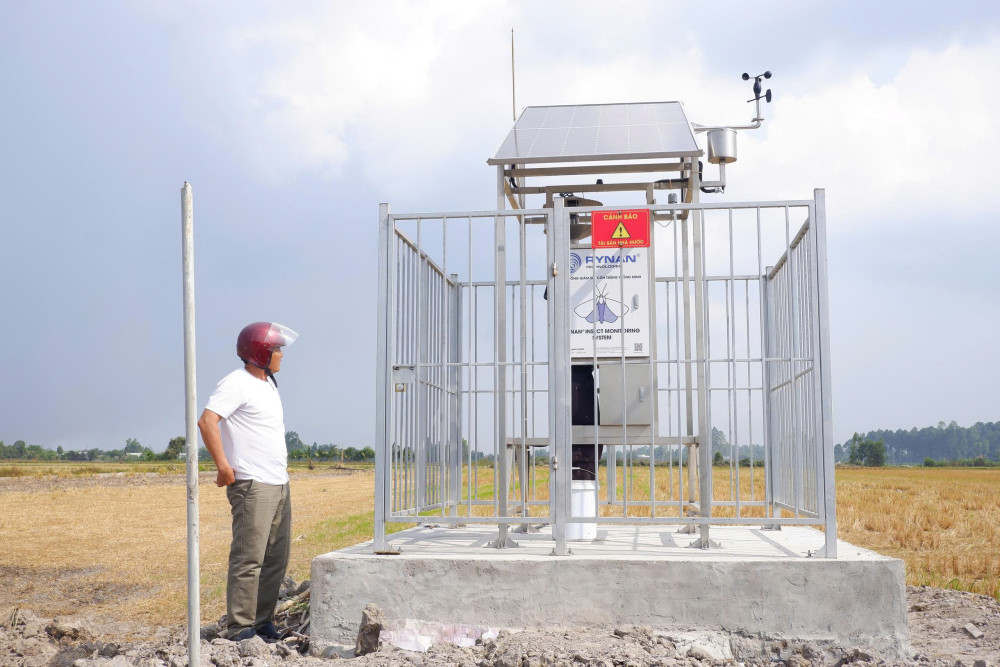
Smart light traps placed in the middle of rice fields automatically record and analyze the density of harmful insects using artificial intelligence technology.
To address this problem, the agricultural sector is deploying smart light traps – an effective tool for monitoring, forecasting, and controlling pests and diseases in a timely manner. The light traps operate on the principle of attracting insects with LED lights of different wavelengths (UV, blue, green, white). When insects fly into the trap area, they are recorded by specialized cameras, and the images are analyzed using artificial intelligence to determine the species, number, and density in real time.
The system automatically records, classifies, and counts insects, while also building a pest density chart; the data is automatically transferred to the data center and synchronized with the Rynan Mekong application. This allows farmers and agricultural specialists to monitor pest situations without being physically present in the fields.
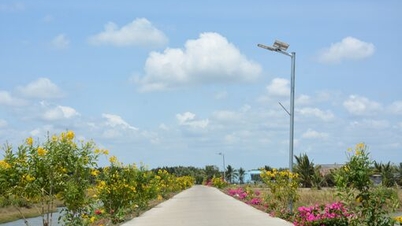
The device operates on solar power, incorporates a battery backup, is lightning-proof, and is easy to install in areas far from the power grid, ensuring continuous operation even in bad weather conditions.
The implementation in the province has shown clear effectiveness. Several localities such as Moc Hoa, Vinh Hung, Nhon Hoa Lap, Binh Thanh, etc., have installed smart light traps in key rice and fruit-growing areas. Thanks to this equipment, officials and farmers can update the pest situation daily or at specific times of the day, predict the density of pests and diseases, and proactively take timely control measures, reducing spraying costs and management time.
Mr. Tran Van Hai (residing in Binh Hoa commune) shared: “Since the local authorities installed smart light traps, I no longer have to guess the pest situation in my rice fields like before. I just need to open the Rynan Mekong app to see the pest density every day. With clear information, I only spray pesticides when absolutely necessary. As a result, costs have decreased significantly, and the environment is less affected. This is a very useful technology, helping farmers keep up with new production trends.”
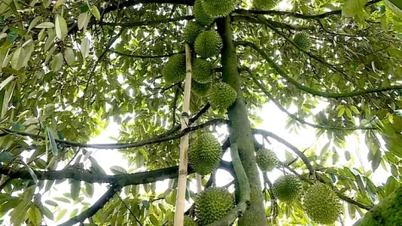
Not only rice farmers, but also fruit growers in the province are benefiting from this system. In Binh Thanh commune, where durian cultivation is rapidly expanding, smart light traps have become "gatekeepers," providing early warning of pests that are increasing due to extreme weather conditions.
Ms. Le Thi Hong, a durian farmer in Binh Thanh commune, said: “Since having the smart light traps, I can monitor fruit-boring insects and stink bugs that damage durian trees in a timely manner. Thanks to this, I only spray pesticides when absolutely necessary, which reduces costs and protects the environment. This year's durian yield has increased significantly compared to previous seasons.”
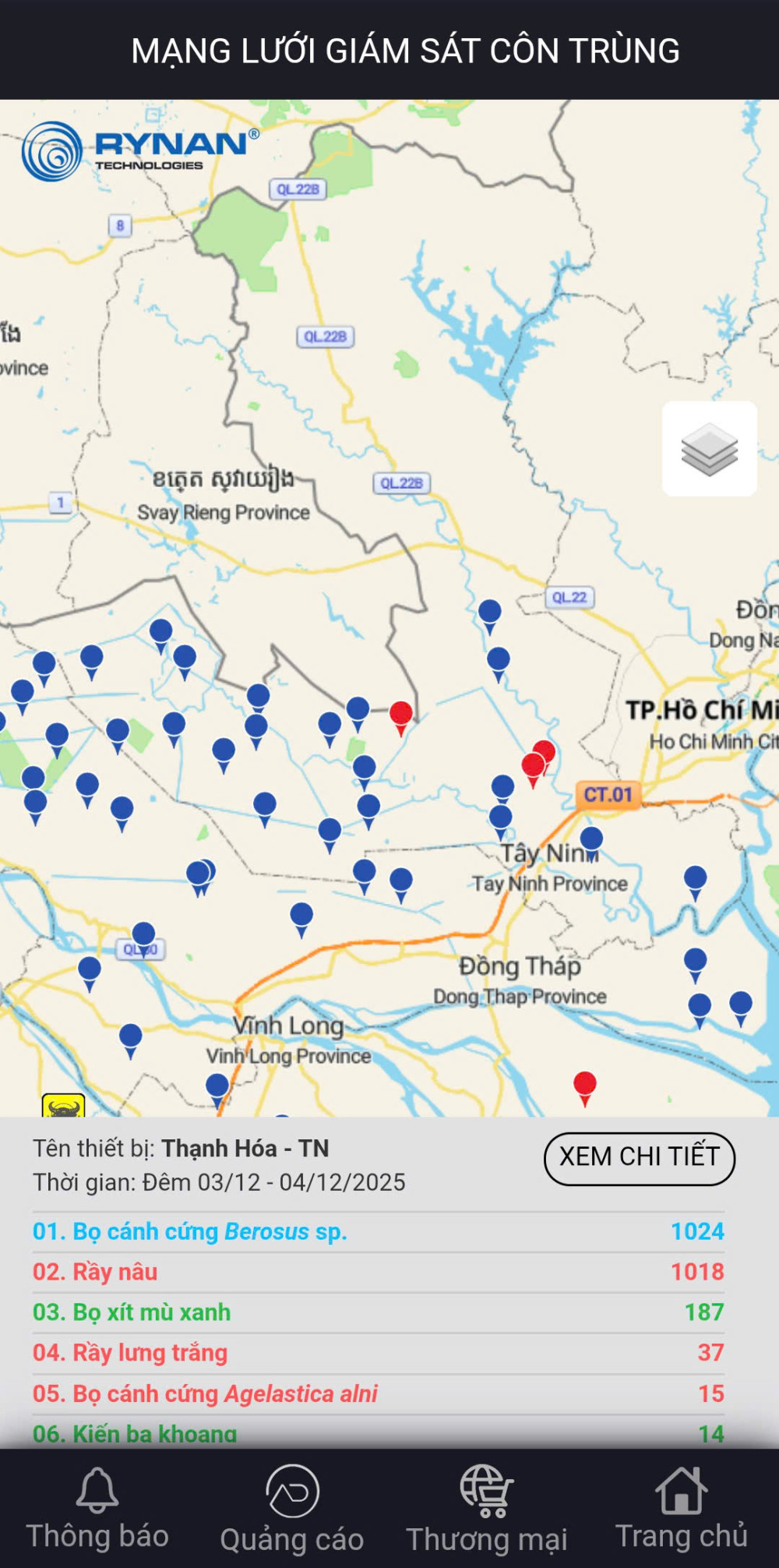
The insect monitoring network interface on the Rynan Mekong app helps farmers update pest and disease densities in real time.
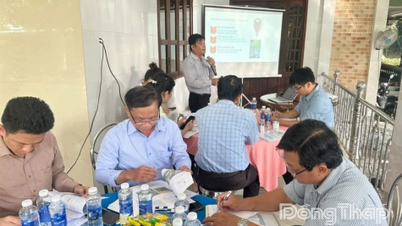
To maximize effectiveness, the provincial Department of Agriculture organizes training courses to transfer technology, guide farmers in installing applications, operating equipment, reading pest charts, and applying data to appropriate control measures. In addition, farmers are also guided in monitoring environmental indicators such as pH, salinity, temperature, and water levels – factors affecting insect development.
Another important advantage of smart light traps is their ability to provide real-time data, helping farmers and management agencies make quick and accurate decisions, detect and warn of potential pest outbreaks early. The system also contributes to minimizing unnecessary pesticide spraying, protecting farmers' health, and enhancing the reputation of agricultural products in the market.
Towards smart and sustainable agricultural production.
The application of smart light traps in agricultural production not only helps farmers reduce costs and risks from crop pests but also supports relevant authorities in building a large, continuously synchronized database of pests. Every day, tens of thousands of images and technical parameters are automatically updated to the Rynan Mekong platform, creating a valuable data source for forecasting and crop planning.
Data from light trap stations helps specialized agencies build pest maps by area, identify outbreak risks early based on weather conditions, and proactively recommend appropriate planting, care, and control measures. This is a significant step in the transition from traditional pest management to digital management and big data management.

Lemon farmers are applying safe production processes, combined with pest monitoring using smart light traps.
According to Deputy Director of the Department of Agriculture and Environment Nguyen Dinh Xuan: “In the coming time, the Department will expand the application of smart light traps to key areas, connecting data with the management center for continuous pest monitoring. Simultaneously, the sector will promote the application of modern technology in climate change management and forecasting; coordinating with research institutes, universities, and technology companies to build models for forecasting extreme weather events, analyzing climate data, and proposing adaptation solutions for each ecological zone. This approach will help local agriculture gradually shift from a reactive management model to a forecast-prevention model, moving towards green and sustainable development.”
The application of smart light traps is clear evidence of the digital transformation trend in agriculture. With just a smartphone, farmers can monitor pest and disease outbreaks, predict pest and disease densities, view environmental indicators, and receive early warnings, making the production environment more transparent, reducing losses, increasing profits, and promoting high-quality agricultural products.
The provincial agricultural sector is aiming to connect all monitoring equipment, observation stations, and central management applications, thereby forming a "data ecosystem" to support smart production. Once completed, the system will provide online data to farmers, management agencies, purchasing businesses, and consumers, facilitating traceability and enhancing the value of agricultural products.
The application of smart light traps in monitoring and controlling pests and diseases is a strategic step, not only minimizing risks in production but also supporting the development of a safe, environmentally friendly, and competitive agricultural value chain in both domestic and export markets. The combination of technology, data, and agronomic knowledge promises to create a generation of modern farmers who are proactive in pest management, reduce costs, and improve production efficiency.
From smart lighting systems in the fields, the province is gradually realizing its goal of smart and sustainable agriculture, contributing to environmental protection, increasing farmers' income, and developing the rural economy .
Thanh Tung
Source: https://baolongan.vn/ung-dung-bay-den-thong-minh-trong-giam-sat-va-phong-tru-sau-benh-a208139.html
![[Photo] Prime Minister Pham Minh Chinh holds a phone call with the CEO of Russia's Rosatom Corporation.](/_next/image?url=https%3A%2F%2Fvphoto.vietnam.vn%2Fthumb%2F1200x675%2Fvietnam%2Fresource%2FIMAGE%2F2025%2F12%2F11%2F1765464552365_dsc-5295-jpg.webp&w=3840&q=75)
![[Photo] Closing Ceremony of the 10th Session of the 15th National Assembly](/_next/image?url=https%3A%2F%2Fvphoto.vietnam.vn%2Fthumb%2F1200x675%2Fvietnam%2Fresource%2FIMAGE%2F2025%2F12%2F11%2F1765448959967_image-1437-jpg.webp&w=3840&q=75)






































![[OFFICIAL] MISA GROUP ANNOUNCES ITS PIONEERING BRAND POSITIONING IN BUILDING AGENTIC AI FOR BUSINESSES, HOUSEHOLDS, AND THE GOVERNMENT](https://vphoto.vietnam.vn/thumb/402x226/vietnam/resource/IMAGE/2025/12/11/1765444754256_agentic-ai_postfb-scaled.png)


















































Comment (0)