

ESG pressure
Practicing ESG (Environment, Social, Governance) standards is becoming mandatory.
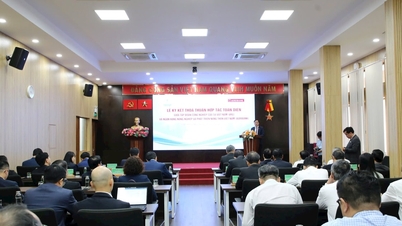
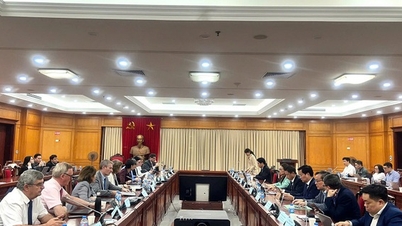
This was the general consensus of businesses participating in the seminar "ESG Practices in Businesses: Building Sustainable Competitive Advantage - Creating a Prosperous Future" organized by the Ministry of Planning and Investment in collaboration with the United States Agency for International Development (USAID) on the afternoon of October 3rd in Hanoi .
“Recently, when we work with FDI partners, especially businesses from Taiwan, China, Singapore, Malaysia, etc., they often ask, ‘Have you implemented ESG yet?’ Clients need it, so we have to find out to meet their requirements,” said Mr. Vu Thanh Tung, Head of Business Development Department, Vilai Viet Construction Joint Stock Company.
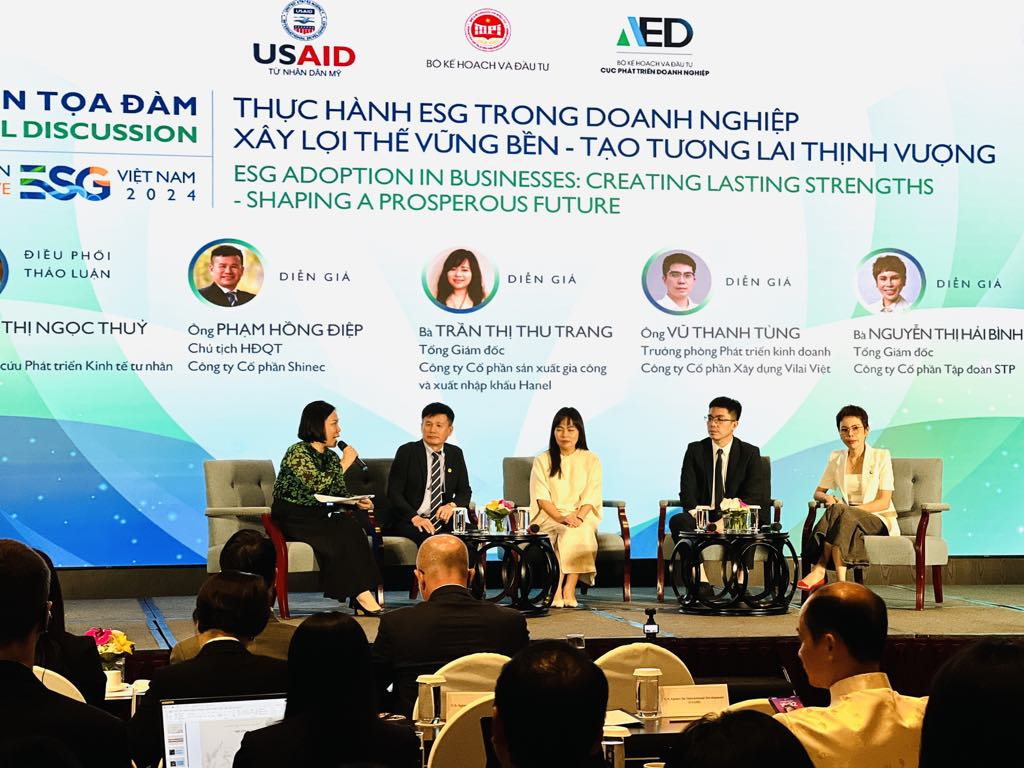
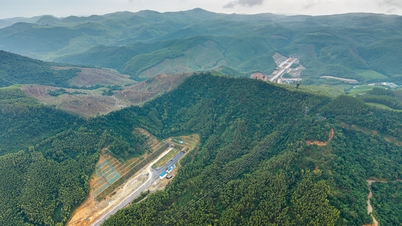
The pressure from FDI enterprises has also forced many other Vietnamese businesses to "transform," including Shinec Joint Stock Company, the investor of Nam Cau Kien Industrial Park ( Hai Phong ).
"When attracting FDI businesses to industrial parks, they have long pursued ESG standards. If industrial park developers lack an ESG mindset, they will be less competitive," explained Mr. Pham Hong Diep, Chairman of the Board of Directors of Shinec Joint Stock Company.
For businesses that do not yet have FDI customers or export activities to major markets such as the United States or Europe, ESG is becoming a new direction to help maintain sustainable development.
For example, STP Group Joint Stock Company, led by General Director Nguyen Thi Hai Binh, is a business that produces and researches sustainable agricultural infrastructure at sea. The recent Typhoon No. 3 swept away STP's marine farming infrastructure, but thanks to its positioning system, they were able to salvage 90% of it.
"Sustainable agriculture is a growing trend in Vietnam. Businesses that don't transform themselves and practice ESG cannot keep up with domestic trends, let alone global trends," Ms. Binh stated.
According to Ms. Pham Thi Ngoc Thuy, Director of the Office of the Private Economic Development Research Board, there are currently two business models implementing ESG in Vietnam.
Firstly, businesses operating in relatively traditional sectors, such as construction and supporting industries, have recognized the shift in the market, international buyers, and legislation, leaving them with no choice but to research and integrate ESG into their production and business operations.
"We truly admire businesses that are trying to integrate ESG elements into their traditional production and business operations. That's not easy because Vietnamese businesses have long been labor-intensive and resource-intensive," Ms. Thuy shared.
Secondly, there are businesses that, from their very first day of operation, have been associated with the concepts of "ecology" and "sustainability".
There are quite a few highly impactful stories that can serve as models for other businesses. For example, businesses participating in the "Vietnam ESG Initiative 2024" program, chaired by the Department of Enterprise Development - Ministry of Planning and Investment.
Do it for real.
The CEO of STP emphasized that for businesses to integrate and implement ESG effectively, their leaders must be ESG-minded individuals who set an example so that all employees become "green people." Along with that, it's also necessary to select stakeholders who are "of the same type and quality" in terms of the E, S, and G criteria.
"Many Vietnamese businesses still tend to 'put on a show'. Be genuine, don't wait until your partners come to inspect before you start dealing with the situation," Ms. Binh advised.
Mr. Vu Thanh Tung noted that Vietnamese businesses lack both extensive experience and capital accumulation compared to foreign businesses. If they compete directly in the market, the risk of losing is very high. There is no other way than to start from the root and, especially, to take action. Currently, many businesses talk a lot but fail to act.
Agreeing strongly with the phrase "action must be taken," Ms. Thuy cited a story from about two years ago, when Vietnamese textile and garment businesses were "shocked" by the "green textile" phenomenon in Bangladesh. In a very short period, Bangladeshi textile and garment businesses' exports to the US increased by 54% thanks to green certification.
For the next year, Vietnamese textile and garment businesses were divided into two halves in their debate: one half argued that the growth was due to "green" initiatives; the other half argued that it wasn't solely due to "green" factors but also stemmed from advantages such as cheap labor and readily available supply chains.
While many businesses were busy debating, a female owner of a medium-sized textile and garment business in Vietnam took the initiative to find out what certification the Bangladeshi company had obtained from the US market. Upon learning that it was LEED certification, awarded by US organizations, her company decided to pursue this certification as well.
When she first saw the LEED assessment, she was overwhelmed by the sheer number of criteria, some of which were extremely difficult to meet. However, the company remained determined and achieved results. Last year, while the entire Vietnamese textile and garment industry experienced nearly 10% negative growth, this company still achieved positive growth, becoming a preferred choice for international buyers due to its rare certification compared to other businesses in the same market.
"If businesses only think of ESG as a decorative activity, a way to 'show off' or 'put on a show' for the market, then they will find it difficult to go the distance and will not achieve sustainable development," Ms. Thuy concluded.
The Department of Enterprise Development - Ministry of Planning and Investment has recently introduced several tools to support ESG practices for businesses, including: a toolkit for assessing sustainable business practices based on the ESG framework; a handbook introducing legal regulations on ESG in 2024; and a report assessing the level of ESG practice in businesses in 2024. The tools are available free of charge at https://esg.business.gov.vn |
Source: https://vietnamnet.vn/dung-lay-esg-nhu-hoat-dong-phong-bat-lam-mau-2328584.html


![[Photo] Closing Ceremony of the 10th Session of the 15th National Assembly](/_next/image?url=https%3A%2F%2Fvphoto.vietnam.vn%2Fthumb%2F1200x675%2Fvietnam%2Fresource%2FIMAGE%2F2025%2F12%2F11%2F1765448959967_image-1437-jpg.webp&w=3840&q=75)










































![[OFFICIAL] MISA GROUP ANNOUNCES ITS PIONEERING BRAND POSITIONING IN BUILDING AGENTIC AI FOR BUSINESSES, HOUSEHOLDS, AND THE GOVERNMENT](https://vphoto.vietnam.vn/thumb/402x226/vietnam/resource/IMAGE/2025/12/11/1765444754256_agentic-ai_postfb-scaled.png)











































Comment (0)