

This morning (October 21, 2025), the nationwide pork market witnessed a clear divergence in price trends across regions. While the North saw localized price increases, the South recorded slight downward adjustments in many areas, and the Central and Central Highlands regions maintained stable prices.
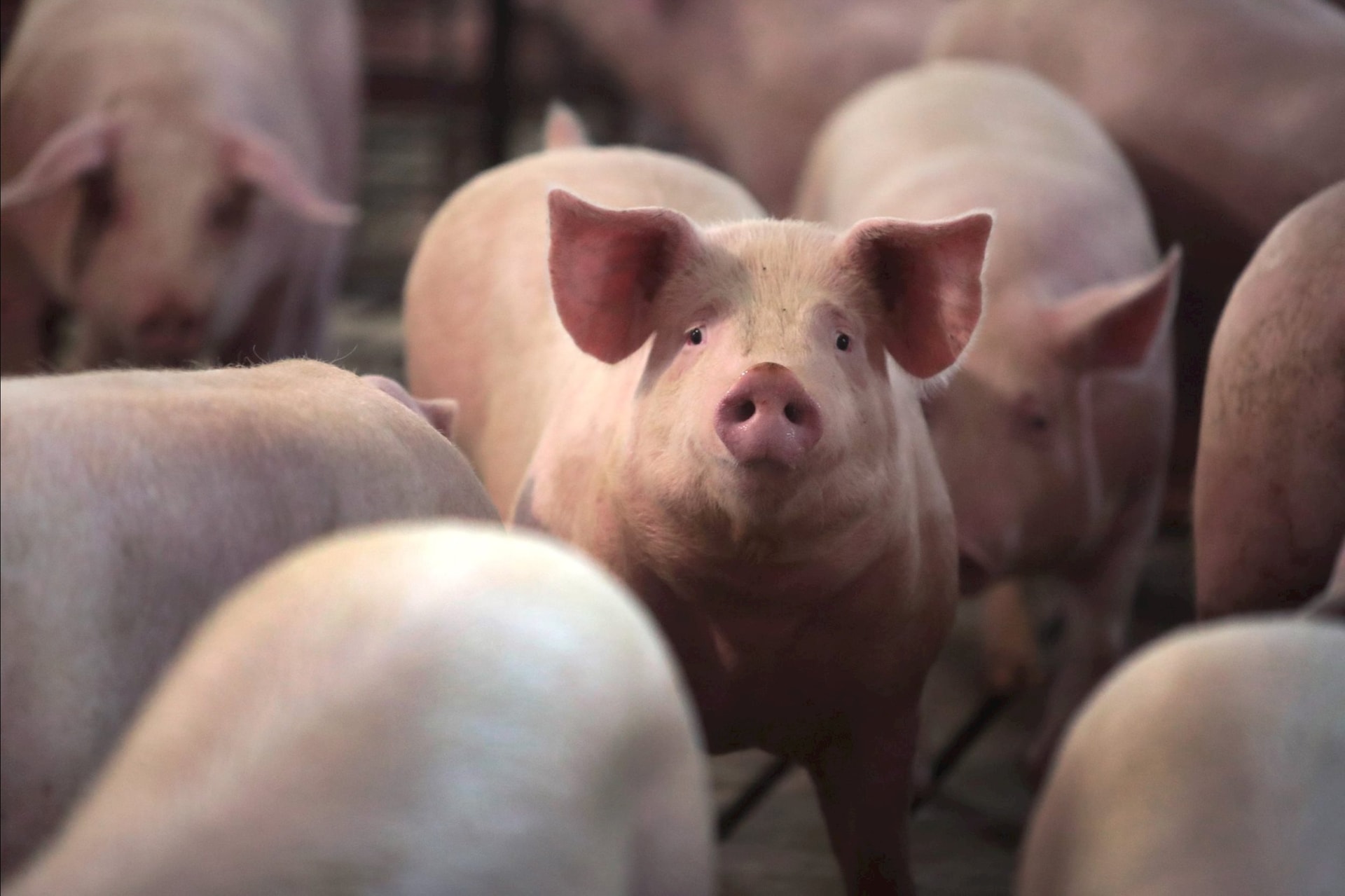
Northern Vietnam: Two provinces see slight price increase, with common prices ranging from 52,000 to 54,000 VND/kg.
A slight upward trend has appeared in the Northern pork market as Thai Nguyen and Bac Ninh both increased by 1,000 VND/kg, bringing the price in these two localities to 54,000 VND/kg.
This is also the price ceiling for the region, maintained in other key provinces such as Hanoi , Hai Phong, Ninh Binh, and Hung Yen.
Conversely, many provinces and cities are still trading around 53,000 VND/kg, including Tuyen Quang, Cao Bang , Lang Son, Quang Ninh, Lao Cai, Dien Bien, Phu Tho, and Son La. Notably, Lai Chau remains the locality with the lowest price in the entire region, closing at 52,000 VND/kg.
Pork prices in the North are currently fluctuating between 52,000 and 54,000 VND/kg.
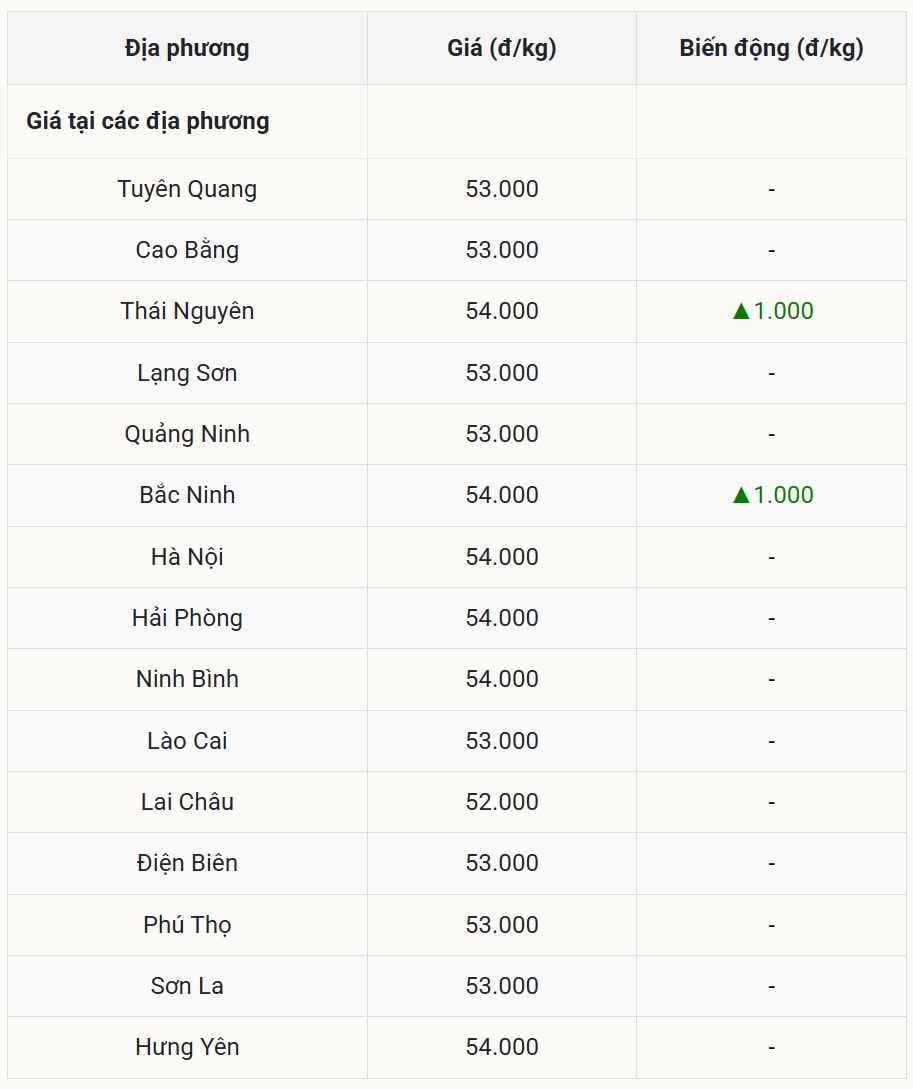
Central and Central Highlands regions: 'Maintaining a firm stance', no changes.
In contrast to the North, the Central and Central Highlands markets continued to trade sideways, maintaining the price levels established from the previous session.
Thanh Hoa and Nghe An provinces lead the region with a price of 53,000 VND/kg. Following them are Ha Tinh, Hue, and Lam Dong, all purchasing at 52,000 VND/kg.
Prices of 51,000 VND/kg were recorded in Quang Tri, Da Nang, Quang Ngai, and Khanh Hoa. Meanwhile, Gia Lai and Dak Lak remained at the lowest level in the region, at 50,000 VND/kg.
The price of live pigs in Central Vietnam and the Central Highlands is currently in the range of 50,000 – 53,000 VND/kg.
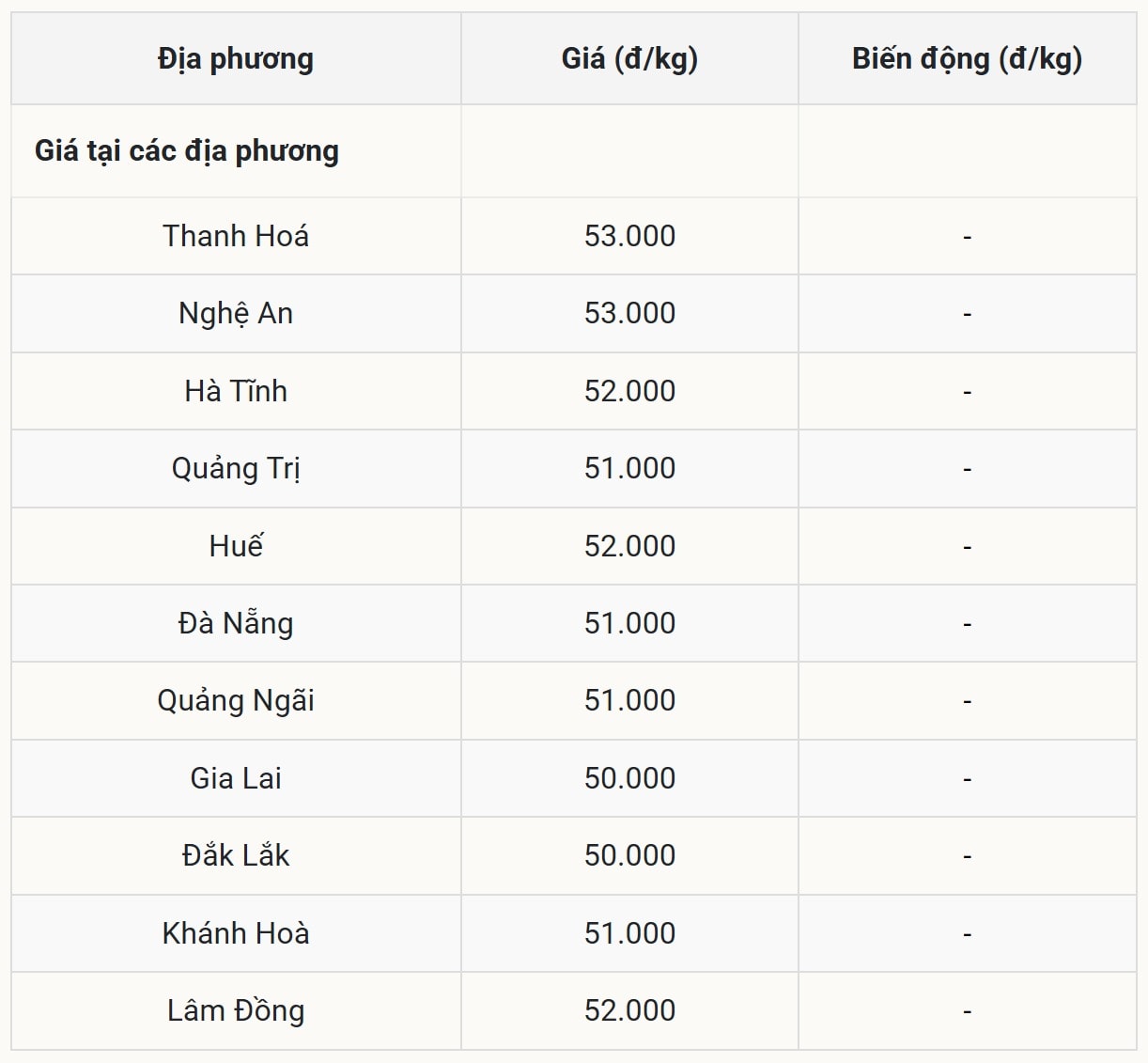
Southern Vietnam: Downward price pressure, Vinh Long hits a low of 49,000 VND/kg.
The southern region recorded the sharpest downward adjustments nationwide. The widespread price pressure forced many localities to cool down.
Specifically, Dong Nai, Tay Ninh, and Ho Chi Minh City all saw a decrease of 1,000 VND/kg, bringing the price down to 52,000 VND/kg.
The provinces of Dong Thap, Can Tho, and Ca Mau maintained a price of 50,000 VND/kg. An Giang traded at 51,000 VND/kg. Notably, Vinh Long continued to be the epicenter of the decline, maintaining the lowest price nationwide at only 49,000 VND/kg.
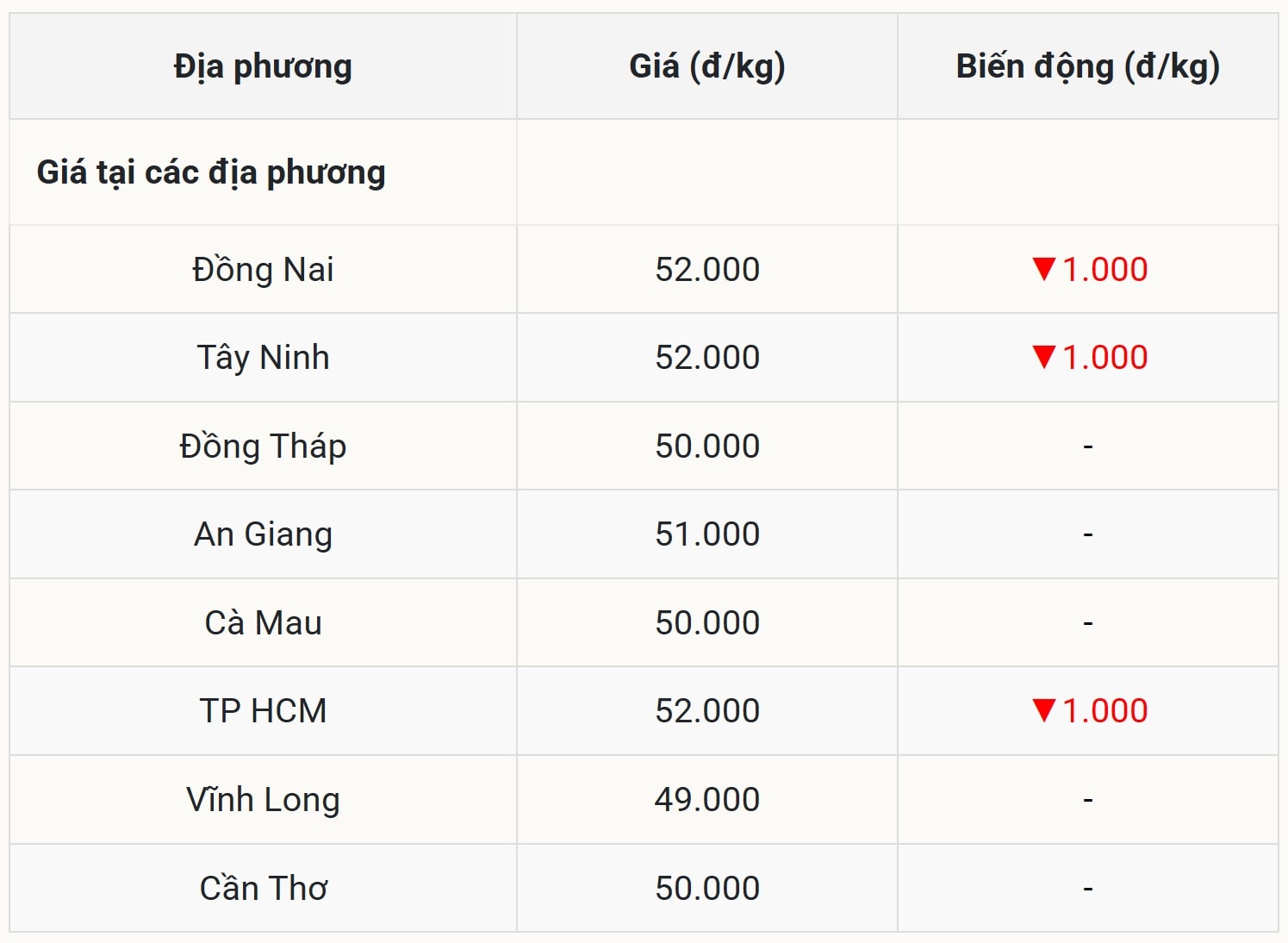
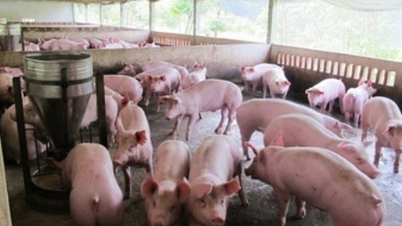
An Giang is stepping up measures to prevent and control diseases and protect the health of livestock.
According to the Agriculture and Environment newspaper, many livestock farmers in An Giang have adopted a method of using microorganisms combined with herbs to strengthen the animals' resistance and treat the farm environment, contributing to protecting livestock from increasingly complex disease outbreaks.
Given the unpredictable nature of animal diseases, livestock farmers in An Giang are shifting to using biological solutions as an alternative to chemical antibiotics. In localities such as Tan Hiep, Hon Dat, Chau Thanh, and Tinh Bien, supplementing feed with natural ingredients like garlic, turmeric, ginger, and galangal along with IMO microbial preparations has become a common practice.
Experts believe that garlic contains allicin and turmeric contains curcumin – both compounds with natural antibacterial properties. When combined with probiotics during fermentation, these compounds help increase beneficial gut bacteria, inhibit harmful bacteria, and stimulate digestion. As a result, livestock have a healthier digestive system, improved immunity, reduced risk of disease, and a decreased need for chemical antibiotics.
The application of microbial and herbal preparations is carried out directly at the livestock farms. Farmers cultivate their own microorganisms and ferment a mixture of herbs such as garlic, turmeric, ginger, galangal, and bear's paw leaves... then dilute it for livestock to drink or mix into feed. Healthy pigs are given 10 to 20 ml per day, while sick pigs receive up to 40 ml, with recovery usually observed within 3 to 5 days. Many households also use this solution to bathe their pigs, helping to kill bacteria on the skin, reduce odor, and limit the spread of disease.
In addition to caring for the animals, livestock farmers are also advised to spray 5% lime powder combined with herbal microbial preparations to disinfect the barns. For barns that have been infected, the washing should be done 3 to 5 times, combined with high-pressure spraying to kill pathogens and maintain a clean environment, minimizing toxic gases.
According to the An Giang Provincial Department of Agriculture, this "green antibiotic" method has many advantages such as ease of implementation, low cost, utilization of readily available materials, and suitability for small-scale livestock farmers. More importantly, it is a sustainable approach that helps reduce antibiotic residue in food, meeting the increasingly stringent standards of domestic and international markets.
Source: https://baolamdong.vn/gia-heo-hoi-hom-nay-21-10-mien-bac-dong-loat-len-dinh-54-000-dong-396147.html





























![[Video] The craft of making Dong Ho folk paintings has been inscribed by UNESCO on the List of Crafts in Need of Urgent Safeguarding.](https://vphoto.vietnam.vn/thumb/402x226/vietnam/resource/IMAGE/2025/12/10/1765350246533_tranh-dong-ho-734-jpg.webp)




























































Comment (0)