

Ho Chi Minh City lost the peak of 150,000 VND/kg, down to 149,500 VND/kg.
Dong Nai slightly decreased by 1,000 VND, returning to 149,000 VND/kg.
Gia Lai decreased the most by 2,000 VND, returning to 148,500 VND/kg.
The two provinces of Dak Lak and Lam Dong recorded the mark of 150,000 VND/kg, both decreasing by 1,000 VND/kg.
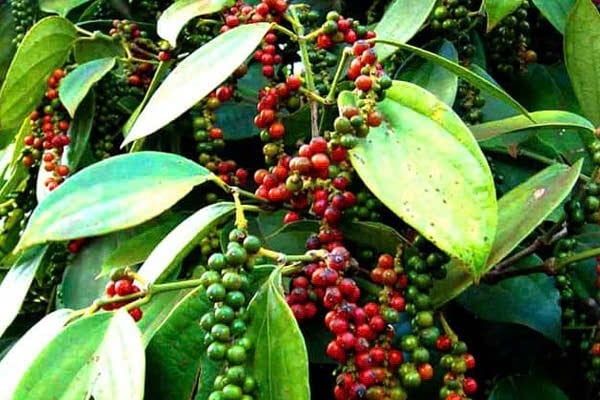
In the world market, pepper prices are largely stable in all regions. The Indonesian exchange is trading in the range of 7,126 - 9,703 USD/ton.
Specifically, the price of Black Pepper increased to 7,136 USD/ton. The price of White Pepper increased to 9,717 USD/ton.
Similarly, the Brazilian market maintained a stable streak, currently at 6,175 USD/ton. Meanwhile, black and white pepper remained unchanged, trading at 12,300 USD/ton and 9,200 USD/ton.
In Vietnam's pepper export market, the price of 500g/l and 550g/l black pepper remained stable, hovering at 6,400 - 6,600 USD/ton. The price of ASTA white pepper remained at a high level, currently standing at 9,050 USD/ton.
The latest report from Nedspice shows that the market is facing a prolonged shortage of supply. World production has decreased by more than 30%, to only about 430,000 tons.
In contrast, Vietnam, India and Indonesia all significantly reduced production.
Despite the weakening global demand this year, especially in the US where it has dropped by 30%, Vietnam’s exports have only decreased by 6% in 10 months thanks to maintaining its market share in the EU. The German market alone imported 2,241 tons in September, of which Vietnam accounted for more than 50%.
Domestic supply has fallen sharply as production has failed to keep up with exports: Vietnam’s 2025 output is expected to be just 172,000 tonnes, nearly half the peak of 2018–2019. The upcoming crop is expected to be 153,000 tonnes due to adverse weather.
Meanwhile, pepper imports, mainly from Brazil, increased by 32% to 38,000 tons, although domestic inventories still decreased as farmers limited sales to wait for prices to recover.
Since November 13, 2025, the US has included pepper in the list of reciprocal tax exemptions, creating expectations that import demand will increase again in the near future.
In the international market, Brazil is expected to reach 89,000 tons despite labor shortages. Indonesia is left with only about 36,000 tons because last year's volume was sold off strongly when prices soared.
At the end of November, IPC recorded pepper prices increasing in Vietnam but decreasing in India due to the depreciation of the Rupee. Currently, this commodity is still around 6,000 - 8,000 USD/ton, after a surge of more than 80% in the first half of 2024.
* Domestic coffee prices in the Central Highlands such as Dak Lak, Lam Dong, Gia Lai, purchase prices decreased by 800 - 1,300 VND/kg, bringing the transaction price to the range of 110,500 - 111,200 VND/kg.
Specifically, coffee prices in Dak Lak decreased by VND1,300/kg, bringing the price to VND111,000/kg.
In Lam Dong, coffee prices are currently being purchased at 111,200 VND/kg, down 1,300 VND/kg. This is currently the highest price today.
Next, coffee prices in Gia Lai also decreased by 1,200 VND/kg, down to 110,700 VND/kg.
From mid-November, when the coffee berries on the fields are ripe, the people of Kon Proh Tu Ria village (Dak Mar commune) begin the bustling harvest season. From early morning, people bring bags, tarps, food and water to the fields to pick coffee beans on time. The practice of exchanging labor helps households save costs and speed up the harvesting process.
Coffee trees play an important role in the economy of Dak Mar commune. The whole commune has more than 3,300 hectares of coffee, of which nearly 3,000 hectares are in the harvest stage. Up to now, people have harvested about 50% of the area, creating a vibrant picture of the crop on the red basalt hillsides.
This year, coffee prices are good, so picking costs have also increased to 11,000 - 13,000 VND/kg. Stable income during the season helps people have more conditions to cover expenses for the end of the year.
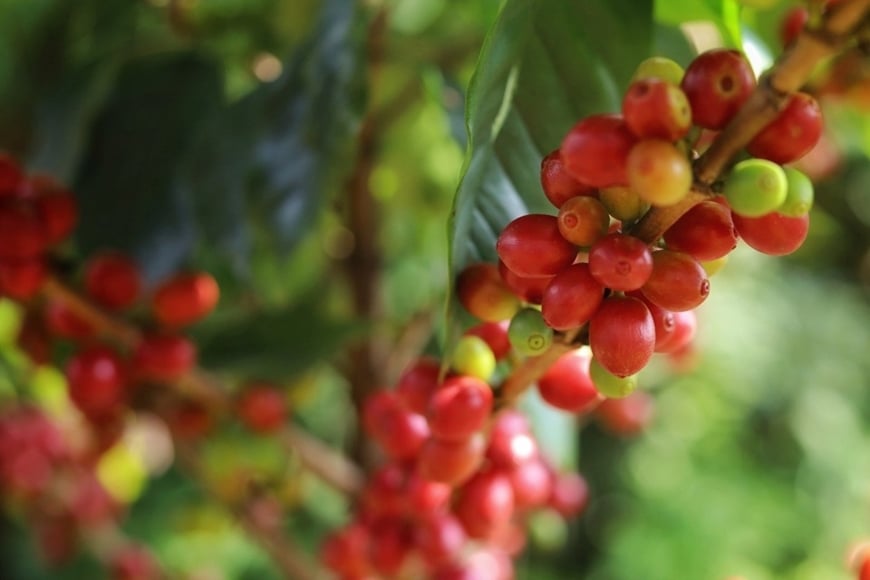
(Illustration: kinhtedothi.vn)
On the London floor, the online price of robusta coffee today did not record any new developments compared to yesterday in terms of terms. Specifically, the November 2025 futures contract remained at 4,565 USD/ton; the January 2026 contract was at 4,413 USD/ton; the March 2026 contract remained at 4,335 USD/ton…
Similarly, on the New York floor, online Arabica coffee prices remained stable compared to yesterday's trading session. Specifically, the December 2025 contract remained at 413.0 cents/Ib; the March 2026 contract remained unchanged at 381.2 cents/Ib; the May 2026 contract remained at 364.0 cents/Ib...
Climate change is causing prolonged droughts and rising temperatures in many arabica-growing regions in Brazil, Bloomberg reported. Arabica is the country’s main coffee variety, but yields are becoming increasingly difficult to maintain, so many farmers are switching to robusta, which is more resistant.
According to the USDA, robusta production in Brazil has increased by more than 81% in the past 10 years. StoneX expert Fernando Maximiliano said that this shift is not due to market demand but to the decline of arabica. Thanks to robusta, Brazil hopes to maintain its position as the world's largest coffee exporter, especially since robusta has advantages in durability, disease resistance and competitive prices.
Arabica production has increased by only 2-2.5% per year in the past three years, while robusta has increased by 4.8%, nearly 22% this year alone. Farmers in hotter regions are using agroforestry to maintain moisture and stabilize yields.
Source: People's Army
Source: https://htv.com.vn/gia-ho-tieu-ca-phe-giam-manh-222251202080253463.htm


















![[Photo] Parade to celebrate the 50th anniversary of Laos' National Day](/_next/image?url=https%3A%2F%2Fvphoto.vietnam.vn%2Fthumb%2F1200x675%2Fvietnam%2Fresource%2FIMAGE%2F2025%2F12%2F02%2F1764691918289_ndo_br_0-jpg.webp&w=3840&q=75)
![[Photo] Worshiping the Tuyet Son statue - a nearly 400-year-old treasure at Keo Pagoda](/_next/image?url=https%3A%2F%2Fvphoto.vietnam.vn%2Fthumb%2F1200x675%2Fvietnam%2Fresource%2FIMAGE%2F2025%2F12%2F02%2F1764679323086_ndo_br_tempimageomw0hi-4884-jpg.webp&w=3840&q=75)





























































Comment (0)