

Today's pepper prices (March 17, 2025): online pepper prices, pepper prices in Dak Lak, Dak Nong, Binh Phuoc, and Gia Lai.
Domestic pepper prices remained unchanged today, anchoring at high levels.
Today's pepper prices, updated at 4:30 AM on March 17, 2025, are as follows: Domestic pepper prices remain stable and unchanged compared to yesterday's trading session. Currently, the average purchase price of pepper in key growing areas is 158,400 VND/kg.
Specifically, today's pepper price in Gia Lai province remained stable, with little fluctuation compared to the previous trading session. Currently, the pepper purchasing price in this locality is at 158,000 VND/kg.
Similarly, pepper prices in Ba Ria - Vung Tau and Binh Phuoc remained unchanged and stable compared to yesterday, with traders currently buying pepper at 158,000 VND/kg.
Pepper prices in Dak Lak and Dak Nong provinces, after a previous decline, have stabilized at a high level, with traders currently buying pepper from these two localities at 159,000 VND/kg.
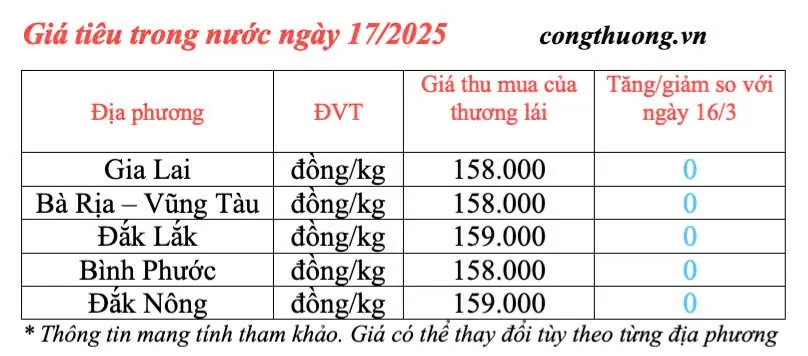 |
| Domestic pepper prices updated on the morning of March 17, 2025. |
On the morning of February 17th, domestic pepper prices remained stable, fluctuating between 158,000 and 159,000 VND/kg. Overall for the past week, domestic pepper prices decreased by 1,000 to 3,000 VND/kg compared to the closing price of the previous week.
The Vietnam Pepper and Spice Association said that global consumption demand remains stable, especially in the US and Europe. With low inventories and reduced output, pepper prices are forecast to remain high in the coming time.
According to experts, although there is a decrease of 1,000 - 3,000 VND/kg compared to the closing price of last week, with the current pepper price, farmers not only have high income but also have the motivation to invest and take better care of their pepper gardens, contributing to improving economic efficiency and stabilizing their lives.
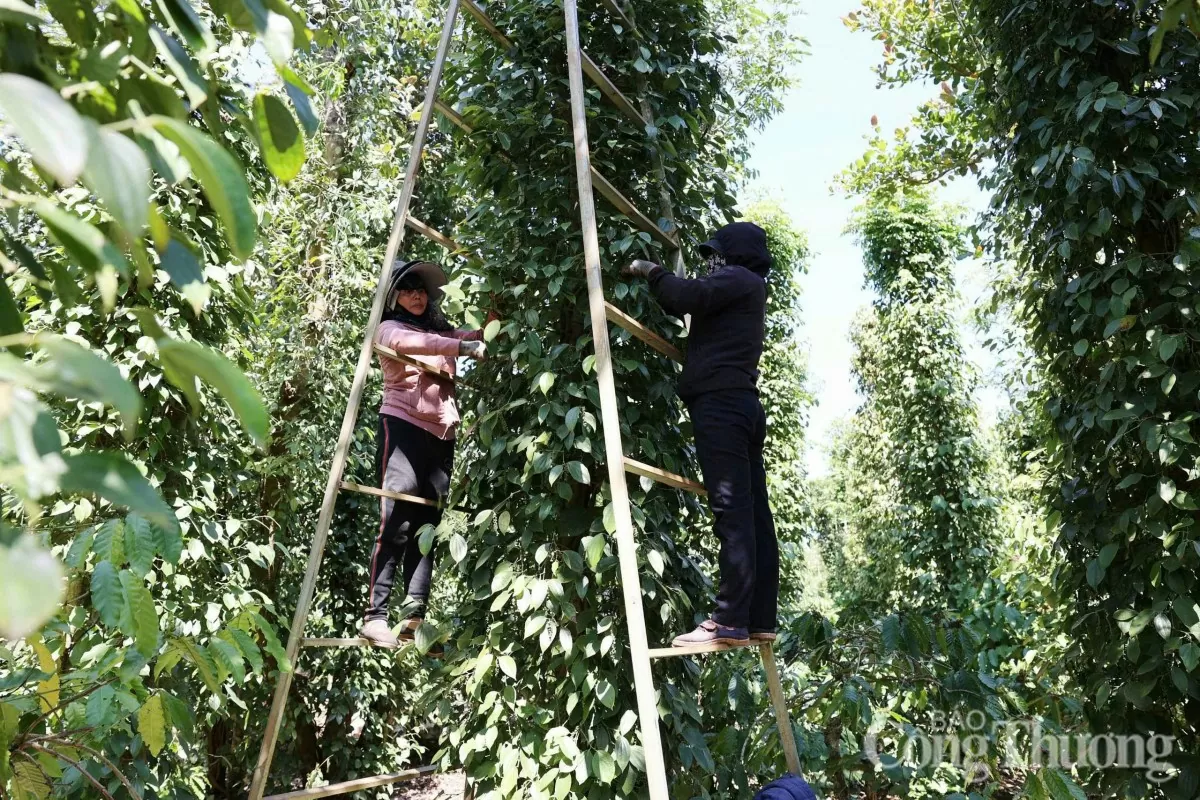 |
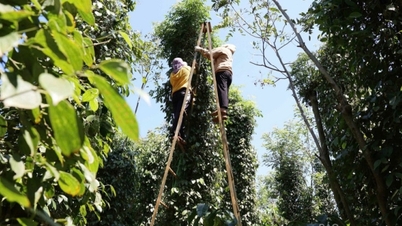
| Farmers in Dak Nong province harvest pepper. |
Currently, it is the peak pepper harvesting season in key producing regions. However, high pepper prices encourage farmers to stockpile their produce, reducing the pressure to sell immediately during the harvest season, leading to a shortage of raw materials. This forces processing businesses to use their existing inventory to fulfill signed export contracts, putting significant pressure on their operations, especially when farm-gate prices sometimes exceed export prices.
Furthermore, agricultural experts advise farmers not to expand pepper cultivation areas spontaneously due to high prices, to avoid oversupply like in previous years. Instead, sustainable pepper cultivation is a crucial solution, in which applying organic farming models and reducing the use of pesticides will help improve product quality and stabilize the market.
 |
| Pepper gardens grown in Dak Nong province |
World pepper prices remain stable today.
The latest update on world pepper prices from the International Pepper Association (IPC) at 4:30 AM on March 17, 2025 is as follows: the market continues to remain stable, trading sideways compared to the previous session.
Specifically, IPC listed the price of Indonesian Lampung black pepper at 7,265 USD/ton; Muntok white pepper is currently purchased at 10,252 USD/ton.
The Malaysian pepper market remained stable compared to the last trading session, with Malaysian ASTA black pepper currently being purchased at US$9,800/ton and ASTA white pepper at US$12,300/ton.
Pepper prices in Brazil have fluctuated little and are currently anchored at a fairly high level, with the current purchase price reaching 6,900 USD/ton.
The Vietnamese pepper export market is stable and experiencing a slight decline. Specifically, the export price of Vietnamese black pepper is currently at US$7,000/ton for the 500 g/l variety; US$7,200/ton for the 550 g/l variety; and US$10,000/ton for white pepper.
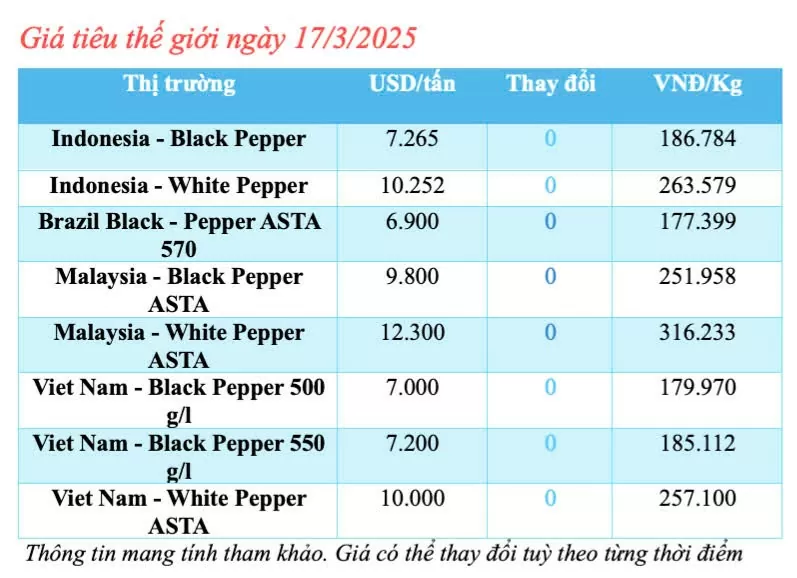 |
| World pepper price update, morning of March 17, 2025 |
According to data from the General Department of Customs, Vietnam is the main supplier of pepper to the US, reaching 75,602 tons, accounting for 77.2% and increasing 41.8% compared to the previous year. Followed by the following countries: India: 7,750 tons, accounting for 7.9% of the market share; Indonesia: 7,708 tons, accounting for 7.9% of the market share; Brazil: 3,704 tons, accounting for 3.8% of the market share.
Source: https://congthuong.vn/gia-tieu-hom-nay-1732025-trong-nuoc-neo-muc-cao-378542.html



























![[Video] The craft of making Dong Ho folk paintings has been inscribed by UNESCO on the List of Crafts in Need of Urgent Safeguarding.](https://vphoto.vietnam.vn/thumb/402x226/vietnam/resource/IMAGE/2025/12/10/1765350246533_tranh-dong-ho-734-jpg.webp)





















































Comment (0)