

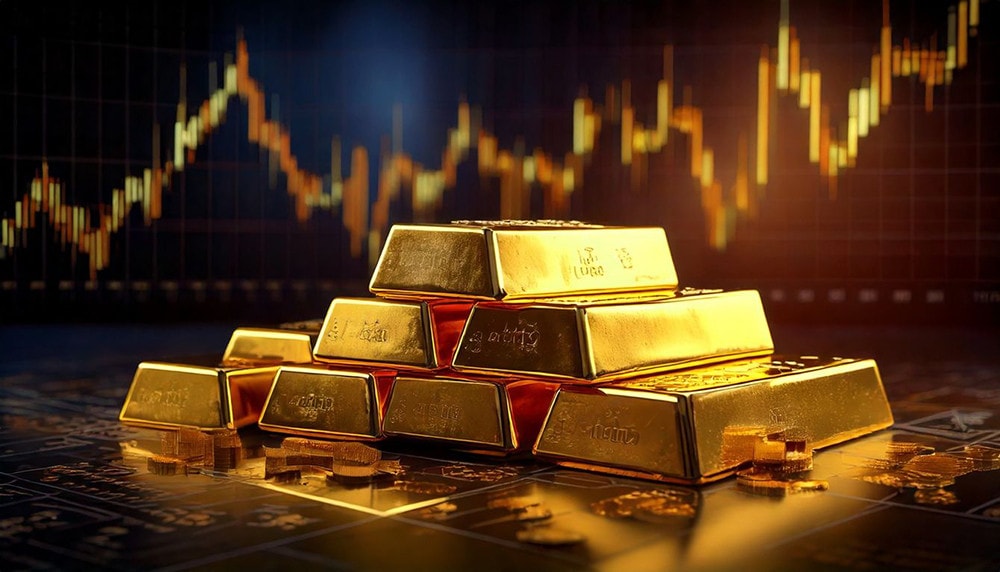
According to Ole Hansen, Head of Commodity Strategy at Saxo Bank, gold prices have risen 27% since the beginning of the year, reaching the target of $3,300 per ounce in 2025, faster than many experts had previously predicted.
An analysis report from Saxo Bank points to several factors driving gold's continued upward trend.
Fed interest rates
Currently, investors are closely monitoring the Fed's interest rate policy. The market expects the agency to cut interest rates by 75 to 100 basis points before the end of 2025, reflecting a trend toward easing monetary policy to support economic growth.
In this context, falling interest rates become a strong supporting factor for gold. When interest rates are low, the opportunity cost of holding non-yielding assets like gold decreases, making gold more attractive to investors and thus supporting its price.
Gold ETF trading
Demand for investment in gold ETFs is trending upwards, becoming one of the main drivers of gold prices this year. To date, the total amount of gold held by ETFs has reached 2,773 tons, an increase of 269 tons compared to the same period in May 2024. However, this figure is still significantly lower than the historical peak of 3,453 tons recorded in 2020.
One key factor attracting investors to ETFs is the cost of holding non-yielding assets like gold. The prospect of lower holding costs, coupled with concerns about an economic recession, is driving demand for gold investments.
According to expert George Milling-Stanley, gold ETFs will continue to be a major driver of investment demand for the remainder of 2025.
Inflation is rising in the US.
Gold has long been considered an effective hedge against inflation. When inflationary pressures increase, investors often shift their funds to gold to preserve the value of their assets.
Recently, real yields on the US Treasury bond curve have been steadily declining, reflecting growing concerns about future inflation.
As inflation expectations rise, the real yields (inflation-adjusted interest rates) of fixed-income assets—such as bonds—will fall, thereby increasing the relative attractiveness of gold.
Geopolitical risks
Global instability has always tended to drive investors to seek safe-haven assets like gold. When geopolitical tensions escalate, such as armed conflict, war, or diplomatic instability, the demand for safety in gold typically increases, thereby driving up its price.
Furthermore, trade wars, particularly the ongoing trade tensions between the US and China, are increasing risks to global economic growth. This further reinforces the role of gold as a "safe haven" for international capital flows.
Central bank needs
More and more central banks around the world are striving to diversify their foreign exchange reserves, reduce their dependence on the US dollar, and shift towards holding gold as a neutral, long-term stable reserve asset.
Countries such as China, India, Türkiye, and Russia are leading this trend. Over the past three years, global central banks have consistently purchased more than 1,000 tonnes of gold annually – a record high in decades.
Analysts believe that, amidst geopolitical instability and rising currency risks, the trend of central banks accumulating gold is likely to continue into 2025. This will provide further solid support for gold prices in the international market.
VN (according to Vietnamnet)Source: https://baohaiduong.vn/gia-vang-dao-chieu-lien-tuc-thoi-gian-toi-thang-hoa-hay-tut-doc-410219.html


























































































Comment (0)