Proactively address the issue.
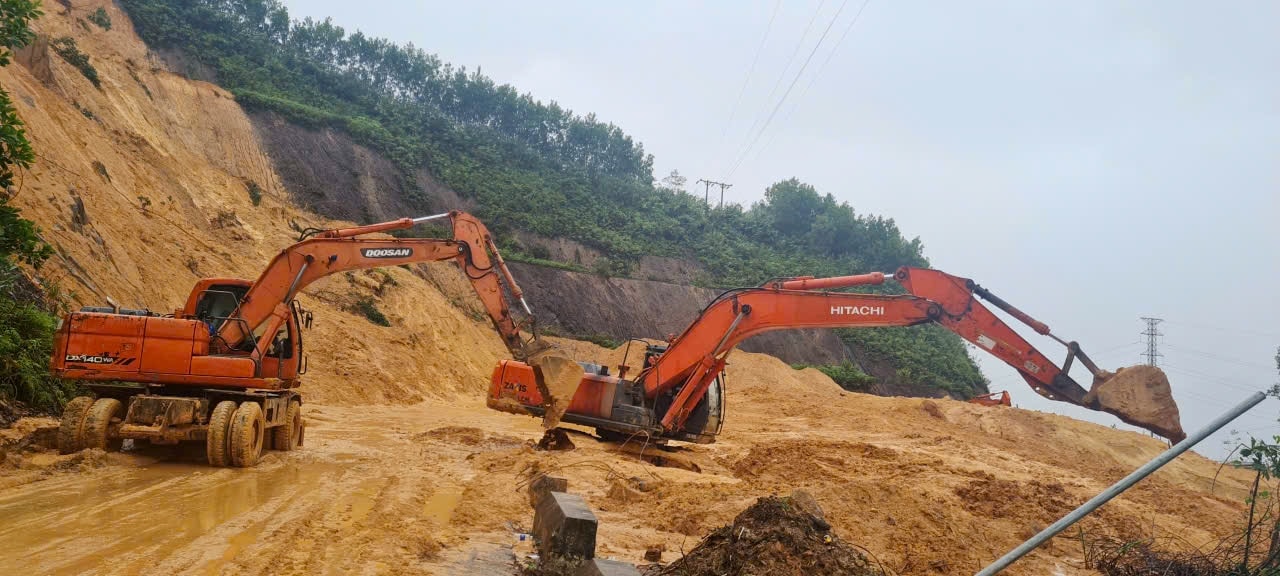
Due to the impact of Typhoon No. 12 and heavy rains from October 21st to the present, many national and provincial roads in Da Nang city have suffered severe damage to their structure, landslides, and flooding, causing traffic congestion. According to Nguyen Ha Nam, Director of the Department of Construction, national highways QL40B, QL24C, QL14D, QL14E, QL14G, QL14B, QL14H, and provincial roads DT601, DT615, and DT606, which are under the department's management, have been damaged by floods, resulting in landslides, cracks, and road breaks. Access roads to bridges have also been damaged, and in some cases, plans for new construction are being considered, such as the Ong Hoi bridge at kilometer 41+656 on provincial road DT615 (Viet An commune).
Taking a proactive approach, management and maintenance units immediately deployed measures to respond to and mitigate the consequences of natural disasters and address traffic congestion.
However, the heavy rains have created a complex situation, with many areas still impassable; landslides are constantly recurring and new ones are emerging. As of the morning of November 4th, many flooded areas have yet to be inspected, and the number of damages is expected to continue to rise.
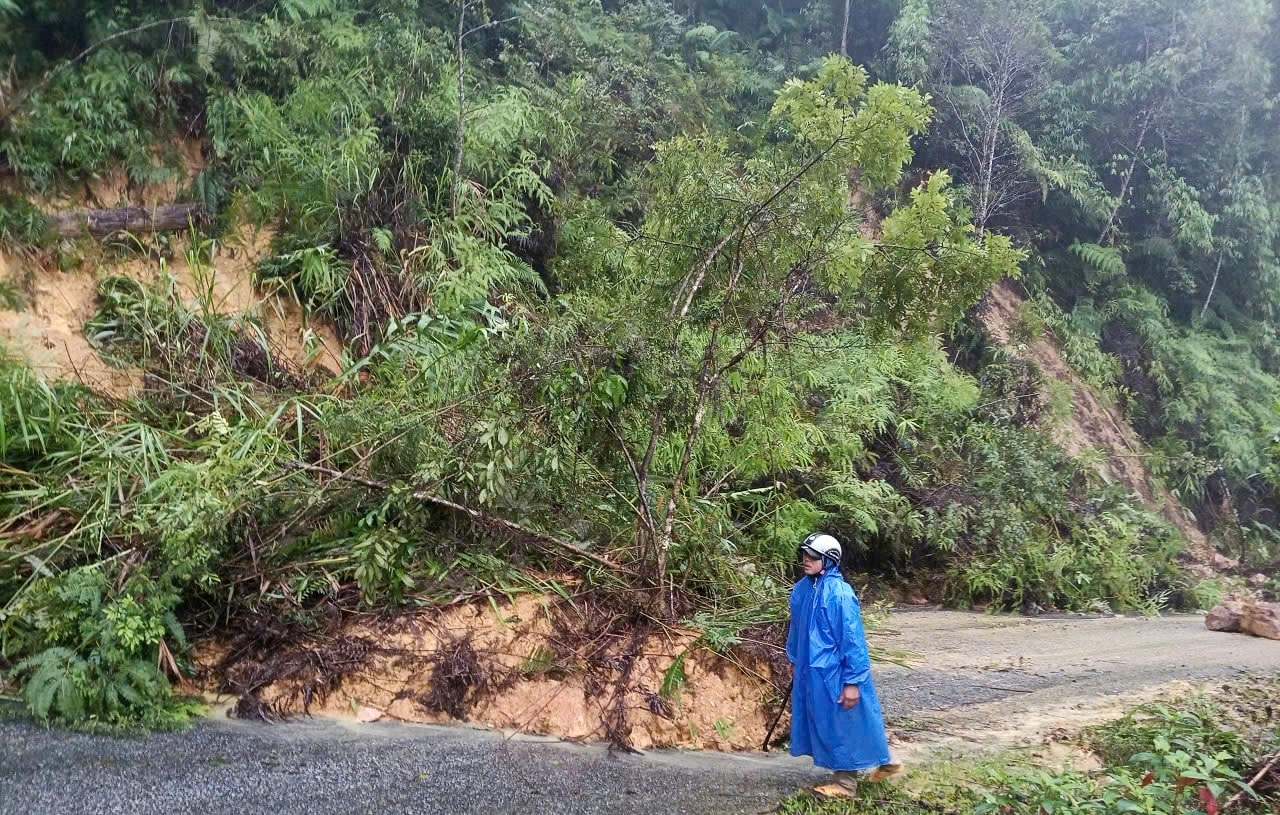
Within Da Nang's jurisdiction, the routes managed by Road Management Area III include: the Ho Chi Minh Highway (Western branch) with traffic congestion at 6 locations; the Truong Son East Highway with 10 landslide points still closed; and the La Son - Hoa Lien Expressway with 2 problematic points, with one lane expected to be open to traffic by the afternoon of November 7th.


According to Mr. Tran Ngoc Thanh, Deputy Director of the Department of Construction, the "four on-the-spot" principle for repairing damage and protecting infrastructure and transportation structures was implemented flexibly during the recent floods. Management units mobilized maximum manpower, vehicles, and materials to promptly repair landslides and damaged areas, aiming to restore the "lifeline" to full service as quickly as possible to support rescue and relief efforts.
Directing the remediation work at the construction site, Mr. Nguyen Van Sy, Deputy General Director of Quang Nam Transportation Construction Joint Stock Company, shared that before Typhoon No. 12 struck, the Department of Construction and the unit had inspected and reviewed vulnerable points prone to landslides, and re-examined the locations for gathering machinery and equipment. In the face of heavy, unusual rainfall, the "four on-the-spot" principle was maximized. Localities through which the road passes actively coordinated in responding to and assisting in handling and mitigating the consequences of the natural disaster.
Efforts to overcome difficulties
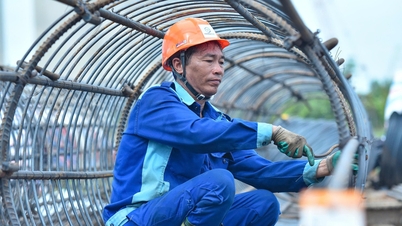
Repairing and restoring traffic flow after the floods has been fraught with difficulties. For example, at some locations, just as a lane has been cleared, the task force moves to another spot, only for landslides to recur. Workers and road patrols have to be deployed in multiple directions, manning checkpoints and guarding areas to prevent people and vehicles from passing through unsafe areas.
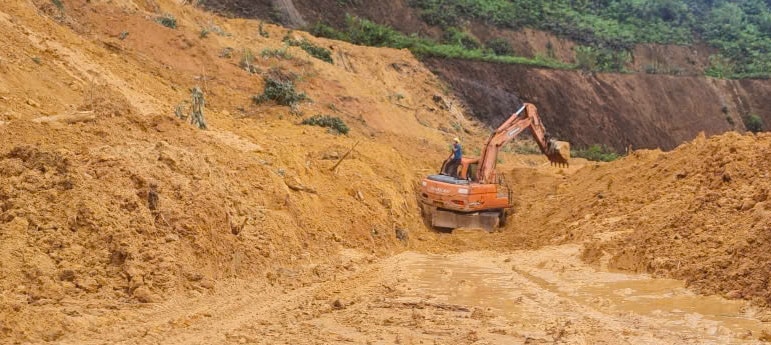
Mr. Nguyen Van Quang, Deputy Director of Dong Phong Consulting and Construction Joint Stock Company, said that the company is assigned to manage and regularly maintain the DT606, DT608, DT609, DT609C, DT610B and QL14G routes. For many days, the company has focused its efforts on addressing the problems amidst unfavorable weather conditions due to prolonged heavy rain, which has reduced visibility, made the road surface slippery, and caused waterlogged soil and rocks, hindering construction and machinery movement.
While on duty, workers face a high risk of accidents due to the possibility of recurring landslides, especially at locations with weak embankments and eroded slopes, and unstable roadbeds. Mechanical equipment is easily bogged down in mud, soil, and wet rocks, making excavation difficult; coordination and communication between teams are hampered by heavy rain, resulting in frequent loss of phone signal.
According to Mr. Quang, the pressure stems from having to focus on repairing landslides while simultaneously maintaining temporary road access and ensuring the safety of road users. Working in prolonged rain, wind, and damp conditions causes fatigue, reduced productivity, and a greater tendency to lose focus during construction. Being stationed at landslide sites means they cannot return to their temporary accommodations for personal hygiene for an entire week.


Nguyen Hong Anh (Quang Nam Road Management and Construction Joint Stock Company), in charge of patrolling the section from km 54+580 to km 85+850 of National Highway 40B, said that sometimes, while clearing the road for people, rocks and soil would slide right above their heads, posing a great danger. To prevent sudden landslides, the unit assigns personnel to be on guard, and if they see any unusual activity, they will shout to the drivers to retreat from the clearing area. "Whether it's noon or night, the team quickly eats a meal and then continues working. Seeing our people waiting anxiously, we are very worried, so we can't rest," Mr. Anh said.
Mr. Nguyen Tuan Anh, General Director of Quang Nam Transportation Construction Joint Stock Company, said that while the funding for repairing damage and ensuring traffic flow due to natural disasters is still unknown, the company, with its responsibility, is advancing resources to reopen the "lifeline" of the economy and support rescue efforts. The company constantly encourages its members to continue striving despite difficulties and hardships to reopen the routes as quickly as possible.
Source: https://baodanang.vn/gian-nan-thong-duong-3309203.html