

At around 1:00 p.m. on November 24, 2025, Nguyen Hoang Long (class 12C, Ha Tinh Vocational College) was attacked by a group of young men who stormed into the school, used wooden sticks to beat him hard, and kicked him repeatedly in the head, causing him to suffer an injury to his left eye and many scratches on his body. Not only did he record the clip, one of the participants in the assault also posted the clip on social networking sites, considering it an achievement to brag about and challenge the law.
Ms. Nguyen Thi Hoa - mother of Nguyen Hoang Long (Thien Cam commune) shared: "In addition to the injuries the subjects caused to the child, what makes me even more upset is that they also posted the video on social networks with a very defiant and fearless attitude. I think that such actions reflect serious moral degradation, and need to have strong educational measures."
According to Lawyer Phan Van Chieu (Ha Chau Law Firm, Thanh Sen Ward), the act of recording a clip of beating a friend and posting it on social media can be subject to an administrative fine of 5-10 million VND according to Decree No. 14/2022/ND-CP amending Decree No. 15/2020/ND-CP. In addition, this act also shows the moral degradation of the violating individual.
Previously, the case of a 13-year-old girl in Tay Ho ward, Hanoi , who left home after dinner and lost contact due to listening to strangers on social networks (July 2025) also sounded a warning about the limits of children on social networks. The girl was fortunately found in Ho Chi Minh City after four days of missing thanks to the enthusiastic participation of the online community, however, many fathers and mothers fell into a state of panic because that hidden disaster could strike their family at any time.

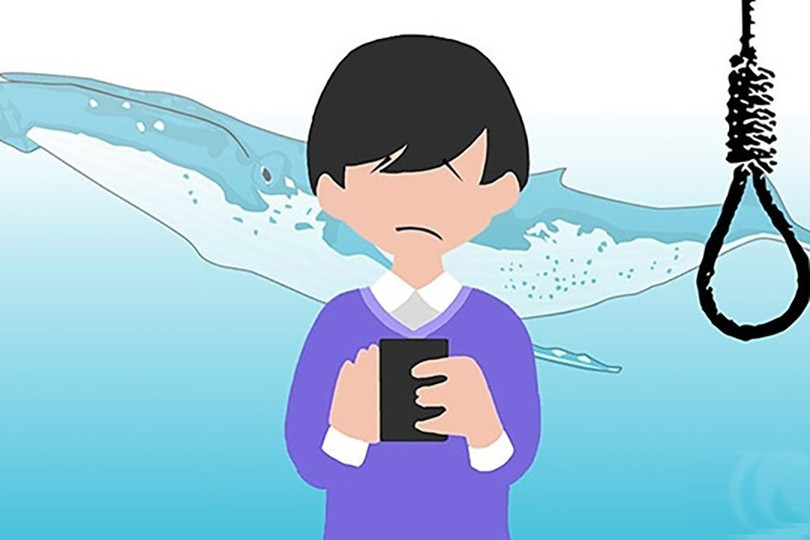
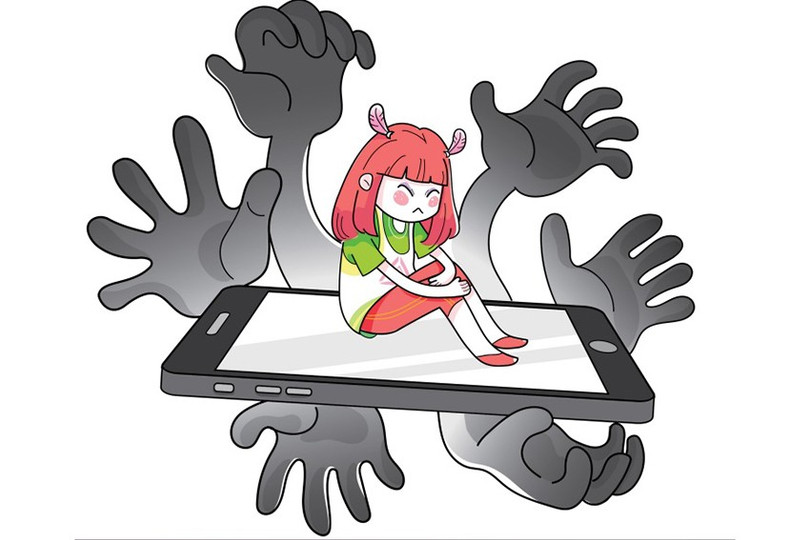
The two incidents mentioned above are just the tip of the iceberg of the negative impacts of social networks on children. The risks do not stop at school violence or online fraud, but also include many potential dangers. Typically, it encourages children to perform harmful challenges such as "disappear for 24 hours"; "Momo Challenge" or "Blue Whale Challenge" game on social networks... These behaviors can lead to serious and unpredictable consequences for children's health and lives.
Major Dang The Long - Cyber Security and High-Tech Crime Prevention Department, Ha Tinh Provincial Police said: "Social networks are secretly influencing and shaping children's interactions, behaviors and perceptions. Frequent exposure to the virtual world and violent acts will cause children to have a distorted view of the world around them. Children will also easily become victims of bad guys."
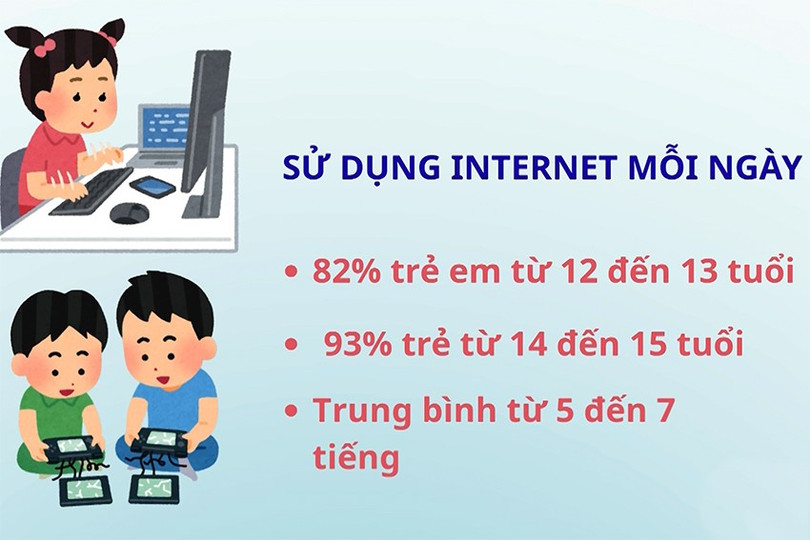
According to statistics, Vietnam is one of the leading countries in the world in terms of the rate of Internet and social network users. Currently, there are more than 72 million social network users, accounting for about 73% of the population. Of these, 7.1% are between the ages of 13 and 17. This is a particularly important age in the formation of children's personality and awareness. Excessive use of the Internet and social networks can cause negative impacts on health and psychological risks such as anxiety disorders, depression, etc.
In Vietnam, there are many regulations to protect children in cyberspace such as: Law on Children, Law on Cyber Security. Most recently, Decree No. 147/2024 of the Government on the management of provision and use of internet services and information on the internet. However, in reality, the sanctions are not strong enough. For example, requiring children under 16 years old to use social networks must have registration from their parents or guardians, but there are no age limits or access time regulations.
Meanwhile, many countries around the world have specific regulations, such as in Australia, the ban on children under 16 using social networks will officially take effect from December 10, 2025, including platforms Twitch, Facebook, Instagram, Kick, Reddit, Snapchat, Threads, TikTok, X and YouTube. In the Netherlands, children over 12 years old are advised to use computer and phone screens for no more than 3 hours/day; Malaysia plans to block all accounts under 16 years old and apply electronic identity verification from 2026...
The drastic intervention of some countries in the world shows that social networks with negative impacts on children's awareness and behavior have become an alarming problem that needs to be controlled. In Vietnam, this is also an issue that receives special attention from experts as well as parents.
At the discussion session of the 10th Session of the 15th National Assembly on the socio-economic situation in 2025 on October 30, 2025, delegate Chau Quynh Giao (An Giang province) expressed concern: "Why don't we regulate the age and limits on social network access like the laws of some countries have stipulated?"
Sharing the same opinion, Mr. Pham Van Quyet (Thanh Sen ward) said: "Students now have TikTok or Zalo accounts and can access any content like adults. Especially with bad and toxic content, if not controlled, it will affect the way they perceive the world around them. Therefore, limiting age, time, and content is necessary."
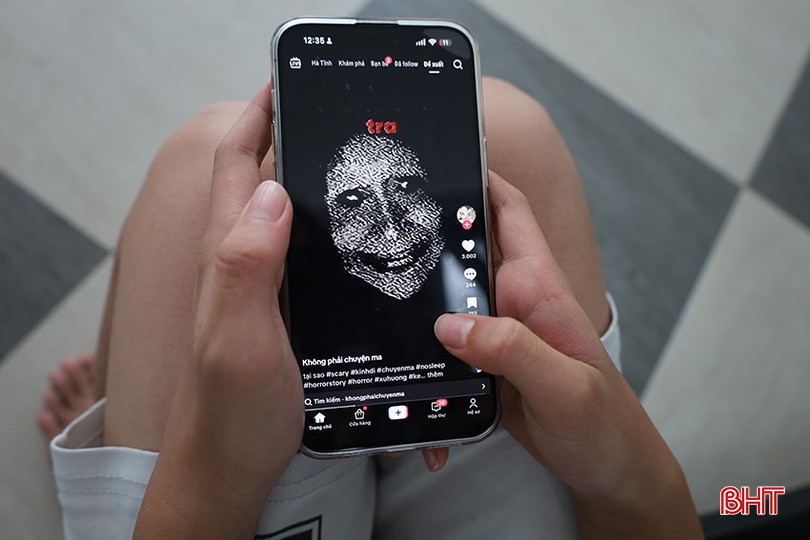
In the digital age, social networks bring many benefits, but also create an invisible spiral that makes many students dependent, reducing their physical and mental health. And if children often search for negative content, the social network algorithm will continuously push similar content to their personal pages, making them vulnerable to harmful information. This can lead to impulsive personalities, difficulty distinguishing right from wrong, and an inability to protect themselves from negative behaviors.
According to Master of Psychology Nguyen Thi Huong Giang (lecturer at Ha Tinh University), Vietnam needs to refer to the practices of some countries, combine with research to come up with regulations suitable to the country's circumstances and the development characteristics of Vietnamese children.
In the context of the rapid spread of harmful content and the consequences of early exposure to social networks, the solution of “limits”, that is, limiting the age and time of social network access for children, is necessary. By setting clear boundaries, families and schools can create a safer environment, helping children develop both emotionally and cognitively. This is also an important step to ensure a safe future for the younger generation.
Source: https://baohatinh.vn/gioi-han-nao-cho-tre-tren-mang-xa-hoi-post300658.html




![[Photo] National Assembly Chairman Tran Thanh Man attends the VinFuture 2025 Award Ceremony](/_next/image?url=https%3A%2F%2Fvphoto.vietnam.vn%2Fthumb%2F1200x675%2Fvietnam%2Fresource%2FIMAGE%2F2025%2F12%2F05%2F1764951162416_2628509768338816493-6995-jpg.webp&w=3840&q=75)
![[Photo] 60th Anniversary of the Founding of the Vietnam Association of Photographic Artists](/_next/image?url=https%3A%2F%2Fvphoto.vietnam.vn%2Fthumb%2F1200x675%2Fvietnam%2Fresource%2FIMAGE%2F2025%2F12%2F05%2F1764935864512_a1-bnd-0841-9740-jpg.webp&w=3840&q=75)





























































































Comment (0)