

This is an activity within the framework of the FEF-R Patrimoine project, sponsored by the French Ministry for Europe and Foreign Affairs (through the French Embassy and the French Institute in Vietnam - IFV), in coordination with the University of Social Sciences and Humanities - Vietnam National University, Hanoi (USSH - VNU), the French School of the Far East (EFEO) and the Francophone University Organization (AUF).
This initiative aims to introduce and promote the value of the capital's tangible, intangible and digital heritage through four experimental heritage tourism itineraries, an interactive map system, the H-Heritage application and a QR code system at many relic sites in central Hanoi.
The chosen method is a combination of field survey, document analysis, training and application of mapping technology. From more than 100 relics surveyed in Hanoi , the research team selected 28 typical relics, divided into four heritage journeys associated with four traditional beliefs of the Vietnamese people: Tu Tran, Mau Temple, Dinh To Giao and Hanoi Pagoda.
The program "Hanoi Heritage Tourism Journey" was formed with the desire to identify, research, connect and introduce those heritages to the public using modern methods, combining academic research, student training and digital technology application.
Journey 1 “Thang Long Tu Tran” (Four Guardian Gods of the Citadel) will explore four sacred temples: Bach Ma, Voi Phuc, Quan Thanh and Kim Lien, guarding the four directions East, West, South and North of Thang Long Citadel. The journey honors the sacred cultural identity and unique spiritual structure of Hanoi, which not only needs human protection but also needs the gods to ensure its well-being.
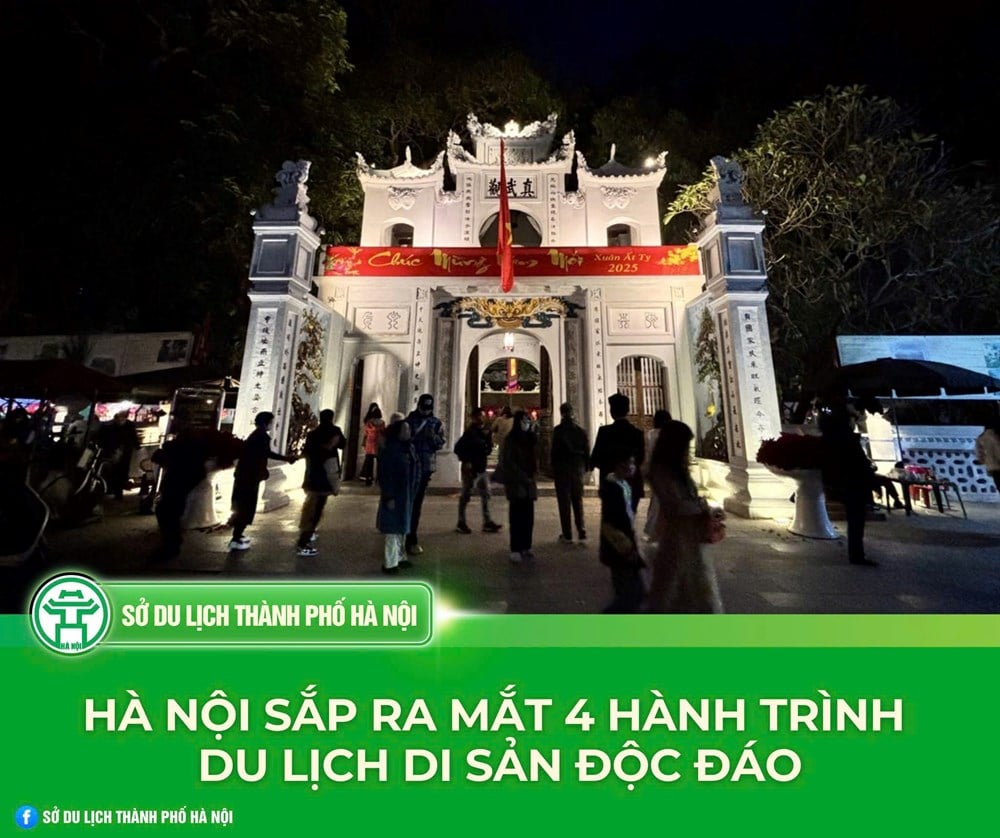
Journey 2 “Mother Goddess Temples” will connect eight temples, shrines of Mother Goddess Lieu Hanh and the Holy Mothers, representing the Three Palaces belief - an intangible cultural heritage recognized by UNESCO. This is a unique belief of the Vietnamese people, combining rituals, music, dances and the spirit of honoring the Mother. This journey will explore the temples: Dong Ha, Vu Thach, Ba Kieu, Xuan Yen, Dau Temple, Vong Tien, Tay Ho Palace, and Long Bien Station incense tree.
Journey 3 “Communal Communal Houses” is a journey through the communal houses in Hanoi’s Old Quarter, honoring the founders of traditional crafts. Each communal house is a place to preserve the traces of ancestors who contributed to creating the quintessence of crafts, showing the enduring creativity of the ancient Thang Long land.
This journey will explore the ancestral temples of Hanoi such as: Kim Ngan (ancestor of goldsmithing), Dong Lac (ancestor of ancient yem), Pha Truc Lam (ancestor of leather shoes), Ha Vi (ancestor of lacquering), Phuc Hau (ancestor of mirror coating), Tu Thi (ancestor of embroidery), Lo Ren (ancestor of blacksmithing), Ngu Xa (ancestor of bronze casting).
Journey 4 “Hanoi Pagodas” will explore the pagodas associated with the name of Monk An Thien (Phuc Dien) - one of the representative ancestors of Vietnamese Buddhism. From Bao Thien Pagoda, now only in memory, to Lien Tri, Ham Long and Lien Phai… The journey recreates the historical and spiritual flow of Thang Long, where memory, technology and belief meet, telling the story of loss - survival - regeneration and preservation of heritage.
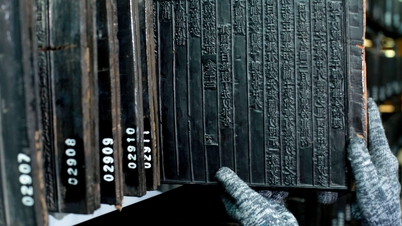
The organizers said that the research work was conducted according to a unified process, including: field survey, photography, collection of steles, translation of Han Nom documents, document lookup, architectural diagram creation, video recording and supplementing historical data.
Each relic is introduced with a complete profile including description, old and new photos, videos, text quotes and reference list. These data are digitized and integrated into the electronic map system, QR code and H-Heritage application, allowing residents, students and tourists to access directly on their smartphones.
This is an important step in bringing heritage knowledge closer to the public, turning visiting, learning and researching heritage into an interactive, flexible and pedagogical experience.
Each journey not only gathers a group of relics, but also tells a linked story, reflecting the spiritual structure and memories of Hanoians past and present. Hanoi is always an attractive destination for tourists because of its natural beauty, a harmony between historical depth and modern life.
By the end of November 2025, Hanoi Capital welcomed 30.94 million visitors, an increase of 22.1% over the same period last year. Of which, international tourists are estimated at 7.09 million, an increase of 25.2% (including 5 million international visitors with accommodation); domestic tourists are estimated at 23.84 million, an increase of 21.3% over the same period in 2024.
Source: https://baovanhoa.vn/du-lich/ha-noi-4-hanh-trinh-kham-pha-di-san-doc-dao-cua-thu-do-185993.html


![[Photo] Cat Ba - Green island paradise](/_next/image?url=https%3A%2F%2Fvphoto.vietnam.vn%2Fthumb%2F1200x675%2Fvietnam%2Fresource%2FIMAGE%2F2025%2F12%2F04%2F1764821844074_ndo_br_1-dcbthienduongxanh638-jpg.webp&w=3840&q=75)









































































Comment (0)