

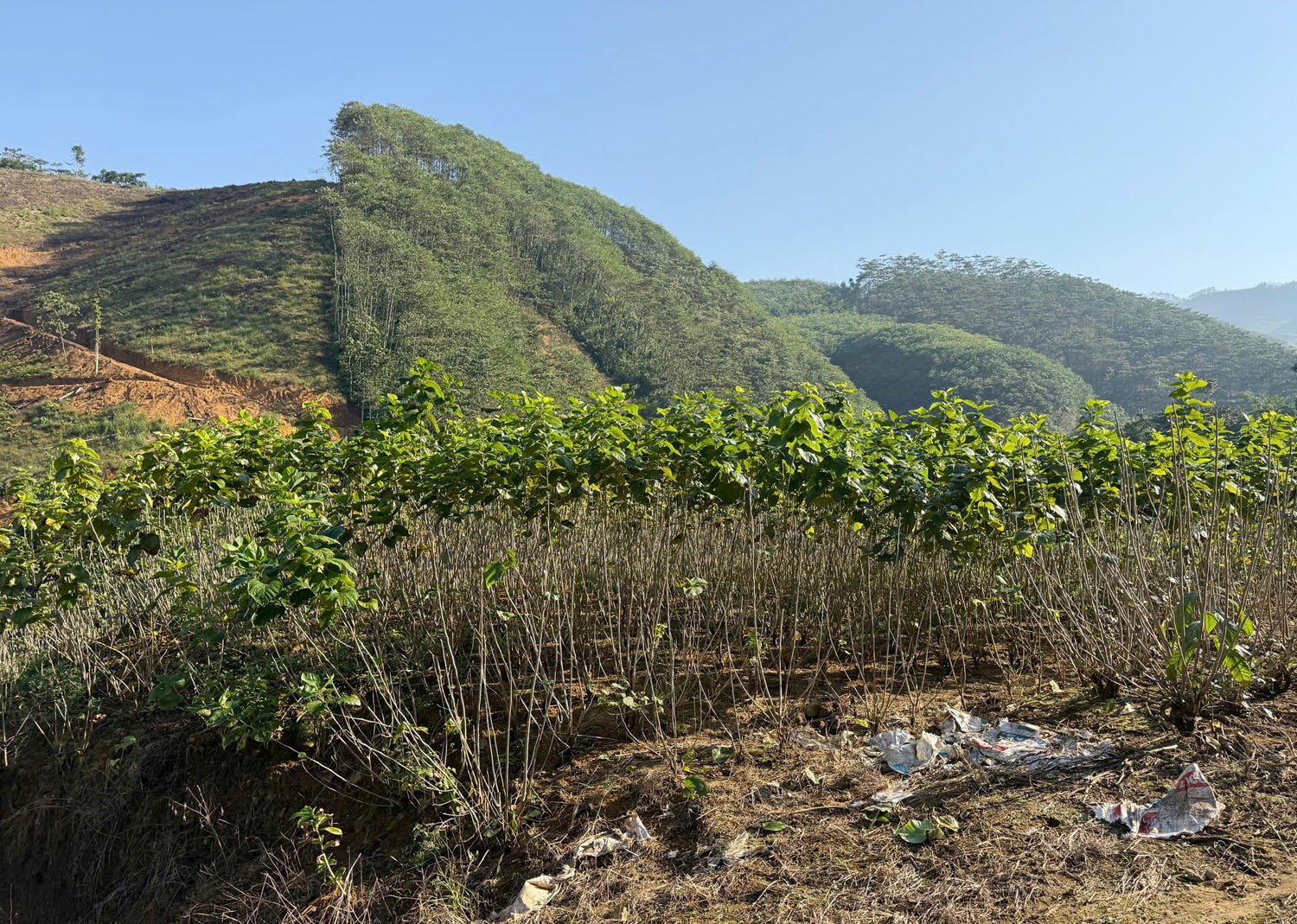
Mulberry trees are grown effectively on hilly land in Bao Ha commune.
Be propagandized and determined to innovate
At the end of 2023, following the commune government's crop conversion orientation, Ms. Nguyen Thi Sinh was supported with 4,000 m² of mulberry seedlings and fertilizer to pilot the silkworm farming model. This is a promising production direction in Bao Ha, but is still quite new to the people of Khoai 3 village.
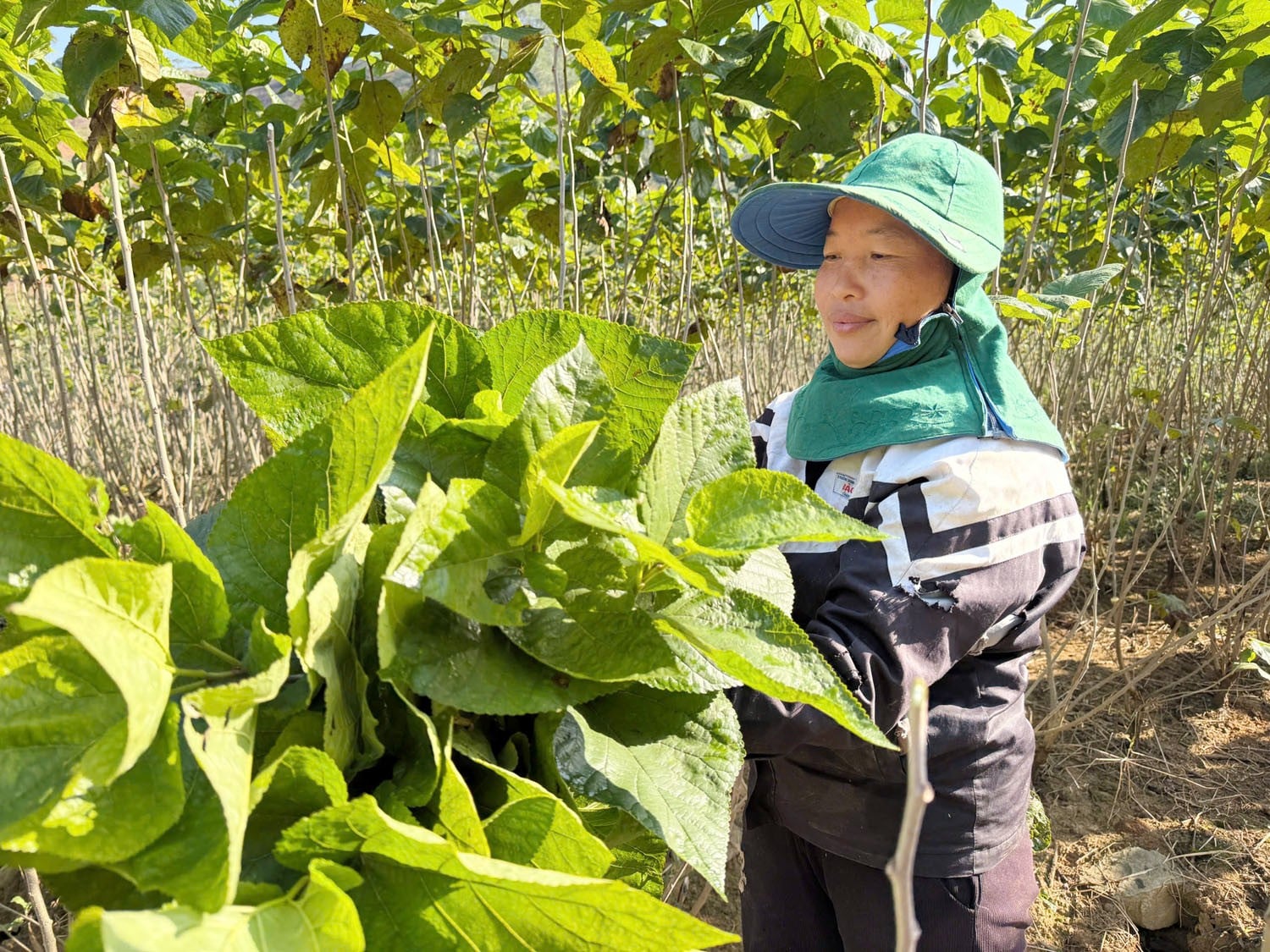
The mulberry tree was planted by Ms. Nguyen Thi Sinh's family on hilly land but it grew very well and had big, beautiful leaves.
At first, Ms. Nguyen Thi Sinh could not help but wonder about the word of mouth in the area: "Raising silkworms means eating standing up", implying the hardship and time-consuming nature of silkworm farming.
She shared: “Before I did it, I felt very worried, I was afraid of the complicated care. But when I started doing it, I found that raising silkworms is not too difficult. The most important thing is to maintain good hygiene so that the silkworms do not get sick and die. Besides, you have to be proactive in the food source, ensuring that the mulberry leaves are always fresh and clean.”
From the first positive results of the farming season, Ms. Sinh boldly borrowed money from the bank to build a corrugated iron house to raise silkworms according to safe procedures; at the same time, she expanded the mulberry growing area to nearly 4 hectares, creating a stable and abundant food source all year round.
High productivity, stable income, opening a way out of poverty
After nearly two years of persistently pursuing the model, Ms. Sinh has mastered the care techniques and proactively sourced mulberry leaves in the garden, helping the silkworm raising process go smoothly. According to her, each breeding cycle lasts only 15 days, with a stable yield of 18-20 kg of cocoons and live silkworms/cycle. With a market price of about 200,000 VND/kg, the model has brought in a fairly stable income.
By raising silkworms all year round, after deducting expenses, Ms. Nguyen Thi Sinh's family earns a profit of about 150 million VND/year, far exceeding the efficiency of previous traditional agricultural models.
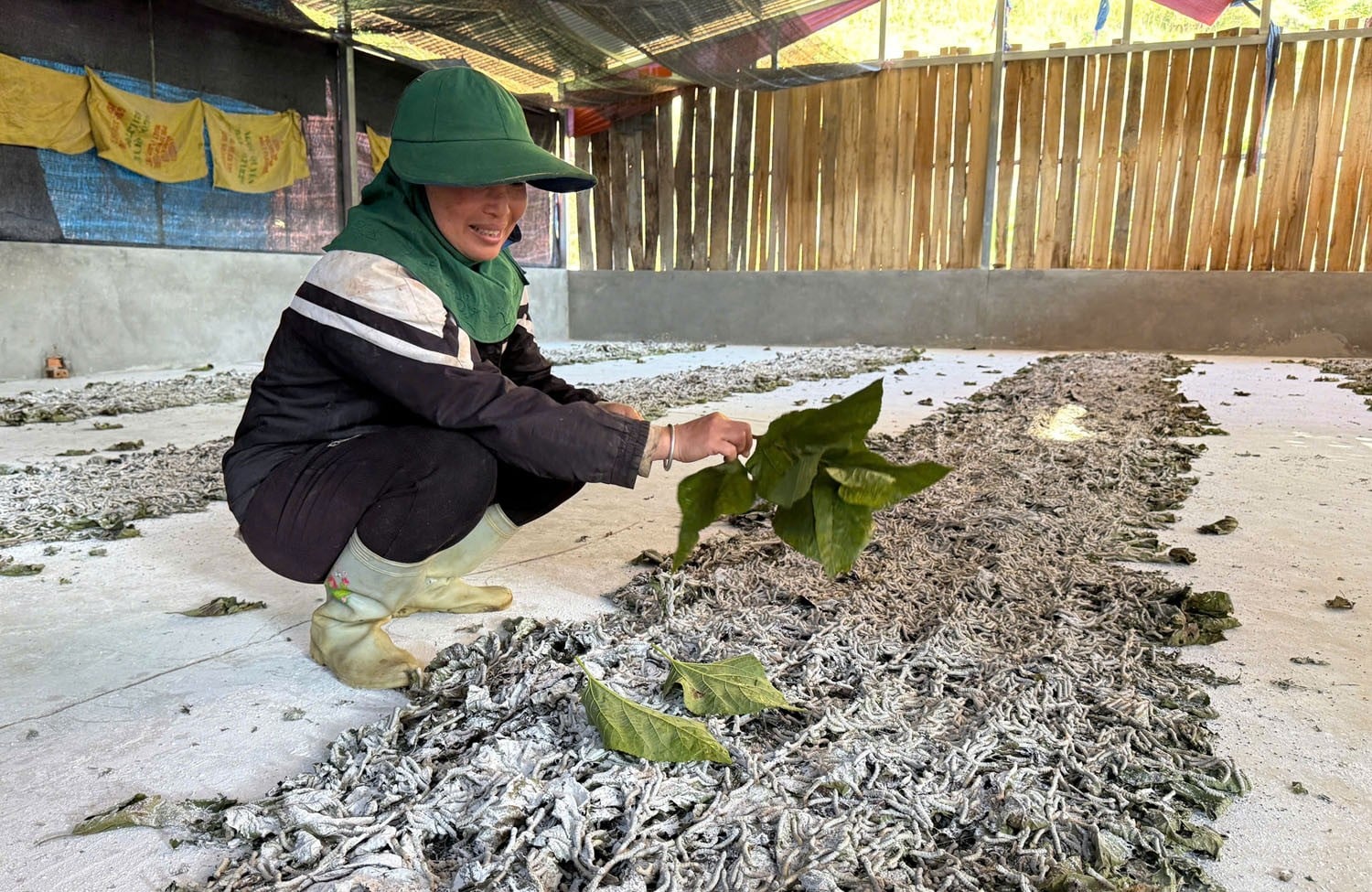
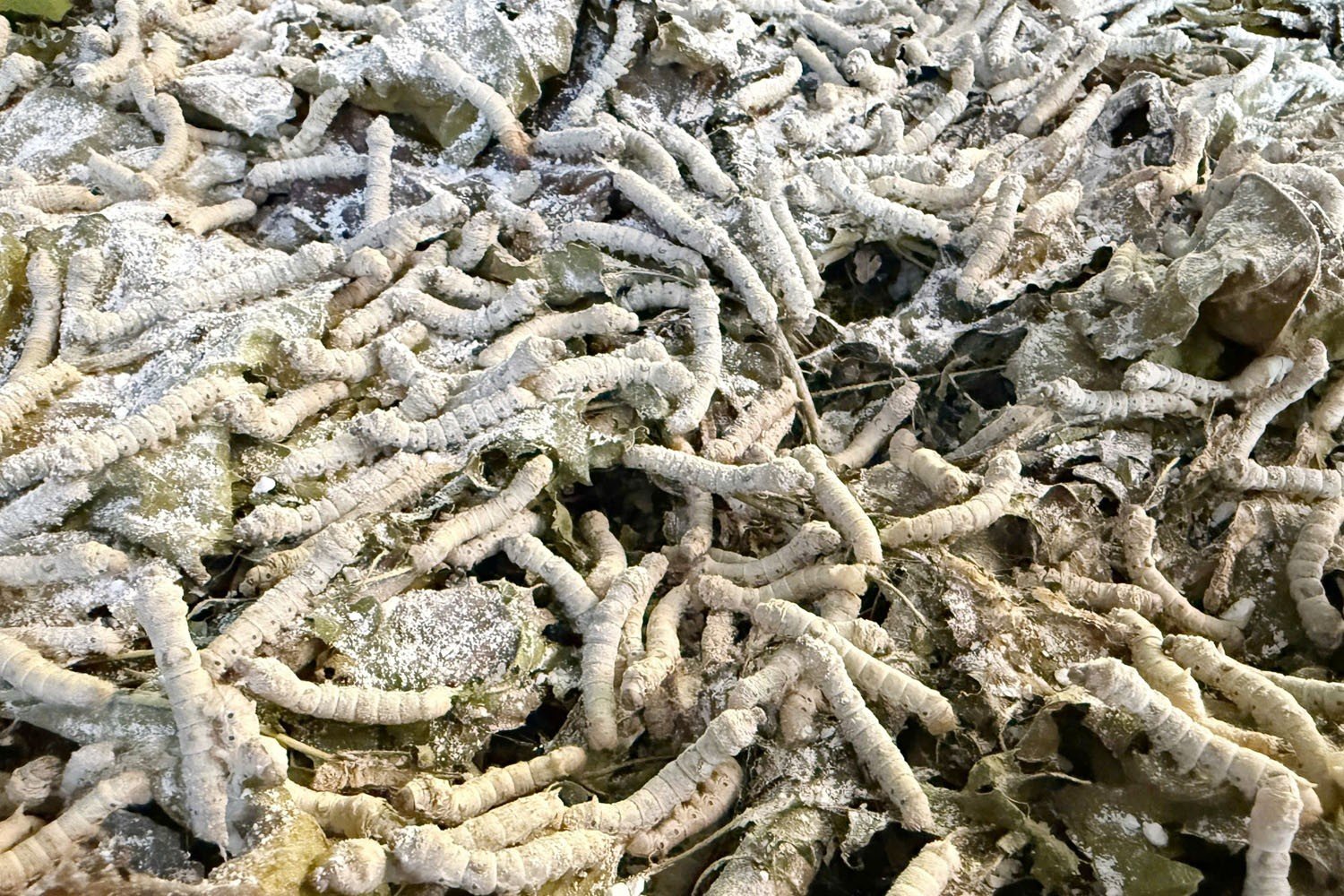
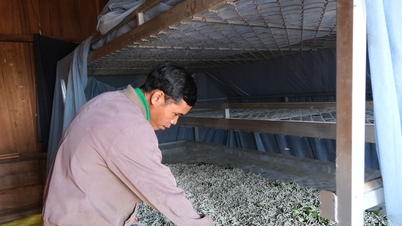
New silkworms of Ms. Nguyen Thi Sinh's family are raised all year round, including winter.
An even greater joy is that the silkworm raising work is currently mainly undertaken by Ms. Nguyen Thi Sinh herself, while her husband and children still have time to participate in other models, increasing the family income. Thanks to the obvious effectiveness, the model has helped Ms. Sinh's family escape poverty, stabilize and become rich, becoming a place of sightseeing and learning for many households in the commune.
Replicating the model, creating new livelihoods for people
According to Ms. Tran Thi Hoai Thu - an agricultural extension officer of Bao Ha commune, said: "We have studied the mulberry growing and silkworm raising model from neighboring communes and found it to be clearly effective, suitable for Bao Ha's production conditions. From there, the commune has promoted and mobilized people to boldly follow. Ms. Sinh's family is one of the first households to implement and bring positive results when growing mulberry on hilly land, creating a strong spreading effect.
Currently, Bao Ha commune is continuing to mobilize people to expand the mulberry growing area on the hill, selecting households with suitable conditions to replicate the model. At the same time, the commune has supported Ms. Sinh's family to participate in the product consumption chain with other communes, helping to stabilize output and limit price risks.
The connection also creates conditions for local people to exchange experiences, support each other in technology, and improve production efficiency.
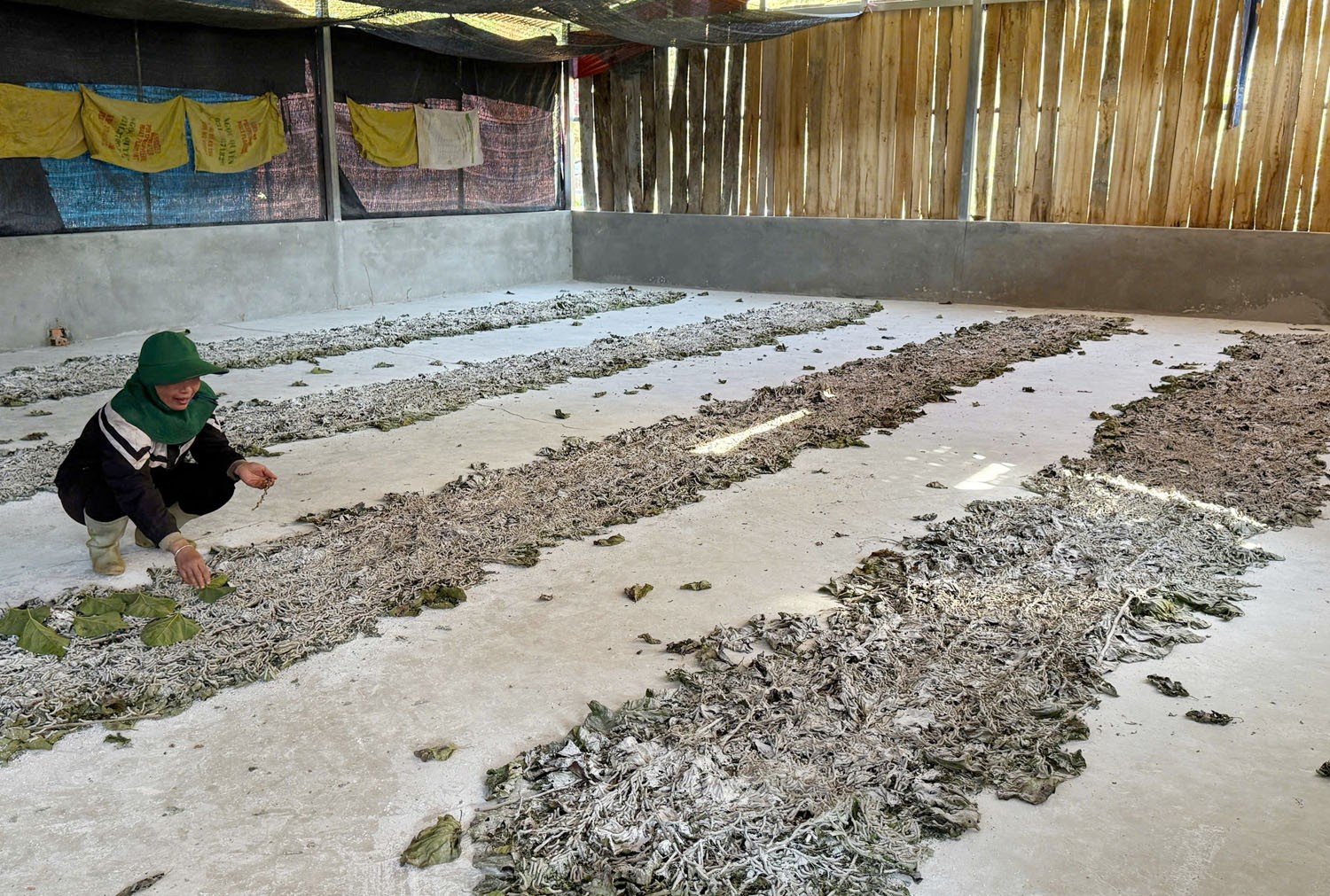
The house is invested to raise silkworms of Ms. Nguyen Thi Sinh's family.
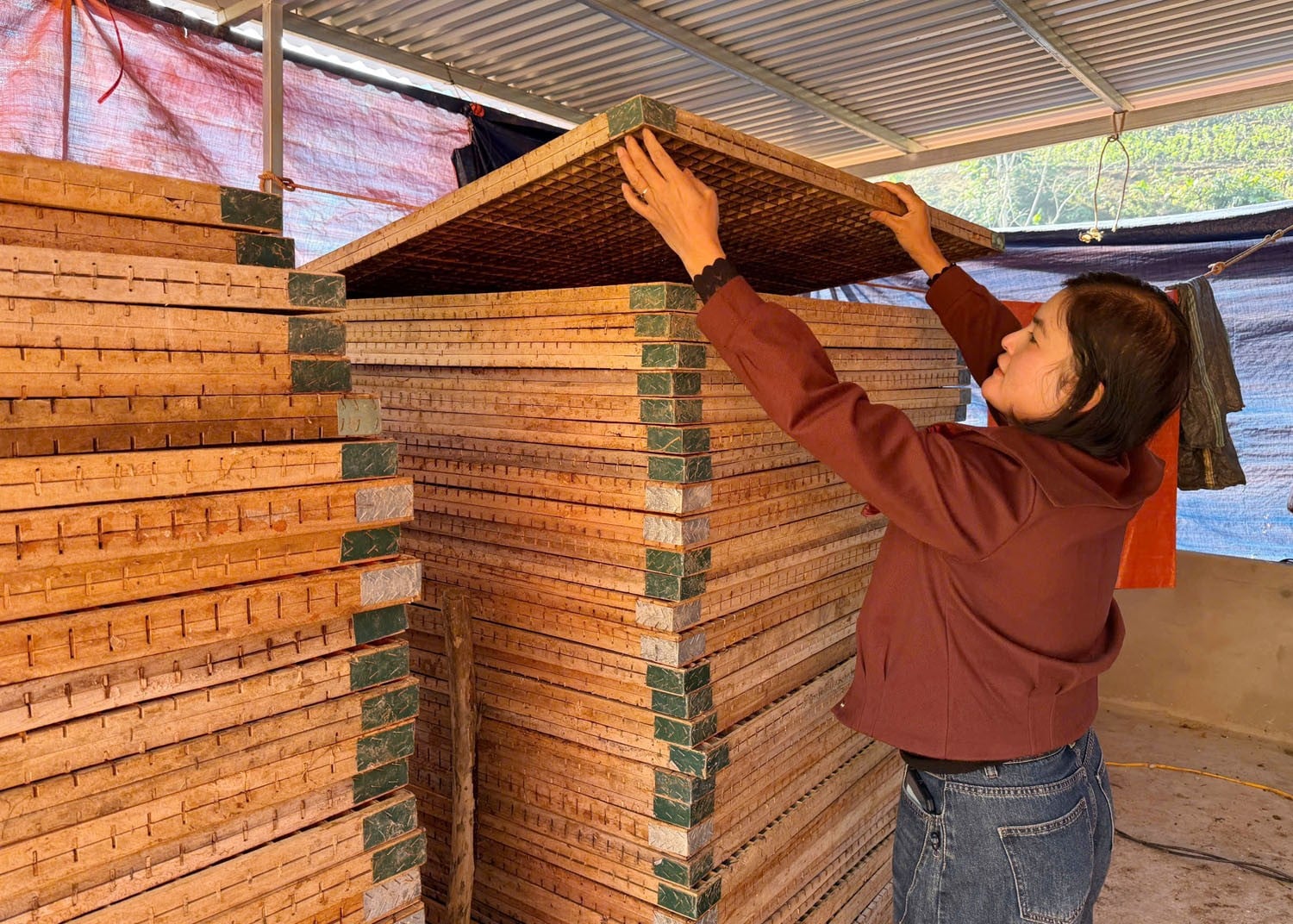
Silkworm cocoon molds are prepared for each rearing cycle.
The successful model of Ms. Nguyen Thi Sinh's family is proof that boldly changing thinking, taking advantage of government support and applying a completely new production model can help rural people escape poverty and become masters of their lives. This is also the direction that Bao Ha commune continues to encourage in order to promote internal strength, increase income and contribute to building a sustainable new countryside.
Source: https://baolaocai.vn/hieu-qua-mo-hinh-trong-dau-nuoi-tam-tren-dat-doi-o-xa-bao-ha-post887978.html

















![[Photo] Parade to celebrate the 50th anniversary of Laos' National Day](/_next/image?url=https%3A%2F%2Fvphoto.vietnam.vn%2Fthumb%2F1200x675%2Fvietnam%2Fresource%2FIMAGE%2F2025%2F12%2F02%2F1764691918289_ndo_br_0-jpg.webp&w=3840&q=75)
![[Photo] Worshiping the Tuyet Son statue - a nearly 400-year-old treasure at Keo Pagoda](/_next/image?url=https%3A%2F%2Fvphoto.vietnam.vn%2Fthumb%2F1200x675%2Fvietnam%2Fresource%2FIMAGE%2F2025%2F12%2F02%2F1764679323086_ndo_br_tempimageomw0hi-4884-jpg.webp&w=3840&q=75)




















































Comment (0)