

 |
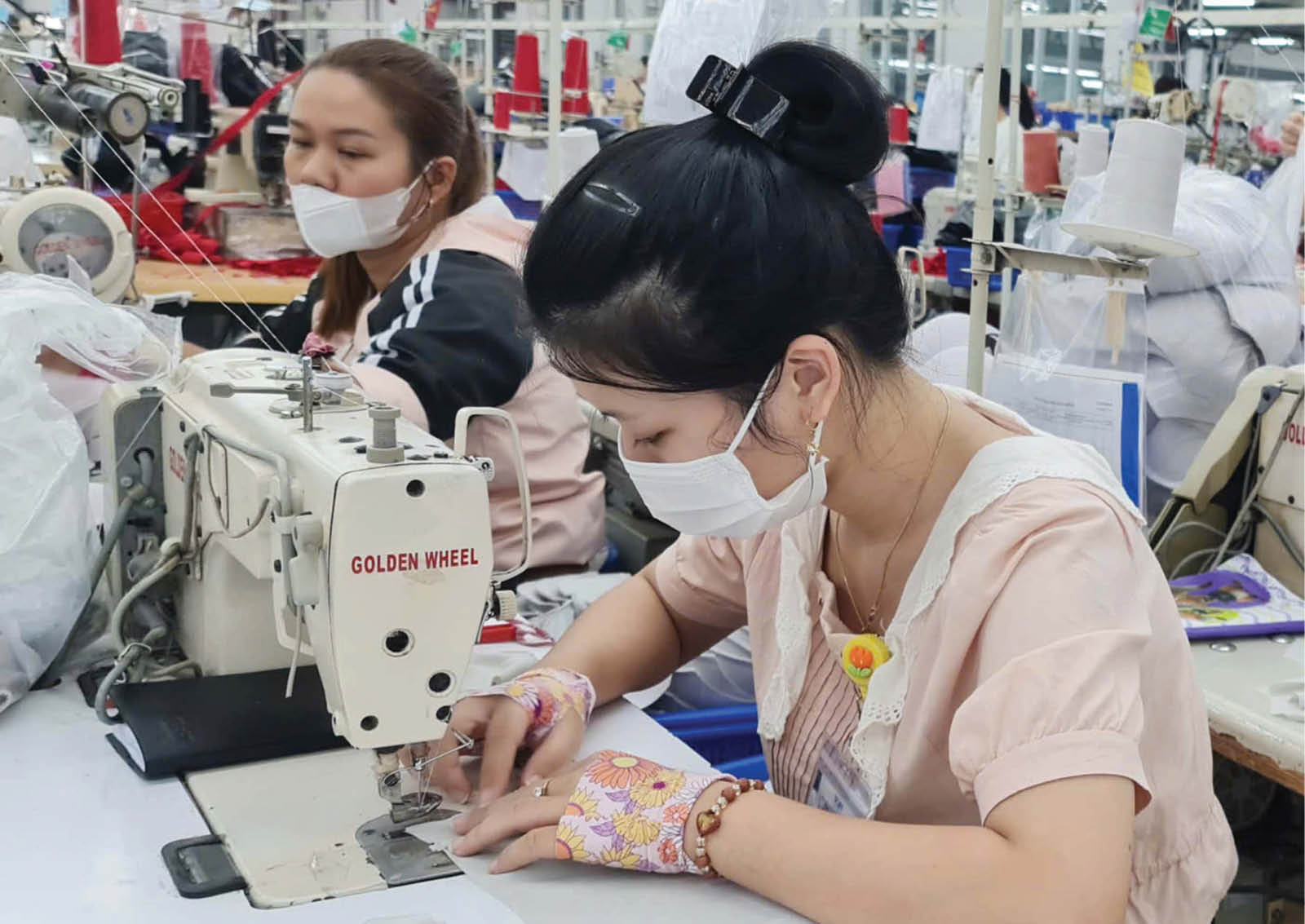
| Workers on the sewing line of SCavi Hue Company during a shift producing goods for export. |
Looking back to go further.
In early April this year, the Ministry of Industry and Trade, in coordination with the Government Office, announced the 2024 Free Trade Agreement Implementation Performance Index (FTA Index), aiming to measure the level of FTA utilization at the local level. This is the first time Vietnam has had its own index to measure FTA implementation capacity, thereby supporting policy planning, improving the investment environment, and encouraging businesses to more effectively utilize trade agreements.
According to the results, Hue City scored 19.08 points, ranking 55th out of 63 provinces and cities nationwide. Mr. Phan Quy Phuong, Standing Committee member of the City Party Committee and Vice Chairman of the People's Committee of Hue City, said that Hue's failure to achieve a high ranking in the FTA Index 2024 is a warning sign to re-evaluate the locality's integration capacity and serve as a driving force for reform.
“Most businesses in Hue are small and medium-sized, with limited resources, weak management capabilities, and limited access to information about free trade agreements. Some businesses still depend on traditional markets and have not proactively exploited tax incentives from new generation agreements,” Mr. Phuong said.
In addition, the logistics infrastructure, import and export support services, and supporting industries are still underdeveloped, leading to high trade costs and reducing the competitiveness of local goods.
Based on this reality, the city is shifting from a "receiving preferential treatment" mindset to a "proactive integration" mindset, focusing on key solutions such as: providing in-depth training for businesses on rules of origin, environmental and labor standards, and technical barriers; and simultaneously promoting the provision of market information, guiding the issuance of Certificates of Origin (C/O) quickly and transparently, creating conditions for businesses to effectively access markets within the FTA bloc.
“FTAs are not just about tariffs, but also a test of our integration capacity,” Mr. Phuong emphasized. “Hue needs to simultaneously reform procedures, develop logistics, increase the localization rate, and improve human resource capacity. Only when businesses are strong enough can we fully utilize the advantages of new-generation trade agreements.”
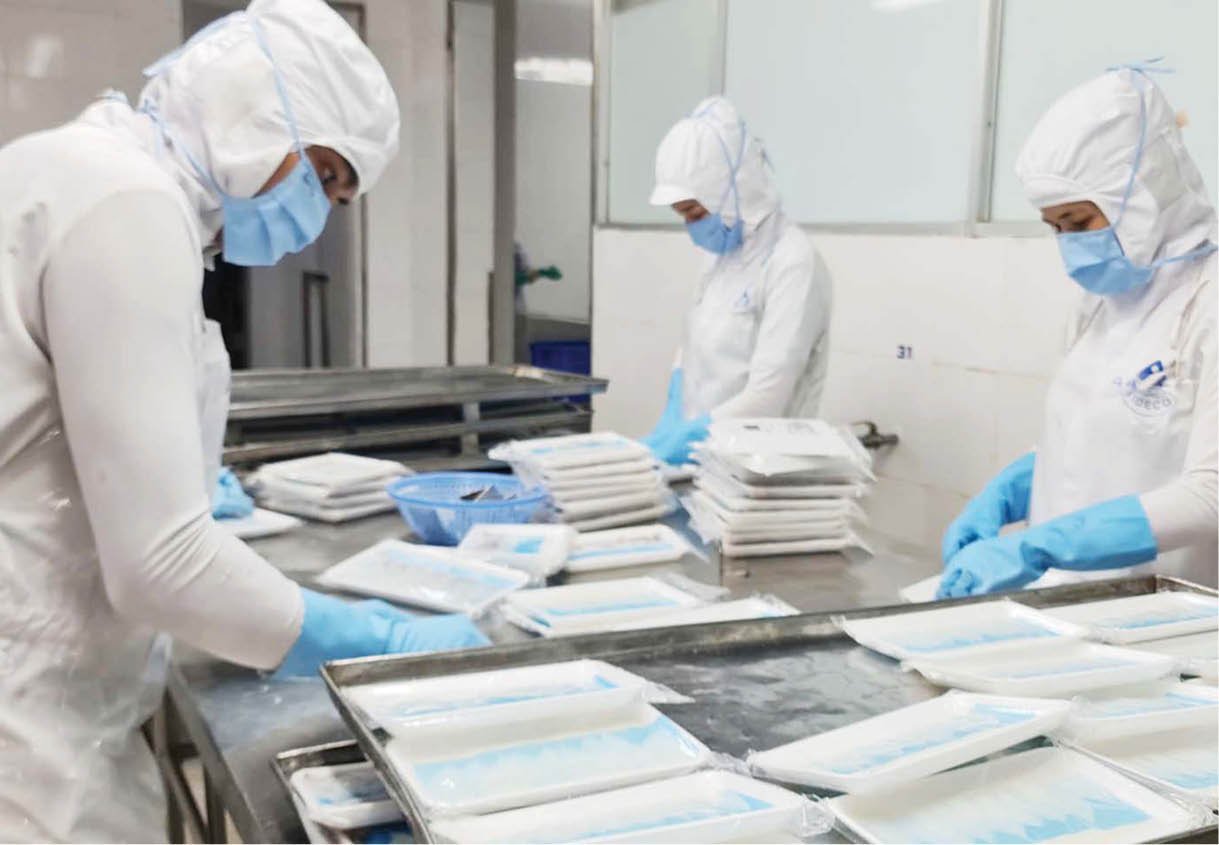 |
| Workers at Hue Fisheries Development Joint Stock Company process export products according to FTA standards. |
Breakthroughs from procedures to logistics.
From a state management perspective, the Department of Industry and Trade is considered a crucial focal point in implementing the benefits from FTAs into practical results.
Mr. Phan Hung Son, Deputy Director of the Department of Industry and Trade, said: “We have deployed a team of consultants to directly guide businesses in the effective use and exploitation of Certificates of Origin (C/O), while promoting digital transformation in the licensing process. Each year, the department issues thousands of C/Os for goods exported to markets under trade agreements, with processing time reduced to only 6-8 working hours.”
Currently, the Department is coordinating with the Ministry of Industry and Trade to implement an electronic Certificate of Origin (C/O) issuance system on the eCoSys platform, helping businesses shorten processing time, reduce errors, and increase transparency. The application of this technology also allows businesses to search for and update information, minimize paperwork, and save significant costs.
"We are shifting from providing procedural support to strategic partnership, not only issuing Certificates of Origin quickly and on time, but also advising businesses on choosing suitable agreements and exploiting markets more effectively," Mr. Son emphasized.
The Department of Industry and Trade also collaborates with the Ministry of Industry and Trade and Vietnamese trade offices abroad to update market information, organize trade promotion conferences, and guide businesses in grasping international consumer trends, helping Hue businesses proactively expand export markets and effectively utilize the benefits from FTAs.
The customs sector is the "front line" supporting businesses at border gates. Mr. Nguyen Dinh Chien, Deputy Head of the Customs Sub-Department of Region IX, said that the unit is implementing the "Digital Customs," "Smart Customs" model, aiming for "Green Customs," promoting the application of technology in management, declaration, and traceability of goods, helping to minimize customs clearance time.
According to Mr. Truong The Khanh Quynh, Team Leader of the Customs at Chan May Port, the unit regularly organizes dialogues between customs officials and businesses, updates new regulations, and guides businesses on proper declaration to avoid losing preferential treatment. The goal of customs is not only to collect revenue but also to facilitate trade and minimize extraneous costs for businesses.
Digital transformation - a new driving force.
At Vinatex Phu Hung Joint Stock Company, digital transformation is considered a strategic step in enhancing integration capabilities. Ms. Nguyen Thi To Trang, General Director of the company, stated: The company has invested in a smart production management system, digitizing the entire import and export process and synchronizing Certificate of Origin (C/O) data on an electronic platform, enabling real-time, transparent, and accurate information chain control. “Previously, it took several days to review origin documents; now it only takes a few minutes; all documents are automatically updated, ensuring clear traceability,” Ms. Trang said.
According to Ms. Trang, digital transformation not only helps shorten customs clearance time, reduce costs and errors, but also creates a foundation for businesses to meet high standards on environment, labor, and traceability as required by new generation FTAs.
Sharing this view, Ms. Xu Jia Ji, System Manager of Billion Max Vietnam Export Processing Co., Ltd., believes that to fully exploit the FTA, businesses must upgrade themselves. The foundation for Hue businesses to integrate more deeply into the global value chain is the standardization of processes, investment in technology, and the formation of a domestic linkage network. Ms. Xu Jia Ji stated that currently, the company's domestic raw material ratio is only about 3-5%, because Vietnam has not yet produced engineering plastic resins that meet international standards. "If in the future there is a domestic supply that meets standards, our company will reduce its dependence on foreign raw materials and better utilize the tax incentives from the FTA," Ms. Xu Jia Ji hoped.
According to Mr. Tran Van My, Chairman of the Hue City Business Association, digital transformation is not just a supporting step, but a prerequisite for businesses to enter the "door of FTA". "Without transparent data, it's impossible to talk about integration and effectively utilizing FTAs. Businesses must transform themselves, and digital transformation is the key to unlocking that door," Mr. My emphasized.
To date, Hue City has supported more than 700 businesses in digital transformation, provided digital signatures and electronic invoices to more than 2,200 businesses, and helped 150 business households transition to the corporate model.
Based on practical experience in managing and directing local economic development, Vice Chairman of the City People's Committee Phan Quy Phuong emphasized: "Digital transformation not only helps businesses save costs, but also serves as a foundation for the government to create a transparent, modern, and globally connected business environment."
At the macro level, Mr. Dau Anh Tuan, Deputy Secretary General and Head of the Legal Department of VCCI, stated: “If FTAs are a golden passport that helps goods travel further, then digital transformation is the tool for Vietnamese businesses to maintain their position in the global value chain. New generation agreements don't just stop at tax cuts; they demand transparency, social responsibility, and data governance capabilities – this is the playing field for businesses that know how to adapt.”
Vice Chairman of Hue City People's Committee Phan Quy Phuong affirmed: "Each enterprise that makes good use of free trade agreements not only brings benefits to itself, but also represents a step forward for the entire Hue economy. The city government will support this with concrete actions - from reforming administrative procedures, improving logistics infrastructure, to training high-quality human resources and creating a transparent business environment."
These steps are shaping a new face of integration for Hue. When the internal efforts of businesses are met with practical support from the government, the "golden passport" of the FTA will truly realize its value, enabling Hue's goods to reach further and affirm their brand in the international market.
Source: https://huengaynay.vn/kinh-te/ho-chieu-vang-cho-doanh-nghiep-mo-rong-thi-truong-xuat-khau-bai-3-chinh-sach-dot-pha-doanh-nghiep-vuon-xa-159225.html
![[Photo] Prime Minister Pham Minh Chinh receives the Governor of Tochigi Province (Japan)](/_next/image?url=https%3A%2F%2Fvphoto.vietnam.vn%2Fthumb%2F1200x675%2Fvietnam%2Fresource%2FIMAGE%2F2025%2F12%2F16%2F1765892133176_dsc-8082-6425-jpg.webp&w=3840&q=75)
![[Photo] Prime Minister Pham Minh Chinh receives Lao Minister of Education and Sports Thongsalith Mangnormek](/_next/image?url=https%3A%2F%2Fvphoto.vietnam.vn%2Fthumb%2F1200x675%2Fvietnam%2Fresource%2FIMAGE%2F2025%2F12%2F16%2F1765876834721_dsc-7519-jpg.webp&w=3840&q=75)

![[Image] Leaked images ahead of the 2025 Community Action Awards gala.](/_next/image?url=https%3A%2F%2Fvphoto.vietnam.vn%2Fthumb%2F1200x675%2Fvietnam%2Fresource%2FIMAGE%2F2025%2F12%2F16%2F1765882828720_ndo_br_thiet-ke-chua-co-ten-45-png.webp&w=3840&q=75)
![[Live] 2025 Community Action Awards Gala](/_next/image?url=https%3A%2F%2Fvphoto.vietnam.vn%2Fthumb%2F1200x675%2Fvietnam%2Fresource%2FIMAGE%2F2025%2F12%2F16%2F1765899631650_ndo_tr_z7334013144784-9f9fe10a6d63584c85aff40f2957c250-jpg.webp&w=3840&q=75)




























































Comment (0)