


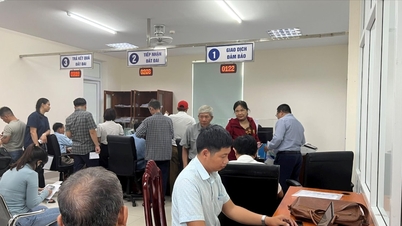
Illustration photo: Wellsgray
The first crucial tool for impressing recruiters is your resume. Without knowing how to invest in a professional resume that catches the recruiter's eye, you'll find it difficult to land your desired job.
What are the important elements that should be included in a job application?
Your resume should accurately reflect your personal values. In other words, it should be a mirror of who you are.
In addition to the usual required documents such as CV, personal profile, transcripts, relevant diplomas, letters of recommendation, health certificate, copy of ID card, household registration..., you also need to clarify these things in your application: What makes you unique, what makes you different, and why should the company hire you? In other words, you must show the recruiter that hiring you is a profitable investment for their company.
You shouldn't simply list the jobs you've done or are currently doing; show the value of your contribution to each job with specific examples. Instead of writing vaguely like, "I have experience managing many projects...", be more specific: "In 2023, I successfully managed 10 projects with a total budget of 500 billion VND and a project team of approximately 20 people...".
What will employers evaluate?
1. Specialized knowledge and general knowledge
Professional knowledge demonstrated through qualifications is the first thing considered in a candidate's application. I always review the candidate's transcript, especially the specialized subjects. I will disqualify a candidate if their grades in specialized subjects are not high, as this shows a lack of responsibility towards their chosen profession.
In addition, foreign language proficiency is crucial. I often jokingly tell students, "You can be bad at a few subjects, but you must be good at foreign languages."
In this day and age, not being proficient in foreign languages limits your learning opportunities and career potential. Statistics show that people with strong foreign language skills can earn up to 30% more than those with weaker skills.
In some companies, due to job requirements, they also assess candidates' understanding of social issues.

Author Nguyen Tuan Quynh
2. Skills needed to perform well in the job application
The skills needed for a job aren't just demonstrated by certificates of graduation from this or that course. The real question is whether you can use those skills proficiently.
Therefore, in addition to a certificate proving you have completed a public speaking skills training course, I would like to see evidence that you have served as an MC, facilitator, etc., in events organized by your class, school, club, etc.
At the same time, you need to clearly identify the skills necessary for the job you are applying for so that you can learn and improve them. Skills are assets that stay with you throughout your life, so you should consciously practice them to become more proficient each day.
3. Attitude towards life and work style
Attitude and work style are the most important factors when evaluating a candidate. It's easy to assess style and demeanor during a face-to-face interview. But how can one demonstrate their attitude on paper – in their job application?
When you say you are positive, sociable, eager to learn, and willing to help others, you should provide evidence. That's why I encourage young people to actively participate in youth union and association activities from their school days. Participating in these activities gives you the opportunity to improve your knowledge, gain experience, and learn many valuable things.
Most importantly, a team-oriented environment will help you temper your ego, focus on others, learn to contribute and sacrifice for the collective, cultivate a sense of responsibility, and learn and practice organizational and team leadership skills.
All of these are essential for any future job.
And when it comes to attitude towards life, I want to emphasize the AQ (Adversity Quotient) – resilience. Work isn't always easy or favorable. You always have to strive, work hard, and be patient… to overcome obstacles in your studies and life. Show the recruiter your AQ – resilience.
4. Experience
The question I get asked most often when talking to students is: "You've just graduated, where would you get the experience from?"
First, it must be stated that when the applicant is a recent graduate, experience is not a mandatory requirement. Throughout my leadership career, I have hired hundreds of recent graduates, even while they were still interning.
Most students have part-time jobs. In my opinion, you should choose part-time jobs that are related to your future career. For example, if you're studying accounting, you could choose to work as a cashier at a coffee shop; if you're studying marketing, you could do part-time work writing advertising content, etc. This way, part-time work also helps you understand your future career better. And instead of just listing part-time jobs, get confirmation and feedback from company or department leaders about your work ethic and results.
5. Personal relationships
Besides personal background, employers are also interested in the social relationships that candidates have built, the names of those who introduced them, and other contacts needed to get to know the candidate better—all of this information is crucial.
As a student, you can build relationships with faculty, experts in your field, seniors, and professional forums…
However, I want to emphasize my relationships with my university friends. These are the most valuable and enduring relationships. University friends are truly close friends, always ready to help and support each other.
6. Appearance and health
Choose an image that is relevant to the job you are applying for to include in your resume. If you play sports , run, etc., please include your achievements and evidence of these activities. Actively maintaining good health is a plus, and many companies nowadays strongly encourage employees to participate in sports.
Ultimately, the virtual but real image you project – your online persona on Facebook, Instagram, TikTok, etc. – is crucial and must align with the true person you want to portray. Companies today, when recruiting for important positions, carefully review candidates' social media profiles. So, when should you start preparing your job application?
Most students will do this in their final year of university. That's too late. Because much of the evidence of your abilities and competence is demonstrated in your first year, second year, and so on.
Therefore, I think that as soon as you enter university, you should start preparing your job application materials.
Source































































































Comment (0)