

Vietnam's aluminum and steel industries still have much room for growth.
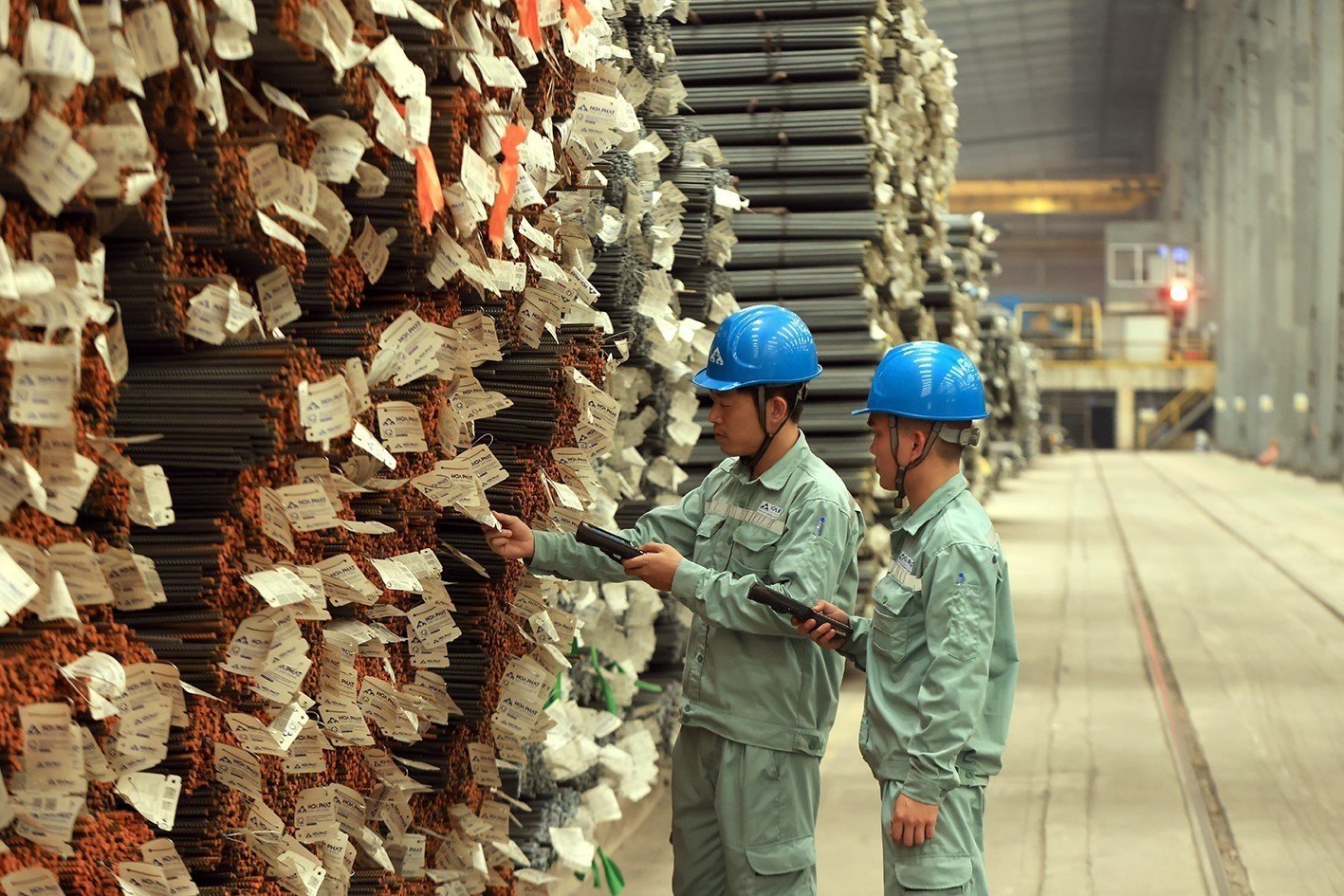
President Donald Trump has signed an executive order imposing a 25% tariff on all steel and aluminum imports into the United States. The import tariff on aluminum will increase from 10%, effective since 2018, to 25%. This policy has had a significant impact on countries exporting steel and aluminum to the United States, including Vietnam.
According to Mr. Do Ngoc Hung, Commercial Counselor and Head of the Vietnam Trade Office in the United States, US customs statistics show that in 2024, Vietnam exported approximately US$983 million worth of steel and steel products to the US market (an increase of nearly 159% compared to 2023). Major Vietnamese steel products exported to the US include: galvanized steel (HS code 7210.49); aluminum-zinc coated steel (HS code 7210.61); plastic-coated steel (HS code 7210.70); stainless steel (HS code 7219.34); and alloy steel (HS code 7209.16)...
Regarding aluminum products, customs statistics also show that in 2024, Vietnam exported approximately $479 million worth of aluminum and aluminum products to the US market, a 9.5% increase compared to 2023. Some of Vietnam's major aluminum products exported to this market include: kitchen cabinets, aluminum tables, aluminum furniture (HS code 7615.10); aluminum alloys (HS code 7604.21); aluminum bars and wires (HS code 7604.29)...
According to information from the Trade Office, Vietnamese aluminum and steel products are currently still subject to tariffs of 10% and 25% respectively, under Section 232, which the United States has applied to most countries since 2018.
Furthermore, aluminum and steel products, especially Vietnamese steel products, are frequently the subject of trade defense lawsuits. To date, the United States has investigated more than 34 cases, accounting for over 50% of the total number of trade defense cases investigated by the US against Vietnam, while there are 2 cases specifically for aluminum products.
Mr. Do Ngoc Hung believes that the imposition of these new tariffs will, indirectly, create a level playing field for countries exporting to the United States, including Vietnam, especially those countries that suffered more disadvantages during President Donald Trump's 2018 term. Vietnamese export businesses will have the opportunity to compete fairly and equally in the US market. Vietnamese exports will be able to compete on equal terms with major exporting countries around the world .
According to Mr. Hung, Vietnam will gain increasingly deeper access to the US supply chain, especially as Vietnamese products have ensured traceability and provenance, with increasingly competitive quality and prices.
Another advantage is that Vietnamese businesses have prepared well and are very resilient to this tariff imposition. However, this tariff imposition, from any perspective, will affect global trade, including the import demand of the US market; therefore, Vietnamese businesses also need to be prepared.
What should businesses do?
According to data from the Vietnam Steel Association, the United States is currently the third largest market for Vietnam's total steel exports, after the EU (23%) and ASEAN (26%). Other markets include India (6%), Taiwan (4%), Brazil (3%), Türkiye (3%), etc.
Mr. Nghiem Xuan Da, Chairman of the Vietnam Steel Association, believes that businesses need to accept the trade protection policies applied globally, as all 13 million tons of Vietnam's steel exports are affected by these policies.
"In every crisis lies an opportunity; there are always chances for further exports. Businesses need to enhance their competitiveness, reduce costs, ensure clear origin, and understand the laws of the importing country to avoid being subjected to trade defense measures," Mr. Da advised.
Offering advice to Vietnamese aluminum and steel exporting businesses, Mr. Do Ngoc Hung suggested that domestic businesses need to assess the situation to develop appropriate business strategies, expand exports to markets with FTAs with Vietnam, and avoid dependence on a single market.
The Head of the Vietnam Trade Office in the United States specifically advised that exporting businesses must comply with US regulations on origin of goods and be ready to fully participate in the explanation process of US investigating agencies in trade defense cases. At the same time, they should closely coordinate with the Ministry of Industry and Trade (Trade Defense Department) and diplomatic missions abroad to closely monitor the situation and respond appropriately.
According to assessments from many importing countries, Vietnamese goods exported to the US market are competitively priced and of good quality, contributing to reducing inflation and greatly supporting bilateral trade.
Regarding recommendations for businesses exporting to the United States, Dr. Le Quoc Phuong, former Deputy Director of the Center for Industrial and Trade Information (Ministry of Industry and Trade), assessed that businesses need to outline scenarios to be prepared to respond to potential tariffs imposed by the United States. In the event of low tariffs, they should continue to maintain their market presence and implement solutions such as investing in technology and optimizing production costs to reduce prices and increase profits.
In addition, businesses need to continue diversifying their markets, implementing a "don't put all your eggs in one basket" strategy to avoid potential risks from import markets. At the same time, they should closely monitor information from the Vietnamese Trade Office in the United States and other Vietnamese representative offices in the US to stay informed and have timely countermeasures to respond to any changes from the US side (if any).
In particular, according to Dr. Le Quoc Phuong, the high tariffs imposed by the United States on neighboring countries could lead to a situation where businesses in those countries export goods to Vietnam, fraudulently misrepresent the origin of goods, and then re-export them to the United States. This has happened before, and when discovered, it affected the entire Vietnamese export industry. Therefore, Vietnamese businesses need to deeply consider the long-term benefits and absolutely avoid allowing partners to fraudulently misrepresent the origin of goods, as this could negatively impact the exports of the entire industry and the nation.
Vietnamese small and medium-sized enterprises (SMEs) need to collaborate to increase their synergy, enhance resilience, stabilize supply chains, find partners, and share risks. Close coordination between businesses and the government is essential in warning, sharing information, and proposing appropriate policies.
Vietnamese and American goods complement each other. Regarding the US market, the Ministry of Industry and Trade assesses that, in terms of economic and trade relations, the two economies are complementary. The export and foreign trade structures of the two countries do not directly compete, but rather complement each other, aligning with the internal needs of each country. Vietnamese goods exported to the US mainly compete with third countries, not directly with US businesses in the US market. Conversely, it facilitates access to cheaper Vietnamese goods for US consumers. Looking ahead, the Ministry of Industry and Trade assesses that the economic and trade pillars will continue to develop stably within the overall comprehensive strategic partnership between Vietnam and the United States. Any existing issues in bilateral economic and trade relations will be proactively addressed through the policy dialogue mechanism of the Vietnam-U.S. Trade and Investment Council (TIFA), a mechanism that is maintained regularly, continuously, and effectively at all levels. This aims to strengthen strategic trust between the two countries, build a shared vision, and contribute to long-term and stable development of bilateral economic and trade relations. According to the Ministry of Industry and Trade, to continue developing in the context of a volatile and challenging global economy, in addition to efforts from the Government and ministries, businesses must also rely on their own sensitivity, proactive approach to market trends, and ability to adapt, explore, and develop their own competitiveness. Businesses need to continue proactively building roadmaps and solutions to diversify export markets, improve product quality, and ensure technical, labor, and environmental standards. |
Source: https://doanhnghiepvn.vn/kinh-te/hoa-ky-ap-thue-25-co-hoi-nao-cho-xuat-khau-nhom-thep-viet/20250214093252861


![[Photo] Prime Minister Pham Minh Chinh attends the Conference summarizing and implementing tasks of the judicial sector.](/_next/image?url=https%3A%2F%2Fvphoto.vietnam.vn%2Fthumb%2F1200x675%2Fvietnam%2Fresource%2FIMAGE%2F2025%2F12%2F13%2F1765616082148_dsc-5565-jpg.webp&w=3840&q=75)






















































































Comment (0)