

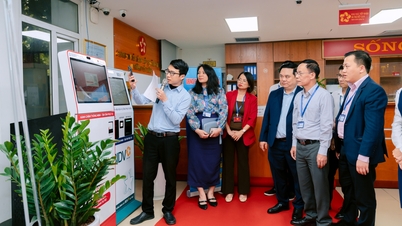
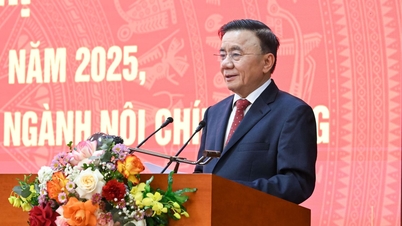
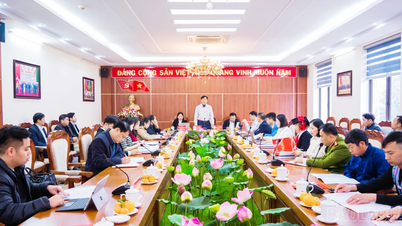
On December 19-20, in Vinh City, the Sustainable Forest Management Certification Office, in collaboration with the Forestry Department and the National Agricultural Extension Center, organized a workshop on "Commodity Production Without Deforestation in accordance with EUDR regulations - Opportunities and Challenges".
Dr. Vu Tan Phuong - Director of the Sustainable Forest Management Certification Office and Mr. Nguyen Danh Hung - Deputy Director of the Nghe An Department of Agriculture and Rural Development chaired the workshop. Attendees included representatives from the Sustainable Forest Management Certification Office, the Forestry Department, and related organizations involved in forest management and certification; representatives from various departments and agencies; leaders of the People's Committee and the Agriculture Department of Nghe An province and several provinces in the North Central region.
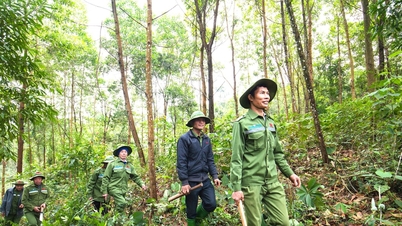
Forest resources have great potential for exploitation.
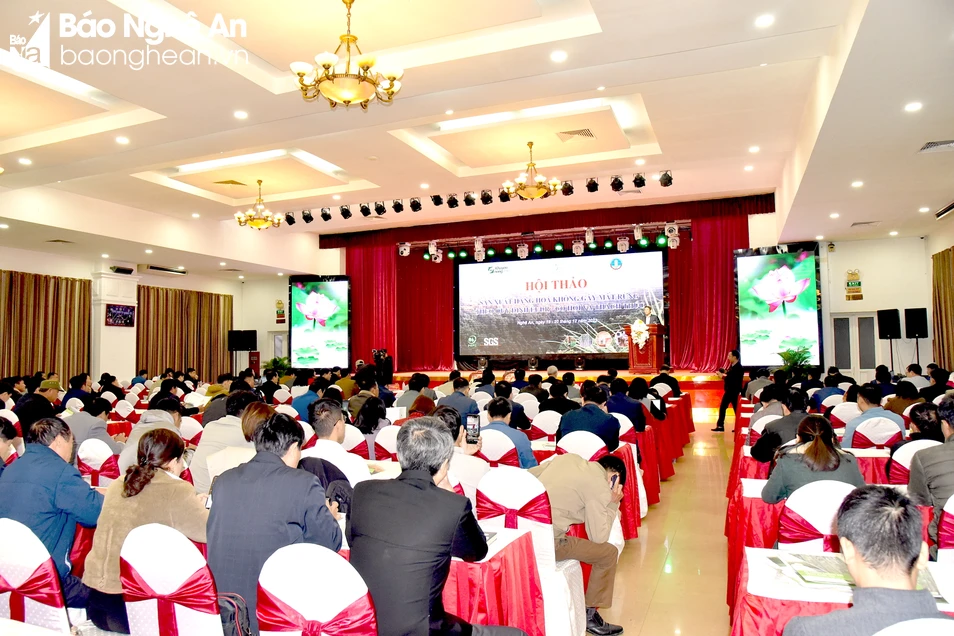
The European Union's (EUDR) anti-deforestation regulation is landmark, effective from June 29, 2023, and its provisions will apply from December 30, 2024.
The workshop introduced the European Union's regulations on the production of goods without causing deforestation, and presented the Framework for Adaptation to the EUDR. The workshop also provided information on the Vietnam Forest Certification System (VFCS), the steps for implementing sustainable forest management certification; the difficulties, challenges, and solutions to promote forest certification, contributing to the achievement of Vietnam's forestry development strategy goals for the period 2021-2030, with a vision to 2050.
The workshop aims to connect scientists , forest owners, and wood processing businesses to develop certified sustainable forest management plantation areas and produce goods compliant with EUDR regulations in Nghe An province and neighboring provinces.
To maximize the potential and advantages of its forest resources, Nghe An province has developed and implemented the Green Growth Action Plan for the period 2021-2030 with many contents: Developing certified sustainable forest raw material areas linked to high-quality wood processing in the period 2017-2020; promoting the development of high-quality intensively cultivated plantation forest raw material areas linked to sustainable forest management certification and forest product processing industry in the period 2021-2025; policies to support agricultural and rural development in the period 2022-2025...
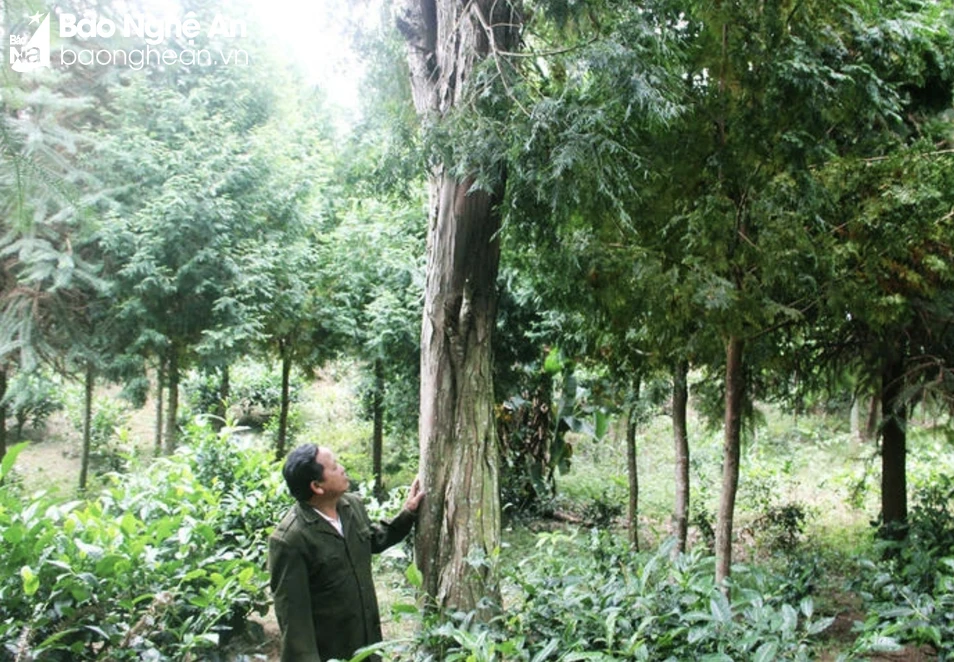
As a result, Nghe An's forestry sector has achieved many results in forest protection and development, maintaining a stable forest cover of over 58%, preserving biodiversity, and improving watershed and environmental protection; creating jobs, increasing income, and alleviating poverty for ethnic minorities in mountainous areas and those working in forestry. The internal economic structure of the sector has undergone positive changes, gradually forming and developing high-quality intensively cultivated forest raw material areas linked to processing and product consumption. The forestry sector has experienced strong growth in forest planting, management, and protection, with forest cover reaching 58.36% by 2022.
To date, Nghe An province has 16,884.0 hectares of forest certified under the VFCS/PEFC and FSC sustainable forest management standards. The target is to reach 50,000 hectares of certified forest by 2025 and 100,000 hectares by 2030.
Opportunities and challenges
In addition to identifying potential economic development opportunities and increasing revenue from forests, many delegates attending the workshop presented papers and discussed assessments of opportunities, challenges, and strategic directions for sustainable exploitation of forest resources and production that does not cause deforestation.
Mr. Vu Tan Phuong, Director of the Sustainable Forest Management Certification Office, provided information at the workshop on the national forest certification system, policies for implementing forest management and protection and certification, as well as related standards; the current status of logging and utilization of planted forest timber and the product chain of custody within the national forest certification system.
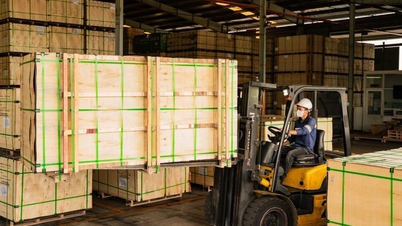
In accordance with the European Union's anti-deforestation regulations, Vietnam's wood and wood product (SPG) processing and export industry to the EU faces both opportunities and challenges. For example: The legal system regulating the legality of timber is comprehensive. Vietnam banned the exploitation of natural forest timber in 2014, and the raw material now mainly comes from domestically planted forests. Wood products exported to the EU are primarily imported from geographically active regions with sustainable forest management certifications.
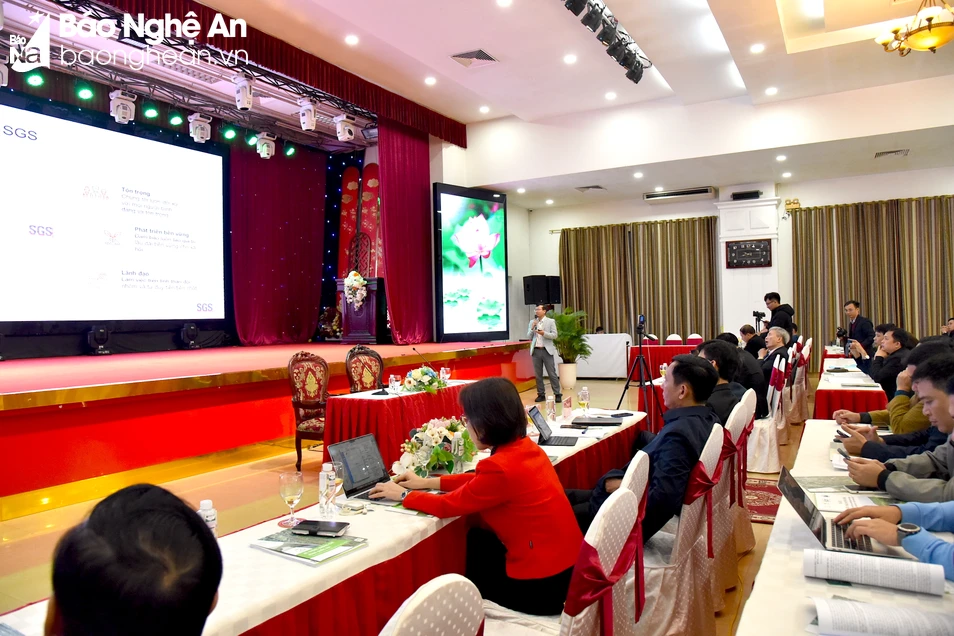
The Trade and Sustainable Development Chapter of the EVFTA includes commitments on sustainable forest management, biodiversity conservation, combating illegal logging and timber trade, and preventing deforestation. Therefore, the preparation and implementation of the EUDR affirms Vietnam's commitment to sustainable development and contributes to promoting the implementation of the EVFTA.
Alongside the significant opportunities, it is necessary to identify the challenges and difficulties in the field of planted forest exploitation. In particular, Vietnam is an exporter of agricultural products to Europe, and many Vietnamese agricultural products will be subject to adjustments to adapt to the new regulations.
The passage of this new law poses a challenge, requiring manufacturing and exporting businesses to make even more significant changes, moving towards building brands in a responsible and transparent manner.
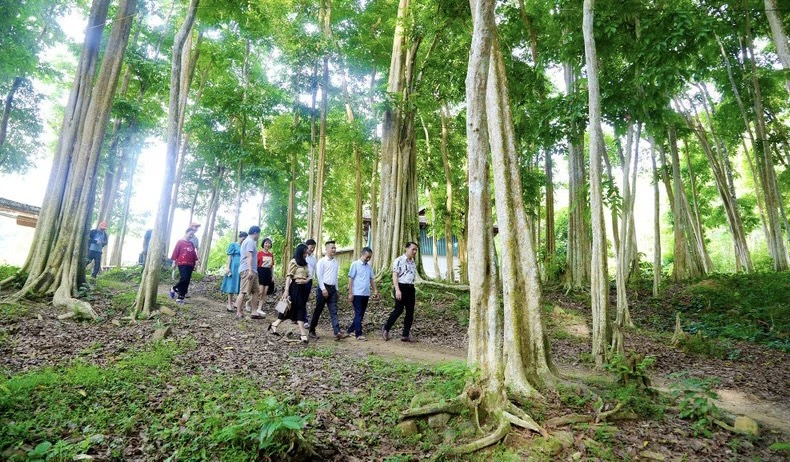
Currently, Vietnam's legal system does not regulate the description/identification of the geographical location of all land parcels related to goods produced in Vietnam. Approximately 50% of Vietnamese wood and wood products exported to the EU originate from imported sources; therefore, it is necessary to identify the geographical indications of this wood, especially for sources without sustainable forest management certification.
Faced with the opportunities and challenges in exploiting the sustainable economic potential of afforestation and developing forest-related industries without causing deforestation, the workshop provided insightful guidance and important information to help localities, units, and businesses leverage their advantages and conditions and apply policies to achieve high results in production and business development while protecting the environment and promoting sustainable growth.
The Vietnam Forest Certification Scheme (VFCS) was established based on Decision No. 1288/QD-TTg dated October 1, 2018, of the Prime Minister approving the Sustainable Forest Management and Certification Scheme. During the period 2019-2021, the General Department of Forestry acted as the National Forest Certification Body (NGB) and the Sustainable Forest Management Certification Office (VFCO) was under the General Department of Forestry. During this period, Vietnam became the 51st member of the Programme for International Forest Certification (PEFC) on May 30, 2019, and the VFCS was officially certified by PEFC on October 29, 2020. In October 2021, the role of NGB was assigned to the Vietnam Academy of Forestry Sciences (VAFS), and VFCO was transferred to the direct control of the Academy according to Decisions No. 3924/QD-BNN-TCCB and No. 3925/QD-BNN-TCCB dated October 4, 2021, of the Minister of Agriculture and Rural Development.
Source

































































Comment (0)