

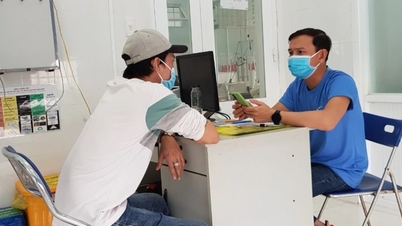
Recently, according to Master's degree holder and doctor Nguyen Tien Thanh, a member of the Vietnam Dermatology Association, they received a patient, Mr. LVK (30 years old, Ha Dong, Hanoi ), who came for examination with symptoms of itchy throat and a feeling of something stuck between his teeth when chewing and swallowing food.
In addition, Mr. K. also had a growing, easily bleeding papilloma on his lingual frenulum. Since the appearance of the papilloma in his mouth, the patient has experienced bad breath, while eating and daily activities have become difficult, causing him anxiety. When he went for a check-up at the Dental and Maxillofacial Hospital, the doctor referred him to a dermatologist for treatment.
According to Dr. Nguyen Tien Thanh, a member of the Vietnam Dermatology Association, upon observing the patient's lesions, the doctor suspected papilloma, a sexually transmitted infection. Test results confirmed the patient had genital warts.

Image showing genital warts lesions on the tongue of a patient. Photo courtesy of the doctor.
After hearing the doctor's advice about his illness, Mr. K. was extremely surprised and shocked. He said that recently he had gone to a bar with friends, and after drinking too much, he met a woman there, hugged and kissed her on the lips. However, he insisted that it was only a kiss and no sexual intercourse. Two weeks later, the young man began to notice lesions appearing in his mouth.
Dr. Thanh explained that genital warts are a type of papilloma disease in humans, usually transmitted through sexual contact, caused by the HPV (Human Papilloma Virus). Genital warts begin as soft, skin-colored, pink, or brown papules, a few millimeters in diameter. After a few weeks to a few months, these lesions may merge into larger patches, also known as cauliflower-like lesions. Genital warts can appear on other mucous and semi-mucous membranes: eyes, mouth (tongue, between teeth, cheek mucosa).
Recently, Dr. Thanh reported that the number of patients with genital warts seeking treatment at the hospital is increasing. The disease can be transmitted sexually through intercourse with a partner carrying the HPV virus (in the genitals and mouth). The virus can also spread through indirect contact of skin and mucous membranes with secretions containing the HPV virus, such as sharing towels, underwear, personal items, and sometimes medical instruments that have not been properly sterilized.
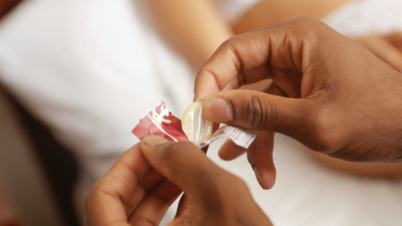
To prevent genital warts, doctors recommend that people practice safe sex, and vaccination is the most effective way for women to proactively prevent this dangerous disease. The HPV vaccine is quite safe and highly effective in protecting children, women, and men from diseases related to the HPV virus.
Thu Phuong
Source

































































































Comment (0)