


Conclusion No. 226-KL/TW, signed and issued by Politburo member and Standing Committee Secretary Tran Cam Tu on behalf of the Secretariat, has the following content:
Considering the proposal from the Central Party Office on the Project to rectify working methods; prevent and combat formalism and waste, and standardize activities in the political system (Submission No. 151-TTr/VPTW, dated November 24, 2025), the Secretariat concludes as follows:
1. In recent times, with the political determination and great efforts of the entire Party, the restructuring and streamlining of the political system's organizational apparatus has achieved many important results; the political system's organizational apparatus has been arranged in a way that is synchronized, streamlined, effective, efficient, close to the people, and better serves the people. However, alongside the achievements, there are still some issues that need to be rectified and overcome in leadership, direction, and management, such as the excessive issuance of documents and meetings, the lack of smooth and close coordination between levels, sectors, organizations, agencies, and localities, the inconsistent and uncoordinated implementation of reporting systems, and the limited application of information technology and digital transformation…
2. In order to promptly rectify and overcome the above shortcomings, it is required that Party committees, Party organizations, agencies, localities, and units focus on leading and directing the thorough understanding and effective implementation of the following contents:
2.1. Regarding the issuance of documents
- Focus on innovation and improving the quality of document issuance by simplifying and streamlining processes and procedures, and integrating them into the issuance process. Do not issue documents under specific authority in place of documents under the general authority of the organization, agency, locality, or unit. Do not include content on personnel matters, regulations, and policies in documents regulating professional and technical matters; ensure that documents are issued within the correct authority and in the correct format and presentation.
- Strengthen the review process to ensure consistency in the content of issued documents; amend, supplement, and replace overlapping or outdated documents and regulations; integrate necessary related regulations from various documents into a single general regulation; integrate similar inter-sectoral content into a joint document (ministry, sector) to guide and organize implementation, avoiding difficulties for businesses, enterprises, and citizens.
- Only issue documents when absolutely necessary to regulate, guide, and organize implementation; do not issue documents that merely copy the content of documents from higher levels. The content of documents must be concise, clear, easy to understand, and clearly state the objectives; the proposed solutions and policies must be feasible, appropriate to practical conditions, and consistent with the regulations of the Party, the Constitution, and the laws of the State. Documents from lower levels must concretize the directives of higher levels into tasks and solutions for their own level and unit, specifying resources, completion time, and clearly assigning responsibilities to relevant organizations and individuals. Annually, organizations, agencies, localities, and units must reduce the number of administrative documents by at least 15% compared to the previous year.
2.2. Regarding the organization of conferences
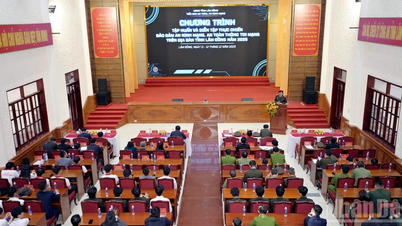
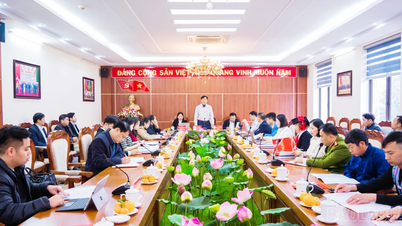
Annually, based on the work program, Party committees, Party organizations, agencies, localities, and units at all levels develop plans to organize conferences based on the actual situation; in which, the number of in-person conferences accounts for no more than 40% and the number of online conferences accounts for no less than 60% of the total number of conferences in the year. Conferences should not be organized unless absolutely necessary or if the content has already been detailed in written guidelines. All levels should not reorganize conferences that have already been held via live video or online broadcasts to the grassroots level. Strictly implement austerity measures and combat waste in organizing conferences, ensuring that the budget allocated for conferences is not exceeded; and reduce the number of conferences by 10% annually.
- Party committees, party organizations, government agencies, and mass organizations should strengthen coordination in organizing conferences at their respective levels, sectors, and units, avoiding duplication and overload, and concentrating them at the beginning or end of the year; at the provincial level, no more than two conferences of provincial scale should be held per year (comprising all leaders of the provincial/city political system, excluding regular meetings of the Party Committee and People's Council of the province/city). In exceptional cases where an additional provincial-level conference is needed, the Standing Committee of the Provincial/City Party Committee shall consider, decide, and be responsible for its decision; at the commune level, no more than three conferences of commune-level scale should be held per year (comprising all leaders of the commune-level political system, excluding regular meetings of the Party Committee and People's Council of the commune). In exceptional cases where an additional commune-level conference is needed, the Standing Committee of the Commune Party Committee shall consider, decide, and be responsible for its decision.
- When organizing a conference, it is necessary to clearly define the scale and composition of participants, ensuring an appropriate number of delegates to guarantee effectiveness according to the principle that the conference should invite delegates from the bloc that is responsible for it (Party, government, elected bodies, mass organizations). National conferences convened by the Politburo include members of the Central Committee of the Party, provincial and city Party secretaries, and Party committees directly under the Central Committee; other conferences only invite and convene participants within the scope of management of the convening level and who are directly involved in implementing the conference's agenda.
Conferences organized by ministries, departments, provinces, and cities are internal in nature: Only delegates from their own level and sector are invited; delegates from the central government and other sectors and localities are not invited (except in cases where the conference content is inter-sectoral or inter-local in nature requiring coordinated resolution; the organization of congresses and traditional day celebrations is governed by separate regulations). For specialized conferences: Only officials in charge of the relevant field are invited; individuals not directly related to the conference's field or content are not invited. The organizing agency is responsible for assigning a leader to preside over the conference; not all leaders of the agency are invited to attend and preside.
- Innovate and improve meeting methods towards conciseness and clarity; focus on discussion, avoiding verbatim repetition of submitted documents. Conferences to disseminate resolutions, directives, and major policies should not exceed half a day; professional and technical conferences should not exceed one day; and important conferences of ministries, sectors, and localities requiring discussion should not exceed 1.5 days. Speeches at conferences must be concise, focused, and directly address the issues being presented, regardless of achievements or current events. Opening remarks should not exceed 10 minutes, concluding remarks by leaders should not exceed 50 minutes in total; and presentations should not exceed 10 minutes.
2.3. Regarding innovation in working methods, coordination, application of information technology, and digital transformation.
- Party committees, party organizations, agencies, localities, and units must regularly lead and direct the review and improvement of functions, tasks, powers, and responsibilities, and enhance the effectiveness of the political system's organizational structure after restructuring; build, refine, standardize, and strengthen the management of the list of responsibilities, regulations, processes, and work procedures, ensuring consistency between responsibilities and powers in performing duties and tasks; abolish outdated administrative processes and procedures to simplify and reduce the burden on subordinates.
The activities of the facility must be developed and implemented in accordance with the work plans and programs approved by competent authorities, ensuring they are scientific , practical, effective, and avoid formalism and waste. Strengthen innovation and improvement in working methods, emphasize individual responsibility, and encourage bold thinking, action, and accountability for the common good; improve the quality and effectiveness of coordination among different levels, sectors, agencies, and units; thoroughly address overlapping, duplication, shirking, and avoidance in organization and operation that causes difficulties for agencies, units, businesses, and the people; and use results, products, and the level of satisfaction of the people and businesses as a measure to evaluate the quality and effectiveness of the work.
- The delegated responsibilities and authority must be clearly evaluated and standardized. Subordinates, upon being delegated authority, must take responsibility for organizing and implementing the tasks. Task assignment should follow the principle of assigning only one person (individual or agency/unit) to handle and resolve a task, following the motto of clear responsibilities, clear tasks, clear timeframes, clear accountability, clear authority, and clear outcomes. Superiors must not interfere illegally in the work of subordinates; subordinates must proactively resolve tasks within their delegated authority, without shirking responsibility, avoiding accountability, or seeking advice from superiors on matters within their authority, provided that the difficulties or obstacles are beyond their authority.
- Party committees, party organizations, agencies, localities, and units must lead and direct the development of regulations for implementing digital transformation in their work. They must prioritize investment in, upgrading, and improving information technology infrastructure, digital infrastructure, digital platforms, and digital data, ensuring seamless connectivity, information security, and synchronization of data systems from the central to local levels. This will facilitate the exploitation of shared data, enable automated control to avoid content duplication, and promote online public services for citizens and businesses.
Implement administrative procedures in a digital environment and digitize documents to achieve a rate of 95% or higher. Strengthen training, professional development, and digital skills, as well as leadership and management skills, for officials and civil servants applying digital technology and artificial intelligence (AI) in their professional activities. Expeditiously standardize the application of information technology, unify indicators, forms, and reporting data systems, ensuring that reports are concise, clearly state timelines and accountability, quantify results, and reduce the number of reports; ensure 100% of issued documents and periodic reports, and information transmission between levels, are conducted via the network.
- The heads of Party committees, Party organizations, agencies, localities, and units are responsible for leading and directing the strengthening of political and ideological education and mass mobilization work, creating high consensus and unity in society regarding the organization and implementation of the Party's guidelines and policies, and the State's laws within their scope of leadership and management. They must strengthen guidance, inspection, supervision, and instruction to resolve difficulties and obstacles at the grassroots level, preventing them from escalating; and uphold the self-determination and accountability of the heads of Party committees, Party organizations, agencies, localities, and units. Annually, the performance of heads of organizations will be evaluated and ranked based on the results of their leadership and direction in implementing this Conclusion within the organization, agency, locality, or unit under their responsibility.
3. Provincial Party Committees, Municipal Party Committees, and Party Committees directly under the Central Committee are responsible for leading and directing the concretization and comprehensive and thorough implementation of the contents on rectifying working methods and improving the effectiveness of the political system in organizations, agencies, localities, and units under their jurisdiction.
- Annually, every six months, or quarterly, provincial Party committees, city Party committees, and Party committees directly under the Central Committee shall report to the Secretariat on the implementation of this Conclusion, focusing on the results of reducing the number of issued documents and the number of conferences and meetings; and the application of information technology and digital transformation in organizations, agencies, localities, and units.
- The Central Party Office shall preside over and coordinate with relevant agencies to monitor and urge the implementation of this Conclusion, and periodically report to the Secretariat of the Central Committee on difficulties and obstacles for guidance and resolution.
Source: https://nhandan.vn/ket-luan-cua-ban-bi-thu-ve-nang-cao-hieu-qua-hoat-dong-cua-he-thong-chinh-tri-post929885.html








![[Video] Hue and Quang Ninh mark strong tourism growth](https://vphoto.vietnam.vn/thumb/402x226/vietnam/resource/IMAGE/2025/12/12/1765555481742_dung00-22-16-02still007-jpg.webp)




















































Comment (0)