

Electronics industry – great opportunities from supply chains and technology transfer.
Ms. Do Thi Thuy Huong, Vice President of the Vietnam Supporting Industries Association (VEIA) and a member of the VEIA Executive Board, noted that Israel is a high-tech economy with strengths in semiconductors, medical devices, cybersecurity, telecommunications, and IoT solutions. These are areas that directly complement Vietnam's electronics industry.
Conversely, Israel has a great need for components, modules, and OEM/ODM products, which are Vietnam's strengths. "This is a clear opportunity for Vietnamese businesses to participate more deeply in the supply chain, becoming suppliers of components and accessories," Ms. Huong emphasized.
VIFTA also creates a significant advantage with 92.7% of tariff lines being reduced according to the roadmap, helping Vietnamese goods increase their competitiveness.
To capitalize on this opportunity, the Supporting Industries Association has put forward five key recommendations:
1. Upgrading quality standards and certifications: ISO, CE, RoHS, EMC… along with a rigorous quality control process.
2. Understand the rules of origin (ROO) and prepare a properly documented origin claim to benefit from preferential tariffs.
3. Focus on your core strengths, especially simple components and accessories, before adopting more advanced technologies.
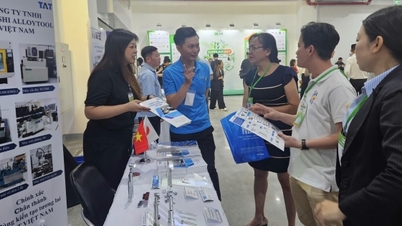
4. Strengthen connections with Israeli partners, proactively participate in trade fairs, B2B events, and market research trips.
5. Prepare financial and commercial insurance documents when working with the Israeli market.
The association also stated that it will provide business data for the electronics industry, organize in-depth training on standards and rules of origin, expand one-on-one consultations, and coordinate with the Ministry of Industry and Trade and the Vietnamese Trade Office in Israel to implement trade promotion programs.
Vietnamese businesses need to take the lead and proactively survey the market.
Mr. Phan Minh Thong, General Director of Phuc Sinh Joint Stock Company, assessed Israel as a vibrant, modern consumer market with high quality demands. "Goods that want to enter Israel must be in the high-end segment or deeply processed, meeting standards equivalent to those in Europe," Mr. Thong said.
According to him, the biggest obstacle comes from geographical distance and the "waiting for customers to come" mentality of Vietnamese businesses. To overcome this barrier, he suggested that the Ministry of Industry and Trade and the Vietnamese Embassy in Israel organize survey trips and tours to connect businesses from both countries.
"Israel buys a lot of goods. If Vietnamese businesses proactively approach and attend international trade fairs where Israeli businesses are present, the chances of signing contracts will be very high," Mr. Thong said.
The export market is wide open: Seafood, cashews, coffee, and rice are leading the way.
According to Mr. Le Thai Hoa, Commercial Counselor of the Vietnamese Trade Office in Israel, the prospects for bilateral trade are very positive, especially in the context of supply chain disruptions in Israel from some traditional markets. This has prompted Israeli businesses to actively seek new suppliers.
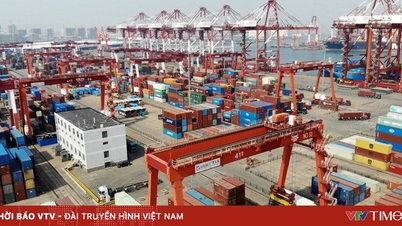
Currently, Vietnam's exports to Israel amount to approximately $800 million per year, and this is expected to reach $850–880 million in 2025.
Vietnam's main export sectors to Israel
Seafood: over $100 million per year, accounting for 12–13% of Israel's total seafood imports. The outlook is for a strong rebound as transportation improves.
Cashew nuts: popular among Israeli consumers due to their quality and reasonable price.
Coffee: Vietnam is currently the fastest-growing market for Israel (2021–2022), primarily in the instant coffee segment.
Rice: Israel imports nearly $200 million worth of rice annually; Vietnamese fragrant and japonica rice are highly regarded.
Other product categories, such as agricultural products, dried goods, spices, footwear, building materials, and electronic/office equipment, still have significant growth potential.
Strong demand for investment from Israel into Vietnam.
Beyond trade, many Israeli businesses are shifting their investment projects to Vietnam due to its stable business environment and reasonable operating costs. Areas where Israel seeks cooperation include: Information technology and cybersecurity; agricultural technology, irrigation, and livestock; healthcare, disease detection and treatment equipment; and software and automation solutions.
In particular, Israel is experiencing a labor shortage and therefore needs to recruit foreign workers, opening up a new avenue of cooperation for Vietnamese businesses.
Important considerations when entering the Israeli market.
Kosher certification (for Israeli businesses) and Halal certification (for Arab businesses) may be required depending on the shipment.
Israel adopted EU and US standards in its import reforms (“what works for the EU and the US works for Israel”).
Businesses should proactively consult import guidance publications released by the Trade Office.
Mr. Hoa also emphasized: "Israeli businesses are very proactive in coming to Vietnam to find partners, while our businesses are still hesitant due to security risks. This is a point that needs to change."
Vietnam and Israel are entering a "golden" period to promote cooperation.
With VIFTA, deep tariff reductions, the complementarity between the two economies, and large market demand, Vietnam and Israel are on the verge of a breakthrough in trade and investment growth. However, to turn this opportunity into tangible results, Vietnamese businesses need to: proactively seek out markets; meet high standards; thoroughly understand rules of origin; and invest in connectivity and trade promotion.
This provides a foundation for Vietnamese businesses to effectively access one of the most promising markets in the Middle East.
Source: https://baophapluat.vn/khai-mo-co-hoi-hop-tac-viet-nam-israel-doanh-nghiep-can-chuan-bi-gi.html


![[Photo] Closing Ceremony of the 10th Session of the 15th National Assembly](/_next/image?url=https%3A%2F%2Fvphoto.vietnam.vn%2Fthumb%2F1200x675%2Fvietnam%2Fresource%2FIMAGE%2F2025%2F12%2F11%2F1765448959967_image-1437-jpg.webp&w=3840&q=75)






































![[OFFICIAL] MISA GROUP ANNOUNCES ITS PIONEERING BRAND POSITIONING IN BUILDING AGENTIC AI FOR BUSINESSES, HOUSEHOLDS, AND THE GOVERNMENT](https://vphoto.vietnam.vn/thumb/402x226/vietnam/resource/IMAGE/2025/12/11/1765444754256_agentic-ai_postfb-scaled.png)






































Comment (0)