

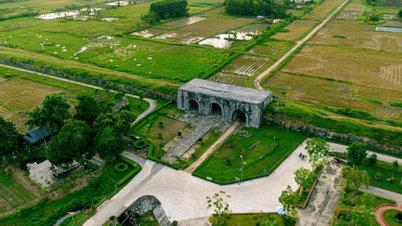
From the center of Thanh Hoa City, heading west towards Vinh Loc area for about 70km, we can easily see a majestic citadel built with massive stone blocks more than 600 years ago.
According to historical records, in January 1397, Ho Quy Ly ordered Do Tinh, the Minister of Personnel and concurrently the Grand Historian, to survey and measure An Ton Cave (the present-day Ho Dynasty citadel) in order to build a rampart, dig a moat, establish ancestral temples, open streets, and erect the Altar of the Earth and Grain, with the intention of moving the capital there.

Ho Citadel World Heritage Site
Despite its brief existence of only 7 years, Ho Quy Ly managed to build the citadel in just 3 months (from January 1397 to the end of March of that year), leaving behind a unique architectural masterpiece, an outstanding symbol of ancient stone citadel construction.
The Ho Dynasty Citadel was built on an area of 155 hectares (the core area), while the entire citadel complex covers 5,000 hectares. The citadel consists of three parts: the outer wall, the moat, and the inner wall, built of stone on the outside and mainly earthen on the inside.
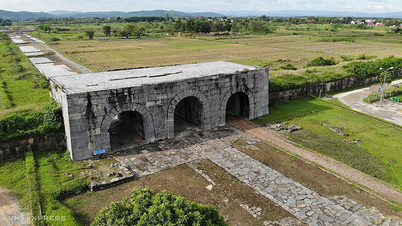
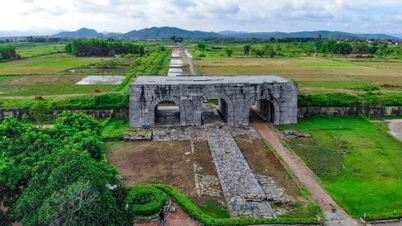
The citadel was built on a nearly square architectural plan, measuring 870.5m from north to south and 883.5m from east to west. The average height was 7-8m, with the southern gate exceeding 10m in some places. Four gates were built in the four directions: south, north, east, and west. The gate architecture featured arched roofs, with the stone slabs on the arches carved into grapefruit segments and fitted together tightly.

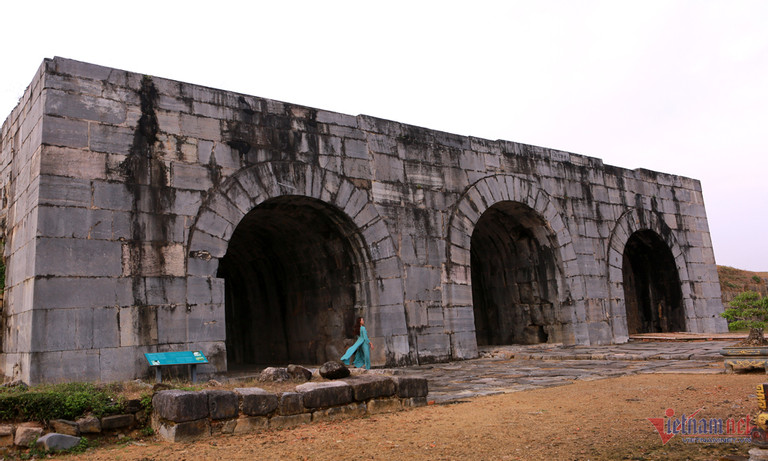
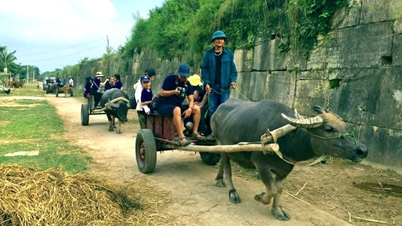
Every year, Ho Dynasty Citadel welcomes millions of visitors.

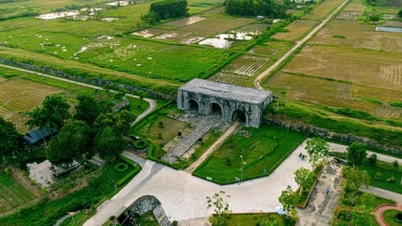
Inside the Ho Dynasty Citadel, people still cultivate their land as usual, creating a tranquil scene.
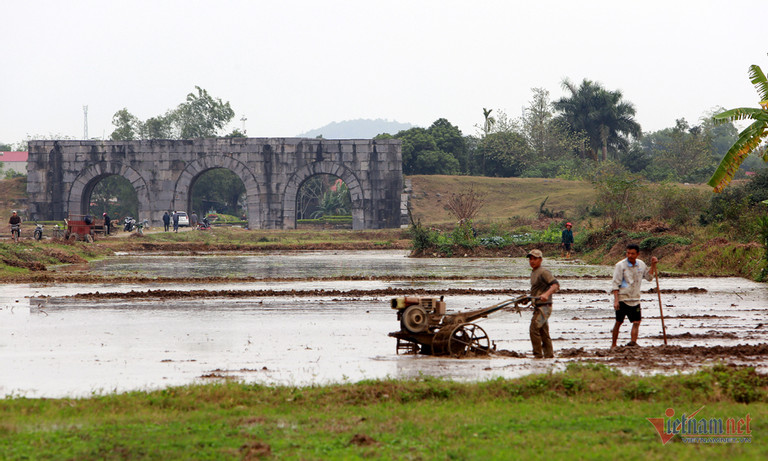
The inner city area is a vast expanse of rice fields.
The entire city wall and the four main gates were built with stone slabs approximately 1.5m long, some as long as 6m, with an average weight of 10-20 tons per block. The western wall features a massive 26.7-ton stone block, representing a total volume of approximately 25,000 cubic meters of stone and nearly 100,000 cubic meters of earth that were meticulously excavated and piled.
Over 600 years later, the city wall system remains almost completely intact, with massive stone slabs weighing tens of tons simply stacked on top of each other without any binding material. What puzzles researchers is that this magnificent structure was completed in just 3 months, from design to construction, demonstrating the unique construction skills, the masterful craftsmanship, and the incredible creativity of the "artisans" of that era.
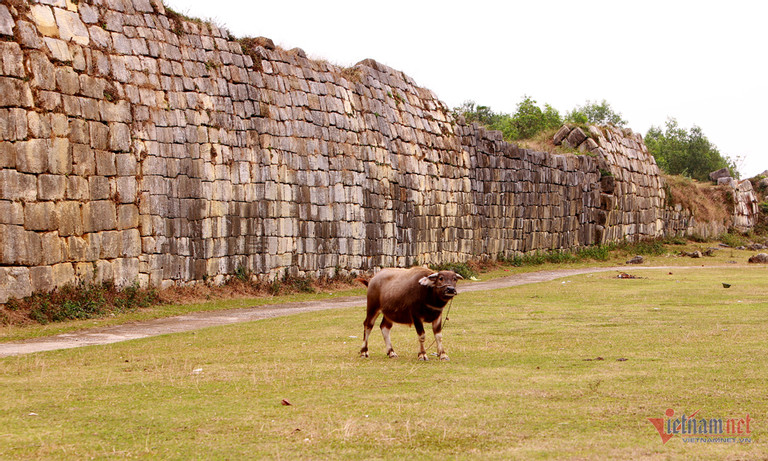
The massive stone wall
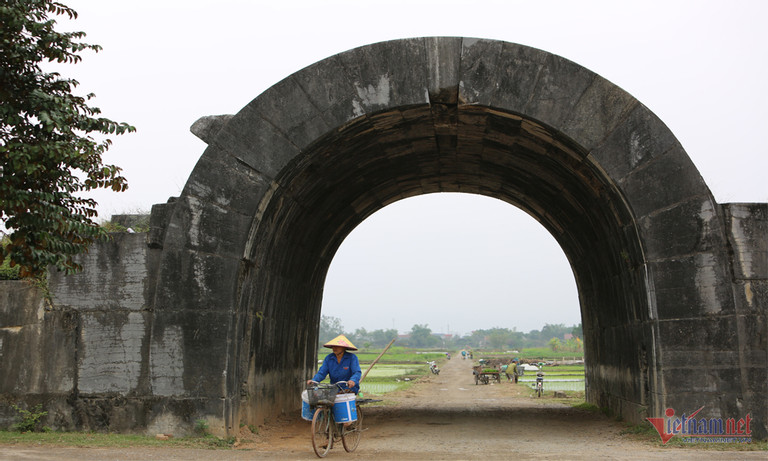
Peaceful life in the city center
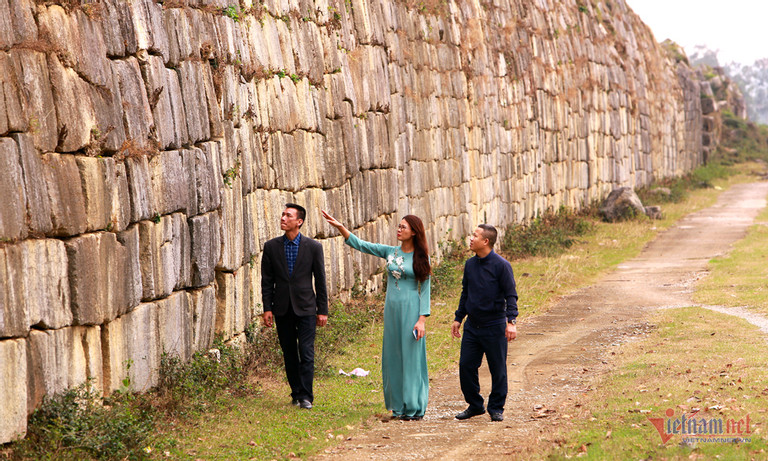
Many tourists come to explore the Ho Dynasty Citadel.
Mr. Trinh Huu Anh, Deputy Director of the Ho Citadel World Cultural Heritage Conservation Center, said that to serve the people during the Lunar New Year of the Year of the Dragon, the unit has developed and planned a cultural space and special art programs.
Specifically: the Spring Flower Festival of the ancient capital , participating in the "Golden Bell" quiz and immersing oneself in the Thượng Nêu festival, releasing Ông Công fish in the Imperial Palace; an exhibition space showcasing artifacts with the theme "Land and People of Tây Đô" ; recreating the atmosphere of Tet in the past, organizing a calligraphy program at the beginning of spring, displaying photos with the theme "Heritage Route" and performing cultural and artistic performances of the Tây Đô region….






































































Comment (0)