

To address these issues, science and technology play a key role in the transition of the development model to a green, low-emission, resource-efficient economy .
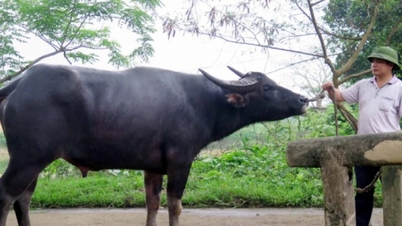
For Vietnam, the livestock industry in particular and agriculture in general are both pillars of food security and sectors directly impacted by climate change. They are also sources of emissions that need to be controlled and restructured towards a greener, more sustainable direction.
Over the years, science and technology in livestock farming have become the foundation and key driving force for the industry's development. Research, transfer, and application of technological advancements have significantly contributed to improving breed structure, increasing livestock productivity, developing high-tech and digital technologies in livestock farming, and gradually perfecting a sustainable livestock farming system.
This role becomes even more crucial in the context of the ongoing Fourth Industrial Revolution, which demands research into new models, technologies, and processes, and their widespread transfer into agricultural production and processing in line with the circular economy. Implementing modern, closed-loop processes that maximize the use of by-products, minimize the use of natural resources, and reduce environmental waste not only enhances product value but also ensures the sustainable development of the livestock industry.
In practice, science and technology have driven the shift in livestock farming from small-scale to industrial-scale, gradually moving from "quantity" to "quality". New technical and technological advancements are being applied comprehensively, from feed and breeding stock to farming processes and environmental treatment, creating a foundation for the industrialization of livestock farming towards a green and safe direction, meeting the increasingly high demands of domestic and international markets.

In recent years, Vietnam's livestock industry has been restructuring towards increasing added value, sustainable development, and strongly promoting organic farming, circular farming, and green farming.
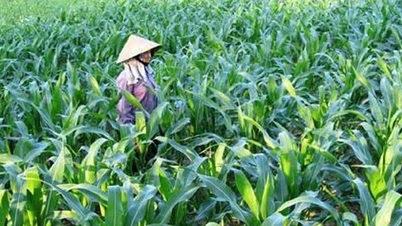
Many models have been implemented that utilize agricultural by-products such as corn stalks, straw, and peanuts to produce animal feed; process waste to produce biogas, raise earthworms, and produce biofertilizers and organic fertilizers; and apply microbial technology, biological bedding, and waste treatment techniques.
These practices both reduce environmental impact and increase the value of the production chain. Livestock and poultry farming along the value chain, with strict adherence to biosecurity, disease control, and traceability requirements, is increasingly emphasized. Many large enterprises have built supply chain linkages, mastered technology, promoted digital transformation, and exported livestock products.
The quality of livestock breeds has improved significantly; high-yielding breeds from around the world have been quickly adopted and applied.
Advanced techniques such as artificial insemination, sex-sorted semen, and embryo transfer in cattle, pigs, and poultry are achieving increasingly higher success rates. Many farms have proactively managed waste at the source, using organic products to process straw and livestock waste into organic fertilizer, contributing to the development of green agriculture, reducing greenhouse gas emissions, and limiting negative impacts on the surrounding environment.
Several technological processes for processing agricultural and industrial by-products, treating livestock wastewater, and producing microbial organic fertilizers have been initially applied in farms and households, in line with the circular economy and green economy orientation.
However, sustainable livestock development has only achieved initial results, and many issues remain that need to be addressed.
Production remains largely small-scale, fragmented farming households, lacking linkages, which creates obstacles to the application of science and technology, the organization of production along value chains, and the connection of production with processing and trade of agricultural products.
The system of mechanisms and policies supporting organic, circular, and green livestock farming lacks uniformity; project development procedures and access to support mechanisms remain complex and risky, making it difficult for businesses and farmers to confidently invest.
Vietnam currently possesses a vast amount of agricultural, forestry, and fisheries by-products and livestock waste, which constitute important "secondary resources" for the development of a circular economy in agriculture. However, the collection and reuse rates remain limited, and the mechanisms and policies for effectively utilizing these by-products have not yet been fully effective.
Furthermore, the penalties for violations related to the use of veterinary drugs, chemicals, and antibiotics in livestock and aquaculture, as well as acts of environmental pollution, food safety fraud, and mixing organic, green, and high-quality products with conventional products, are not strong enough. This reduces market confidence and hinders the development of green livestock brands.

From the perspective of developing and transferring environmentally friendly technologies, the roles of research institutes, universities, and businesses are becoming increasingly evident, but many gaps remain.
At research institutions, scientific activities have become more closely linked to practice, but the management and statistics of technology commercialization remain limited; in some cases, authors transfer research results independently without appropriate monitoring and management mechanisms. Many inventions and new technological processes remain at the research stage, incomplete and not yet ready for widespread application, requiring further time and investment.
From the scientists' perspective, the need for and ability to connect with businesses is not high due to a lack of mechanisms, incentives, and conditions for coordination. Some scientific and technological products are few and of insufficient quality to meet commercialization requirements; research equipment capacity is limited; and research time is long while businesses need quick solutions that meet market demands.
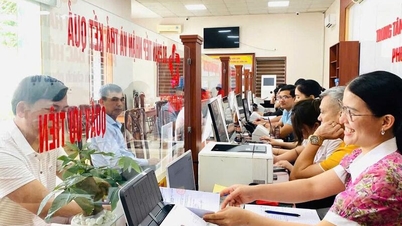
From the business perspective, most are small-scale, have simple production processes, and limited financial resources, thus having few opportunities to invest in research, technological innovation, and technology assessment and valuation. Concerns about business confidentiality also make many businesses hesitant to collaborate with research institutes and universities.
Intellectual property rights are one of the crucial factors ensuring the successful commercialization of technology. However, awareness and enforcement of intellectual property protection remain limited, the number of technology patent applications is low, and intellectual property infringement continues to be a complex issue. A portion of research results have potential applications but do not yet meet commercial requirements; scientists are not proactive in bringing their products to market, while businesses lack the capacity and readiness for technological innovation.
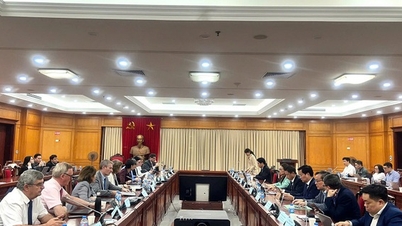
In this context, the State's role in promoting the development of the science and technology market becomes particularly important. It is necessary to continue reviewing and removing institutional, mechanism, and policy bottlenecks to ensure the science and technology market develops synchronously, efficiently, modernly, and integrated; encourage the formation and development of intermediary organizations such as appraisal, valuation, and technology transfer consulting units; and connect the science and technology market with the markets for goods, services, labor, and finance.
The development and pilot implementation of policies to incentivize commercialization, and to quickly integrate research results and intellectual property generated from state budgets, public-private partnerships, and private sector research into production and business, is an urgent requirement.
To promote green livestock farming, several solutions need to be implemented in a coordinated manner.
First, we must continue to improve the mechanisms and policies for developing green livestock farming, creating a favorable environment to attract social investment in green agriculture. This includes policies to encourage businesses to invest in livestock farming, develop farm and household economies, mechanization, and the application of digital technology and digital transformation in production and management. Alongside this, we must reorganize production towards close cooperation and linkages in the value chain from production to consumption between farmers, cooperatives, and businesses, with businesses playing a core role.
Simultaneously, it is necessary to promote research, transfer, and application of science and technology throughout the entire livestock chain, considering this a key step to create breakthroughs in restructuring the industry.
Developing policies to encourage high-tech and innovative livestock farming, supporting high-tech livestock businesses, developing science and technology centers serving key livestock farming regions, and strengthening the commissioning of scientific tasks linked to practical requirements are essential.
Improving the quality of human resources, from training farmers to become "professional farmers" to building a team of livestock technical staff and value chain managers, is a decisive factor in the capacity to organize green livestock production.
Prioritizing market development and international economic integration for green livestock products is crucial. Strengthening research capacity, market forecasting, trade promotion, building an image of green, high-quality products, ensuring food safety, and linking them with brands and geographical indications will create a competitive advantage for Vietnam's livestock industry. Effectively leveraging support and experience from other countries and international organizations, and linking green livestock development with deep integration, is a direction consistent with current trends.
It can be affirmed that breakthroughs in science and technology development are decisive factors in promoting green transformation and sustainable development of the livestock industry. To achieve this goal, close coordination is needed between the Government, businesses, research institutes, universities, and farmers in formulating and implementing policies, investing in research and development, and commercializing green technologies.
Along with institutional reform and the improvement of the science and technology market, raising public awareness and changing the mindset and actions of each organization and individual regarding green production and consumption will create a solid social foundation for the green transformation in livestock and agriculture, making a practical contribution to the country's sustainable development goals.
Source: https://mst.gov.vn/khoa-hoc-cong-nghe-dong-luc-then-chot-thuc-day-chuyen-doi-xanh-trong-chan-nuoi-197251210182101698.htm


![[Photo] Prime Minister Pham Minh Chinh holds a phone call with the CEO of Russia's Rosatom Corporation.](/_next/image?url=https%3A%2F%2Fvphoto.vietnam.vn%2Fthumb%2F1200x675%2Fvietnam%2Fresource%2FIMAGE%2F2025%2F12%2F11%2F1765464552365_dsc-5295-jpg.webp&w=3840&q=75)


![[Photo] Closing Ceremony of the 10th Session of the 15th National Assembly](/_next/image?url=https%3A%2F%2Fvphoto.vietnam.vn%2Fthumb%2F1200x675%2Fvietnam%2Fresource%2FIMAGE%2F2025%2F12%2F11%2F1765448959967_image-1437-jpg.webp&w=3840&q=75)

































![[OFFICIAL] MISA GROUP ANNOUNCES ITS PIONEERING BRAND POSITIONING IN BUILDING AGENTIC AI FOR BUSINESSES, HOUSEHOLDS, AND THE GOVERNMENT](https://vphoto.vietnam.vn/thumb/402x226/vietnam/resource/IMAGE/2025/12/11/1765444754256_agentic-ai_postfb-scaled.png)





































Comment (0)