


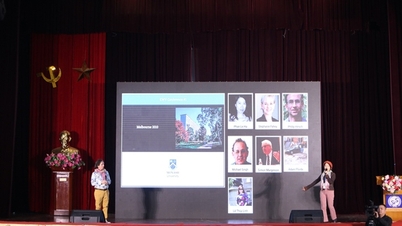
The workshop clarified the facilitating role of the State, the proactive role of localities and businesses in building a sustainable startup ecosystem.
Experience from many provinces and cities shows that innovative startups are gradually becoming an important driving force for new growth, linked to science , technology, innovation, and digital transformation.
Platform for the local startup ecosystem
The workshop took place in the context of the nationwide strong implementation of Resolution No. 57-NQ/TW of the Politburo , which identifies science, technology, innovation, and national digital transformation as breakthrough pillars for rapid and sustainable development. Accordingly, innovative entrepreneurship is no longer a standalone economic activity, but has become an important component in national and local growth strategies.
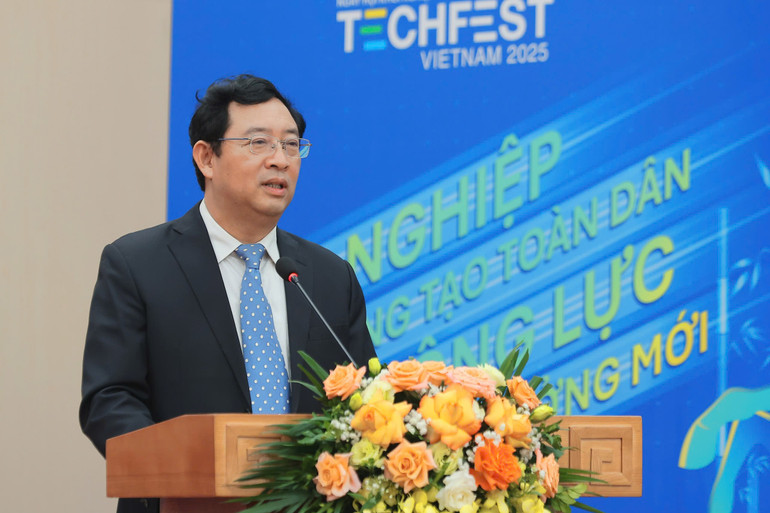
With the participation of experts, managers, and businesses from many provinces and cities, many opinions at the workshop emphasized the leading role of the State in overcoming "market failures" - a common characteristic of innovation activities with large capital requirements, high risks, and long payback periods.
According to representatives from many localities, only the State has the authority and resources to invest in digital infrastructure, innovation centers, and science and technology support funds, thereby creating a foundation for the private sector, businesses, and startups to develop.
The year 2025 also marks a significant step in institutional development with the promulgation of a series of laws and decrees related to innovative startups. According to Pham Hong Quat, Director of the Department of Startups and Technology Enterprises, documents such as the Law on Science, Technology and Innovation; the Law on Digital Technology Industry; the Law on Technology Transfer… along with decrees on venture capital funds and the recognition of innovation centers have created an important "institutional runway," helping innovative startups become more in-depth and substantive.
Each locality has its own approach, linked to its unique advantages.
Experience from various localities shows that innovative startups are being implemented in many different models, linked to their specific conditions, advantages, and development orientations.
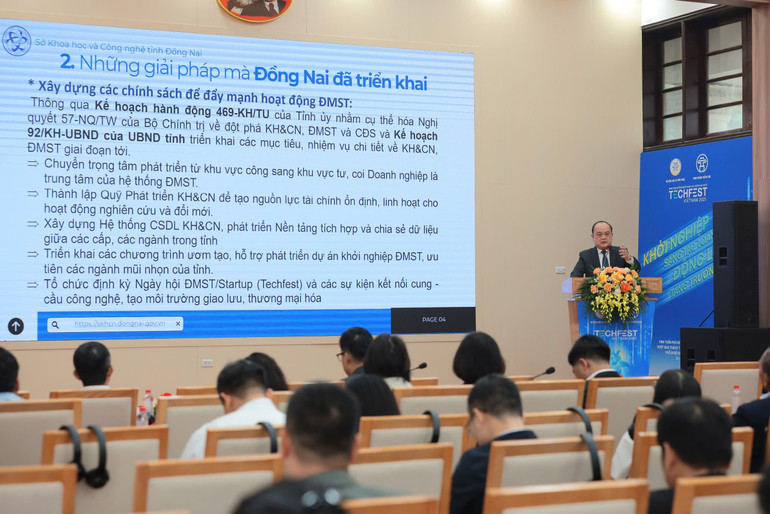
In Dong Nai, an innovative startup ecosystem has been established with approximately 90 innovative startups, 16 science and technology enterprises, and dozens of commercialized products.
According to Vo Hoang Khai, Deputy Director of the Dong Nai Department of Science and Technology, the locality identifies innovation as the driving force for transforming its growth model, while simultaneously promoting decentralization and delegation of authority in the field of science and technology, attracting talent, and fostering linkages among the "four stakeholders" (farmers, scientists, businesses, government, and scientists). Notably, Dong Nai is aiming to form a "development triangle" comprising the Long Thanh Digital Technology Park, the Innovation Zone, and the High-Tech Park.
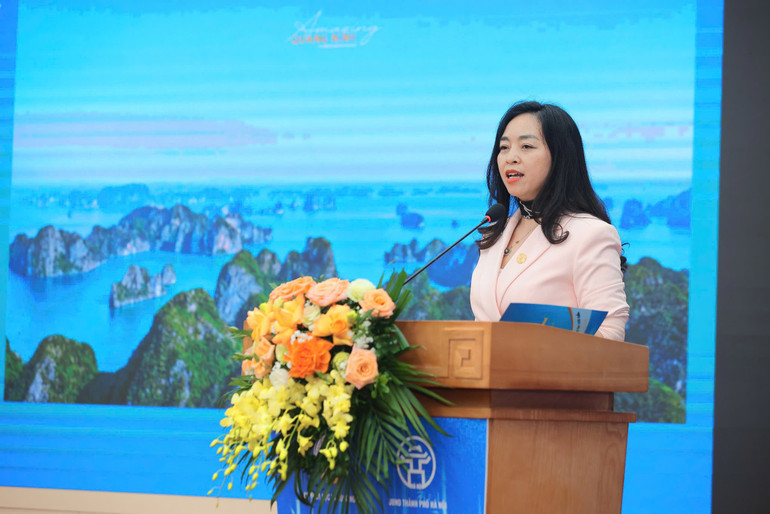
For Quang Ninh, developing a creative startup ecosystem is considered a way to unlock resources, diversify economic models, and nurture the creative spirit of the younger generation.
According to Vu Thi Kim Chi, Deputy Director of the Quang Ninh Department of Science and Technology, the province is focusing on reforming administrative procedures, supporting small businesses and startups, and establishing an Innovation and Entrepreneurship Center to support digital transformation. Maintaining investment and startup clubs with approximately 500 members has contributed to forming a widespread network within the ecosystem.
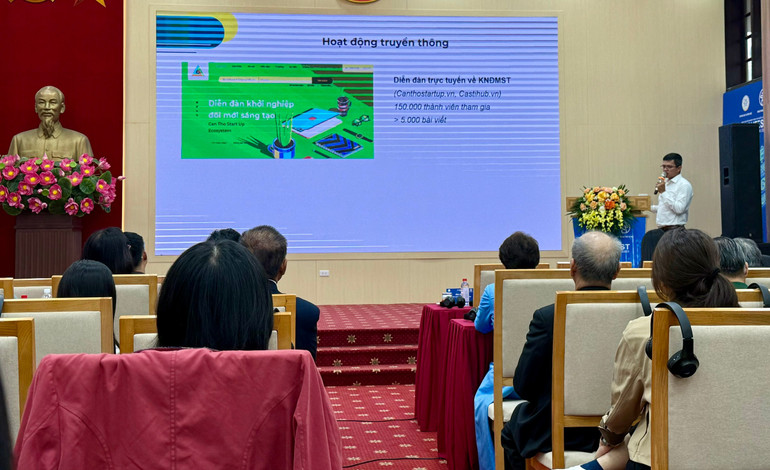
In Can Tho, innovative startups are positioned within the long-term vision of becoming a smart manufacturing, service, and innovation hub for the Mekong Delta region. According to Nguyen Thanh Dien, Deputy Director of the Can Tho City Center for Startups and Innovation: “The city has connected and mentored approximately 40 startup projects with a total investment interest value reaching hundreds of thousands of USD.”
However, according to the delegates, significant challenges remain, as social investment in research and development is inadequate, and linkages between stakeholders in the ecosystem are not truly strong, requiring more synchronized policies at both the local and national levels.
Improving the ecosystem: from green innovation to the challenges of capital and human resources.
Besides localities with advantages in industry and services, many provinces are choosing the path of innovative startups associated with high-tech agriculture and green development.
Following the merger, Lam Dong province covers an area of approximately 24,000 km² with 3.4 million inhabitants, forming three dynamic regions: the highlands, the coastal region, and the midland region. The province has set a vision to become a green innovation center, with high-tech agriculture as its cornerstone, promoting the application of IoT, artificial intelligence, environmental data, biotechnology, traceability, and blockchain. According to Pham Thi Nham, Deputy Director of the Lam Dong Department of Science and Technology, the biggest challenges currently are the lack of high-quality human resources, the absence of sufficiently strong venture capital funds, and the limited commercialization of research results.
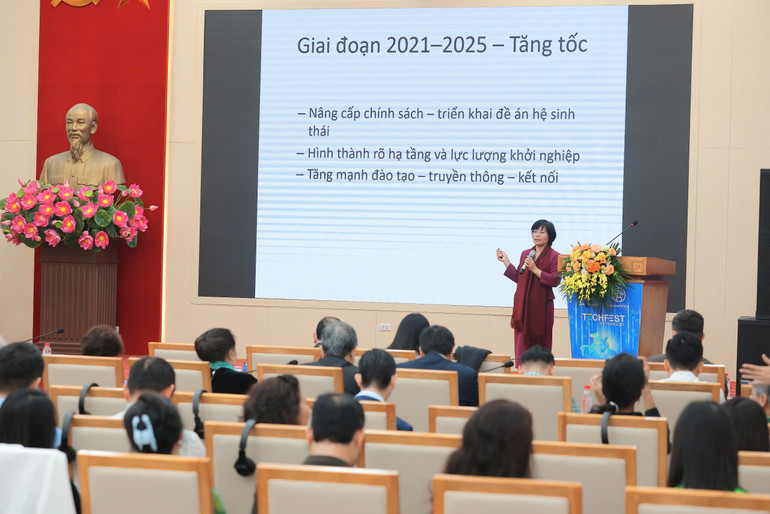
Meanwhile, Khanh Hoa is facing the challenge of improving the quality of innovation, as the majority of businesses are small and micro-sized, and R&D and innovation activities are still at a low level. According to Vo Quang Lam, Deputy Director of the Khanh Hoa Department of Science and Technology, the province will focus on enhancing the capacity of the Center for Applied Science and Technology Information, and simultaneously build a network of innovative startup linkages for the period 2026-2030 to gradually connect the local ecosystem with the national and international innovation network.
Concluding the workshop, Director of the Department of Startups and Technology Enterprises Pham Hong Quat emphasized that, in order for innovative startups to truly become a new growth engine, localities need to strengthen regional linkages, develop human resources, form a venture capital market, and establish appropriate policy testing mechanisms.
TECHFEST Vietnam 2025, with many innovations in organization and content, continues to play a role as a space connecting policies, businesses, and the innovation community, contributing to spreading the spirit of creative entrepreneurship throughout society.
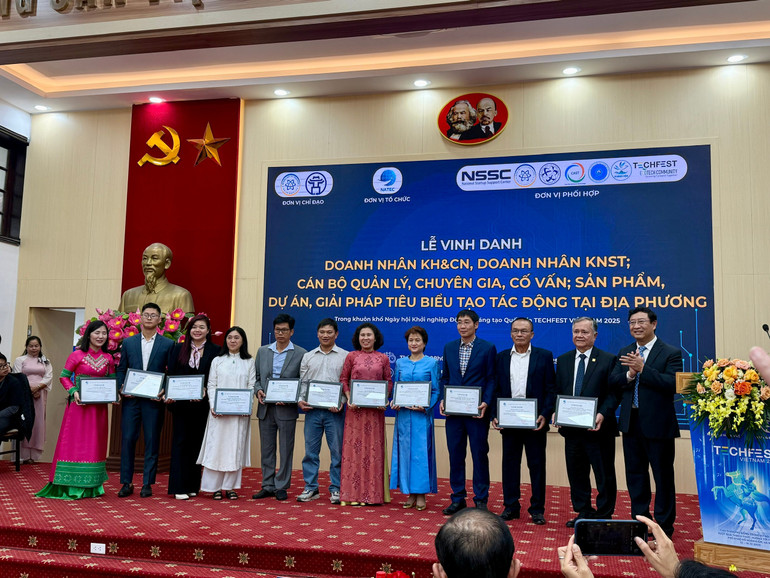
On this occasion, Mr. Pham Hong Quat, Director of the Department of Startups and Technology Enterprises, presented Certificates of Merit to many outstanding businesses, entrepreneurs, managers, and experts who have made remarkable contributions, recognizing practical and valuable initiatives and solutions in promoting innovative startup activities and developing the innovation ecosystem in localities.
The Vietnam Innovation and Entrepreneurship Festival - TECHFEST Vietnam 2025, organized by the Ministry of Science and Technology in collaboration with the Hanoi People's Committee, took place from December 12th to 14th at the Hoan Kiem Lake pedestrian street. This year's theme – "Innovative Entrepreneurship for All – A New Driving Force for Growth" – reflects the direction of making innovation a widespread activity involving all levels of society.
Source: https://nhandan.vn/khoi-nghiep-sang-tao-don-bay-moi-cho-phat-trien-kinh-te-xa-hoi-dia-phuong-post929812.html















![[Photo] Prime Minister Pham Minh Chinh holds a phone call with the CEO of Russia's Rosatom Corporation.](/_next/image?url=https%3A%2F%2Fvphoto.vietnam.vn%2Fthumb%2F1200x675%2Fvietnam%2Fresource%2FIMAGE%2F2025%2F12%2F11%2F1765464552365_dsc-5295-jpg.webp&w=3840&q=75)













































Comment (0)