

The medical history revealed that the baby was born vaginally, weighing 3.4 kg at birth, and had abdominal distension after birth. The baby was admitted to the hospital due to severe vomiting, especially in the three days prior to admission. Prior to this, the patient's mother did not have regular prenatal checkups at medical facilities and only visited private clinics in the final months of her pregnancy.
At the Neonatal Department of Children's Hospital 2, the baby was vomiting more frequently, looked listless due to dehydration, and had a very distended abdomen. After examination by doctors who suspected a tumor in the epigastric region, the baby was ordered to have an abdominal ultrasound.
On September 11th, Dr. Pham Ngoc Thach, Deputy Director of Children's Hospital 2, stated that the results showed a giant mixed mass in the child's abdomen, containing heterogeneous fluid. Abdominal X-rays revealed calcifications in the tumor area. This was identified as the primary cause of the obstruction and gastrointestinal symptoms. After consultation, doctors from the Neonatal and General Surgery departments decided to perform surgery on the child.
The baby received resuscitation with electrolyte replacement and intravenous fluids to compensate for fluid loss due to vomiting, and the doctors then performed surgery.
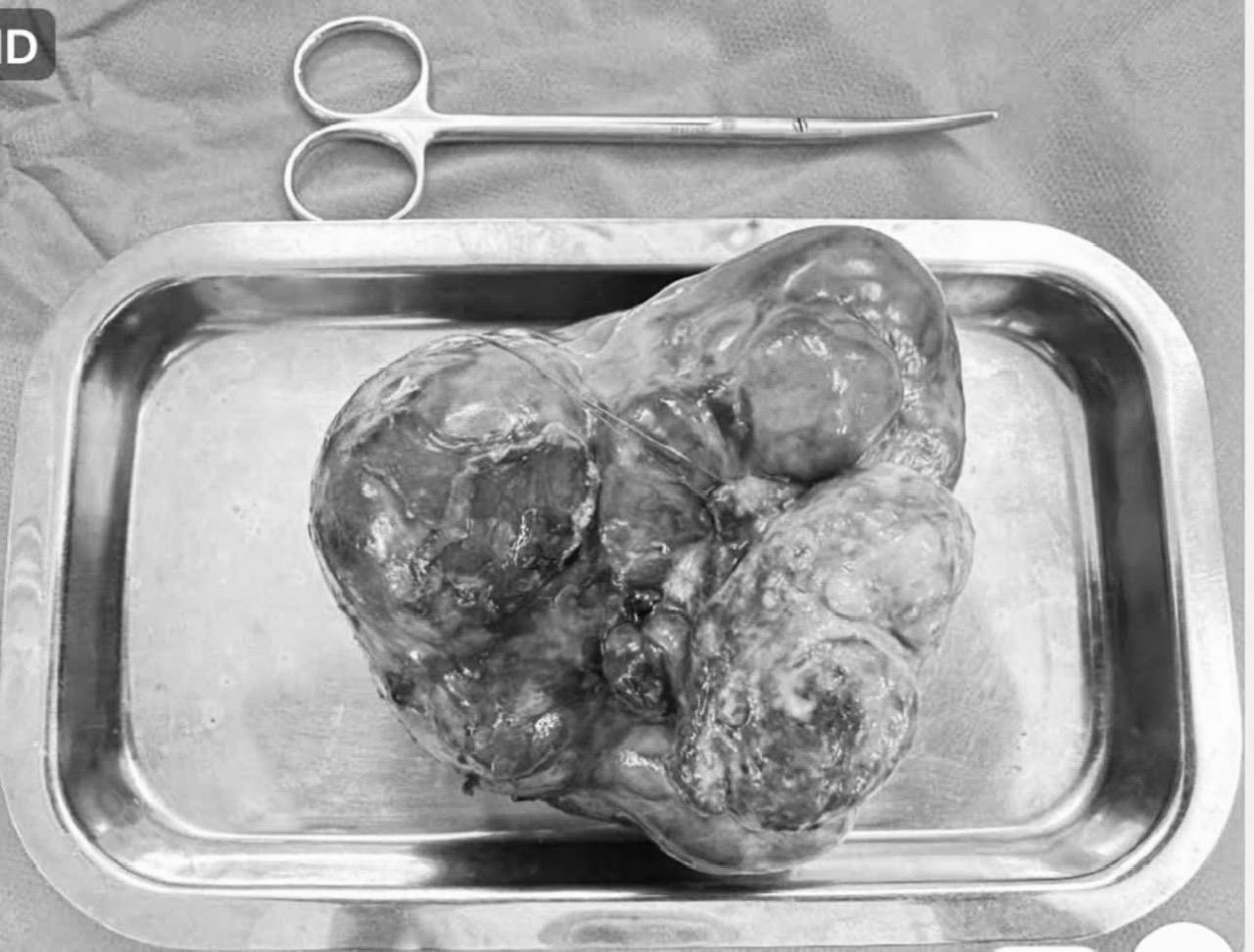
The teratoma after it was surgically removed from the boy's stomach.
During surgery, a large tumor measuring 12x6 cm was found to occupy almost the entire abdominal cavity of the newborn. The tumor was attached to the stomach, with a portion lying entirely within the stomach lumen.
Doctors removed a portion of the stomach containing the tumor and extracted the entire tumor, which weighed approximately 1 kg. After removing the tumor, the doctors reconstructed the stomach and closed the abdominal cavity.
Currently, the baby's health is gradually improving, the surgical wound is clean, the abdomen has flattened completely, and the baby is feeding well.
Gastric teratoma in children is extremely rare.
According to Dr. Pham Ngoc Thach, Deputy Director of Children's Hospital 2, gastric teratoma in children is extremely rare, especially in newborns. Teratomas in children are most commonly found in the sacrococcygeal region of the spine (40%), followed by the ovaries (25%), testes (12%), and brain (5%). The digestive tract is the least affected, with the stomach being the least affected. According to medical literature, fewer than 100 cases of gastric teratoma have been recorded worldwide to date. Currently, no cases of gastric teratoma in newborns have been recorded in Vietnamese medical literature.
The tumor is usually benign; however, it can cause gastric obstruction, anemia, and gastric rupture. The disease is often manifested by abdominal distension, a palpable mass in the abdomen, vomiting, anemia, and respiratory distress. It can be detected early if the pregnancy is properly monitored or if a general check-up and screening for birth defects are performed after birth.
"Early detection, especially prenatal diagnosis, helps us proactively prepare for surgery, avoiding situations where the baby is in a state of vomiting, dehydration, or infection, making the surgery more difficult, especially the recovery process. Therefore, prenatal examination is very important," Dr. Thach shared.
Source: https://thanhnien.vn/khoi-u-quai-nang-1-kg-trong-da-day-be-trai-so-sinh-185240911155623137.htm

![[Photo] Prime Minister Pham Minh Chinh attends the Conference summarizing and implementing tasks of the judicial sector.](/_next/image?url=https%3A%2F%2Fvphoto.vietnam.vn%2Fthumb%2F1200x675%2Fvietnam%2Fresource%2FIMAGE%2F2025%2F12%2F13%2F1765616082148_dsc-5565-jpg.webp&w=3840&q=75)








































































Comment (0)