

Photo: iStock
Budget impasse threatens US economic recovery.
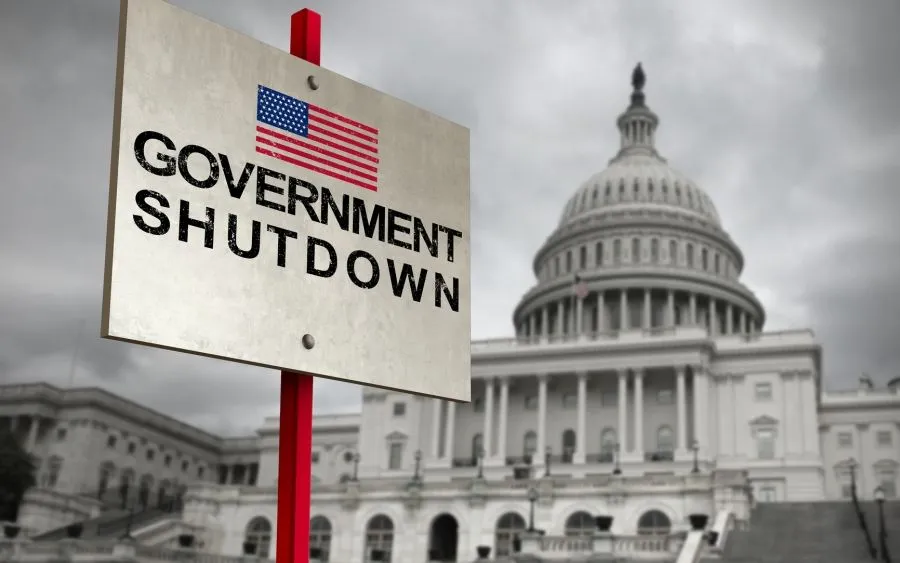
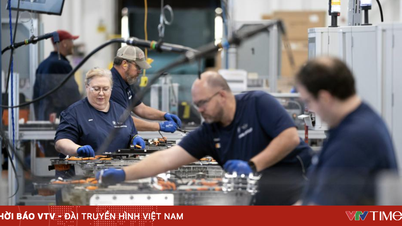
The prolonged budget impasse in the U.S. Congress has forced the federal government to partially shut down for more than two weeks, causing significant damage to the world's largest economy. Many experts estimate that this disruption is costing the U.S. approximately $15 billion per day in output – a figure reflecting the enormous cost of political disagreement.
Speaking at the annual meeting of the International Monetary Fund (IMF) and the World Bank (WB) on October 15 in Washington, US Treasury Secretary Scott Bessent warned that the shutdowns were slowing growth and eroding investor confidence.
According to him, although the economy maintains a solid foundation thanks to private investment and the wave of new technologies such as artificial intelligence (AI), "the lack of budgetary consensus is hindering development." Thousands of infrastructure and research projects have been put on hold, while business sentiment has clearly declined.
Some financial institutions believe the actual losses may be lower, around $15 billion per week, but they all agree that the prolonged stalemate is creating significant risks to the investment environment and the conduct of US macroeconomic policy.
Widespread impact and pressure on policy implementation.
The impact of the government shutdown is widespread. Because Congress has yet to pass a temporary spending bill, dozens of federal agencies have had to cut or cease operations, slowing down processes such as licensing, auditing, and the release of economic data.
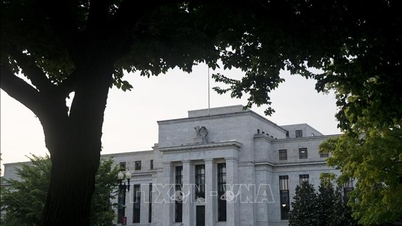
Affected agencies include the Department of Commerce, the Customs Service, the Immigration Service, and various import-export management units. The disruption to the release of inflation, employment, and housing data has left monetary policy in a state of "data input." Federal Reserve Chairman Jerome Powell has warned that this could reduce flexibility in interest rate decisions.
International trade is also hampered by lengthy import and export licensing procedures and foreign worker paperwork, increasing costs and time for businesses.
The impact extends beyond just production losses to market sentiment. Many technology, energy, and manufacturing companies have postponed new projects due to pending approvals, causing a temporary slowdown in foreign direct investment (FDI) into the US. Some businesses are considering shifting to regions with more stable political environments to ensure project progress.
In terms of employment, approximately 4,000 federal employees have been temporarily furloughed, and hundreds of thousands more are working on "budget waiting" terms. This directly impacts household consumption and the recovery of the job market in the fourth quarter of 2025.
The lack of regular economic reports forces the Fed and policymakers to rely on outdated data, reducing their ability to respond to new developments. Meanwhile, US inflation remains around 2.9% and growth shows signs of slowing – a context that demands more accurate and up-to-date data than ever before.
International investors are closely monitoring the situation in Washington, fearing that if the deadlock continues, confidence in the US's fiscal management capabilities will be damaged – a factor that has historically been the foundation of the dollar's position and global financial markets.
Professor David Elliott of George Washington University commented: "Previous government shutdowns have typically had short-term impacts, but 2025 could be an exception as the US economy is in a period of adjustment after a prolonged cycle of interest rate hikes. Any disruption could amplify feelings of uncertainty."
Fiscal picture
According to the IMF, the US budget deficit is currently over 7% of GDP – the highest among developed economies. Interest payments on public debt have exceeded $1.2 trillion, equivalent to the combined spending of the Department of Defense and the Department of Education.
This presents a difficult dilemma for the US government: it must both maintain spending to support growth and control rising public debt.
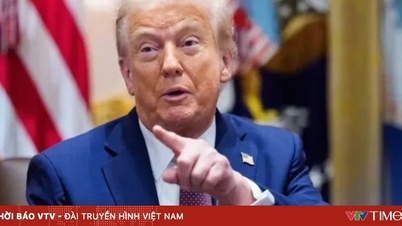
Secretary Scott Bessent argued that the U.S. needs to move toward a balanced growth model, boosting productivity alongside fiscal discipline. However, he acknowledged that reaching a consensus is a major challenge with the presidential election approaching, making any budget agreement politically sensitive.
Nevertheless, Mr. Bessent expressed confidence in the long-term resilience of the US economy. Technology companies, particularly in the AI and clean energy sectors, are maintaining long-term investment plans, reflecting expectations of a more stable environment once the budget crisis is resolved.
Observers believe this budget impasse is a crucial test of the White House's ability to reconcile the interests of Congress. If an agreement is reached soon, the US could limit economic damage, bolster market confidence, and maintain its position as a global financial center.
Conversely, a prolonged scenario could undermine Washington's credibility, negatively impacting the labor market, investment, and monetary policy. With the world expecting the U.S. to lead the global recovery, restoring the smooth functioning of government is seen as a critical task – not only for economic gain, but also for national prestige.
Source: https://vtv.vn/kinh-te-my-chiu-ton-that-vi-be-tac-ngan-sach-10025101623361496.htm

![[Photo] Closing Ceremony of the 10th Session of the 15th National Assembly](/_next/image?url=https%3A%2F%2Fvphoto.vietnam.vn%2Fthumb%2F1200x675%2Fvietnam%2Fresource%2FIMAGE%2F2025%2F12%2F11%2F1765448959967_image-1437-jpg.webp&w=3840&q=75)
![[Photo] Prime Minister Pham Minh Chinh holds a phone call with the CEO of Russia's Rosatom Corporation.](/_next/image?url=https%3A%2F%2Fvphoto.vietnam.vn%2Fthumb%2F1200x675%2Fvietnam%2Fresource%2FIMAGE%2F2025%2F12%2F11%2F1765464552365_dsc-5295-jpg.webp&w=3840&q=75)









































![[OFFICIAL] MISA GROUP ANNOUNCES ITS PIONEERING BRAND POSITIONING IN BUILDING AGENTIC AI FOR BUSINESSES, HOUSEHOLDS, AND THE GOVERNMENT](https://vphoto.vietnam.vn/thumb/402x226/vietnam/resource/IMAGE/2025/12/11/1765444754256_agentic-ai_postfb-scaled.png)










































Comment (0)