

On the afternoon of September 20th, Hanoi Moi Newspaper organized an online meeting and exchange titled " Hanoi , 70 Years of Construction and Development," aiming to affirm the importance and historical significance of the Liberation Day of the Capital; the glorious revolutionary struggle tradition and the great contributions of the Party Committee, government, military and people of Hanoi in the cause of national liberation, construction and protection of the Fatherland.
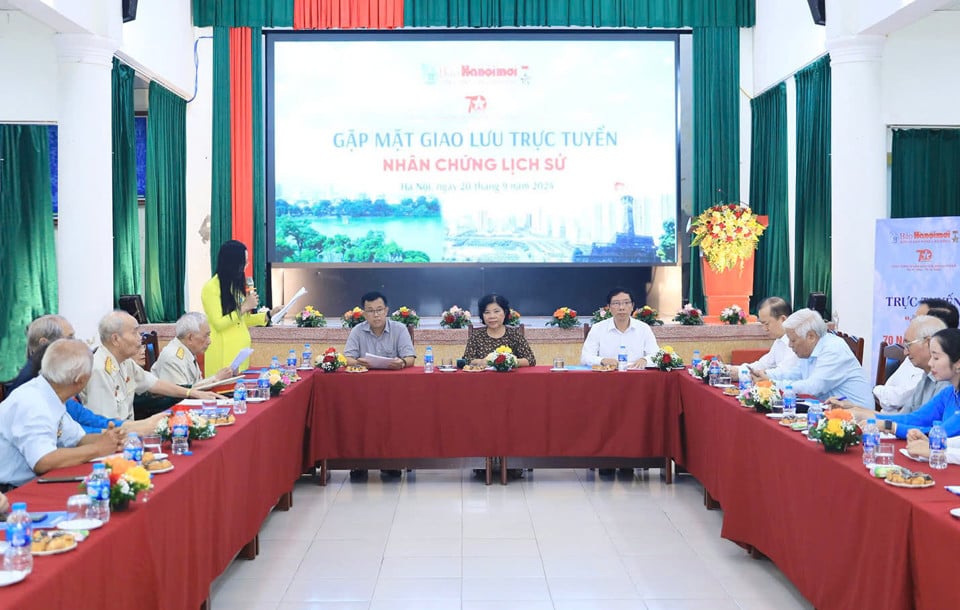
Participating in the online exchange and meeting were historical witnesses, cultural and historical researchers, experts, and representatives of the younger generation in Hanoi...
Special mission on the day of return
Sharing his experience at the meeting and exchange, Colonel Bui Gia Tue, former Head of the Legal Department of the General Department of Defense Industry, said that on the way to take over the capital, his 308th Division had the honor of meeting President Ho Chi Minh at Hung Temple and was assigned the task of returning to take over the capital.
Colonel Bui Gia Tue shared: "Why did Uncle Ho use the word 'return'? Because he knew that we were leaving from Hanoi. Before leaving the capital to fight the French, we wrote a short slogan on the wall: 'There will be a day when we return to Hanoi.' On the day of the takeover of the capital, my car was the third to enter, following the cars of the Chairman of the Military Governing Committee, Vuong Thua Vu, and the Vice Chairman of the Military and Political Committee of Hanoi, Tran Duy Hung; we went from Ha Dong, into Cua Nam, through Hang Dau, Hang Ngang, Hang Dao, Hoan Kiem Lake…".
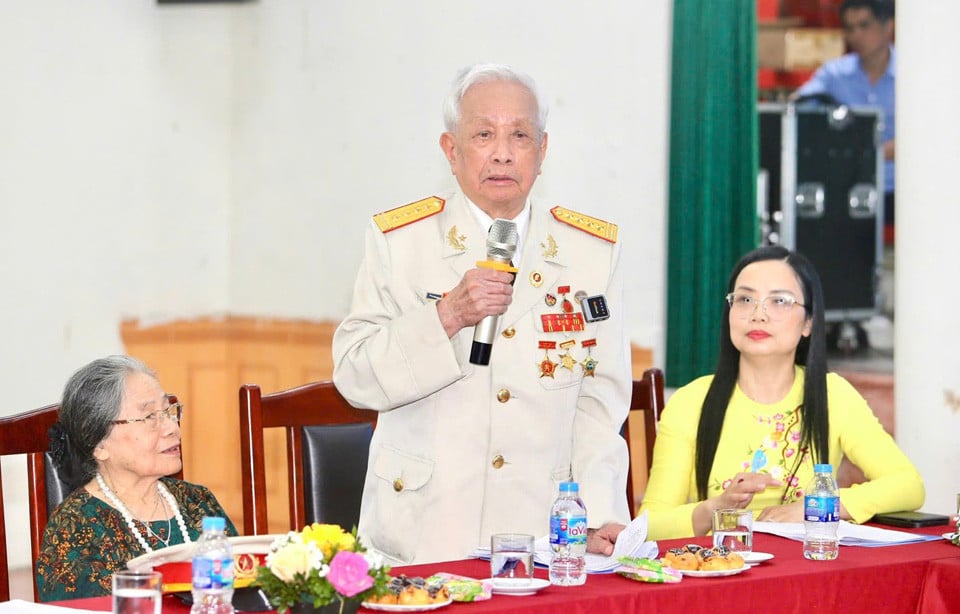
The historical witnesses participating in the seminar included: Colonel Bui Gia Tue (born in 1931) - former Head of the Legal Department (General Department of Defense Industry), one of the first soldiers to return and take over the capital on October 10, 1954; Colonel Nguyen Thu (born in 1933) - a historical witness who participated in the takeover of the capital; Mr. Nguyen Van Trac (born in 1932) - participated in the parade on September 2, 1955 and in the 12 days and nights of "Hanoi - Dien Bien Phu in the air"; Mr. Nguyen Van Khang (born in 1935) - Head of the Liaison Committee of the Youth Volunteer Team that took over the capital; and Ms. Duong Thi Vin - former Vice President of the Hanoi City Association of Former Youth Volunteers.
"Sitting at the front of the vehicle on the right, I witnessed the joyful welcome of tens of thousands of people, and I was deeply moved. The girls from Trung Vuong High School rushed out to greet and embrace us, which made us even more emotional… That was a truly happy moment that I will never forget," said Colonel Bui Gia Tue.
Meanwhile, Mr. Nguyen Van Khang, head of the liaison committee of the youth team responsible for taking over the capital, said: "At that time, we were selected to join the Hanoi Youth Volunteer Team, nearly 400 people, arriving in Hanoi early, from around October 3rd to 6th, 1954. Our task was to act as a vanguard, contacting the people of Hanoi before the army advanced to take over. At that time, due to distorted information and manipulation by the enemy, there were misunderstandings between the people in the temporarily occupied areas and the resistance army, so our task was to carry out mobilization and propaganda work, contacting the people so that everyone understood the policies of our Government."
According to Mr. Nguyen Van Khang, in addition to explaining government policies, his team also had the task of teaching young people and children to sing, and helping the people prepare slogans and welcome gates to greet the soldiers returning on October 10, 1954.
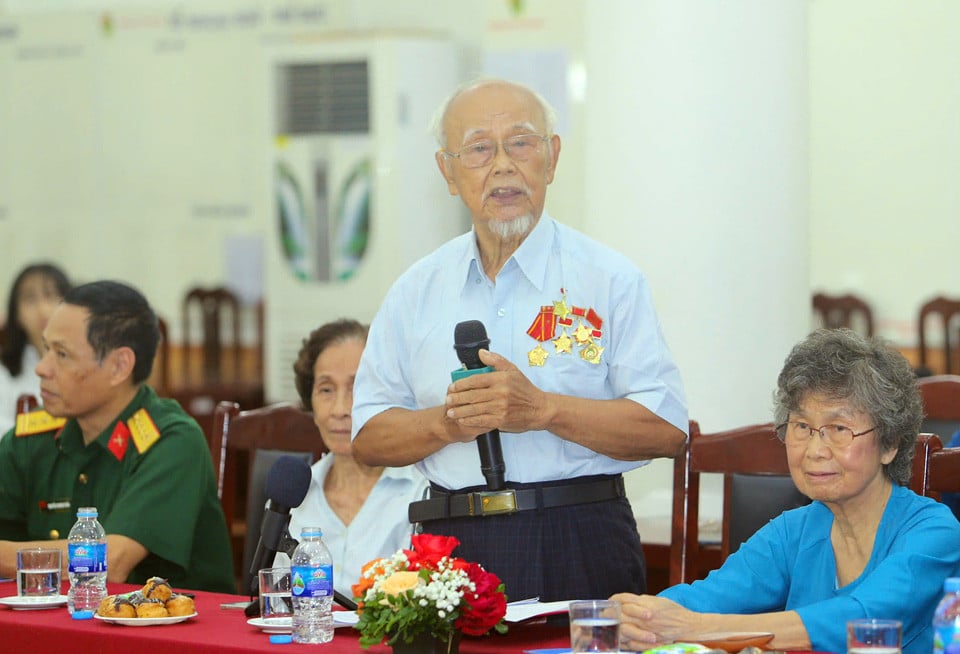
Proud to participate in the parade on September 2, 1955.
For Colonel Nguyen Thu, former Infantry Platoon Leader of Company 269, Battalion 54, Capital Regiment, 308th Division, who participated in the takeover of Hanoi: "At that time, I had so many emotions. From war to peace, the atmosphere was completely different. During the resistance war, the army marched at night, deep in the forest, maintaining secrecy... Now, entering peacetime, our first emotion was overwhelming joy that the entire North was completely liberated, and the capital was taken over intact. Our second feeling was remembering the soldiers of the Capital Regiment who fought bravely for 60 days and nights to defend Hanoi and their ingenious retreat across the Red River to the Viet Bac war zone."
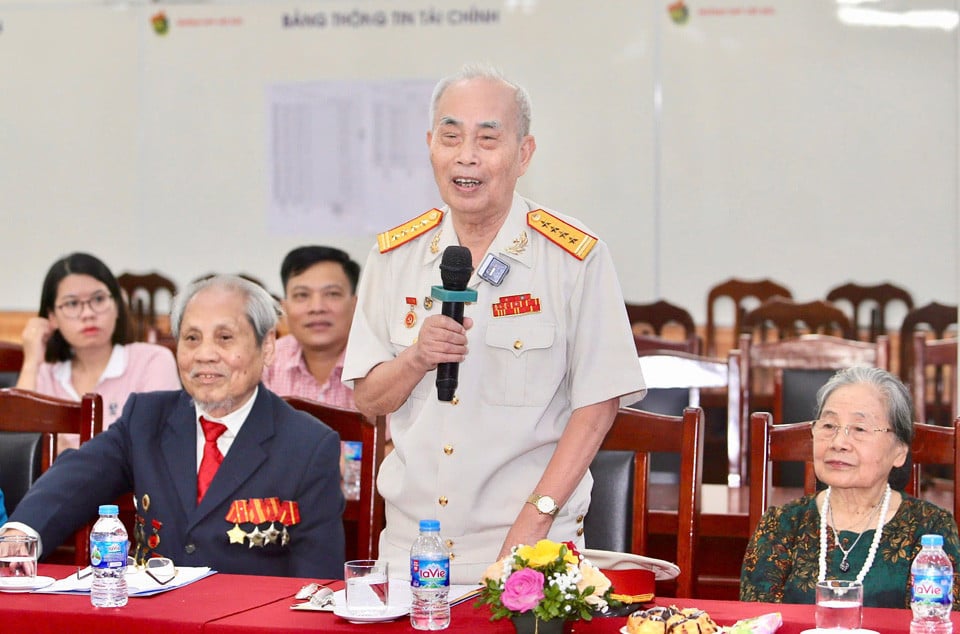
"We were all eager to get back to Hanoi. Almost all of us were rural youths, many of us had never left our villages, so we didn't know what the city looked like. At that time, we were excited to go back and see the city. Walking through the streets, we all looked at everything with a sense of excitement and wonder. Alongside that was the longing to visit our homeland. Throughout the years of the resistance war, we hadn't sent a single letter home to our families," Colonel Nguyen Thu said.
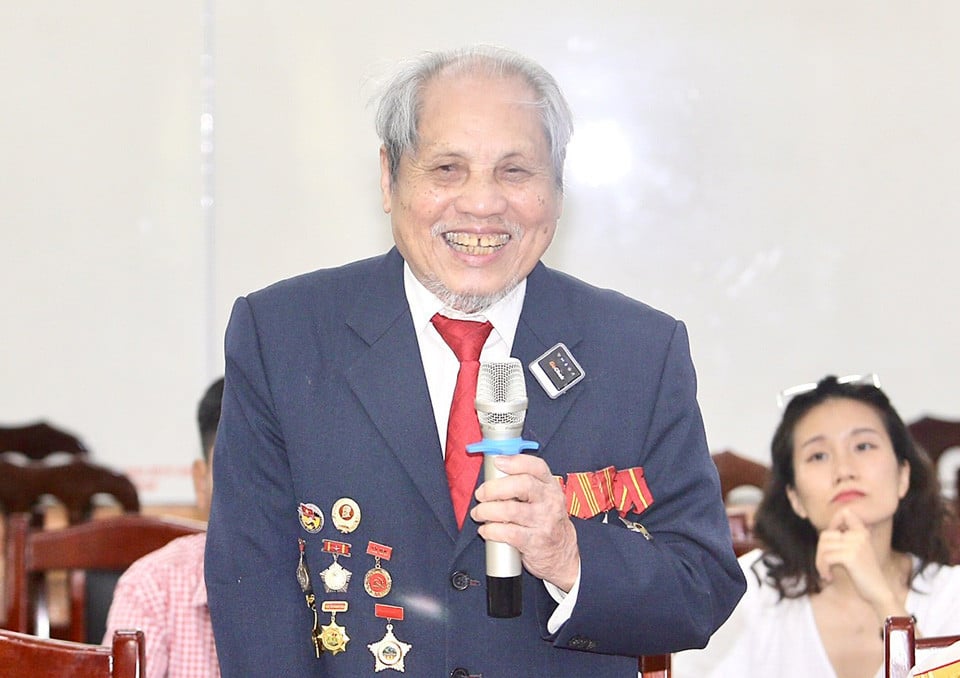
Recalling the training days for the magnificent parade on September 2, 1955, Mr. Nguyen Van Trac (who participated in the parade on September 2, 1955 and the 12 days and nights of the "Hanoi - Dien Bien Phu in the Air" campaign) shared: "The 1955 parade was a very large parade, larger than the flag-raising ceremony organized by the Hanoi Military and Political Committee at the Cot Co stadium on the afternoon of October 10, 1954."
In 1955, at the age of 23, Mr. Nguyen Van Trac worked in the communications battalion of the 312th Division. Everyone felt excited and honored to participate in the parade, so despite the difficulties and hardships, they did not lose heart. Therefore, even though his unit was stationed in Bac Ninh, they still marched on foot to Hanoi for training and the parade, then marched back to their base.
"During training at Bach Mai airport, despite the scorching sun, we were all strong and tall; even though I'm 1.70m tall, I only ranked 7th in the unit's parade. The most special memory for us at that time was meeting President Ho Chi Minh during training at Bach Mai airport. He walked slowly along the line of troops, encouraging the officers and soldiers... At that time, after 9 years of resistance, we all called him 'Uncle Ho'" - Mr. Nguyen Van Trac shared.
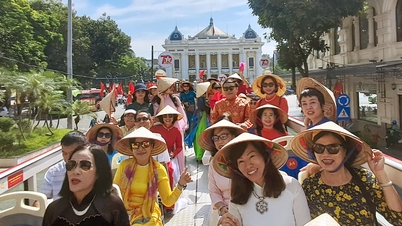
Hanoi is developing rapidly with outstanding achievements.
Participating in the online meeting and exchange, cultural and historical researchers and experts, including Dr. Nguyen Viet Chuc (Vice Chairman of the Cultural and Social Advisory Council (Central Committee of the Vietnam Fatherland Front); Dr. Architect Dao Ngoc Nghiem (Vice President of the Vietnam Urban Planning and Development Association); and Mr. Truong Minh Tien (Chairman of the UNESCO Hanoi Association), discussed Hanoi's achievements over the past 70 years in various fields, especially in developing the capital's cultural and human resources.
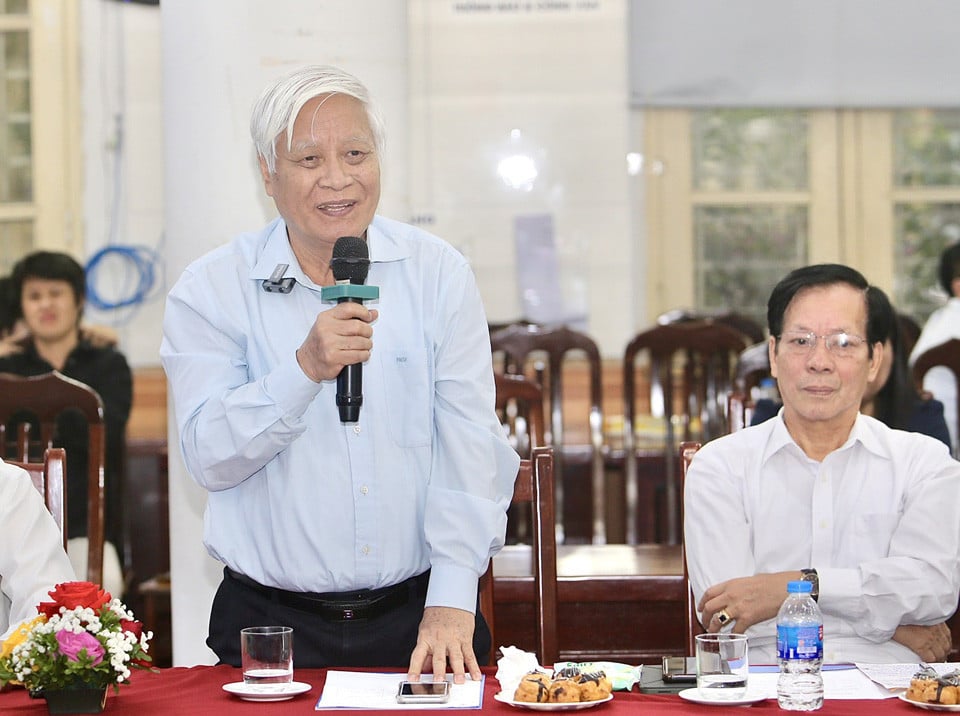
In this context, Dr. Nguyen Viet Chuc noted that Hanoi today has achieved immense accomplishments, not only in terms of area, but also because Hanoi possesses an incredibly rich heritage: its culture and people. It is this rich cultural heritage and the development of its people over more than 1,000 years of history that is the core reason why Hanoi is honored as the "Capital of Conscience and Human Dignity."
"The people of Hanoi throughout history are an inexhaustible source of culture for building the capital, proving that Hanoi's culture is never interrupted. Currently, Hanoi is developing at an astonishing rate. The city is expanding, with many new streets and urban areas appearing... This development is contributed by the cultural exchange and the people throughout different periods. Personally, I always place my faith and hope in the development of Hanoi - a City for Peace, Hanoi - a Heroic Capital, Hanoi - a Creative City," said Dr. Nguyen Viet Chuc.
Source: https://kinhtedothi.vn/ky-uc-ve-ngay-giai-phong-thu-do-va-cac-buoc-phat-trien-cua-ha-noi.html
































































Comment (0)