

Even with an income of a few tens of millions of dong, it's difficult to buy a house.
"My husband and I have been renting a house for 7 years now and we don't know when we'll be able to buy a house in Ho Chi Minh City," said Ms. Nguyen Thi Thuy, a resident of Tan Binh district.
Ms. Thuy said she works as an accountant for a garment company with a salary of 10 million VND per month. Her husband works as a technician for a construction company with a salary of 12 million VND per month. Their total income of 22 million VND is only enough for the couple to cover their living expenses and pay for their 6-year-old daughter's education.
According to Ms. Thuy, she and her husband have saved several hundred million dong, but this amount is not enough to buy a house. The minimum amount they need is around 600 million dong for the bank to lend them money to buy the cheapest, oldest apartments in the city.
Ms. Thuy shared that even with 600 million VND, her monthly income hasn't increased, and she and her husband don't have enough money to pay the principal and interest on the bank loan. Therefore, the dream of owning a house remains very far away.
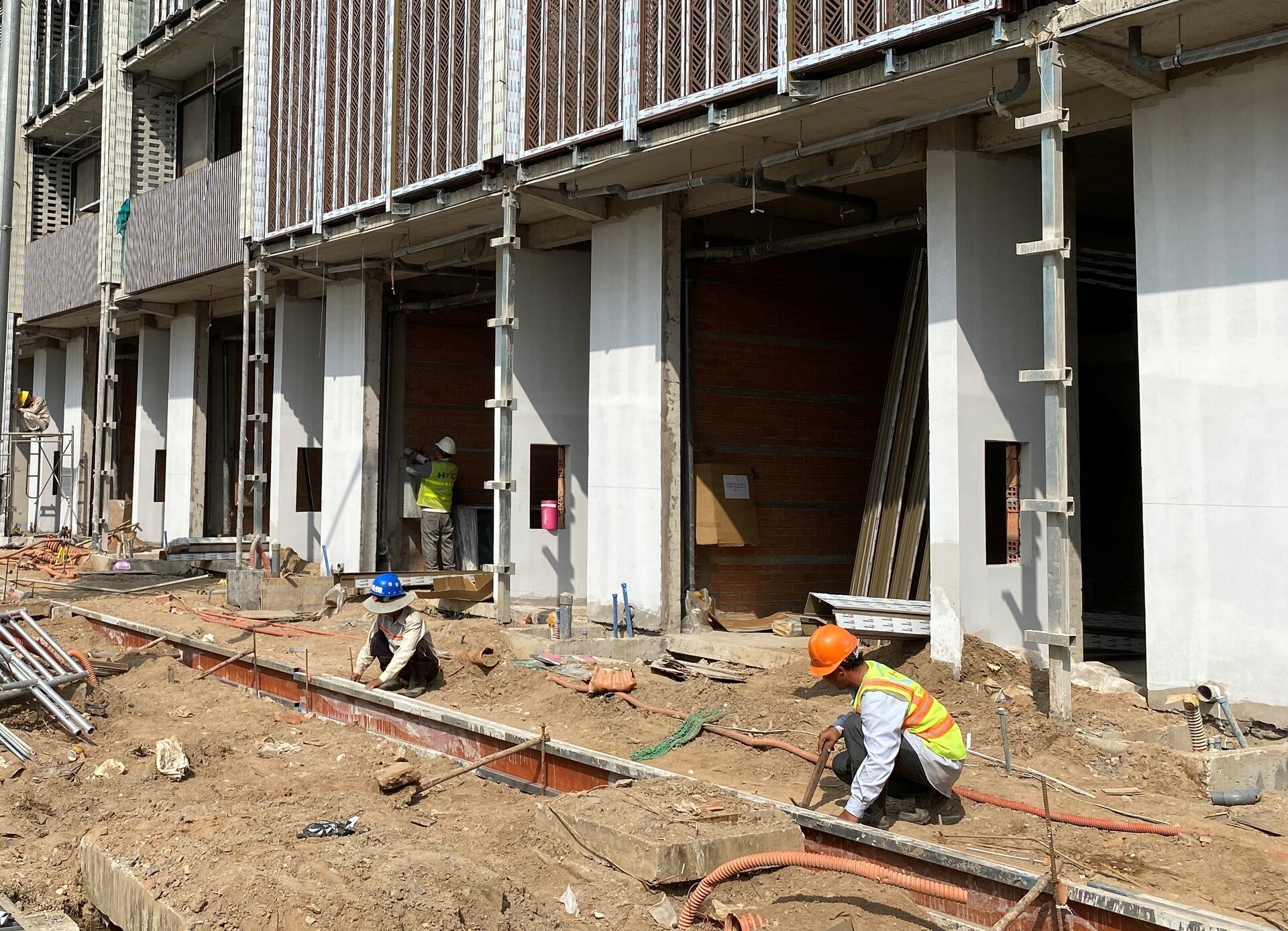
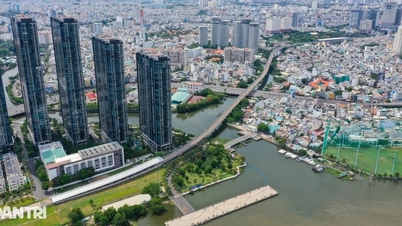
Many middle-income earners are still unable to afford a home in Ho Chi Minh City. (Illustrative image: Dai Viet)
Like Thuy's family, Vo Thanh Tuan, a communications specialist at a foreign company, has also been unable to buy a house despite his current income of 16 million VND per month.
According to Mr. Tuan, if he were to buy a house at the present time, he would need to borrow about 1.5 billion VND. This means the principal and interest payments would completely consume his salary.
Social housing market is "gloomy".
While millions of low- and middle-income people are in need of housing, the social housing segment remains very sluggish. This is due to numerous obstacles related to legal procedures, inadequacies in regulations, difficulties in obtaining preferential loans, and challenges in identifying eligible beneficiaries of the policy.
Dr. Doan Van Binh, a real estate expert, noted that although the Housing Law specifically stipulates the conditions for purchasing social housing such as income, residence, and housing conditions, accurately identifying eligible buyers, renters, or lease-to-own applicants remains challenging.
Furthermore, the regulation requiring commercial housing projects in cities of type III and above to allocate 20% of their land for social housing is currently inconsistent with reality. This leads to many projects allocating land for social housing but not utilizing it, wasting land resources and detracting from urban aesthetics.
For small projects, even if 20% of the area is used for community housing, this area is still insufficient to build a standard social housing complex with amenities and landscaping to serve the residents.
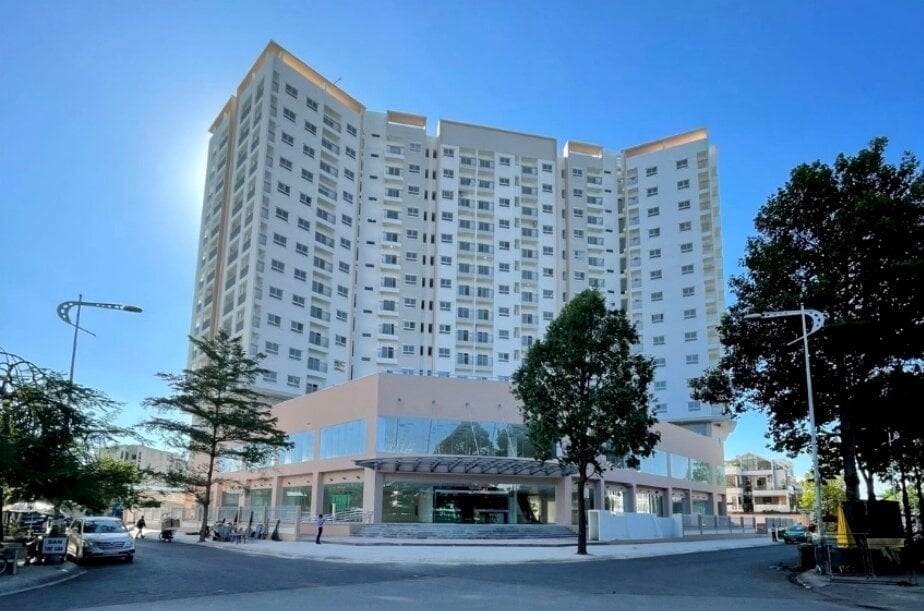
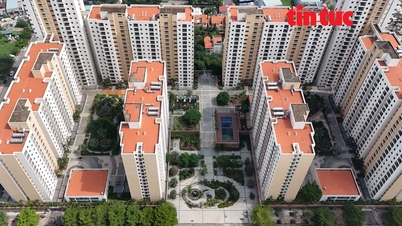
The social housing market is developing very sluggishly and sluggishly. (Photo: D.V)
According to Dr. Binh, people and businesses also face many difficulties in accessing preferential loans for social housing projects. Credit activities supporting the social housing segment have not yet been effective.
According to Ms. Tran Lan Anh, a representative of a real estate company in District 12, Ho Chi Minh City, the reason businesses are not enthusiastic about social housing is because land prices have increased too much, and the profit margin for building social housing is too low.
Meanwhile, the mechanisms and policies have not provided much support for businesses. Therefore, businesses are less involved in building social housing and focus only on commercial housing.
Developing affordable housing is the solution.
According to real estate experts in Ho Chi Minh City, developing affordable housing will create opportunities to address the supply-demand imbalance, meet the housing needs of the majority of people with average and near-average incomes, and lower the overall housing price level of the market.
For many years, addressing housing needs for the people has been a priority for the Party and Government, identified as a key task in the country's socio -economic development. However, rapid economic growth and urbanization have increased the demand for housing. Meanwhile, the supply has continuously decreased and has shown no signs of recovery since 2018, exacerbating the supply-demand imbalance.
The supply structure is increasingly skewed towards high-end, high-value products serving investment and speculation purposes. This prolonged imbalance has continuously pushed up housing prices, establishing a new price level far beyond the affordability of the vast majority of the population. Therefore, developing affordable housing will open up opportunities to address the supply-demand imbalance and meet the housing needs of the people.

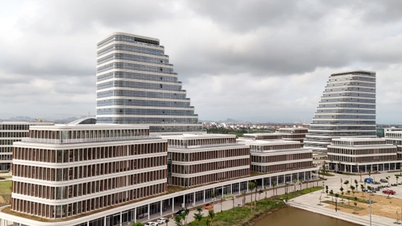
Affordable housing is expected to help the real estate market "warm up" in the future. (Illustrative image: Dai Viet)
Research data from the Vietnam Association of Real Estate Brokers (VARS) shows that the proportion of affordable housing supply (under 25 million VND/m2) in the total housing supply has continuously decreased, from 30% in 2019 to 7% in 2022 and 6% in 2023.
During the period 2019-2022, the proportion of mid-range apartments (25-50 million VND/m2) also decreased to 54%, 34%, and 27% respectively, with the supply mainly coming from products priced at 40-50 million VND/m2.
Meanwhile, demand for actual housing purchases consistently leads the housing demand structure with a share of 80%, while 15% is for long-term investment and 5% for speculation. According to VARS data, only about 25% of those with actual housing purchase needs have the financial capacity to pay for it.
Against this backdrop, VARS believes that, along with social housing, affordable housing will be the main development trend in the real estate market in the coming period, because this segment stems from the actual needs and capabilities of the vast majority of people.
What does "affordable" mean?
Dr. Nguyen Van Dinh, Chairman of the Vietnam Real Estate Brokers Association, stated that Vietnam does not yet have an official definition of affordable housing, but some characteristics of this type of housing can be identified by comparing it with social housing and based on how the reasonableness of housing prices is determined.
Accordingly, social housing currently targets low-income individuals and workers in industrial zones, with exemptions from land use fees and access to preferential credit packages specifically for developers and homebuyers.
Affordable housing refers to commercial housing with affordable prices, suitable for the financial capabilities of the majority of the population, targeting middle- and near-middle-income groups with a certain level of savings, in particularly urban areas.
Mr. Dinh believes that reasonable housing prices are when families can balance housing costs with other living expenses within the limits of their income.
Based on assessments of housing affordability in many countries around the world , affordable housing is defined as housing costs that do not exceed 30% of a household's total income. For a household with an income of approximately 30 million VND per month, 30% of these costs is equivalent to an annual savings of about 100 million VND, so an affordable home would cost around 2-2.5 billion VND per apartment.
However, according to Mr. Dinh, in reality, it is currently very difficult to develop apartment projects priced between 2 and 2.5 billion VND, especially in major cities like Ho Chi Minh City and Hanoi . But difficult doesn't mean impossible.
Mr. Dinh believes that if the entire market works together and housing policies are oriented towards a market economy, then affordable housing will develop. He suggests developing affordable housing alongside social housing.
According to VARS, the government needs to provide an official definition of affordable housing; and research mechanisms and preferential policies specifically for affordable housing, with the main goal of encouraging investors to participate in developing the supply of this segment, meeting the housing needs of middle- or near-middle-income households.
These include preferential credit policies specifically designed to boost purchasing power, or increased taxes on second and third homes to reduce speculative incentives, with tax revenue potentially being recirculated to support those with genuine needs. Support is also provided to developers in the development and operation of social infrastructure projects...
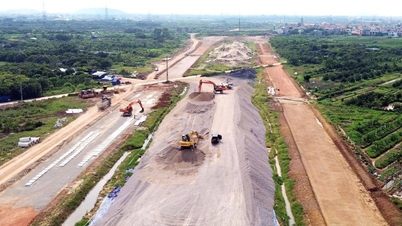
In addition, increased investment and expansion of connecting transportation infrastructure are necessary. When distance is no longer an issue, the trend of moving from the city center to the suburbs is inevitable.
Source


![[Photo] Closing Ceremony of the 10th Session of the 15th National Assembly](/_next/image?url=https%3A%2F%2Fvphoto.vietnam.vn%2Fthumb%2F1200x675%2Fvietnam%2Fresource%2FIMAGE%2F2025%2F12%2F11%2F1765448959967_image-1437-jpg.webp&w=3840&q=75)


![[Photo] Prime Minister Pham Minh Chinh holds a phone call with the CEO of Russia's Rosatom Corporation.](/_next/image?url=https%3A%2F%2Fvphoto.vietnam.vn%2Fthumb%2F1200x675%2Fvietnam%2Fresource%2FIMAGE%2F2025%2F12%2F11%2F1765464552365_dsc-5295-jpg.webp&w=3840&q=75)








































![[OFFICIAL] MISA GROUP ANNOUNCES ITS PIONEERING BRAND POSITIONING IN BUILDING AGENTIC AI FOR BUSINESSES, HOUSEHOLDS, AND THE GOVERNMENT](https://vphoto.vietnam.vn/thumb/402x226/vietnam/resource/IMAGE/2025/12/11/1765444754256_agentic-ai_postfb-scaled.png)

















































Comment (0)