

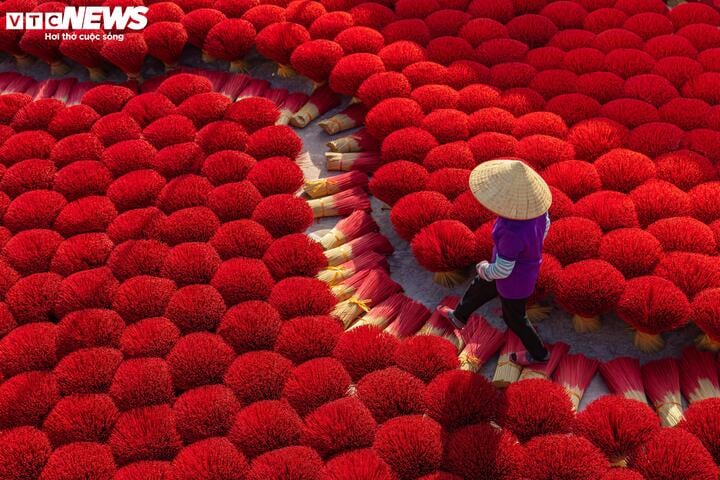
Located more than 30km from the center of Hanoi , the ancient village of Quang Phu Cau (Ung Hoa district, Hanoi), over 100 years old, is famous for its traditional incense making. In these last months of the year, the villagers are busy and actively producing goods for the Tet holiday.
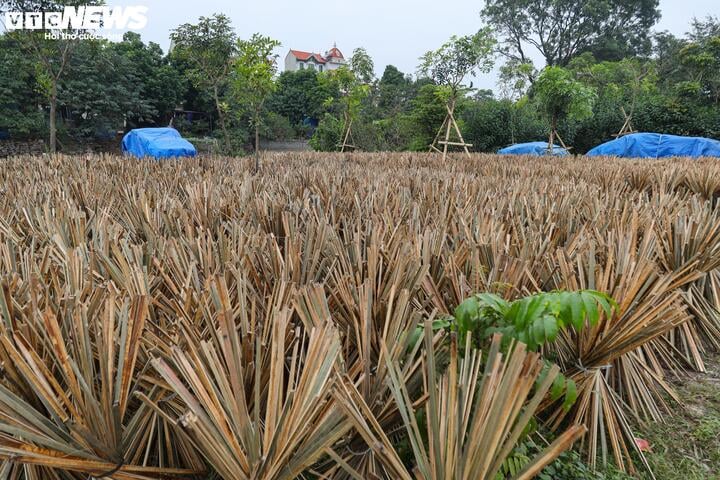
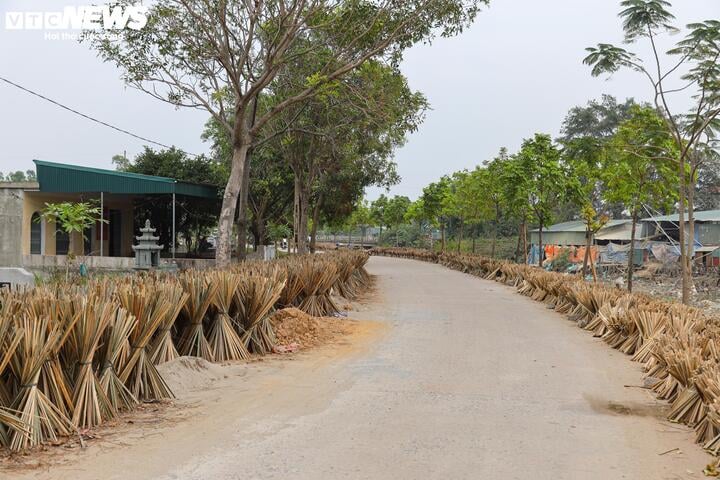
The wood used to make incense sticks must be of sufficient age and carefully selected.
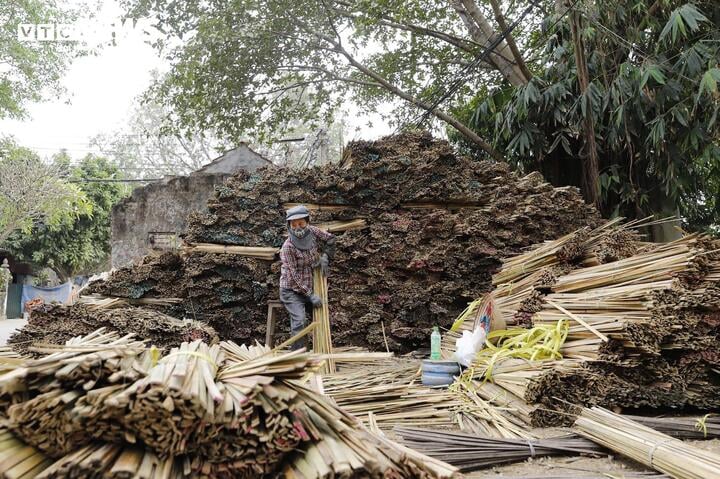
After being selected, the bamboo is split, stripped, and whittled by hand by the craftsmen. However, in today's era of technological development, many households have invested in machinery to increase productivity.
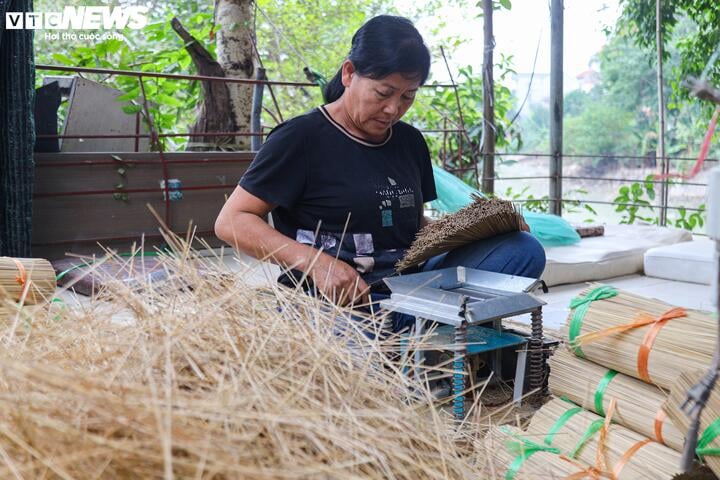
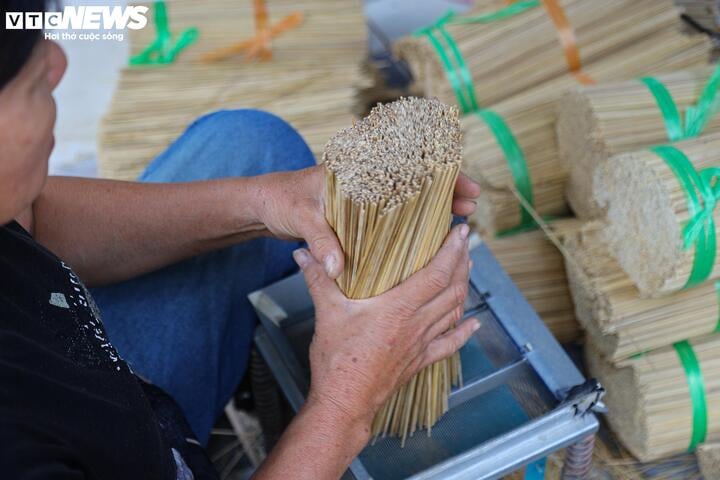
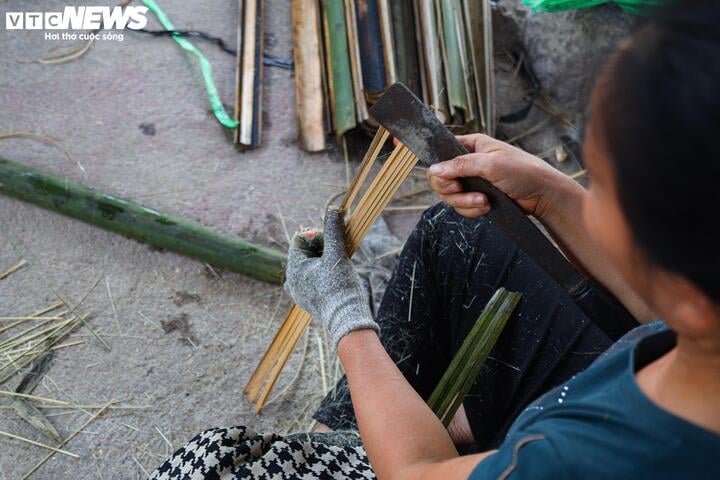
"Machine-crafted incense sticks are specifically designed for use in incense-making machines, while hand-crafted incense sticks are more expensive and can only be used for manual incense making," one person explained.
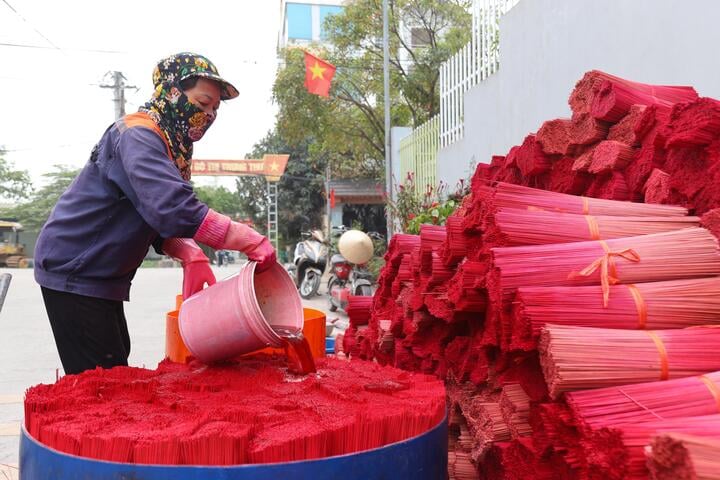
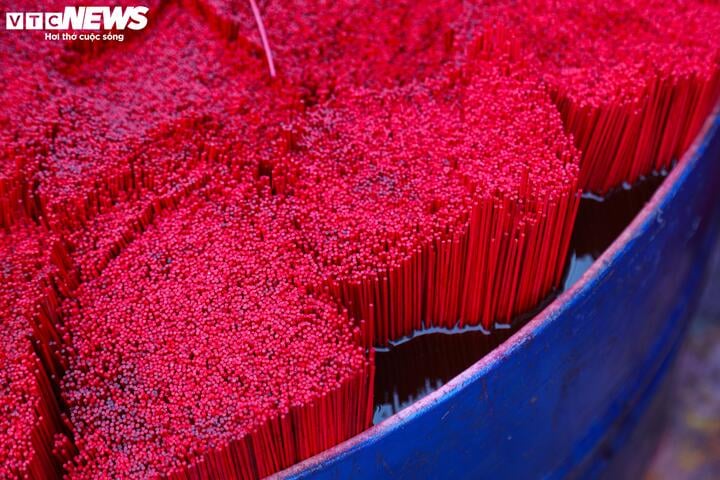
High-quality incense sticks are dyed and then dried in the sun.
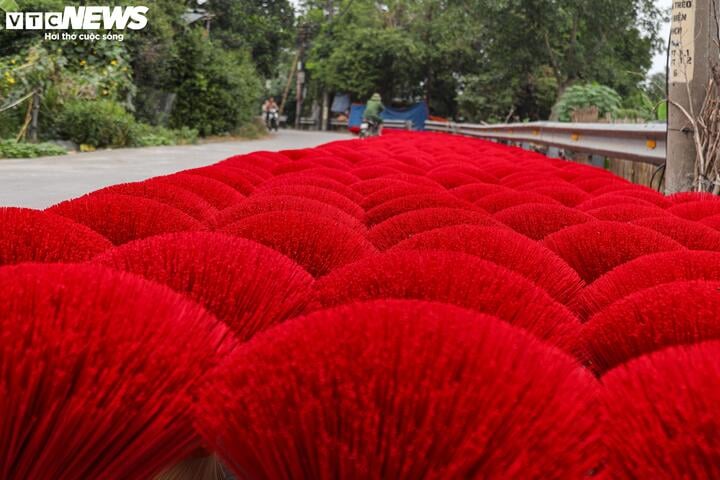
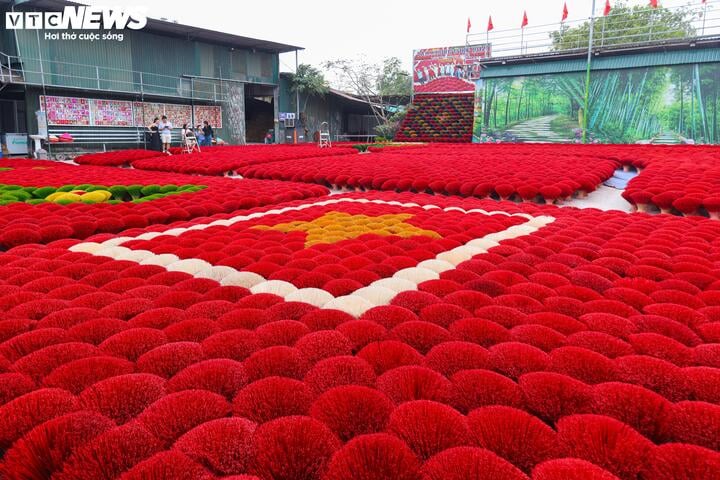
Everywhere you look, you can find these vibrant "flowers" of incense sticks. To make them eye-catching and attract tourists , many households arrange these bundles of incense sticks into various shapes such as flags or the map of Vietnam.
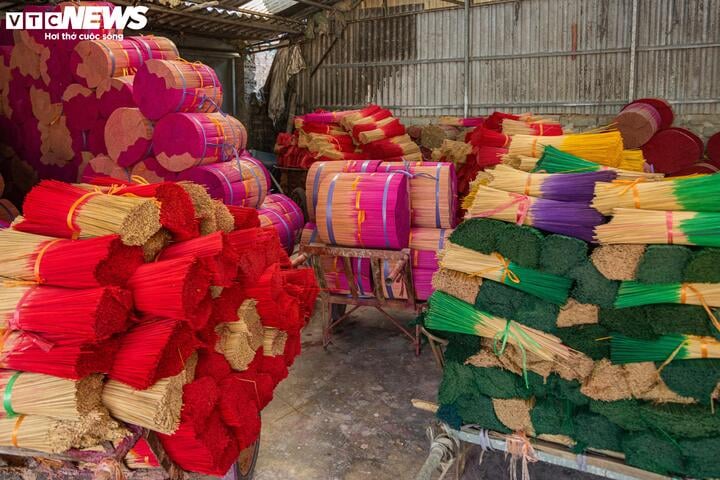
Incense sticks from Quang Phu Cau incense village are usually dyed pink or red, depending on customer orders. Red-dyed incense sticks are commonly used in temples and pagodas, while pink ones are used in households. Each bundle of incense sticks weighs about 3kg and is sold by the villagers of Quang Phu Cau incense village for 3,000 VND/kg.
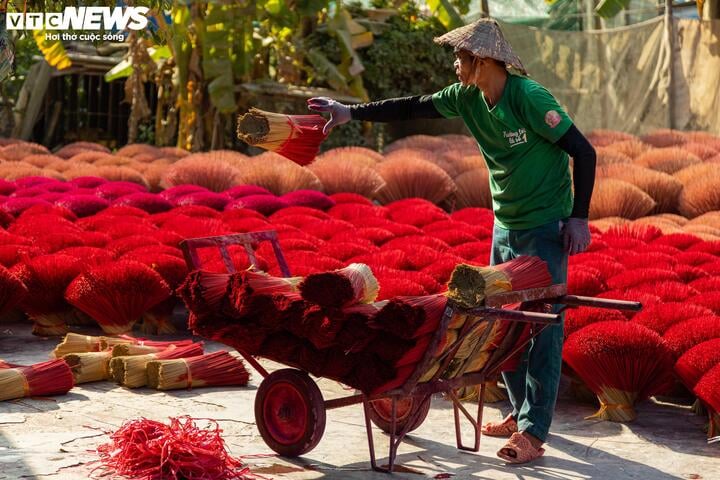
According to locals, incense stick making takes place year-round, but becomes particularly busy in the last months of the year. " On average, we workers earn about 300,000 VND per day, and we work about 20 days a month, depending on the weather; we can only work on sunny days, " said Mr. Van, an incense stick maker.
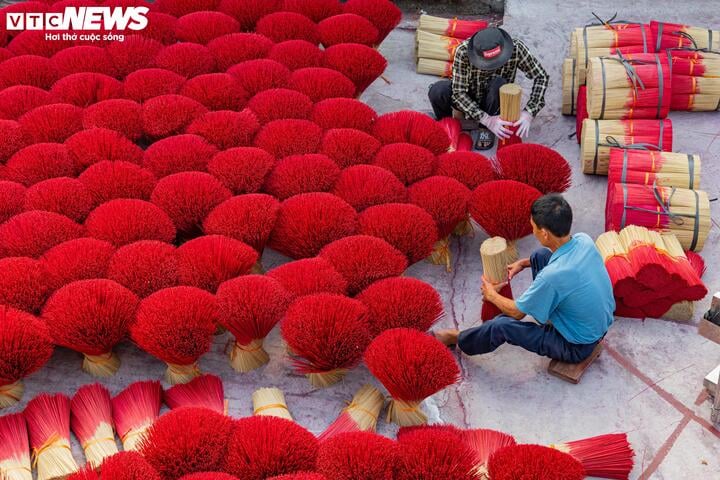
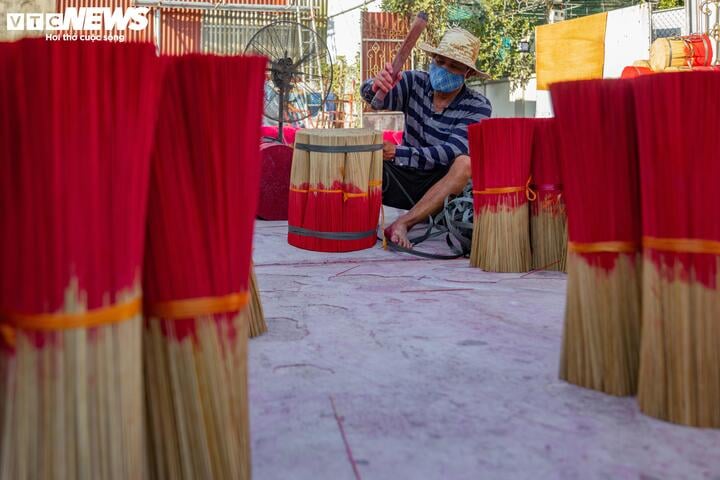
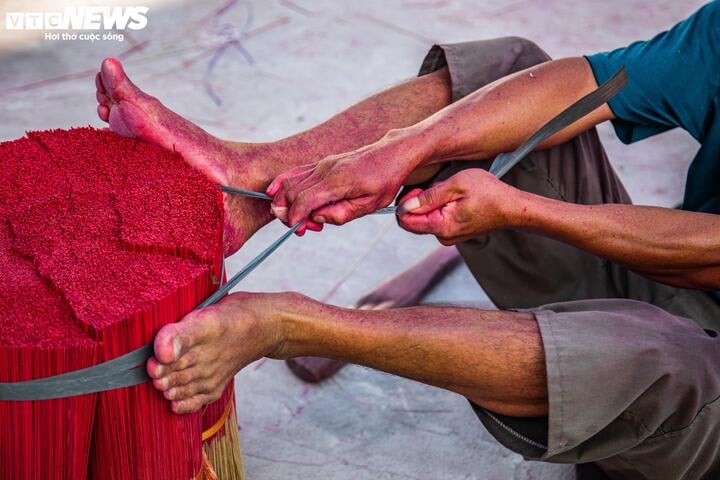
After drying, the incense sticks are bundled into 3kg bunches by the villagers and transported to incense production facilities nationwide. In addition to supplying incense-making facilities across the country, Quang Phu Cau village also has its own incense-making facilities.
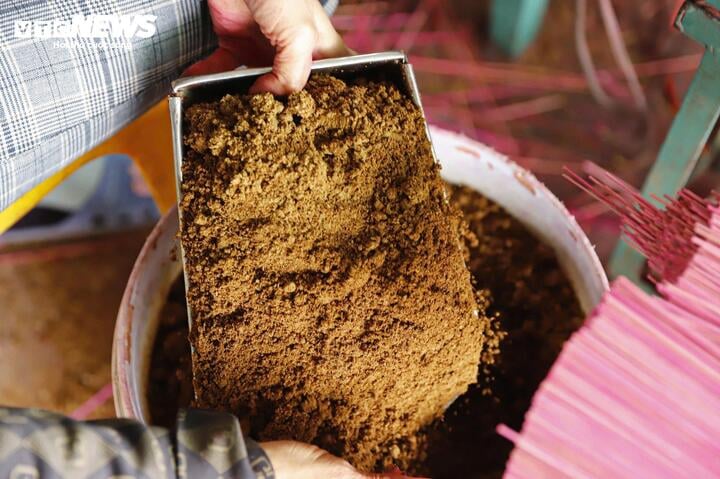
Made with herbal ingredients such as agarwood, pine, patchouli, star anise, cinnamon, and resin from the Terminalia catappa tree, along with a unique blending technique and meticulous attention to detail in each step, Quang Phu Cau incense is considered by many to be visually appealing and long-lasting.
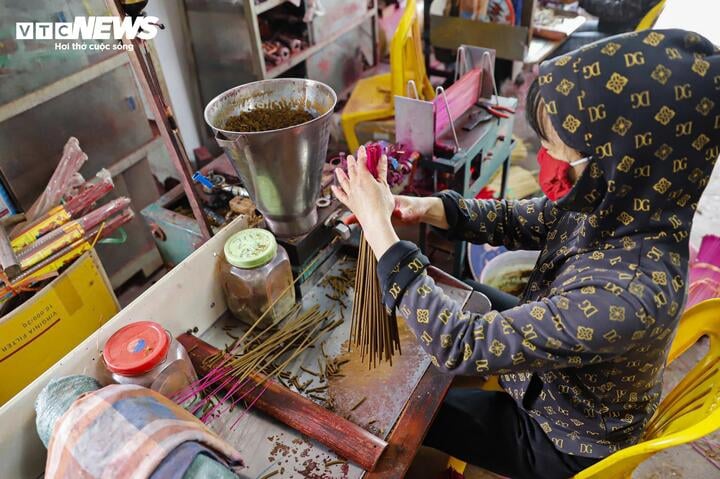
With traditional incense-making methods, craftsmen have to be meticulous and careful. But thanks to the application of modern technology and the use of machinery, this process has become easier and more productive.
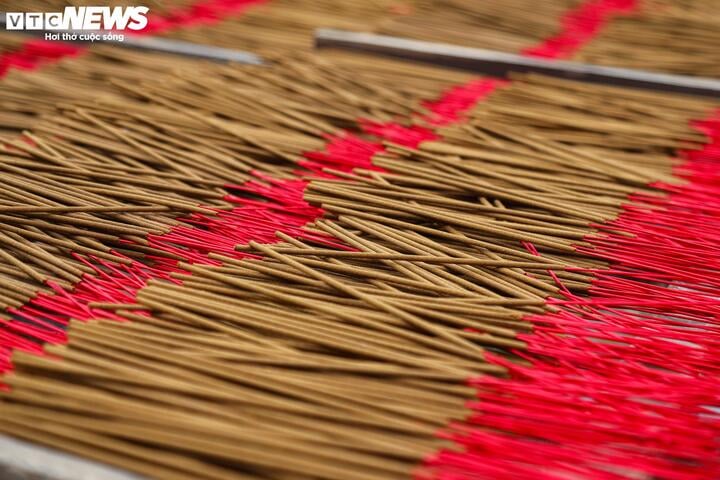
After being dried, the incense sticks are packaged as finished products, which are sold at a price of 35,000 - 40,000 VND/kg.
Source: https://vtcnews.vn/lang-huong-co-hon-100-nam-tuoi-o-ha-noi-tat-bat-vao-vu-tet-ar909485.html



![[Photo] Closing Ceremony of the 10th Session of the 15th National Assembly](/_next/image?url=https%3A%2F%2Fvphoto.vietnam.vn%2Fthumb%2F1200x675%2Fvietnam%2Fresource%2FIMAGE%2F2025%2F12%2F11%2F1765448959967_image-1437-jpg.webp&w=3840&q=75)








































![[OFFICIAL] MISA GROUP ANNOUNCES ITS PIONEERING BRAND POSITIONING IN BUILDING AGENTIC AI FOR BUSINESSES, HOUSEHOLDS, AND THE GOVERNMENT](https://vphoto.vietnam.vn/thumb/402x226/vietnam/resource/IMAGE/2025/12/11/1765444754256_agentic-ai_postfb-scaled.png)




































Comment (0)