Ensuring that Ho Chi Minh City truly has the freedom to act.
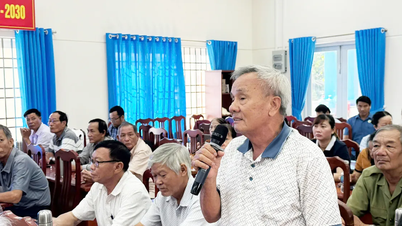
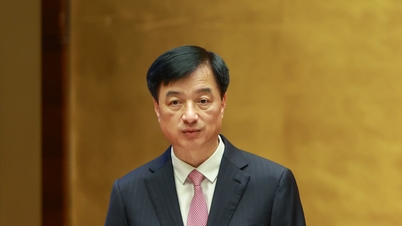
Representative Hoang Van Cuong ( Hanoi ) pointed out that current specific resolutions (such as Resolution No. 98/2023/QH15) are ineffective due to a lack of openness and flexibility, often being constrained by general legal regulations, thus losing their groundbreaking potential.
According to the analysis of MP Hoang Van Cuong, Ho Chi Minh City is a major development center in the South, especially after the restructuring, it has become a strong development hub with great potential and many conditions to attract outstanding investment. Therefore, a truly special institutional framework is needed for Ho Chi Minh City.
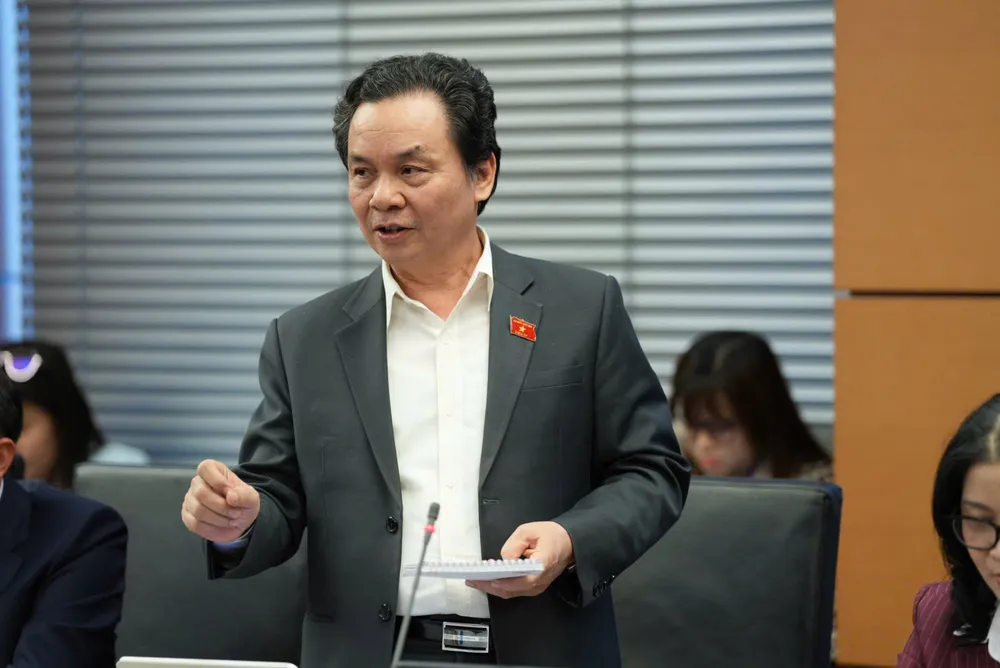
According to MP Hoang Van Cuong, historically, "the newest thing in the country always originates from Ho Chi Minh City, and then spreads nationwide." The MP proposed transforming Ho Chi Minh City into an "institutional sandbox," a place where new policies can be tested and created ahead of the rest of the country. Ho Chi Minh City must be the pioneer, creating institutions, policies, and new approaches.
In a specific comment, the delegate suggested that instead of listing detailed specific regulations, the draft resolution should focus on establishing a framework of principles to enable the City People's Council to proactively make decisions, ensuring that Ho Chi Minh City truly has the freedom to act within the framework of supervision.
For example, according to Representative Hoang Van Cuong, detailing and listing the types of strategic investors is unnecessary. He proposed amending and supplementing Resolution No. 98/2023/QH15 to fundamentally change the approach. Accordingly, all regulations concerning "special" aspects that are nevertheless constrained by other regulations should be removed, because "implementing them according to the law means they are no longer special." Furthermore, special mechanisms should not be listed too specifically, as they cannot encompass all emerging issues.
Representative Hoang Van Cuong also proposed adding a regulation allowing Ho Chi Minh City to apply Clause 2, Article 4 of Resolution No. 206/2025/QH15 of the National Assembly (on special mechanisms for handling difficulties and obstacles caused by legal regulations), granting the City People's Council the right to issue regulations, mechanisms, and policies to resolve conflicts, obstacles, and difficulties in current laws that are not suitable for Ho Chi Minh City, and to report this to the Government so that the Government can report to the Standing Committee of the National Assembly.
"If the city fails to deliver on its assigned powers, it's the city's fault, not the policy. But I believe that with such authority, Ho Chi Minh City will truly have a 'sky' opened up for innovation, creativity, and development. Freedom within a framework of supervision—that's what truly tests the institutional framework," Representative Hoang Van Cuong analyzed.
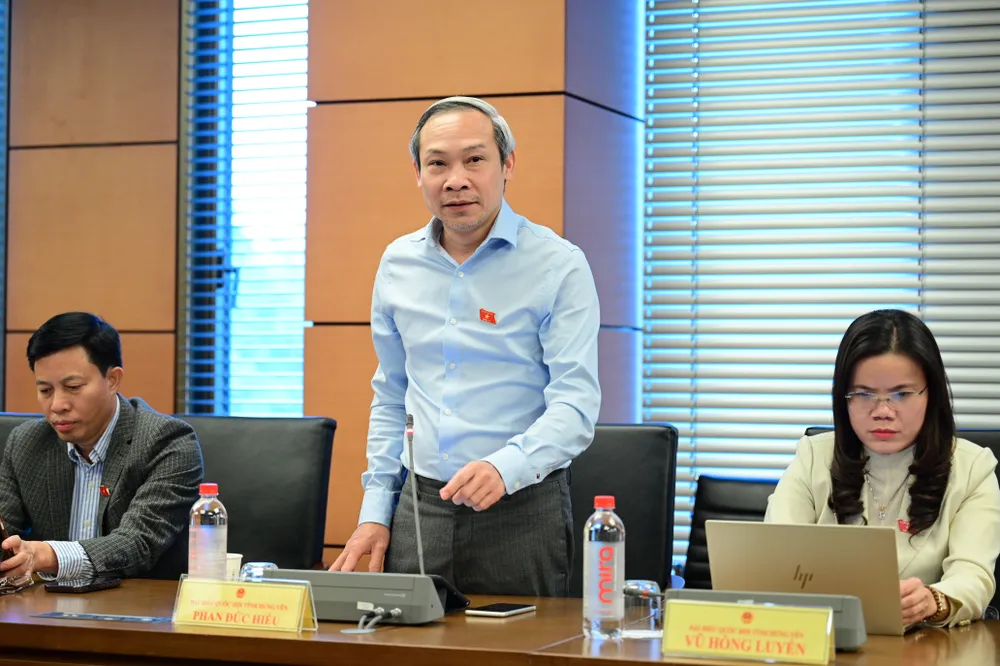
Sharing the same opinion as Representative Hoang Van Cuong, Representative Phan Duc Hieu (Hung Yen) stated: "It is not advisable to describe things in too much detail, too specific and particular. Such regulations are easily outdated and may not meet the needs of investors."

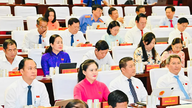
For example, MP Phan Duc Hieu cited that the draft resolution stipulates that priority projects attracting strategic investors must have a minimum capital scale, such as 2,000 billion VND. However, for a priority project, the important issue is not the amount of investment, but the technology and solutions employed.
Commenting on the criteria for identifying strategic investors, Deputy Phan Duc Hieu also expressed the view that there should not be "rigid frameworks." He proposed a "completely new mechanism" for identifying strategic investors. Accordingly, strategic investors should be considered large investors, possibly by referencing various rankings of businesses, such as Forbes, in the IT, infrastructure, energy, and construction sectors, and selecting from the top 500 companies...
“It’s important to understand that strategic investors demand completely different treatment compared to other investors. Ho Chi Minh City, if possible, should propose the establishment of a dedicated agency for handling investment procedures. This agency would be the central point for receiving and processing investment applications. Investors would only work with one agency and receive results directly from that agency.”
A mechanism is needed to protect officials.
Similarly, at the Ho Chi Minh City National Assembly delegation, Delegate Tran Hoang Ngan and many other delegates proposed removing the phrase "Thi Vai - Cai Mep" from the draft resolution when referring to free trade zones (FTZs). The reason is that the plan includes up to four FTZs, and specifying the port names might necessitate amending the resolution if FTZs are implemented in other areas later.
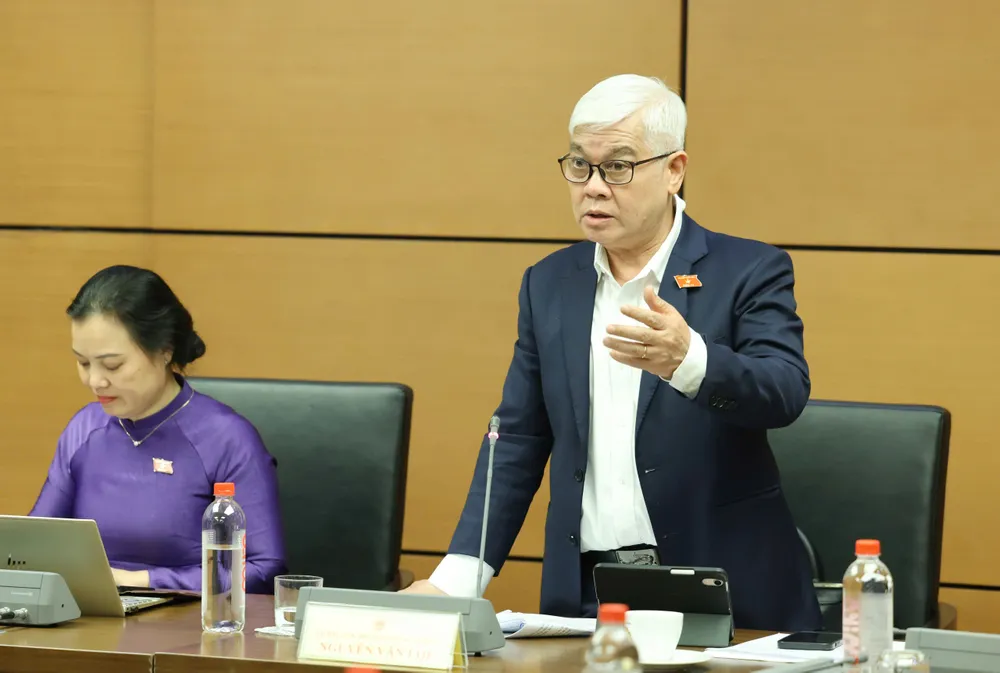
National Assembly Deputy Nguyen Van Loi, Head of the Ho Chi Minh City Delegation, supports empowering Ho Chi Minh City significantly, particularly through the removal of unnecessary legal constraints on special mechanisms, comprehensive decentralization of project decision-making power, and the addition of overarching strategic infrastructure mechanisms for Ho Chi Minh City.
Frankly, the current draft still contains contradictions, stipulating a special mechanism while simultaneously requiring "compliance with the law." Representative Nguyen Van Loi stated: "The special mechanism needs to go beyond current regulations, as it is of a pilot nature." However, the representative noted the principle of applying the law. Accordingly, "if the provisions of current law are more favorable, then the law should be applied, and conversely, if the provisions of this resolution are better, then the resolution should be applied." The representative requested that this be clearly stated in the resolution to avoid future legal consequences due to ambiguity in compliance.
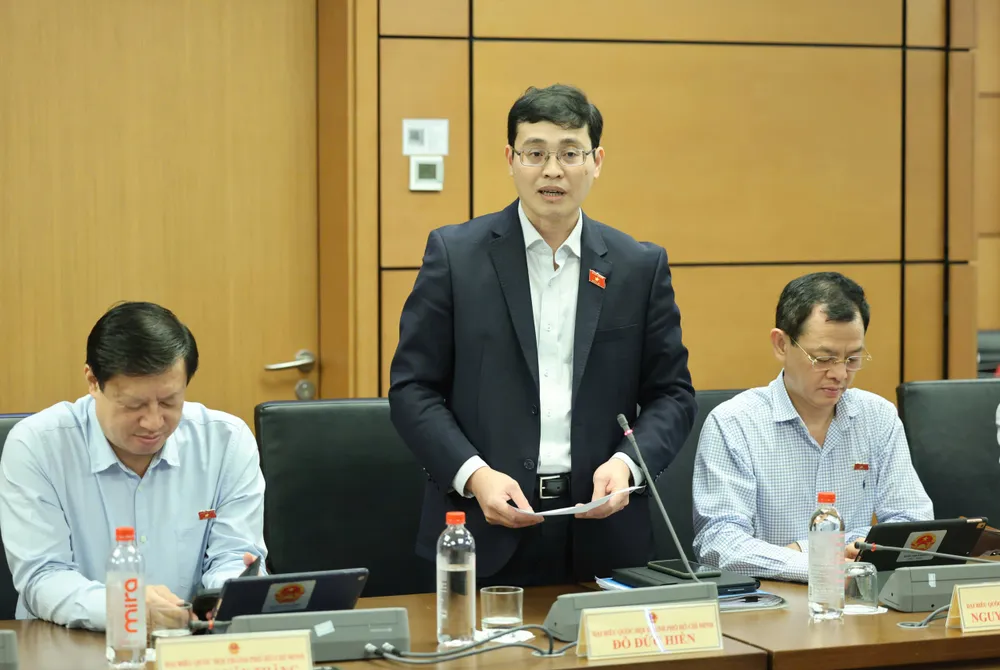
Sharing concerns about handling legal issues when implementing a superior mechanism that differs from current laws, National Assembly Deputy Do Duc Hien (Ho Chi Minh City) commented that adding provisions on exemption from liability is necessary to enhance effectiveness in the implementation process. This regulation is linked to the Politburo's conclusion on protecting dynamic, creative, and proactive officials.
The initial draft included provisions allowing heads of agencies and units, as well as officials, civil servants, and employees involved in the development, promulgation, and implementation of mechanisms and policies stipulated in this resolution, to be considered exempt from liability if they have fully complied with relevant procedures and regulations, acted without self-interest in the performance of their duties, but caused damage due to objective risks. However, the draft submitted to the National Assembly on December 3rd no longer contains this provision.
According to the delegate, it is necessary to mobilize the capacity and intellect of experts and scientists. Simply applying the Law on Cadres and Civil Servants (which already has similar provisions on exemption from liability - PV) is insufficient, because these experts would not fall within the scope of its regulations.
According to Mr. Do Duc Hien, the provision on liability exemption will be a great morale boost for city officials and civil servants, as well as experts and scientists, as they participate in the unique and unprecedented policies in this revision. The delegate also noted that, upon review, the draft resolution on some special mechanisms for Hanoi submitted to the National Assembly includes provisions on liability exemption.



Sharing the same view, Delegate Dao Chi Nghia (Can Tho) suggested: "It is necessary to stipulate that a mechanism agreed upon by the City People's Council can be implemented, considering it as a pre-audit mechanism to protect officials."
Also, from the perspective of boldly empowering Ho Chi Minh City to make decisions and take responsibility, Delegate Nguyen Quang Huan (Ho Chi Minh City) proposed adding a provision to the draft regulations on presiding over inter-provincial projects.
Representative Nguyen Quang Huan analyzed that the draft regulations stipulate that infrastructure projects using public investment capital, located within the administrative boundaries of Ho Chi Minh City and neighboring provinces, will be assigned to a provincial People's Committee as the managing authority. The drafting agency explained that this aims to shorten the time (currently, inter-provincial projects must be submitted to the Prime Minister for assignment, leading to delays).
"If the general regulation is 'one provincial People's Committee,' then when two or three provinces are involved, the People's Committees still have to discuss which committee will be the lead agency. I propose that for inter-provincial projects involving Ho Chi Minh City, the National Assembly should grant the authority to the Ho Chi Minh City People's Committee to take the lead. This reflects the unique nature of the mechanism," the delegate commented.
According to the agenda of the 10th session, on December 8th, the National Assembly will discuss this draft resolution in the plenary session.
Source: https://www.sggp.org.vn/mo-bau-troi-doi-moi-sang-tao-cho-tphcm-post826755.html




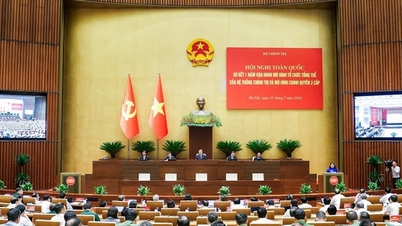
![[Image] National conference summarizing one year of operation of the overall organizational model of the political system, the three-tiered government model.](https://vphoto.vietnam.vn/thumb/1200x675/vietnam/resource/IMAGE/2026/07/01/1782882811691_ndo_br_1-jpg.webp)