

The resort real estate market is stagnating.
According to statistics from the Vietnam Real Estate Association (VnREA), there are currently about 239 resort real estate projects nationwide. Of which, the estimated value of condotel projects is about VND297,128 billion; villa projects are estimated at VND243,990 billion and shophouse projects are about VND154,245 billion. The total value of these three products is about VND681,886 billion, equivalent to USD30 billion.
However, after a period of rapid development, in recent years, this segment has stagnated. The market is almost frozen, with insignificant transaction volume.
According to a recent survey by the Vietnam Institute of Real Estate Research, among the factors hindering the speed, scale, and determination to participate in Vietnam's tourism and resort real estate market, economic and financial factors account for 30%, legal factors account for 50%, and other factors account for 20%.
Speaking at the Scientific Conference "Revising the Land Law: Creating Land for Tourism" on the morning of October 19th, Dr. Can Van Luc - Chief Economist of BIDV and Director of the BIDV Training and Research Institute - also pointed out that the policy of prioritizing and increasing investment in tourism infrastructure has been consistently directed in many documents of the Party and State as well as of the industry.
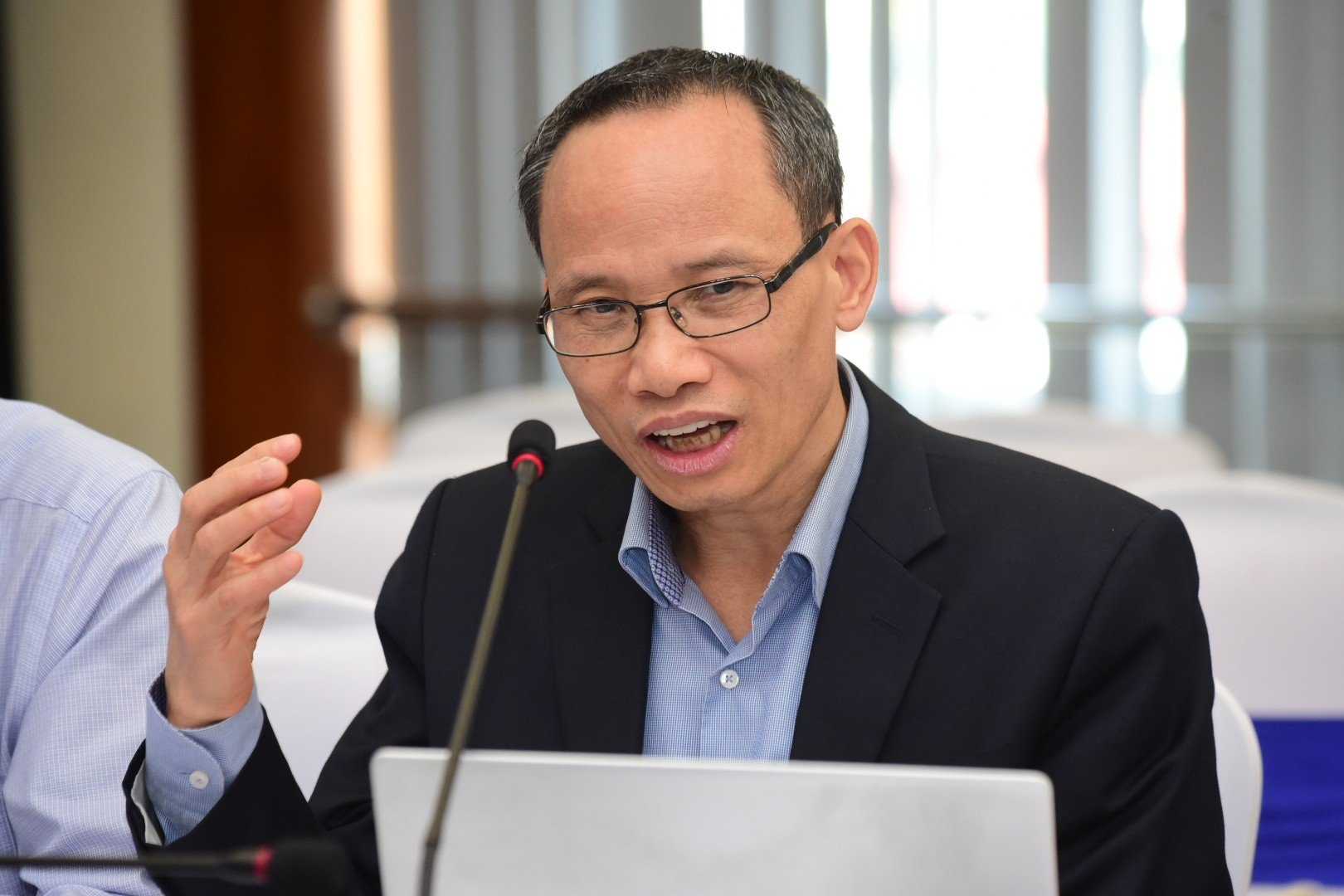
Dr. Can Van Luc delivered a speech at the conference.
However, these policies have yet to be translated into unified, groundbreaking, and specific solutions for the synchronized and sustainable development of tourism infrastructure.
Mr. Luc argued that preferential policies for the tourism industry have not been clearly specified in some relevant laws and regulations; the legal framework for land allocation for tourism development projects still has many shortcomings; and regulations on granting and transferring ownership of land and assets attached to commercial and tourism service land (condotels, shophouses, etc.) are still incomplete and inconsistent.
In fact, Mr. Luc assessed that Vietnam's tourism industry has made strong progress with many encouraging achievements, but it is still not commensurate with its potential.
"The tourism industry still has many shortcomings and limitations, especially in tourism service infrastructure, which need to be addressed soon so that Vietnam can be among the top 30 countries in the world in terms of tourism competitiveness by 2030, as targeted," Mr. Luc said.
The mechanism for accessing land needs to change.
To overcome limitations and develop the tourism industry in the coming period, Dr. Can Van Luc believes that innovative thinking and strong concerted efforts from the entire political system, from the central to local levels, ministries, functional agencies, and the tourism industry itself are needed to quickly overcome current difficulties and challenges, seize opportunities and trends, and achieve rapid and sustainable recovery and development in the future.
From there, Mr. Luc put forward three recommendations for the amended Land Law. Firstly, the draft amended Land Law should consider adding a mechanism for allocating and leasing land through land acquisition for tourism, entertainment, and recreation development projects with large scale or total investment, especially tourism projects in disadvantaged areas, mountainous regions, border areas, and islands…
Secondly, consideration should be given to adding a mechanism for leasing and transferring the right to use commercial and service land for tourism development to Article 121 of the Draft Law on Land (amended) in order to help remove bottlenecks in the tourism and resort real estate sector.
Finally, legal regulations, along with strengthened sanctions for deliberate violations of planning and tourism development investment laws, aim to curb speculation, waste, and land disputes.
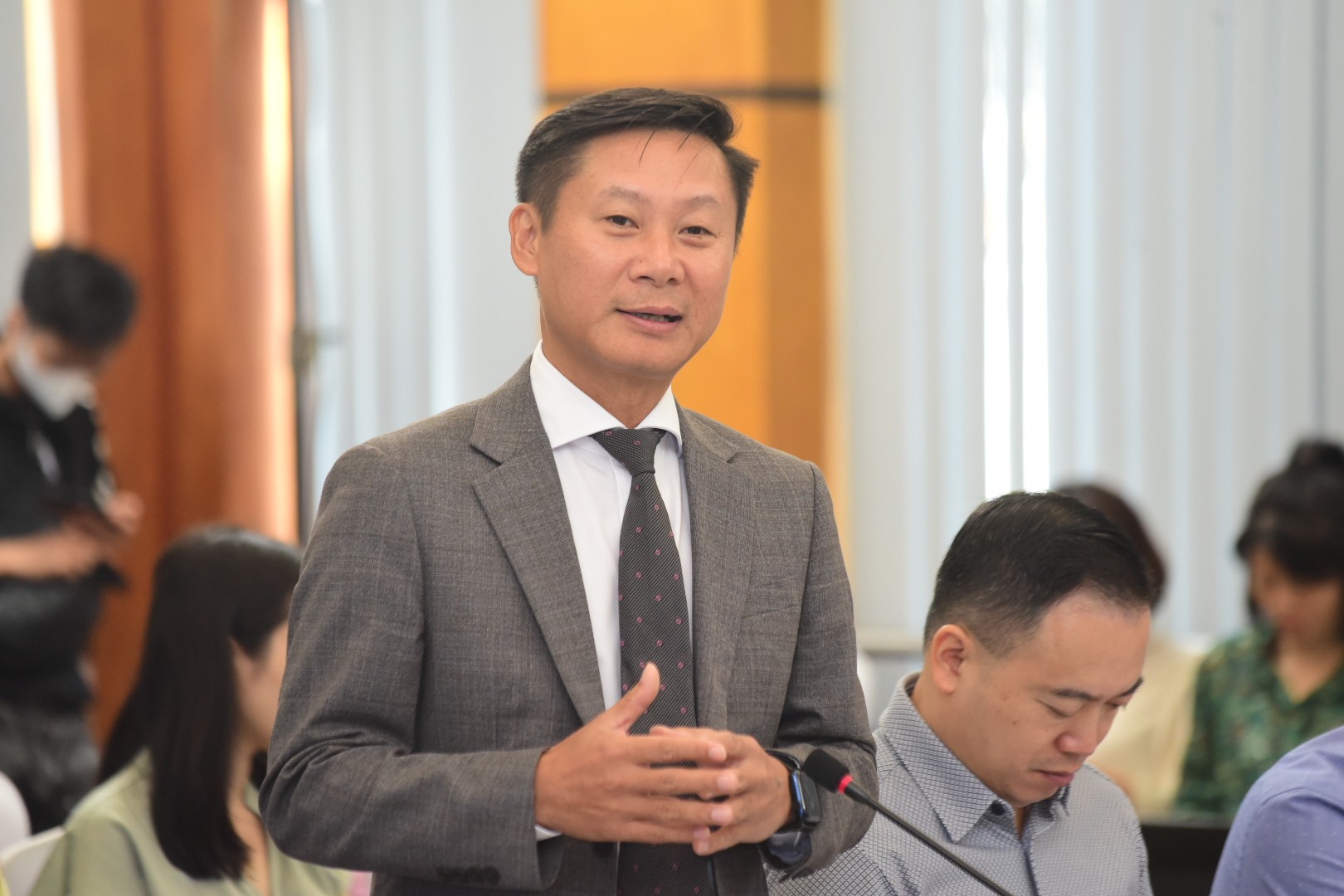
Mr. Nguyen Hong Chung - Chairman of the Board of Directors of DVL Ventures and Vice Chairman of the Hanoi Real Estate Club.
Contributing his input, Mr. Nguyen Hong Chung - Chairman of the Board of Directors of DVL Ventures and Vice Chairman of the Hanoi Real Estate Club - proposed regulations on land allocation for tourism in the draft amended Land Law.
Accordingly, Mr. Chung pointed out the difficulties faced by investors in tourism and resort projects in accessing land. He stated that projects that do not fall under the category of land expropriation by the State but are implemented through land transfer, lease of land use rights, or capital contribution in the form of land use rights are facing significant difficulties and obstacles.
This is because, currently, the law lacks specific mechanisms and policies to encourage and support investors in the process of negotiating with landowners.
Tourism development projects were included in the scope of land acquisition by the State under the 2003 Land Law. Decree 84 of 2007 also legalized tourism as a key economic sector eligible for State land acquisition. However, this provision was removed in the 2013 Land Law.
For tourism to truly become a key economic sector, as outlined in Resolution 18 of the Politburo, Mr. Chung believes that the new Land Law needs specific regulations on land for tourism purposes. At the same time, there should be truly open policies and mechanisms regarding land, taxes, investment, etc., to facilitate tourism development.
"Economic development in each stage has different priorities. Once we have identified tourism as a key economic sector, tourism projects such as amusement parks, entertainment complexes, and multi-functional complexes must be included in the list of projects for which the State will acquire land for socio-economic development," Mr. Chung said.
Sharing the same view, Mr. Nguyen Van Dinh, M.Sc. - a real estate legal expert, expressed strong agreement with the suggestion to add to the draft the case of land acquisition for the implementation of purely tourism, entertainment, and recreation projects that do not have a residential function.
Mr. Dinh argued that if the regulations remain as drafted, the implementation of key tourism projects will be hampered, leading to the consequence of unused residential land, wasting resources; or if used, it will create residential functions within the tourism project area, and the long-term residence of residents within the project will reduce the luxury level of a resort tourism project .
Source



![[Photo] Closing Ceremony of the 10th Session of the 15th National Assembly](/_next/image?url=https%3A%2F%2Fvphoto.vietnam.vn%2Fthumb%2F1200x675%2Fvietnam%2Fresource%2FIMAGE%2F2025%2F12%2F11%2F1765448959967_image-1437-jpg.webp&w=3840&q=75)
![[Photo] Prime Minister Pham Minh Chinh holds a phone call with the CEO of Russia's Rosatom Corporation.](/_next/image?url=https%3A%2F%2Fvphoto.vietnam.vn%2Fthumb%2F1200x675%2Fvietnam%2Fresource%2FIMAGE%2F2025%2F12%2F11%2F1765464552365_dsc-5295-jpg.webp&w=3840&q=75)
![[Infographic] Cross-exchange rates for determining taxable value from December 11-17](https://vphoto.vietnam.vn/thumb/402x226/vietnam/resource/IMAGE/2025/12/11/1765413245543_infographic-ty-gia-tinh-cheo-de-xac-dinh-tri-gia-tinh-thue-tu-11-1712-20251211021920.jpeg)





![[Infographic] Cross-calculated exchange rates to determine taxable value from December 4-10](https://vphoto.vietnam.vn/thumb/402x226/vietnam/resource/IMAGE/2025/12/04/1764832340841_infographic-ty-gia-tinh-cheo-de-xac-dinh-tri-gia-tinh-thue-tu-4-1012-20251204120447.jpeg)

































![[OFFICIAL] MISA GROUP ANNOUNCES ITS PIONEERING BRAND POSITIONING IN BUILDING AGENTIC AI FOR BUSINESSES, HOUSEHOLDS, AND THE GOVERNMENT](https://vphoto.vietnam.vn/thumb/402x226/vietnam/resource/IMAGE/2025/12/11/1765444754256_agentic-ai_postfb-scaled.png)






































Comment (0)