

.jpg)
Many countries invite British and American judges to participate in trials.
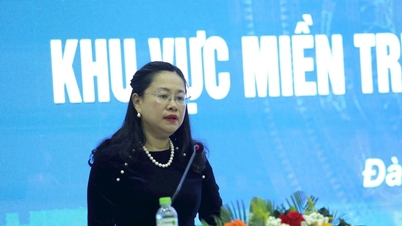
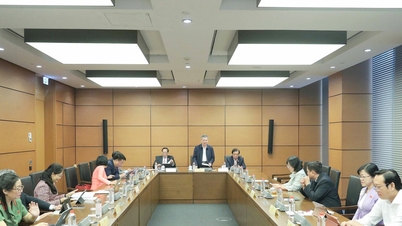
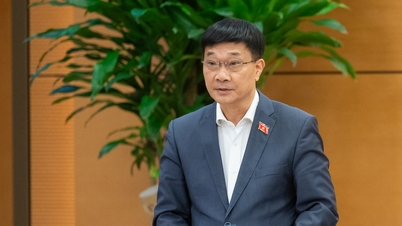
National Assembly Deputy Nguyen Thi Thuy ( Thai Nguyen ) commented that the draft Law on Specialized Courts at the International Financial Center is a completely new law, with high specificity and great difficulty. However, the Supreme People's Court has prepared the draft Law very carefully and seriously, with many new and outstanding regulations to increase the attractiveness and international competitiveness of the Specialized Court model.
According to delegate Nguyen Thi Thuy, this law is designed to serve the group of international investors who are members of the International Finance Center. For them, the basic questions are always: when a dispute arises, which law will be applied? Are the proceedings public, transparent, objective and quick? Will the judgment be enforced promptly? And especially, the capacity of the team of judges is a decisive factor for the reputation of the Special Court.
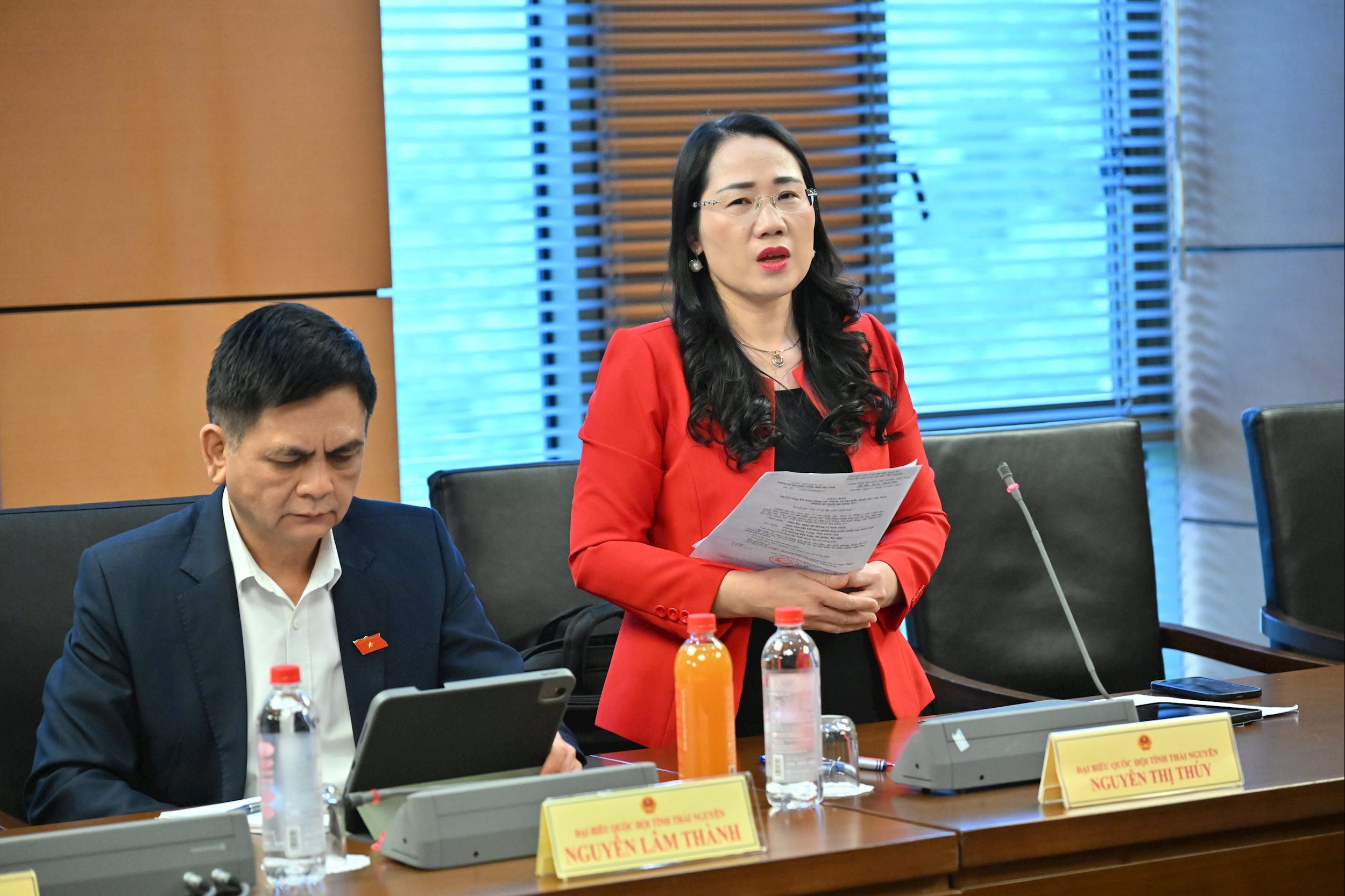
From there, the delegate emphasized: the draft Law must approach international practices, even provide superior mechanisms because Vietnam is a latecomer and must compete for investors to choose to resolve disputes in Vietnam.
“Geographical distance is no longer a problem in the era of online trials and remote access to documents. What is important is the quality and professionalism of the dispute resolution mechanism,” said delegate Nguyen Thi Thuy, affirming that the Specialized Court will be an important component in creating the attraction of the International Financial Center.
One progressive point of the draft Law is to expand the human resources for adjudication. According to the draft, judges of the Specialized Court can come from two sources: foreign judges and domestic sources including people's court judges, experts, scientists , arbitrators, etc.
Delegate Nguyen Thi Thuy agreed that foreigners can be judges at the Special Court at the International Financial Center. “Looking at the list of judges, investors will feel the level of justice assurance and have more confidence.”
The delegate said that many countries in the first five years of establishing the International Finance Center also invited judges from the UK and the US to participate in the trial. And according to statistics from international arbitration centers, most parties in commercial contracts choose English law as the applicable law. “Without inviting English judges, it is very difficult to fully understand the English legal system and case law to accurately resolve cases.”
From that reality, delegate Nguyen Thi Thuy recommended that when implementing the law , the Supreme People's Court should invite prestigious international judges, especially from the UK, not only to directly participate in trials but also to support the development and promulgation of procedural rules in the initial stages of operating the Special Court.
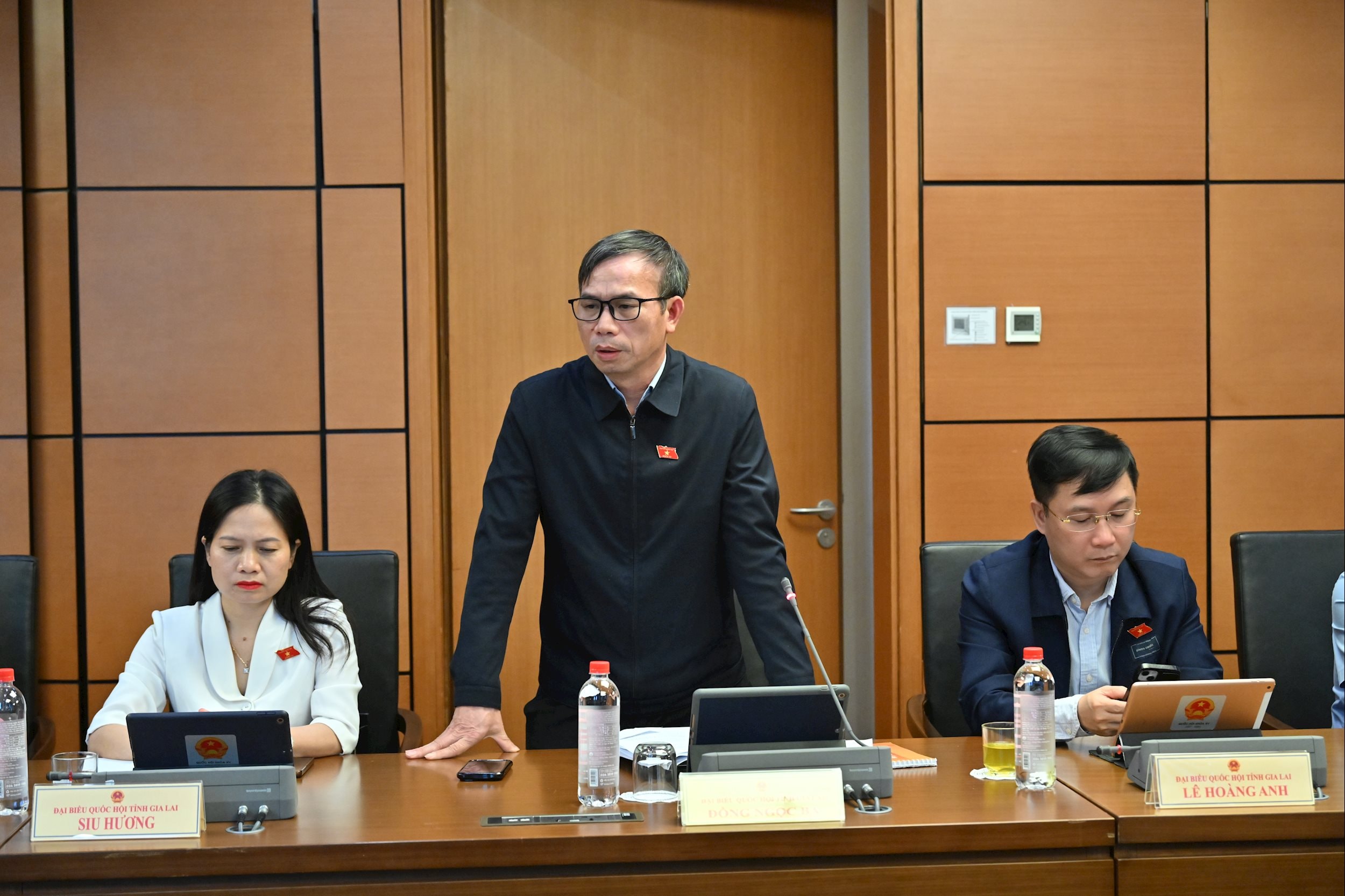
Regarding the application of law at specialized courts, the draft Law stipulates that the parties may agree to choose to apply foreign laws, international practices, and international treaties to which Vietnam is not a member to resolve disputes when at least one party is a foreign individual or organization.
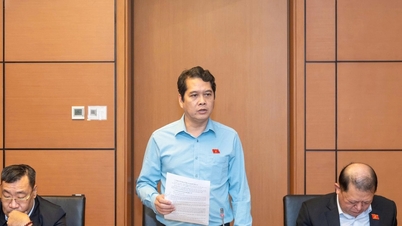
Commenting on this provision, National Assembly Deputy Dong Ngoc Ba (Gia Lai) said that the parties must carefully consider the application of "international treaties to which Vietnam is not a member". Because international treaties create, change or terminate the rights and obligations of the nation, Vietnam's acceptance of commitments under international treaties must go through strict signing and ratification procedures.
Consider flexible adjustment mechanism for power development planning
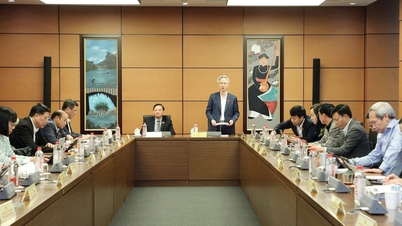
Giving comments on the draft Resolution of the National Assembly on the mechanism and policy for national energy development in the 2026 - 2030 period, National Assembly Deputy Le Hoang Anh (Gia Lai) said that the current context requires a clear distinction between issues that need to be handled immediately by the Resolution and content that needs to be included in amendments to specialized laws.
The delegate emphasized that at this session, the National Assembly is reviewing and amending many laws directly related to the policies in the draft Resolution such as the Investment Law and the Law on Urban and Rural Planning.
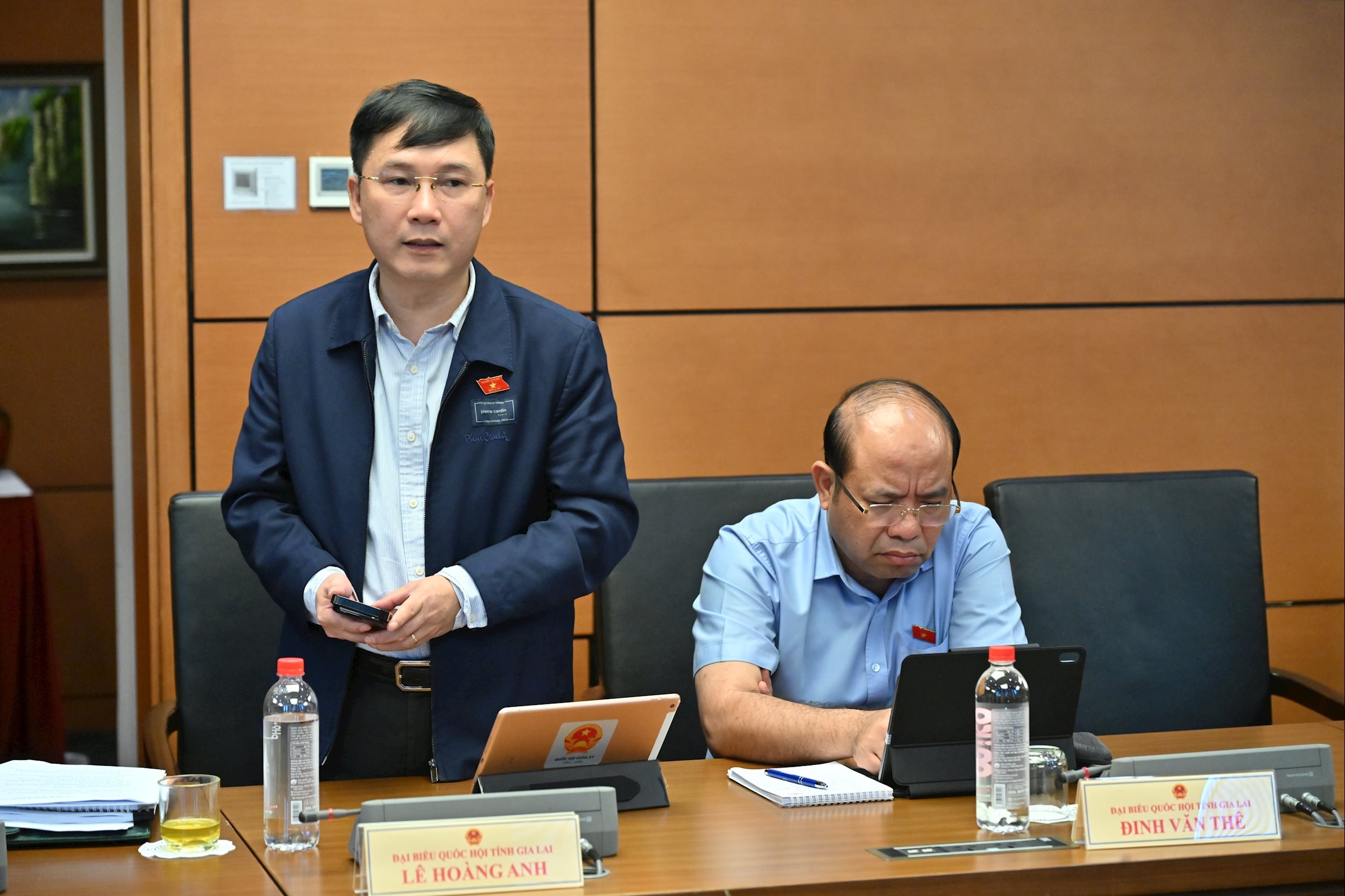
The 2026 Law-making Program will also include fundamental laws in the energy sector such as the Petroleum Law, Electricity Law, and Renewable Energy Law.
“These are all original laws to comprehensively solve national energy problems, so choosing which content to handle first and which content to reserve for law is not an easy problem,” said delegate Le Hoang Anh.
The Draft Resolution devotes a chapter to regulating the adjustment of power development planning and power supply network development plans in provincial planning, which provides a flexible adjustment mechanism. According to the Government's Submission, the current Planning Law lacks flexible adjustment tools, leading to many local proposals, such as adding transformer stations, transmission lines, or connecting power sources, not being able to be resolved promptly, slowing down the implementation progress.
However, delegate Le Hoang Anh said that this new point needs to be carefully considered. The delegate cited Resolution 70-NQ/TW of the Politburo on ensuring national energy security until 2030, with a vision to 2045, which does not mention "flexible adjustment of planning". Therefore, when including this concept in the Resolution of the National Assembly, it is necessary to clarify the basis and scope of application.
According to delegates, the flexible adjustment mechanism may be suitable for important and urgent projects at the national level, but if applied to small-scale projects that require adjustments to higher-level plans such as national master plans, land use plans, and marine spatial plans, it will pose great risks and has not been fully quantified.
Furthermore, the current legal system has designed a simplified planning adjustment process that only takes 15 days for approval. Therefore, is it really necessary to add a “flexible adjustment” mechanism, delegate Le Hoang Anh questioned.
Source: https://daibieunhandan.vn/moi-tham-phan-quoc-te-de-nang-tam-toa-an-chuyen-biet-10398282.html

![[Photo] Cat Ba - Green island paradise](/_next/image?url=https%3A%2F%2Fvphoto.vietnam.vn%2Fthumb%2F1200x675%2Fvietnam%2Fresource%2FIMAGE%2F2025%2F12%2F04%2F1764821844074_ndo_br_1-dcbthienduongxanh638-jpg.webp&w=3840&q=75)




























![[VIMC 40 days of lightning speed] Da Nang Port: Unity - Lightning speed - Breakthrough to the finish line](https://vphoto.vietnam.vn/thumb/402x226/vietnam/resource/IMAGE/2025/12/04/1764833540882_cdn_4-12-25.jpeg)



































Comment (0)