


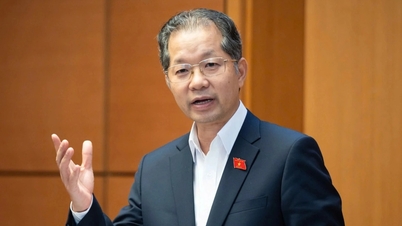
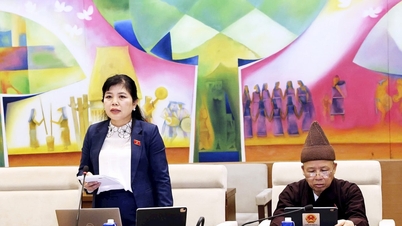
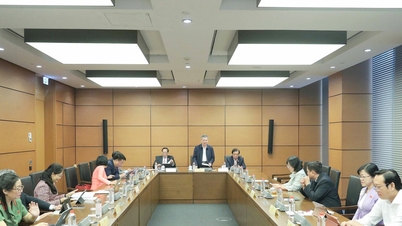
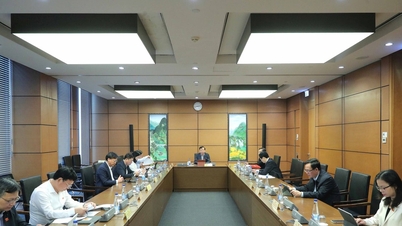
Deputy Head of the National Assembly Office Le Thu Ha spoke at the discussion session in Group 4 on the afternoon of December 4.
Three parallel goals need to be achieved
The construction of a specialized court in an international financial center is not only about adding a new judicial institution, but more importantly - it is a shift from a mindset of dispute resolution to one of creating trust and attracting global capital flows.
It can be seen that we are facing a historic pilot. This is the first time Vietnam has built a financial commercial adjudication mechanism according to international standards right on Vietnamese territory. Therefore, I think that the draft Law needs to achieve three parallel goals.
First is international competitiveness - procedures must be fast, transparent, and laws must be friendly to global investors.
The second is the protection of national legal sovereignty - not at the expense of legal security and public order.
Third is reliability and enforceability - the judgment must be effective and not merely a formality.
Clear scope of judicial immunity
From that perspective, I would like to participate in some key issue groups as follows.
One is about foreign judges (Article 9 of the draft Law). This is a breakthrough, but we need a safeguard of sovereignty. The current draft Law allows the appointment of foreign judges with over 10 years of judicial experience. This is the practice of the Singapore International Commercial Court as well as the Dubai Court. I fully support this option.
Because, as the report stated, our judicial capacity has not met the requirements of this political task. Moreover, international investors do not only look at the law but also at the person holding the scales. Therefore, if a judge comes from Singapore or the UK, Japan… it is itself a market signal that will increase legal confidence from the beginning.
However, to accept international experts to sit on the bench in Vietnam, we need to have a separate code of ethics and conflict of interest for foreign judges. There must be a mechanism to transparently publish the capacity profile, international trial experience and clarify the scope of judicial immunity, especially when the case is related to state agencies; there must be a mechanism to protect cross-border financial and commercial information.
I propose to attach an appendix to the international judicial code of conduct or assign it to the Supreme People's Court to promulgate as soon as the law comes into effect.
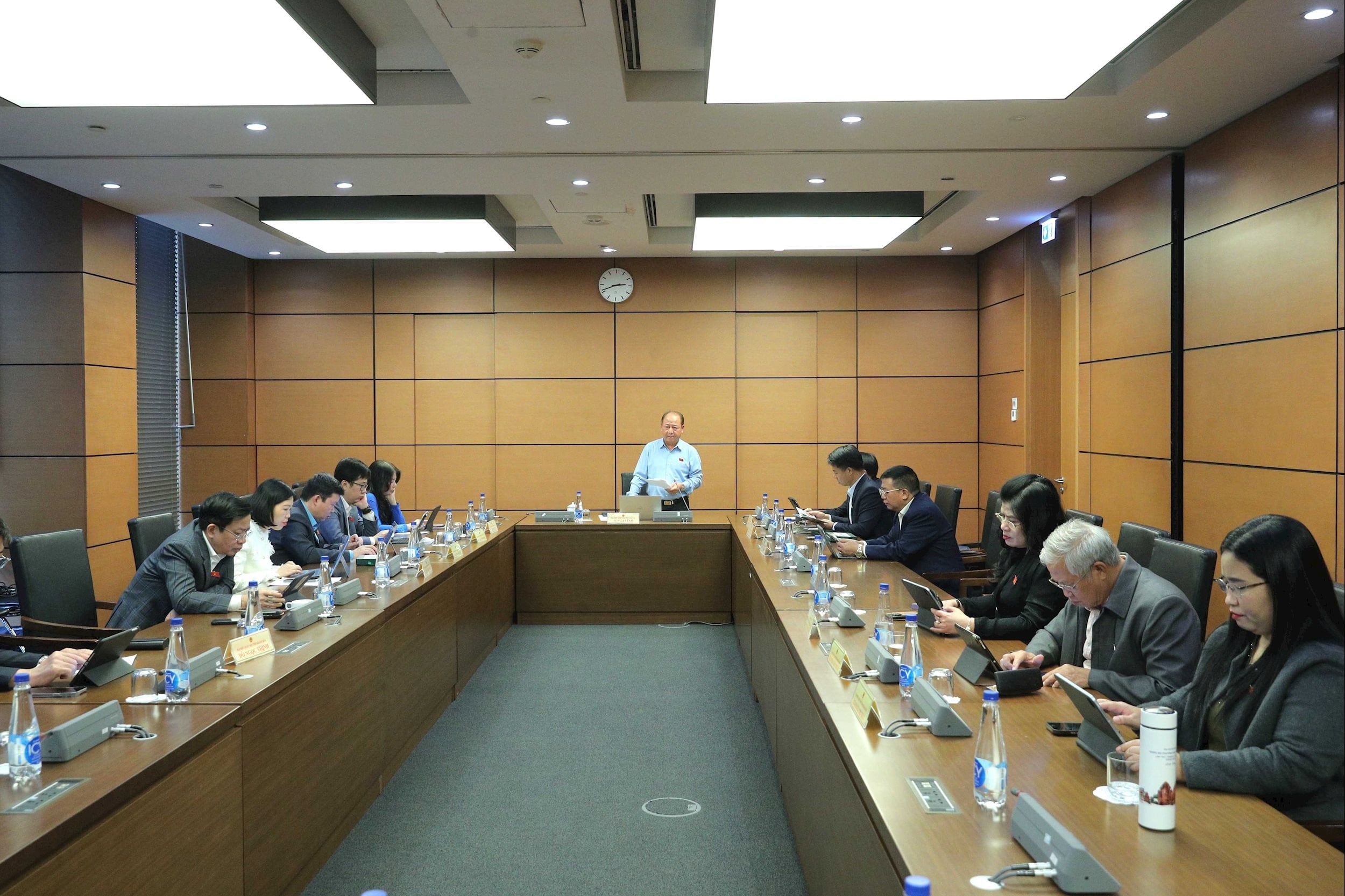
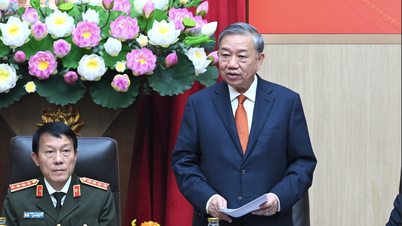
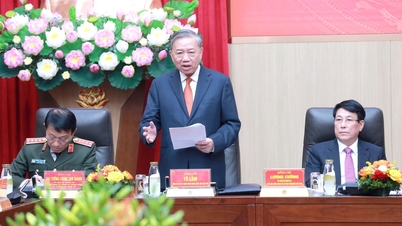
Delegates participating in the discussion at Group 4 (including the National Assembly delegations of Khanh Hoa, Lao Cai and Lai Chau provinces) on the afternoon of December 4.
Second, regarding the language of litigation in English. This is a very bold reform, but it is necessary to clearly define which version is the standard. Article 13 of the draft Law allows the use of English or English with a Vietnamese translation in litigation.
This is a big step forward, which can bring Vietnam closer to the international dispute resolution standards. However, if we do not clearly define which version is the original legal version when the content is inconsistent, we may face disputes right in the language of the judgment.
Therefore, I propose that the English version be the standard version in international commercial transactions, accompanied by a Vietnamese translation for domestic deposit and publication purposes. This is a practice adopted by Singapore and helps to limit post-trial disputes. This should be reflected in the law itself instead of being left in sub-law documents.
Third is the application of foreign laws and international treaties to which Vietnam is not a member. This is an international competitive advantage. Currently, Article 5 allows the application of foreign laws, international trade practices, and even international treaties to which Vietnam is not a member when there is an agreement.
This is a rare spirit of openness. However, Vietnam's public order needs to be defined more clearly to avoid arbitrary interpretation and legal risks when disputes are related to public assets as well as public investment. I propose to amend in the direction of: having a mandatory consultation mechanism with the Ministry of Foreign Affairs or the Ministry of Justice for cases involving public authority and policy-sensitive elements.
“
Specialized courts are not simply courts but are the country's credit rating. Therefore, the National Assembly and the Drafting Committee need to consider perfecting the draft Law in three directions: open but with a ring of sovereignty protection; compatible with international practices but with quantitative criteria to easily control risks; focusing on implementation.
Prescribing mandatory criteria for transfer to the adjudication panel
Fourth is the model of first instance trial by one judge; in complex cases, the first instance trial will be conducted by a panel of three judges (Article 14). I am concerned about ensuring prudence when resolving major disputes.
I propose to stipulate mandatory criteria for transferring to the adjudication council, for example, when the value of the dispute is greater than a certain number of million USD, there are state, bank, public property elements and foreign law is applied. This ensures speed but does not trade off institutional risks.
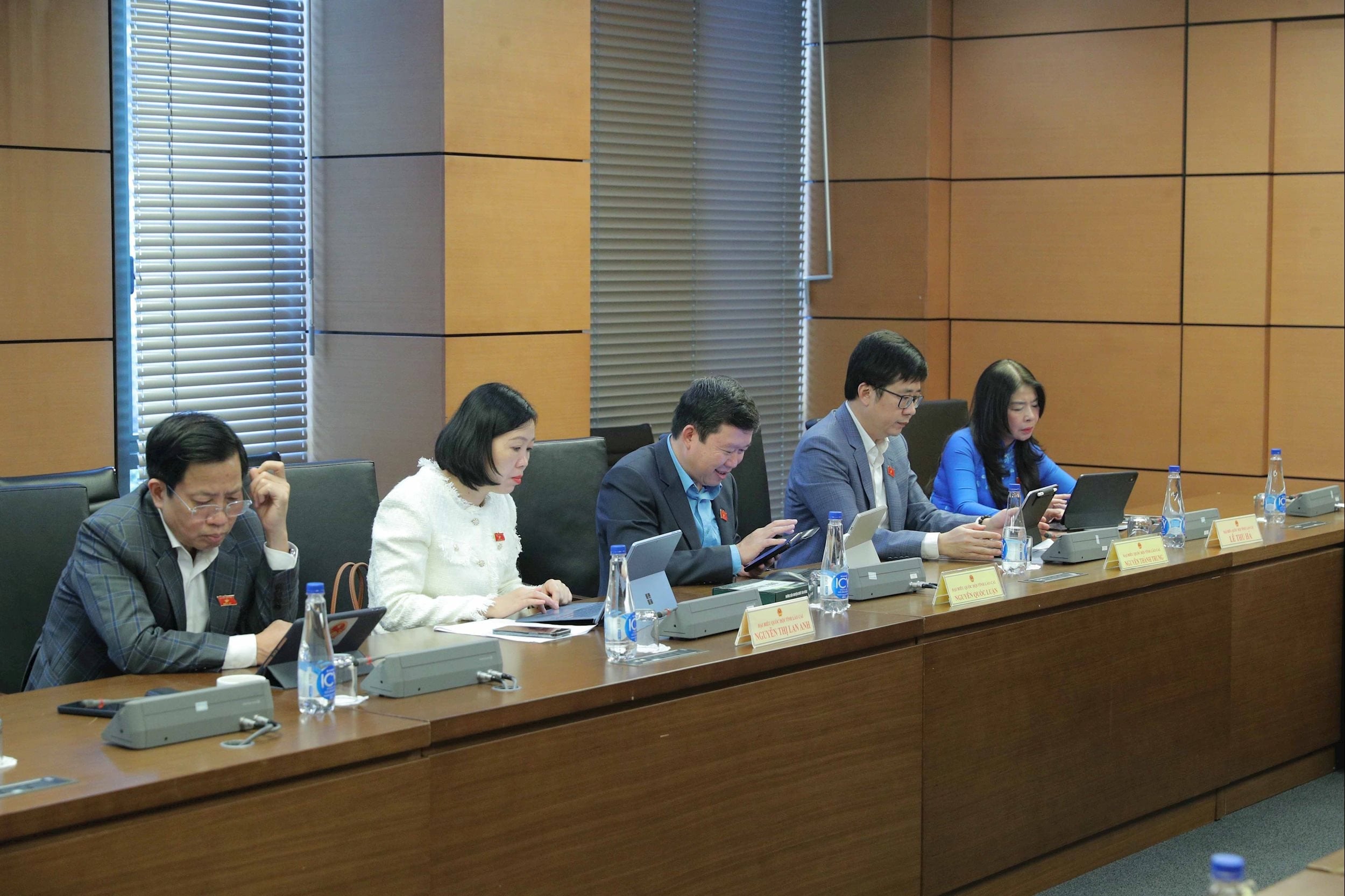
Delegates participating in the discussion at Group 4 on the afternoon of December 4
The fifth is the enforcement and recognition of international judgments. Investors are only concerned with one final question: will the judgment be enforced quickly, substantially and without indefinite delay?
The Draft has now paved the way for the recognition of foreign arbitral and judicial awards in Article 12 and Chapter 3. This is a much-needed step.
However, I recommend that it is necessary to clearly define cases of refusal to recognize if it affects public order and national financial security; to build an open database of international commercial judgments, excluding confidential information, and to transfer the enforcement of judgments to the judicial enforcement mechanism ( a mechanism of enforcement through the judiciary/court - PV ) instead of administrativeizing the process. If a judgment is beautiful on paper but difficult to enforce, it will destroy market confidence faster than if there were no court!
Finally , the evaluation mechanism. I propose to include in the draft Law an evaluation mechanism after 3 years of operation, then submit to the National Assembly an independent report assessing the effectiveness, including: time to resolve cases, rate of judgment enforcement, investment capital associated with the court and evaluation from international investors. If done well, we will expand this model to Hanoi or other special financial zones; if not, we will promptly adjust it.
In short, a specialized court is not simply a court but a credit rating of the country. Therefore, the National Assembly and the Drafting Committee need to consider completing the draft in three directions. These are: open but with a ring of sovereignty protection; compatible with international practices but with quantitative criteria to easily control risks; focusing on implementation.
Source: https://daibieunhandan.vn/pho-chu-nhiem-van-phong-quoc-hoi-le-thu-ha-minh-bach-ho-so-nang-luc-cua-tham-phan-nuoc-ngoai-10398260.html


![[Photo] Cat Ba - Green island paradise](/_next/image?url=https%3A%2F%2Fvphoto.vietnam.vn%2Fthumb%2F1200x675%2Fvietnam%2Fresource%2FIMAGE%2F2025%2F12%2F04%2F1764821844074_ndo_br_1-dcbthienduongxanh638-jpg.webp&w=3840&q=75)


































![[VIMC 40 days of lightning speed] Da Nang Port: Unity - Lightning speed - Breakthrough to the finish line](https://vphoto.vietnam.vn/thumb/402x226/vietnam/resource/IMAGE/2025/12/04/1764833540882_cdn_4-12-25.jpeg)









































Comment (0)