

The protein content in insects is comparable to that of pork, beef, and chicken, but raising them is less expensive and causes less environmental pollution. The benefits are clear, but the question is whether humans dare to eat them.
In the early 1960s, during the last months of the year, crickets would swarm the Tan Dinh area (Saigon) in large numbers. I would go with some drinking buddies to catch crickets, gut them, stuff peanuts into their bellies, and deep-fry them until crispy as a snack.
Adults would tempt children by telling them to eat crickets to grow faster. I wanted to be an adult, so I closed my eyes and ate them, chewing them roughly before swallowing. It felt fatty, rich, and… horrifying!
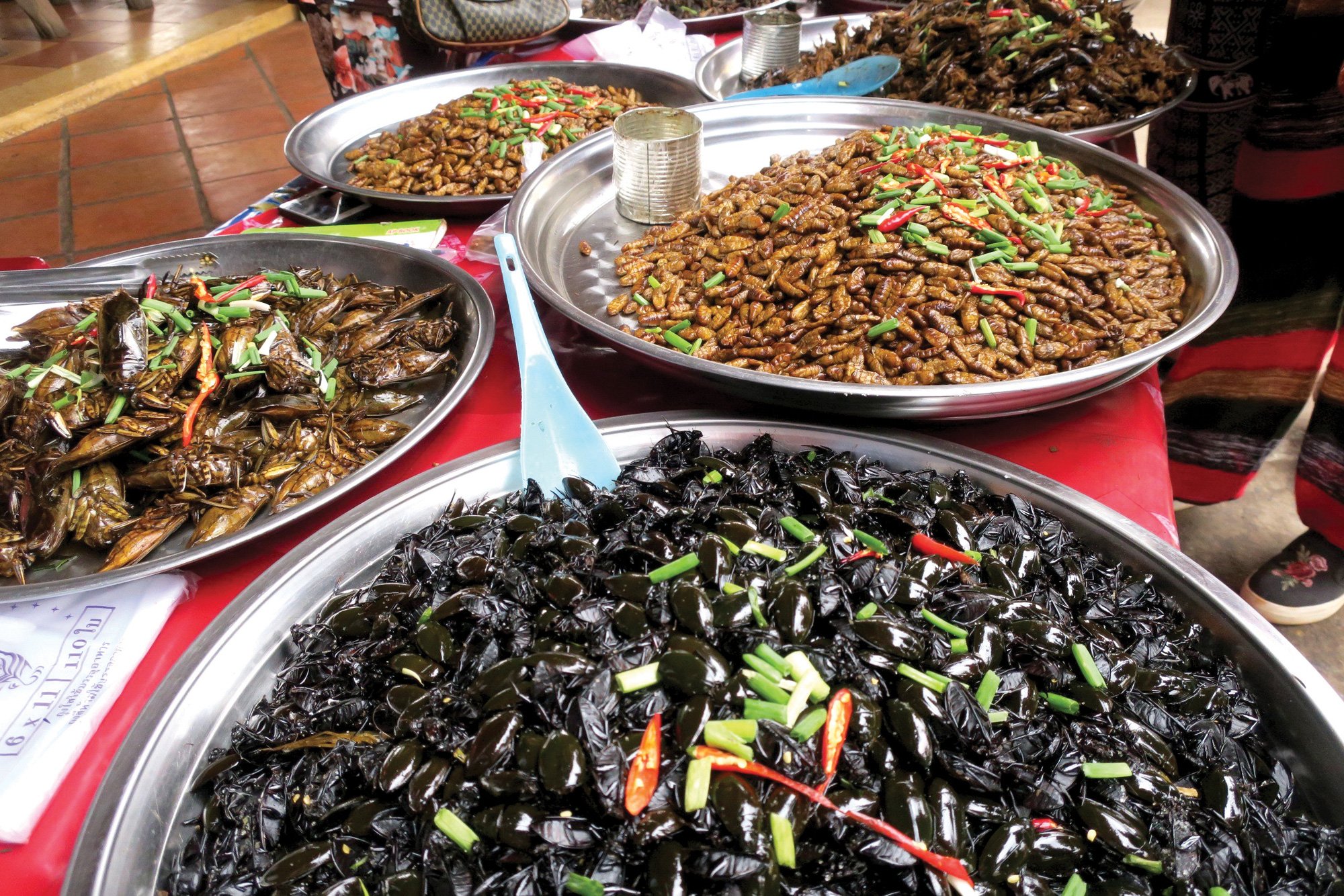
Dishes made from insects are sold to tourists in Phnom Penh (Cambodia). Photo: TTD
More than half a century later, the Food and Agriculture Organization (FAO) is calling on the world to eat insects because of their nutritional value. The feeling of "fat, rich, and terrifying" has naturally come back to life…

Hunting for crickets, like I do, is a piece of cake. Women in Cameroon (Africa) are professionals at harvesting beetle larvae.
They press their ears against the palm tree to listen to the squishing sounds of the larvae, trying to gauge how "ripe" they are. The larvae are at their tastiest and fattest when they are close to hatching into beetles.
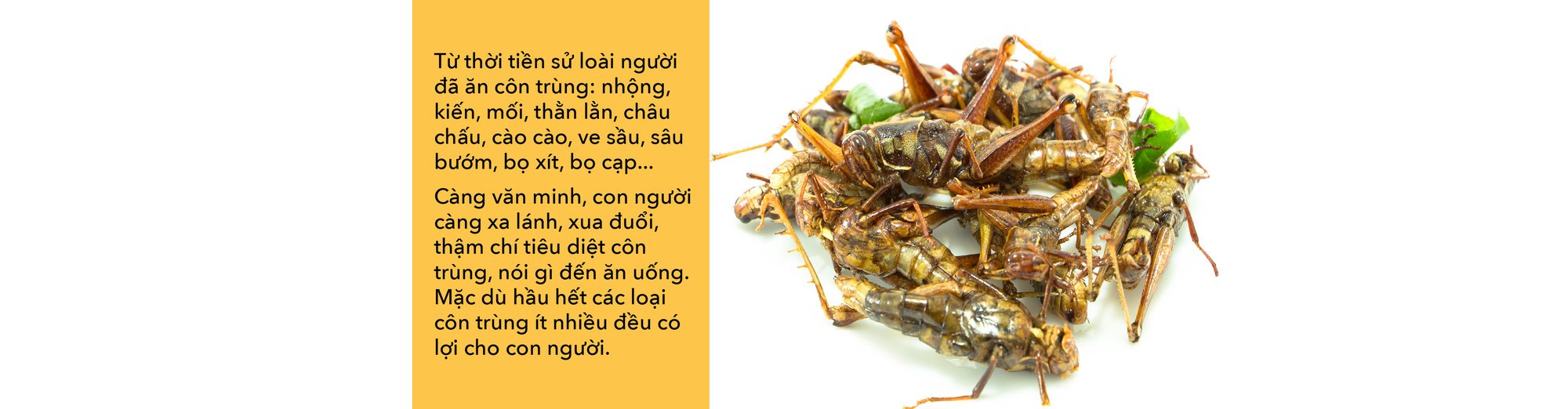
Only about 1 million insect species out of 1.4 million animal species on Earth have been identified. It is estimated that around 100,000 insect species contribute to the survival of plants by pollinating them.
Only a very small number (no more than 0.1%) such as flies, mosquitoes, termites, woodworms, etc., cause nuisance to humans.
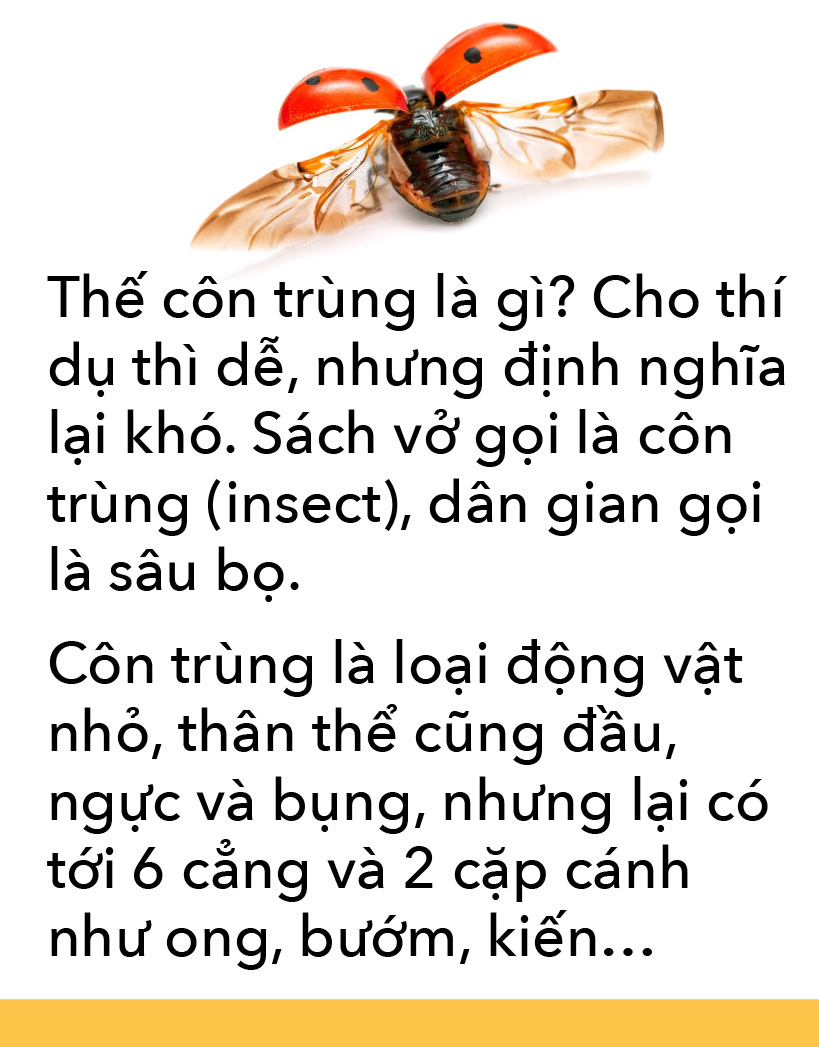
Ants also have wings, belonging to the order Hymenoptera (membranous wings). This definition is general and only relative.
In terms of diet, insects are opportunistic, or simply put, omnivores.
That's why people call them "insects." The more refined ones feed on flowers, plants, pollen, nectar… and even eat other insects, depending on whether their jaw structure is suitable or not.
Lower-level insects feed on organic waste, manure, compost, blood, pus, garbage, etc. Bees, butterflies, flies, and mosquitoes are more "polite" eaters; they use siphons to suck up food.
In 2013, the FAO officially called for people to eat insects for food security reasons. With the world population estimated to reach 9 billion by 2050, food-producing resources (land, rivers, seas, forests, etc.) will put immense pressure on the environment.
In poor countries, there's hardly any meat to eat! That's why the FAO emphasizes that the abundant protein source in insects will be a solution to the problem of malnutrition.
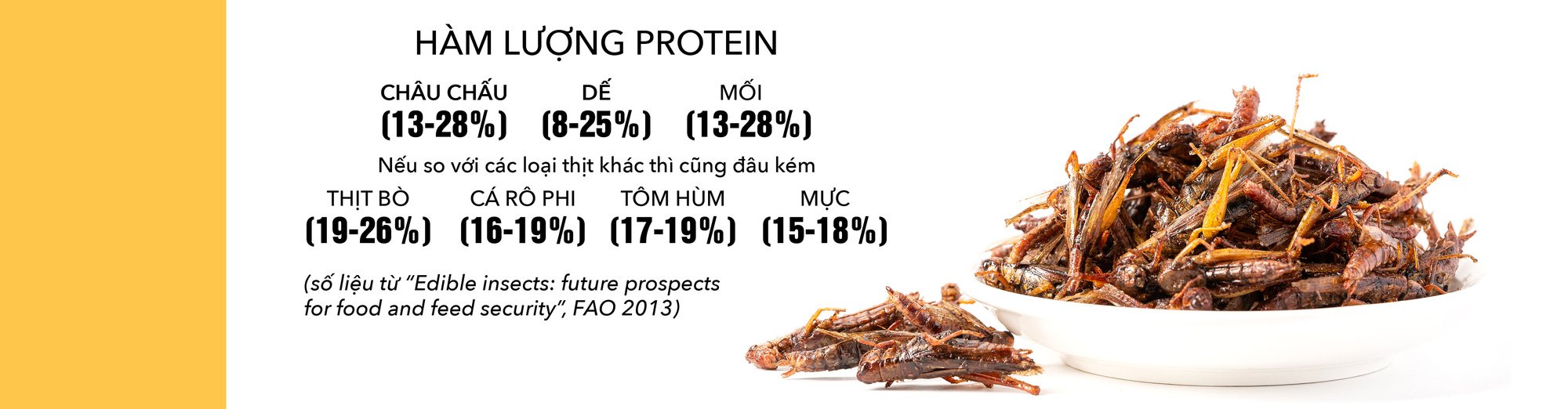
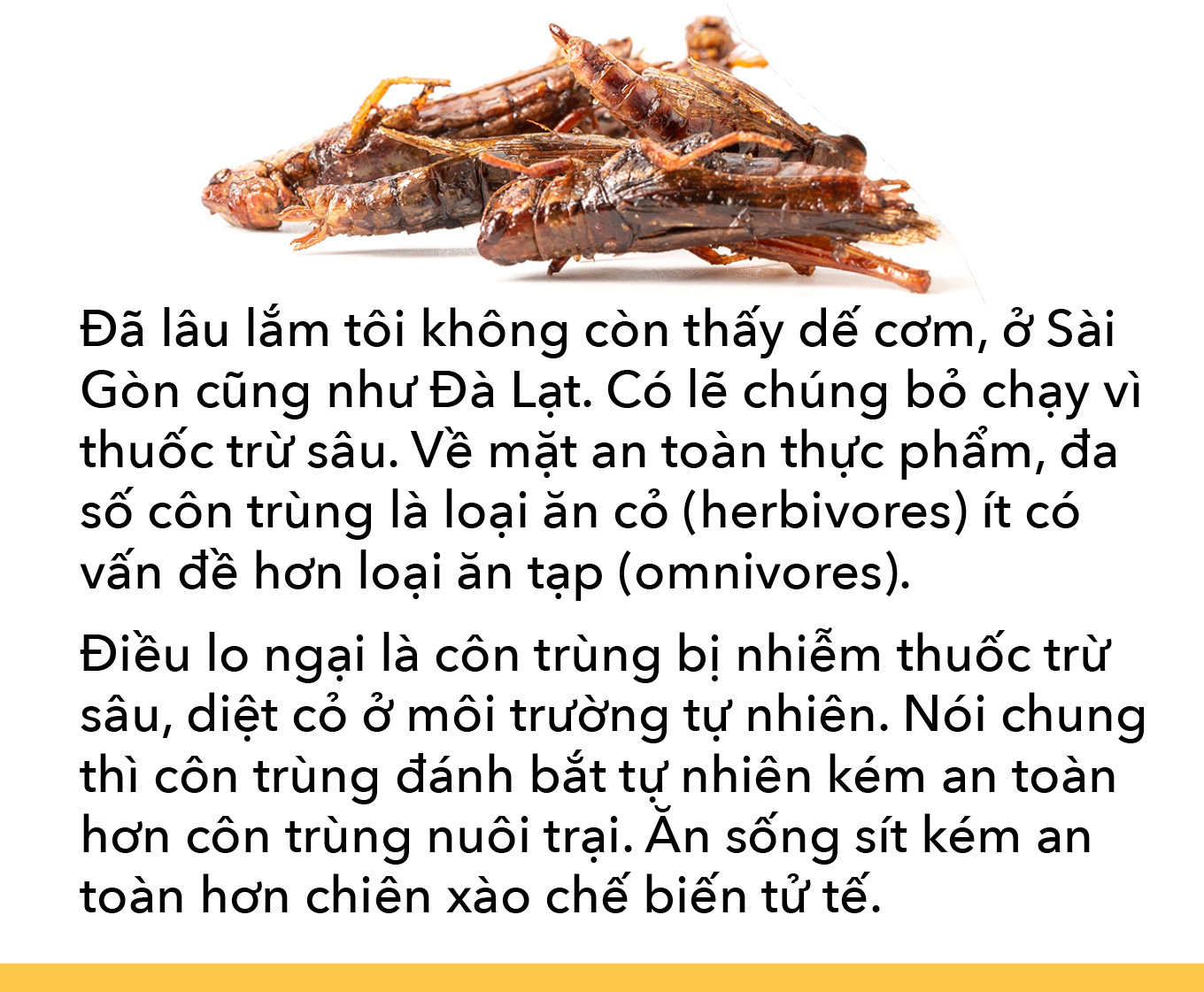
Generally speaking, consuming insect protein and converting it into human protein isn't too bad; in fact, even pigs and cows would have to show some respect.
The protein content in insects varies depending on their developmental stage. The larval stage has lower protein content than the adult stage. Furthermore, insect protein contains a significant amount of essential amino acids such as lysine, threonine, and tryptophan…
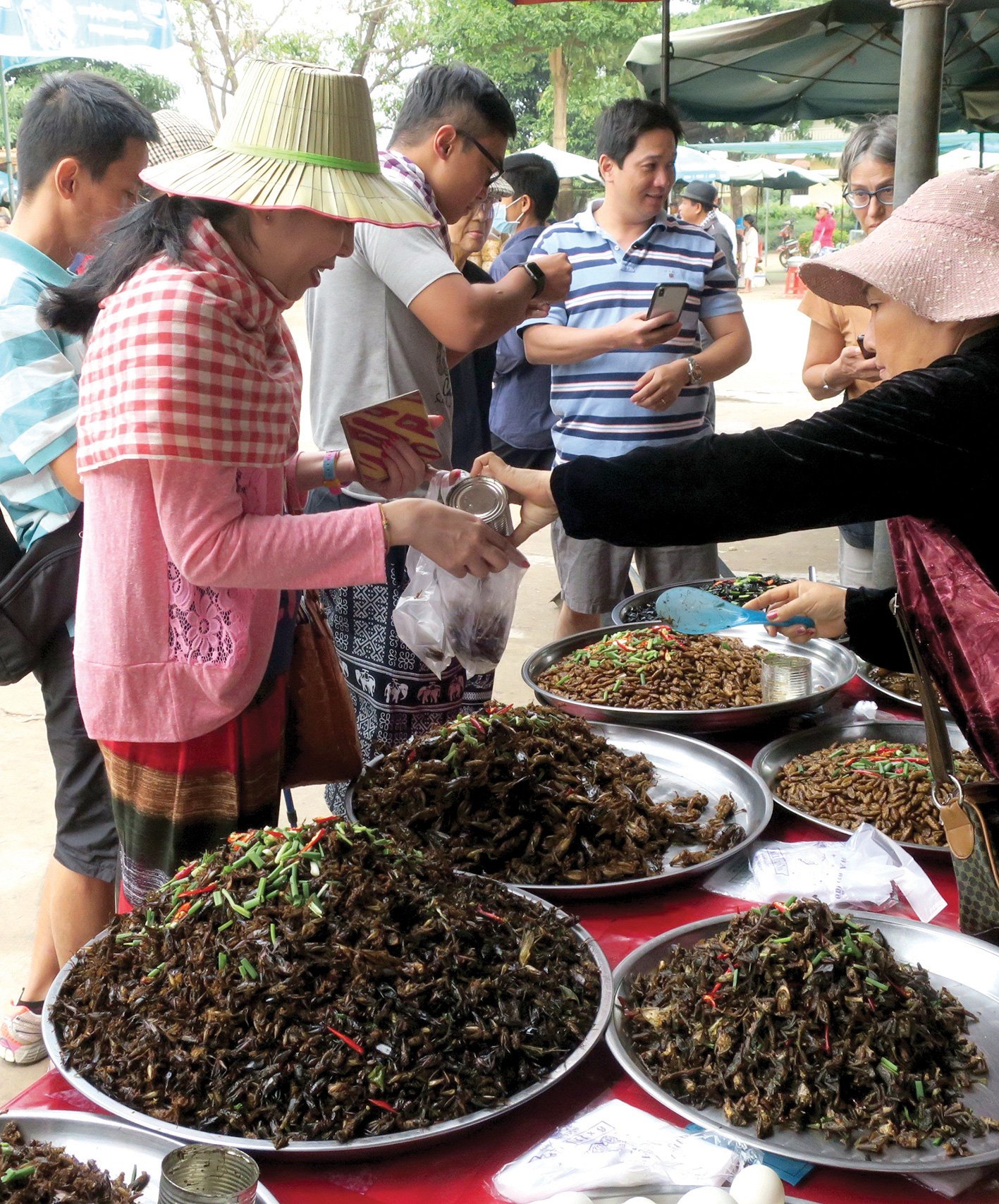
Tourists buy dishes made from insects in Phnom Penh (Cambodia). Photo: TTD
Insects are also rich in essential fatty acids (which the human body cannot synthesize) such as omega-3 and omega-6. They also contain a significant amount of minerals, especially iron and zinc. Vitamins such as B1, B2, B12, A, and E are also abundant.

There are millions of insect species, but only about 2,000 are traditionally considered edible.
According to FAO documents, over 30% are beetles (Coleoptera) such as ladybugs and dung beetles, followed by insects of the order Lepidoptera such as butterflies at 18%, and hymenoptera such as bees and ants at 14%. These insects are usually harvested from the wild.
Raising insects for food is a fascinating new idea. To produce the same amount of protein, raising crickets requires six times less feed than raising cows, four times less than raising sheep, and twice as much as raising pigs or chickens.
Not to mention that insects are opportunistic eaters, as mentioned above. They are omnivorous and grow quickly; raising cattle, pigs, and chickens takes months to a year, while insects only need a few weeks to a month.
They are also easy to raise because raising insects releases far less greenhouse gas and ammonia compared to raising cattle, pigs, and chickens...
Nutritious, inexpensive, and environmentally friendly – no wonder the FAO encourages people to eat insects. Scary? Then raise insects as animal feed.
A more advanced approach involves raising insects to extract protein. Either way, it ends up in the human stomach, directly or indirectly. The FAO is actively campaigning in this direction.
Insect feed and housing conditions are factors monitored by the authorities because they affect microbiological and toxic risks.
Finished products released to the market must also comply with food safety regulations, such as the elimination of pathogenic bacteria, proper packaging, and storage.
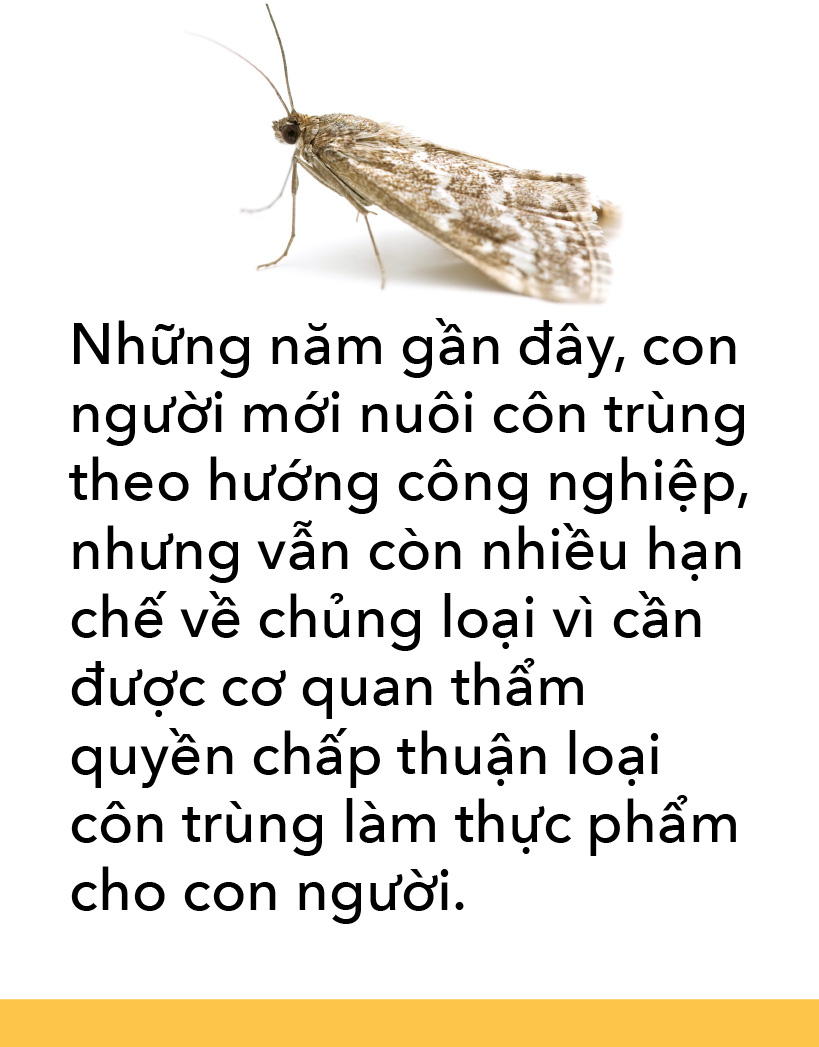
Nearly 2,000 types of insects are edible, but in reality, only a few dozen are approved by safety authorities, varying from country to country. This list is constantly expanding.
Recently, the Singapore Food Authority (SFA) has approved 16 types of insects, including crickets, silkworm pupae, and grasshoppers, as food for humans.
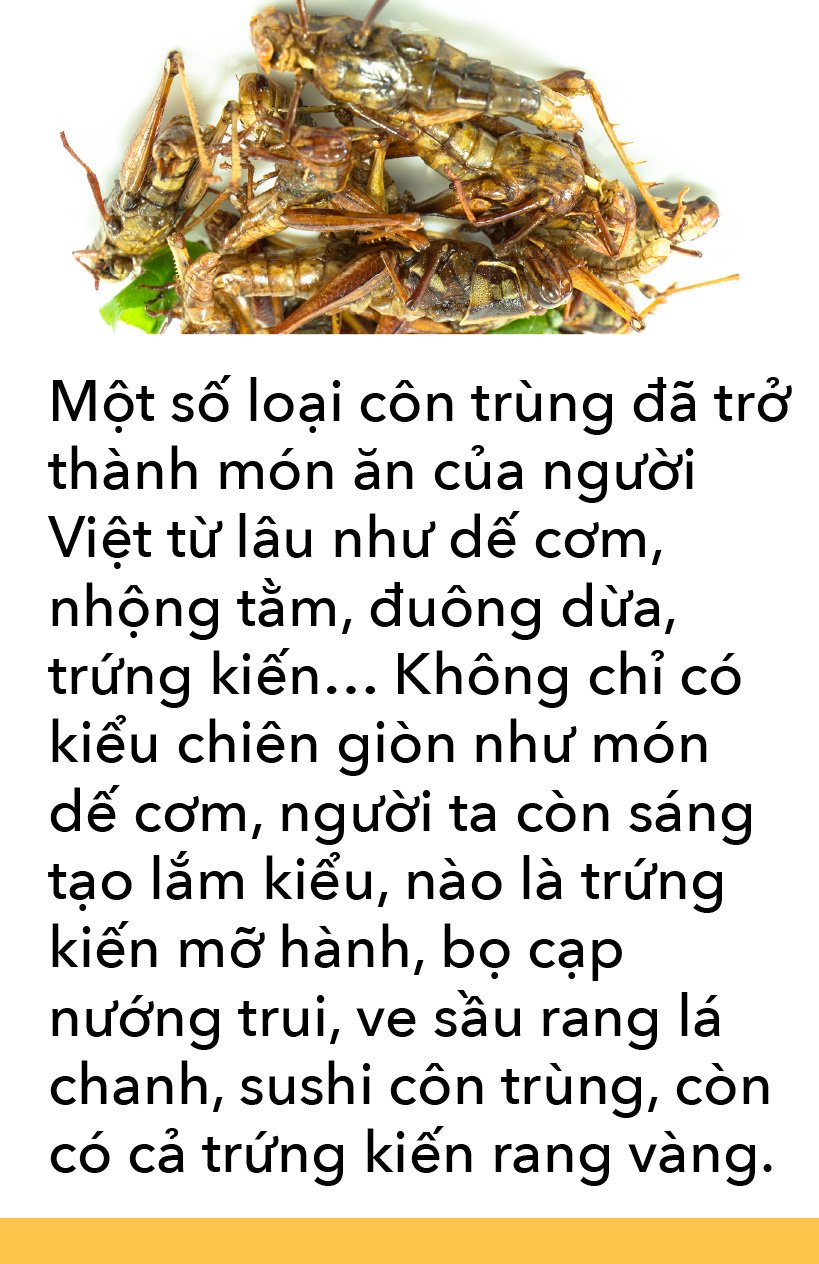
The other day, I went to a restaurant in Saigon for lunch and saw a dish of stir-fried silkworm pupae with scallions. Silkworm pupae are insects in their final stage before transforming into butterflies, so they are very fatty and flavorful. Remembering that I occasionally ate this dish when I was a child, I ordered the pupae. My friend, who was with me, turned pale, even though she's a skilled chicken butcher at home.
However, many Vietnamese people are still averse to eating insects. The safety concerns surrounding insect consumption are insignificant compared to the cultural barriers.
In developing countries like those in Africa, insects are a fairly common food. There are some dishes whose names alone are enough to send shivers down your spine, such as fried termites and crispy fried mosquito cakes (similar to fried shrimp cakes), each cake containing half a million mosquitoes.
In Cambodia, insect dishes are commonly sold in many markets, including crispy fried spiders.
These are dishes that are... "whole" in nature.
Westerners find it disgusting. Food processors in Europe and America are enthusiastically starting to innovate. They're introducing various insect powders to the market, such as cricket powder, grasshopper powder, locust powder, etc., along with "instructions for use" for home cooks to make puddings, chocolate cakes, and so on.
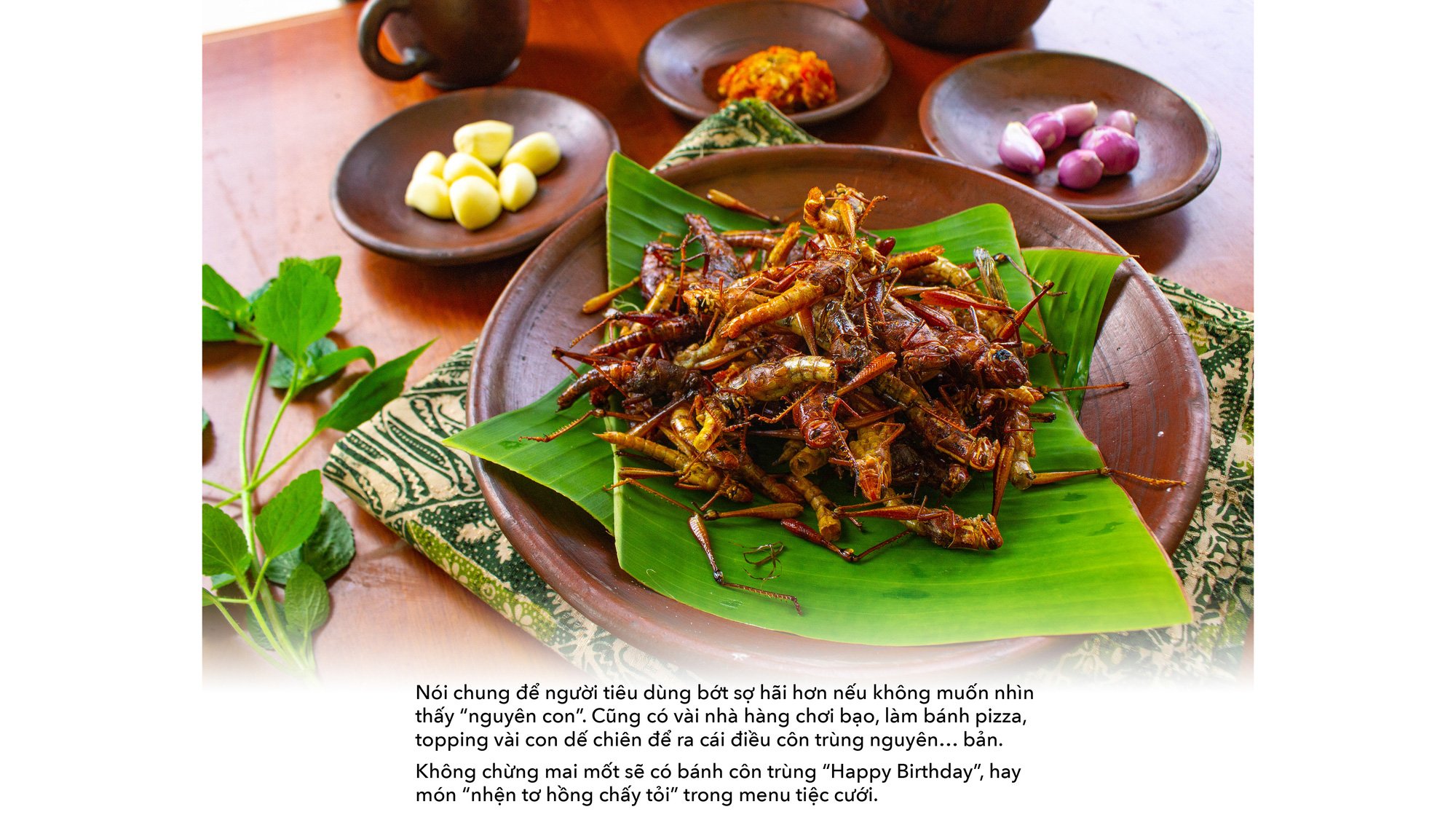
Westerners are afraid of the smell of our fermented fish sauce and shrimp paste. Conversely, many types of Western cheese make us run away at the smell. Taste is a difficult matter to debate. Traditional cuisine must have something special to be passed down for centuries.
Aren't stir-fried silkworm pupae with onions or coconut beetle larvae with tamarind sauce traditional dishes? Civilized people have abandoned and rejected these rustic dishes, but now they are returning to them for nutritional and environmental reasons.
Who knows, one day eating insects might become a trend, and marketers might even "proclaim" insects as a "healing" food.
When discussing nutrition, people often emphasize the healthy protein advantages of insects, but forget one thing: Insects are rich in protein but very low in carbohydrates.
This dish is both rich and flavorful, and perfect for ladies on a weight-loss diet. Do you dare to try it?
-------------------------------------------------------------------------------------
VU THE THANH
Source: https://tuoitre.vn/mon-con-trung-bep-nuc-ngay-cang-sang-tao-20240729065127622.htm
















































































![[Photo] Hanoi residents on the first day after the official cessation of E5 RON 95 gasoline sales.](https://vphoto.vietnam.vn/thumb/402x226/vietnam/resource/IMAGE/2026/06/02/1780370815909_666523_thumb_1780357660_06474202.jpeg)


![[Infographic] Market starts June 2026 with negative sentiment, VN-Index drops nearly 19 points.](https://vphoto.vietnam.vn/thumb/402x226/vietnam/resource/IMAGE/2026/06/02/1780370839687_666534_thumb_1780357795_06495602.jpeg)








Comment (0)