

Discussing in groups about the investment policy of the National Target Program (NTPP) on new rural construction, sustainable poverty reduction and socio -economic development in ethnic minority and mountainous areas (EMMA) for the period 2026-2035, many delegates highlighted the important role of the Ministry of Ethnic Minorities and Religions in this program.
Mountainous provinces need to be given priority in terms of funding.
Delegate Chamaléa Thi Thuy ( Khanh Hoa ) said that the socio-economic development program for ethnic minority and mountainous areas is a policy that the Party and State are interested in and has been implemented since 2021.
“Although there were many problems at the beginning, the implementation process so far, in my opinion, has been basically complete. In the past 5 years, the guiding documents as well as many results achieved are very valuable. That is, the poverty rate has decreased, the appearance of ethnic minority areas has improved, and some indicators have also been raised,” Ms. Thuy said.
Therefore, in order to have a basis for convenient implementation in the coming time, delegates proposed to clearly state in the draft resolution that the Ministry of Ethnic Minorities and Religions will be the presiding unit, coordinating with relevant units to implement synchronously, ensuring continuity as well as promoting the results achieved in the 2021-2025 period.

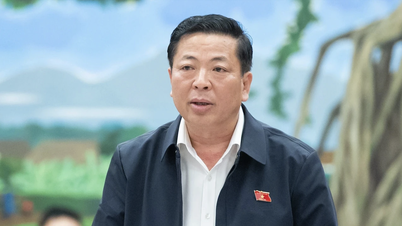
Delegate Hoang Quoc Khanh (Lai Chau). Photo: National Assembly
Delegate Hoang Quoc Khanh (Lai Chau) commented that the program for sustainable poverty reduction and socio-economic development in ethnic minority and mountainous areas for the 2026-2035 period is one of the programs that people in disadvantaged mountainous provinces "are looking forward to".
Expressing full support and looking forward to the early promulgation of this integrated program, the delegate of Lai Chau province requested the drafting committee to review more carefully the objectives to avoid overlapping with other national target programs.
According to the delegate, to implement the program synchronously and effectively, there needs to be a principle of appropriate budget allocation. In particular, mountainous provinces need to be prioritized in terms of funding, because if the same allocation level as large localities is applied, it will be very difficult and slow down the progress or not be able to implement many contents. At that time, requiring localities to "self-balance" from the budget is not feasible, easily leading to stagnation in project implementation.
Therefore, the delegate suggested clarifying the priority criteria in budget allocation, because the draft resolution mentions "priority" but the specifics are not clear.
To avoid the situation of dispersion and each ministry managing a program as before - causing difficulties in integration, delegates supported unifying a leading agency, the Ministry of Agriculture and Environment, but with coordination with the Ministry of Ethnic Minorities and Religions.
However, he also expressed concern: "Such a large program with many components, can one ministry ensure its effectiveness? Especially when at the local level, the Departments of Agriculture and Environment are having to carry out a lot of content."
From there, the delegate suggested that the Government consider carefully, and calculate reasonably what can be assigned to the Ministry of Ethnic Minorities and Religions.
Program to build and strengthen "people's hearts"
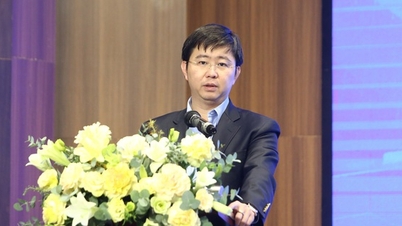
Deputy Minister of Ethnic Minorities and Religions Y Vinh Tor (National Assembly delegate from Dak Lak) emphasized that the National Target Program for Socio-Economic Development in Ethnic Minority and Mountainous Areas is a special program, with special strategic significance both in the short and long term.
The core objective of the program is not only to narrow the development gap but also to address fundamental, generational problems in the most disadvantaged areas of the country.
The program focuses on the most practical needs of the people: essential infrastructure, residential land, production land, domestic water, population stability, livelihood development, improving people's knowledge and preserving cultural identity. More importantly, the program contributes to maintaining security in border areas and consolidating the national defense and security posture of the people.

Deputy Minister of Ethnic Minorities and Religions Y Vinh Tor (National Assembly delegate from Dak Lak). Photo: Hoang Ha
“The greatest significance of the program is to build and strengthen people's trust. Through the implementation process, people clearly feel the attention of the Party and the State. That trust is built from specific changes in life: roads to the village are opened, water is guaranteed, children have convenient education, livelihoods are supported, traditional culture is preserved. It can be affirmed that the program has become a spiritual support for people, a clear demonstration of the consistent policy of 'leaving no one behind'”, delegate Y Vinh Tor emphasized.
The Deputy Minister of Ethnic Minorities and Religions added that in the 2021-2025 period, the program is designed based on the inheritance of the system of 118 ethnic policies, especially Program 135 - one of the most successful policies over many terms. The continuous inheritance helps the program maintain stability, synchronization, and convenience when implementing.
As a result, essential infrastructure in thousands of particularly disadvantaged villages and hamlets has been improved; livelihoods have become more sustainable; the quality of ethnic minority human resources has been improved; and community capacity has been strengthened. People's consensus is an important measure of policy effectiveness.
Currently, it is necessary to implement the policy of integrating 3 national target programs to streamline the focal points and improve investment efficiency. However, given the specific nature and the profound difficulty of the ethnic minority and mountainous areas, the design of the integration model must be considered very carefully so as not to interrupt the continuity of ethnic policies.
If specific goals are mixed into the general goals of new rural construction and sustainable poverty reduction, the risk of losing focus, reducing priority and affecting people's hearts is entirely possible.
The ethnic affairs agency should be assigned the role of focal point with specific components.
Delegate Vi Van Son (Nghe An) suggested that the drafting committee clearly define the objectives, structure and scope of the ethnic minority and mountainous development component, fully reflecting its specific characteristics. The program must ensure the inheritance of important tasks of the 2021-2025 period and the spirit of the premise policies, especially Program 135 and the system of 118 ethnic policies.
The capital allocation mechanism should be prioritized according to the level of difficulty, absolutely avoiding the “equal sharing” mechanism. In particular, the ethnic affairs agency should be assigned the focal role in organizing the implementation of this special component to ensure consistent management and avoid policy disruption.
“This is a prerequisite to ensure continuity, strengthen the trust of ethnic minorities, and promote the effectiveness of ethnic policies in the 2026-2035 period,” the delegate emphasized.
Delegates also proposed to clearly stipulate in the program investment policy report: assign the specialized ministry in charge of state management of ethnic affairs to preside over the second component, coordinate with relevant agencies to ensure continuous and effective implementation, and avoid policy interruptions as noted in Notice No. 4665 dated November 27 of the National Assembly Standing Committee.
The draft resolution needs to add two contents:
1. The Ministry of Agriculture and Environment is the focal point for the program according to the Law on Public Investment; promulgates management mechanisms and organizes the implementation of national targets.
2. The Ministry of Ethnic Minorities and Religions presides over the socio-economic development component of ethnic minority and mountainous areas, in coordination with relevant ministries and branches.
Vietnamnet.vn
Source: https://vietnamnet.vn/mot-bo-dam-nhiem-chuong-trinh-muc-tieu-quoc-gia-rat-lon-lieu-co-hieu-qua-2469179.html


![[Photo] Cat Ba - Green island paradise](/_next/image?url=https%3A%2F%2Fvphoto.vietnam.vn%2Fthumb%2F1200x675%2Fvietnam%2Fresource%2FIMAGE%2F2025%2F12%2F04%2F1764821844074_ndo_br_1-dcbthienduongxanh638-jpg.webp&w=3840&q=75)






































![[VIMC 40 days of lightning speed] Da Nang Port: Unity - Lightning speed - Breakthrough to the finish line](https://vphoto.vietnam.vn/thumb/402x226/vietnam/resource/IMAGE/2025/12/04/1764833540882_cdn_4-12-25.jpeg)





























Comment (0)