

Southeast Asia is bracing for new tariffs and a shift in relations with the U.S. following Donald Trump's re-election. Could the return of the "tariff man" bring economic risks or unexpected opportunities to the region?
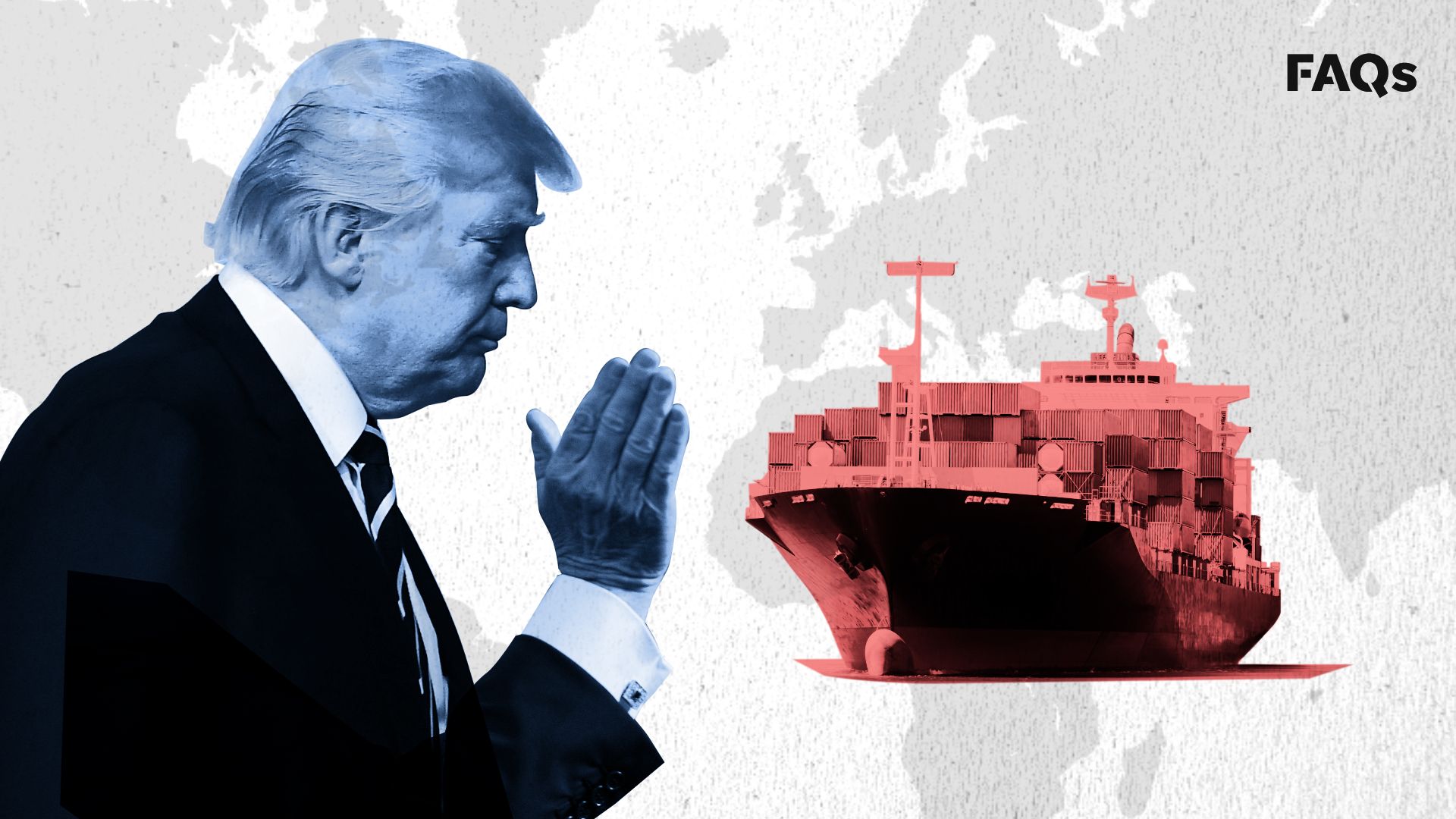 |
| Almost all Southeast Asian countries consider the US one of their top three export markets. The new tariffs that Trump announced during his election campaign are a frightening proposal for Southeast Asia. (Illustrative image. Source: Getty Images) |
During his campaign, Trump declared he would impose comprehensive tariffs of 10-20% on imports from all countries – a frightening proposal for Southeast Asia, a region heavily reliant on exports to the US.
This tax rate is significantly higher than the 7.5% to 25% tax rate he implemented during his first term.
Regarding China, the new White House occupant has announced that it will impose tariffs of up to 60%.
It's not just a trade risk.
Dr. Le Hong Hiep, a research expert at the Vietnam Studies Program of the Institute of Southeast Asian Studies, noted that Southeast Asia had previously cooperated with the US during President Trump's term. This means the region was prepared for Trump's return to the White House.
With the victory of Trump – who calls himself the "tariff man" – Southeast Asia will quickly adapt to the new reality and find ways to protect its interests, according to Dr. Le Hong Hiep.
Meanwhile, Bridget Welsh, an honorary research associate at the Institute for Asian Studies at the University of Nottingham Malaysia, said that Trump's second presidential term would impact countries in different ways.
Some countries focus entirely on commercial aspects, while others, such as the Philippines or Malaysia, will face "security risks".
However, most Southeast Asian countries are net exporters to the world's largest economy, so they would face certain consequences if Trump implemented the tariffs he had "promised".
Oxford Economics recently estimated that the tariffs proposed by Trump could be a "headwind," causing exports from "Asian countries excluding China" to fall by 3%. Poorer economies in Southeast Asia could see even sharper declines.
Frederick Kliem, a research fellow at the S. Rajaratnam School of International Studies (Nanyan University of Technology, Singapore), emphasized: "If Mr. Trump implements the tariffs, Southeast Asia will suffer losses in terms of Gross Domestic Product (GDP) and trade as a percentage of GDP."
The big benefit?
These trade impacts could be offset if the new White House chief were to wage a second trade war with China.
Specifically, some experts believe that the 47th US president's threat to impose a 60% tariff on imports from China could trigger a wave of global companies withdrawing capital from the country. A similar situation occurred after the Trump administration began its wave of tariffs on Chinese goods in 2018.
However, it is noteworthy that some Southeast Asian countries will benefit most from the aforementioned wave of investment flight.
Reuters reports that Southeast Asia is likely to benefit from the trade conflict between the world's two largest economies.
According to the news agency, industrial park developers in the region are hiring more employees who speak Chinese. "This forecast suggests that Trump may rearrange global supply chains after taking office in January 2025," Reuters wrote.
Jareeporn Jarukornsakul, CEO of WHA Group – one of Thailand's largest industrial park developers – revealed that as Trump prepared for his re-election campaign earlier this year, WHA Group was flooded with calls from Chinese clients.
"There has been a wave of migration to Southeast Asia, and this wave will be even stronger than it was during the 2017-2021 period," said Jareeporn Jarukornsakul.
Source: https://baoquocte.vn/hau-bau-cu-my-mot-de-xuat-cua-ong-trump-khien-dong-nam-a-run-ray-loi-ich-lon-bat-ngo-293413.html





































































Comment (0)