

Each year, the school has three internship periods, each in collaboration with four top 100 companies, meaning a student can intern at 12 companies per year.
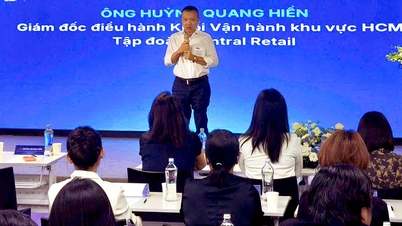
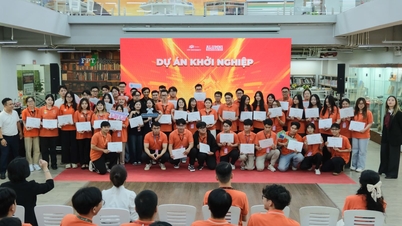
In the first phase, starting in 2026, students will conduct fieldwork at Central Retail, Guardian, L'Oréal, and La Vie, with an expected 1,000 participants.
Before each semester, students attend foundation preparation sessions led by lecturers and business experts, including: Working style, observation and data recording methods, and seemingly smallest standards in the working environment, such as how to walk in the store or observe service criteria.

Over 2-4 weeks, students will undertake two groups of tasks: Mystery Shopper - surveying customer experience using the 3C model (business - customer - competitor) and Shadowing Sales Activation - observing and supporting sales activation activities.
The tasks are standardized based on the real-world processes of modern retail, fast-moving consumer goods, and commerce businesses.
The key difference is that students present reports and receive direct feedback from business managers, not just from lower-level staff. They work in shifts, have targets, and are supervised like full-time employees.
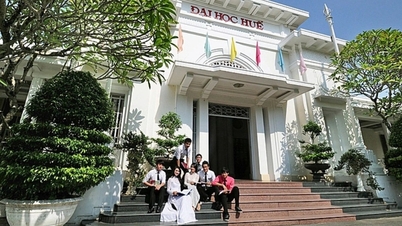
Associate Professor Dr. Tran Ha Minh Quan, Principal of the school, believes that bringing students into a real environment is the missing piece of university education : “If we just stop at inviting businesses to share, we cannot expect students to be ready to work. They need a real environment, where they have to witness, process and take responsibility for specific results.”
According to him, this model creates a bridge between teaching, experience, and assessment, helping learners shape their career mindset early, identify their strengths and areas for improvement, thereby increasing their competitiveness in a rapidly changing labor market.
A 2024 Hult International Business School survey found that only 24% of students believe they are competent enough to enter the workplace; while 96% of employers expect universities to better prepare students. A report by the Chartered Management Institute also found that nearly 80% of businesses rate students as “not ready for work.”
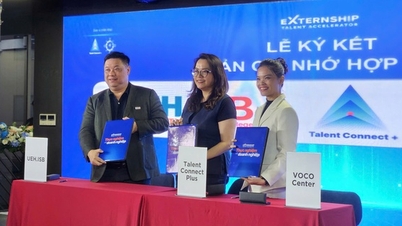
Dr. Le Huynh Phuong Thuc (Talent Connect Plus) shared concerns from the perspective of businesses: students have knowledge but lack many basic skills, causing training costs to increase. “Businesses want graduates to have had more 'collisions' during their studies to gain more experience and practical skills. The more 'collisions' they have in large, complex businesses, the easier it will be for them to adapt when entering the labor market," she said.
Source: https://vietnamnet.vn/mot-truong-cong-bo-cho-sinh-vien-hoc-va-lam-o-doanh-nghiep-top-100-viet-nam-2470983.html


![[Photo] Explore the US Navy's USS Robert Smalls warship](/_next/image?url=https%3A%2F%2Fvphoto.vietnam.vn%2Fthumb%2F1200x675%2Fvietnam%2Fresource%2FIMAGE%2F2025%2F12%2F10%2F1765341533272_11212121-8303-jpg.webp&w=3840&q=75)


























![[Video] The craft of making Dong Ho folk paintings has been inscribed by UNESCO on the List of Crafts in Need of Urgent Safeguarding.](https://vphoto.vietnam.vn/thumb/402x226/vietnam/resource/IMAGE/2025/12/10/1765350246533_tranh-dong-ho-734-jpg.webp)


























































Comment (0)