Buying and selling fetuses violates ethics and should be prosecuted.
Báo Dân trí•24/06/2024
(Dan Tri Newspaper) - Regarding the buying and selling of fetuses in the womb, which is a violation of ethics and traditional customs, a National Assembly representative proposed adding regulations to prosecute this act criminally.
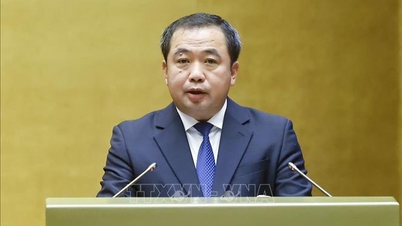
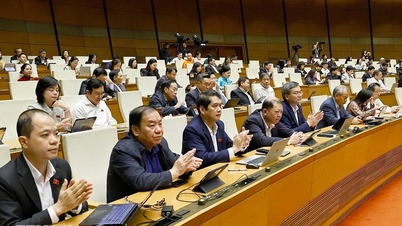
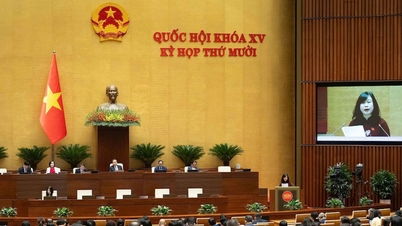
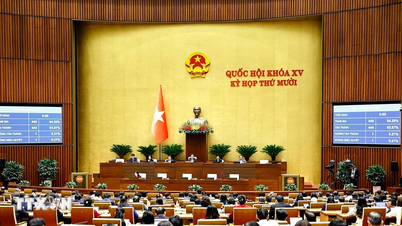
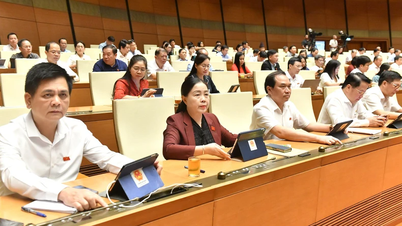
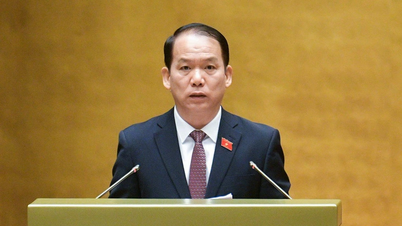
Human Trafficking Under the Guise of Charitable Organizations: During a discussion on the draft Law on Prevention and Combat of Human Trafficking (amended) on the morning of June 24th, Representative Tran Khanh Thu ( Thai Binh province ) stated that, according to a report from the Ministry of Public Security, in the five years from 2018 to 2022, the country detected 394 cases involving 837 individuals violating the law and committing crimes related to human trafficking. While in the previous period (2012-2020) human trafficking mainly involved trafficking abroad, recently there has been an increasing number of cases of domestic human trafficking. With the development of technology, perpetrators can now simply sit in one place and use social media platforms like Zalo and Facebook to connect, entice, and traffic victims abroad, or even trade victims domestically. Representative Tran Khanh Thu (Photo: National Assembly). Therefore, delegates believe that to enhance the effectiveness and efficiency of the fight against human trafficking, amending and supplementing the Law on Prevention and Control of Human Trafficking is necessary. Regarding specific content, delegate Thu stated that the number of human trafficking cases is increasing annually, particularly with the emergence of trafficking in fetuses and trafficking in men for forced labor on fishing vessels. In some areas, the trafficking of newborns is being carried out in sophisticated ways, often under the guise of spontaneous charitable activities. "Trafficking in fetuses is a violation of ethics and traditional customs. Therefore, it is necessary to add regulations to prosecute criminal responsibility for the trafficking of fetuses," the delegate from Thai Binh emphasized. Regarding specific regulations on specialized facilities to support victims of human trafficking for men and women, Representative Tran Khanh Thu argued that social welfare facilities that receive victims of human trafficking do not have dedicated areas for assisting victims, but instead integrate them into the living quarters of other groups. Therefore, there is confusion in implementing support work because there is no appropriate and friendly procedure for receiving victims, a lack of regulations on managing specific cases and support procedures for victims; and especially a complete lack of regulations for receiving victims in emergency cases or suspected cases pending verification and identification. Representative Huynh Thi Phuc ( Ba Ria - Vung Tau ) also suggested that the draft law consider regulating newly emerging behaviors in human trafficking. According to the representative, a new behavior has emerged in social life: the trafficking of fetuses in the womb. The buying and selling of fetuses begins during pregnancy and continues until the child is born, so no consequences occur, leading to difficulties in prosecution. "According to our current criminal law, a child is only considered a person and has citizenship rights when they are born. While still a fetus in the mother's womb, they are not considered subject to criminal activity. Therefore, authorities lack the legal basis to prosecute the buying and selling of fetuses," the representative stated. Representative Huynh Thi Phuc (Photo: National Assembly). Representative Phuc argued that, from a legal perspective, the act of a mother selling her unborn child should be classified as human trafficking and shows signs of the crime of human trafficking. However, current laws do not yet regulate this, so there is no basis for consideration. Neither the 2015 Penal Code nor the laws on preventing and combating human trafficking contain any provisions on this issue. Therefore, the representative suggested that in this revision of the Law, the drafting committee should consider appropriate solutions for the buying and selling of unborn fetuses, given the increasingly complex and sophisticated nature of this practice. On the other hand, human trafficking is currently concealed by very complex forms such as tourism, signing economic contracts, labor export, arranged marriages through brokers, and adoptions through commercial legal entities. Therefore, the delegate suggested that consideration should be given to adding commercial legal entities as subjects of criminal responsibility for the crime of human trafficking. This would help to promptly adjust to the practical situation of human trafficking, which currently involves tightly organized, multinational operations.








![[Photo] Prime Minister Pham Minh Chinh holds a phone call with the CEO of Russia's Rosatom Corporation.](/_next/image?url=https%3A%2F%2Fvphoto.vietnam.vn%2Fthumb%2F1200x675%2Fvietnam%2Fresource%2FIMAGE%2F2025%2F12%2F11%2F1765464552365_dsc-5295-jpg.webp&w=3840&q=75)




































































Comment (0)