

(Dan Tri Newspaper) - Deputy Minister of Health Tran Van Thuan said that Vietnam has seen a trend of declining birth rates. In 2023, the estimated birth rate was 1.96 children per woman, the lowest in history, and is projected to continue decreasing.
On December 10th, the Ministry of Health, in coordination with the Hanoi People's Committee, organized the launching ceremony for the National Action Month on Population and the commemoration of Vietnam Population Day (December 26th) with the theme "Improving the quality of the population for a prosperous country and happy families".
According to Deputy Minister of Health Tran Van Thuan, population work is facing many difficulties and challenges. Many emerging population issues have directly impacted the lives, society, and sustainable development of Vietnam.
Specifically, maintaining the replacement fertility rate nationwide has not been truly sustainable, with a trend towards lower fertility rates. In 2023, the estimated fertility rate was 1.96 children per woman, the lowest in history, and is projected to continue declining in the following years.

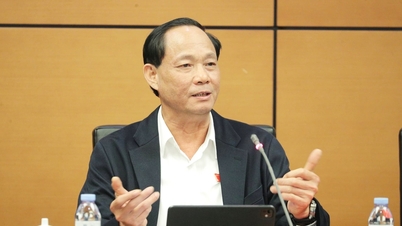
Deputy Minister of Health Tran Van Thuan speaks at the event (Photo: Tran Minh).
In addition, the rapid increase in the sex ratio at birth has been controlled, but it remains high and shows no signs of decreasing (in 2023 it was 112 boys/100 girls). The population is aging rapidly and will soon pass through the period of demographic dividend.
The issues of child marriage, consanguineous marriage, teenage pregnancy and childbirth, physical stature, fitness, and quality of life need to be improved significantly...
Meanwhile, the organizational structure for population work is unstable and lacks uniformity among provinces and cities. The resources invested in population work are not commensurate with the requirements and tasks assigned.
"Entering 2025 and the years to come, we will continue to face even more difficulties and challenges, and many targets are at risk of not being achieved," Deputy Minister Thuan said.
Mr. Matt Jackson, Head of the United Nations Population Fund (UNFPA) in Vietnam, added that results from a study conducted by the General Statistics Office in collaboration with UNFPA show that Vietnam is still in the "golden population" phase, meaning that each dependent is supported by two working-age adults.
However, Vietnam's population began aging in 2011 and is aging at a much faster rate than other countries.
It is projected that Vietnam will become an aging society by 2036 and a super-aging society by 2049. Simultaneously, Vietnam is also entering a trend of low fertility rates, with a total fertility rate (TFR) of 1.96 in 2023.
The transition from a young to an aging society has far-reaching implications, and Vietnam needs to start preparing for these demographic changes now.
Solutions include increasing labor productivity combined with sustainable job creation policies, as well as increasing labor participation rates, especially for the elderly population, supporting women to maintain participation in the labor market, and investing in health and education .
5 key messages of the National Population Action Month:
- A high-quality population is a driving force for Vietnam's development.
- Pre-marital health check-ups prepare for welcoming a new generation.
- Maintaining a reasonable birth rate, a balanced population, and a sustainable future.
- Having two children is a sign of wise parents, and their children will benefit from it.
- Gender equality is the foundation for controlling the sex ratio at birth.
Source: https://dantri.com.vn/suc-khoe/muc-sinh-cua-viet-nam-xuong-thap-nhat-trong-lich-su-20241210134845551.htm
















































































Comment (0)