

Possessing over 22,000 km of natural gas pipelines, Ukraine has been a key player in Europe's energy market for decades. But by the end of this year, the flow of gas from Russia through Ukraine to Europe could be disrupted.
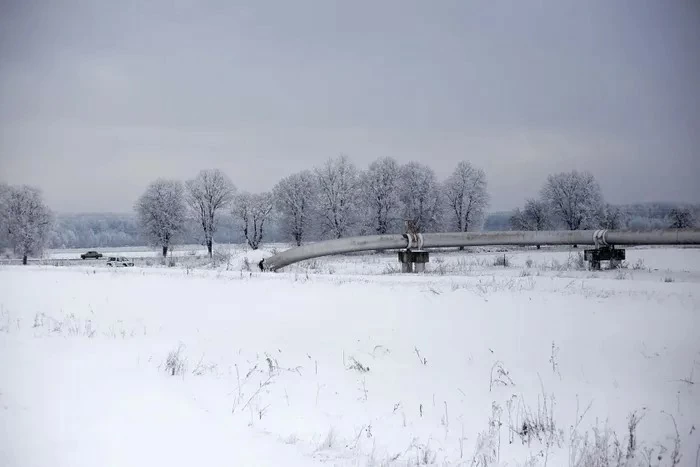 |
| A section of the Urengoy-Pomary-Uzhgorod gas pipeline in Ukraine. This pipeline will transport natural gas from Western Siberia through Sudzha in Russia's Kursk region, then flow through Ukraine towards Slovakia. (Source: Vincent Mundy/Bloomberg) |
Prior to Russia's special military operation in Ukraine, in December 2019, Moscow and Kyiv agreed on a five-year gas transit deal. Under the agreement, 45 billion cubic meters of Russian gas would flow through Ukraine in 2020, and 40 billion cubic meters per year between 2021 and 2024.
The aforementioned agreement will expire at the end of this year. It is considered unlikely to be renewed, and this would halt the flow of Russian gas to Europe – directly impacting the regional market at a crucial time – the heating season.
Which country suffered the most damage?
Margarita Balmaceda, a professor of international relations at Seton Hall University (USA), commented: "The termination of the gas transit agreement through Ukraine signals the end of a simmering era. For the European energy market, this move will further complicate matters. Meanwhile, President Putin's country will lose one of its two remaining gas pipeline routes to Europe."
On the Ukrainian side, the economy could suffer the most. According to Margarita Balmaceda, Kyiv could lose the funds needed to maintain its energy infrastructure and its position as a channel for affordable energy to its Western allies.
For more than five decades, the flow of natural gas has been a key feature linking Russia, Ukraine, and Europe. Since the collapse of the Soviet Union, gas transit via pipelines has become a vital part of Russia-Ukraine relations.
The current transit agreement is the only remaining trade agreement between the two countries.
Experts estimate that the flow of Russian gas via this route currently accounts for less than 5% of Europe's supply, but it is still enough to impact the region's energy security.
Financially, according to estimates by Mykhailo Svyshcho, an analyst at ExPro Consulting based in Kyiv, the country risks losing up to $800 million per year.
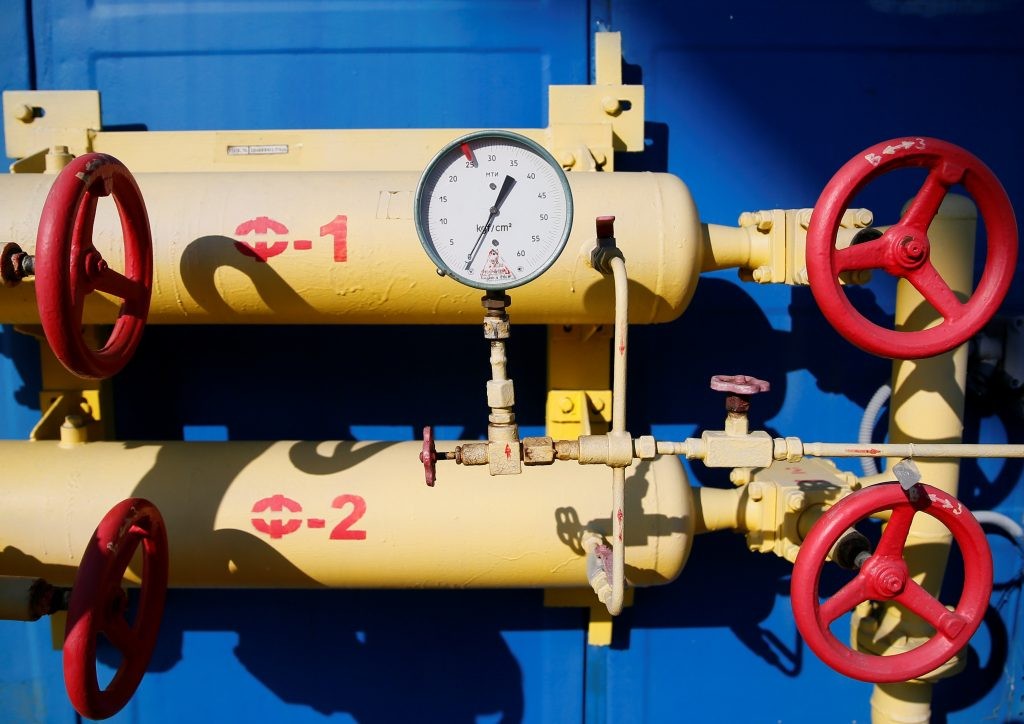 |
| A gas compression station near Uzhhorod, Ukraine. (Source: Reuters) |
European solution
For Europe, most customers buying gas transiting through Ukraine have found alternatives. The European Union (EU) has also lowered its prospects for a new agreement due to the severed diplomatic relations caused by the special military operation.
For example, Germany has increased its gas supply via pipelines from Norway and built facilities to import liquefied natural gas (LNG) from around the world. Currently, Europe's largest economy is independent of importing gas via pipelines from Ukraine.
However, the door is not completely closed yet.
With Germany's manufacturing sector under pressure, some opposition parties and business leaders are calling on the government to return to sourcing gas from Russia. The route through Ukraine would be the most viable option, following the sabotage of the Nord Stream pipeline in September 2022.
Austria and Slovakia – the two main recipients of natural gas via Ukraine – have indicated they are ready to "let go" of this gas supply.
Slovakia's largest gas supplier, SPP, reports that the country is in a comfortable position ahead of winter, able to receive gas from Algeria and other sources. And Austria has also made preparations.
Meanwhile, Hungary has been receiving Russian gas via an alternative route – the TurkStream pipeline.
There are still concerns for the coming winter.
As for Moscow, there are still other routes for selling gas, including pipelines through Türkiye, expanding links with China, and exporting LNG.
However, according to Bloomberg 's calculations, if the agreement with Ukraine ends, Russia could lose $6.5 billion per year at current prices. This is a strong incentive for the Kremlin to negotiate an extension of the agreement.
Last week, President Vladimir Putin said he was ready to resume gas transit through Ukraine after 2024.
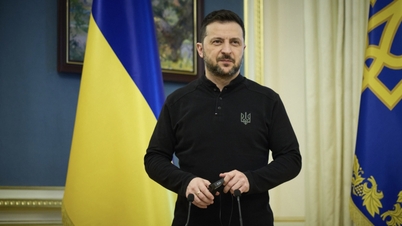
President Volodymyr Zelenskiy, however, took a different approach. He declared he would not renew the agreement in order to cut off the flow of money to the Kremlin.
Ukraine has held transit talks with Azerbaijan, a country that currently supplies gas to eight European nations.
However, Anne-Sophie Corbeau, a researcher at the Center for Global Energy Policy at Columbia University (USA), argues that Azerbaijan's gas production is not sufficient to completely replace the existing supply in the short term, and any replacement agreement could include Russian gas. Russia could sell gas to Azerbaijan, which would then re-export it to Europe.
Additionally, agreements with Kazakhstan and other suppliers in Central Asia could also be an option. However, there is very little time left for negotiations.
Bloomberg News emphasized that, regardless of the outcome, the loss of the route through Ukraine almost certainly risks causing volatility in European markets.
"Energy shortages are still possible during the upcoming heating season," emphasized Frank van Doorn, Director of Trading at Vattenfall Energy Trading GmbH.
Source: https://baoquocte.vn/neu-nga-va-ukraine-buong-tay-thoa-thuan-qua-canh-khi-dot-chau-au-se-chim-trong-noi-lo-285840.html









































































Comment (0)