

Flavescence dorée (FD) – warned by the International Organization of Wine and Grapes (OIV) as one of the most dangerous diseases – is spreading uncontrollably, threatening the livelihoods of thousands of producers and the future of an iconic sector of the Hungarian economy .
FD spreads rapidly through green leafhoppers and there is no cure. Infected plants must be uprooted.

Although it first appeared in 2013, the disease only recently received significant attention and has spread to 21 out of 22 of the country's grape-growing regions. Smaller producers have suffered the most severe losses.
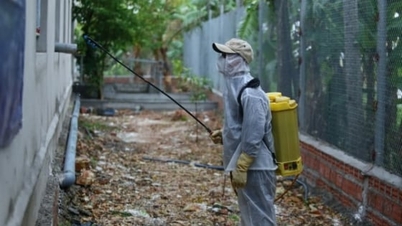
Viktor Keszler, a seedling supplier, shared: "We sprayed pesticides... but it was useless: the aphids carrying the disease moved to untreated vineyards... and then returned." He was forced to uproot part of his vineyard.
In response to the threat, Janos Frittmann, head of the Hungarian National Wine Council, warned: "If we don't take this seriously, it could effectively wipe out Hungary's grape production industry."
The government has allocated 10 million euros for the response and conducted inspections across thousands of hectares. However, expert Gergely Gaspar criticized the inadequately managed disease control system and the slow pace of research. He pointed out a major challenge: "Common grape varieties in Hungary do not exhibit symptoms as described in textbooks."
International experience from Italy and France shows the need to shift from the goal of eradication to long-term disease control. Researcher Elisa Angelini stated: "Diseases are often detected... when it's already too late to eradicate them."
Despite the uncertain future, the last hope for people like Viktor Keszler lies in cooperation: "If the state and local authorities work together, then we can succeed."
Source: https://congluan.vn/nganh-ruou-vang-hungary-doi-mat-nguy-co-bi-xoa-so-boi-dich-benh-la-10322537.html






























































































Comment (0)