

In the Son Giang area ( Ha Tinh province), the model of raising silkworms in air-conditioned rooms, implemented by Mr. Nguyen Van Cuong, Director of Cuong Nga Cooperative, is opening up a new production direction that helps many households increase their income and escape poverty sustainably. From a traditional beekeeper, Mr. Cuong has boldly expanded his business, creating a stable livelihood for his family and local workers.
Mr. Cuong said that he has been involved in beekeeping for many years. However, beekeeping is highly dependent on weather and natural flower sources, with income depending on the season. Recognizing that mulberry cultivation and silkworm farming have good market demand, relatively low costs, and are suitable for the local climate, Mr. Cuong quickly researched and visited successful models to learn from them.
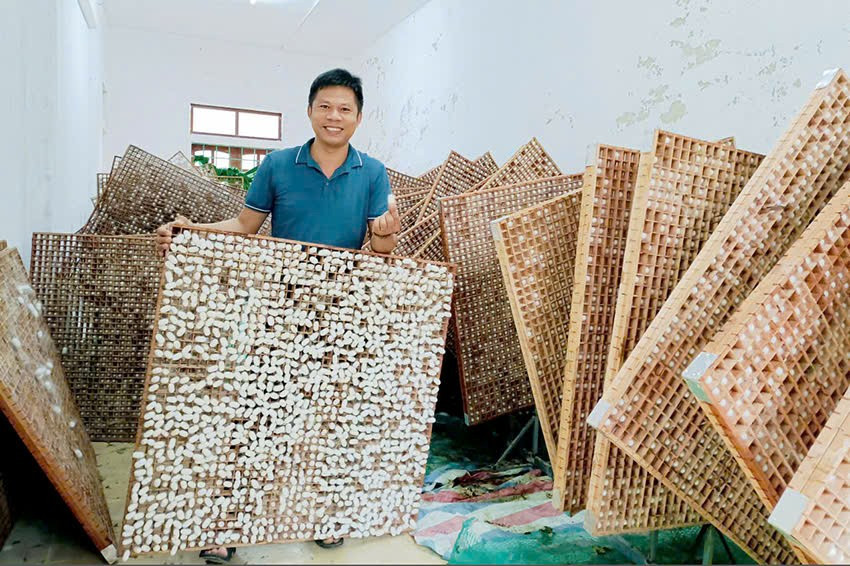
"At first, I just thought I'd try raising a few batches to see how it would go, but unexpectedly, the silkworms thrived in the soil and climate here. So I started expanding the cultivation and hired local laborers to create the model," Mr. Cuong said.
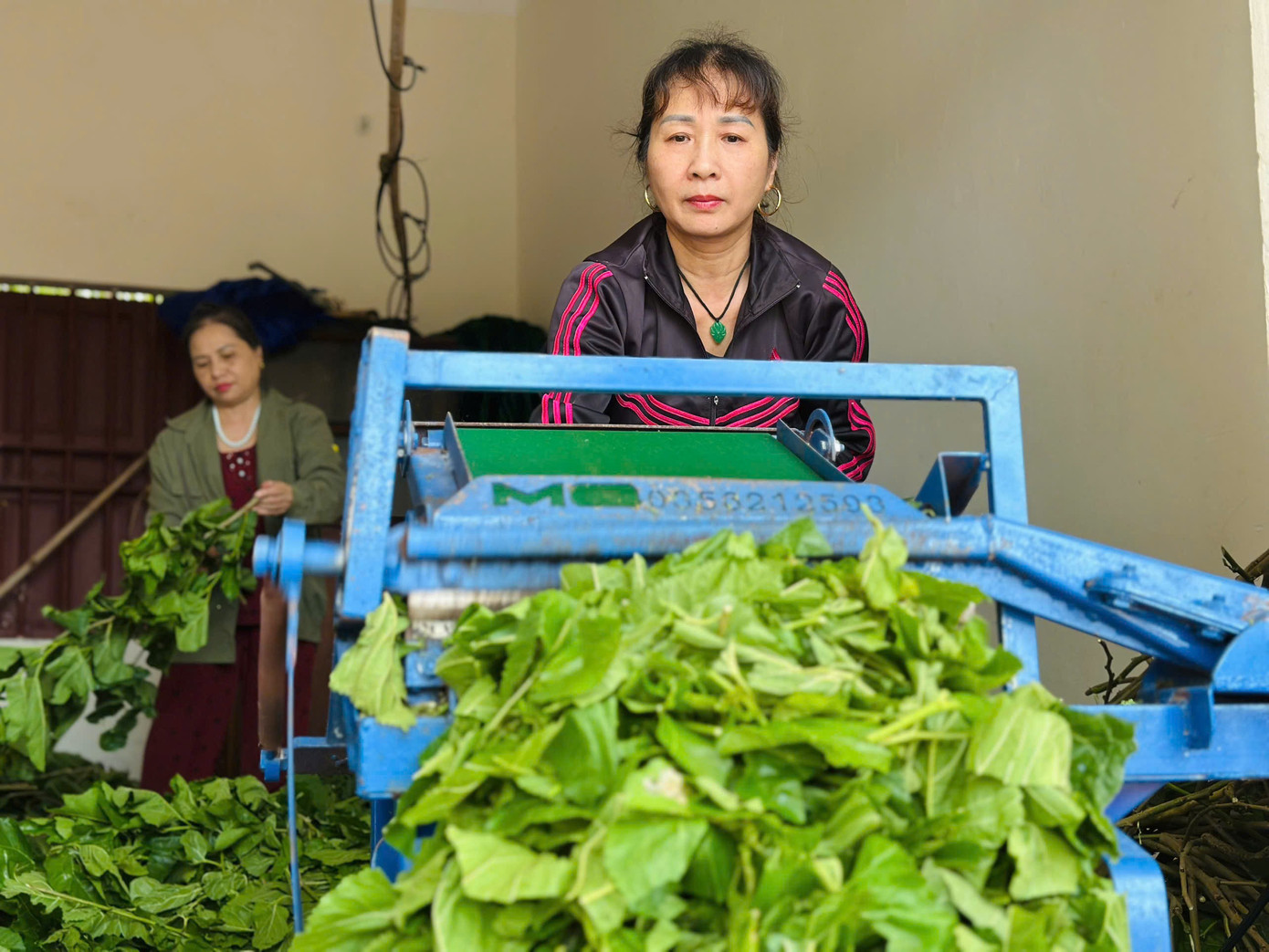
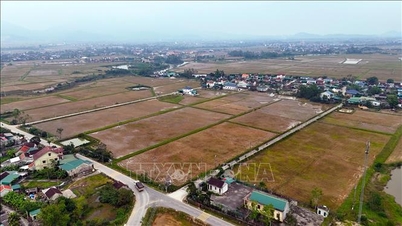
In September 2022, Mr. Cuong began planting hybrid mulberry trees on 3 hectares of land along the Ngan Pho River, an area previously unproductive for cultivation. Thanks to the suitable soil, the mulberry variety thrived, yielding good results. After one year, the mulberry cultivation area expanded to 7 hectares, reaching 9 tons per hectare, creating a stable source of raw materials for silkworm farming.
In September 2023, the cooperative started its first silkworm rearing project. Despite investing approximately 100 million VND in supports, temperature and humidity meters, and air conditioning, the first batch failed due to lack of experience. To further improve his skills, he continued to learn and received technical support from the Central Silkworm Research Center. By June 2024, the cooperative had mastered the entire silkworm rearing process.
The biggest breakthrough was raising silkworms in enclosed rooms equipped with two 900 BTU air conditioners, maintaining a stable temperature of 25-30°C and 80-85% humidity. As a result, the silkworms were healthier, less prone to disease, and spun cocoons consistently.
Mr. Cuong stated that a 100g box of silkworm larvae consumes approximately 800kg of mulberry leaves after 15 days, yielding 45-50kg of cocoons. At a price of 180,000-200,000 VND/kg, each batch generates revenue of 14-16 million VND. On average, the model brings in 40-45 million VND per month, equivalent to over 500 million VND per year.
"Silkworms are very sensitive; even a little dirt or a slight imbalance in humidity can affect the entire colony. Neglecting hygiene can lead to total loss, so absolute cleanliness is essential," Mr. Cuong shared.
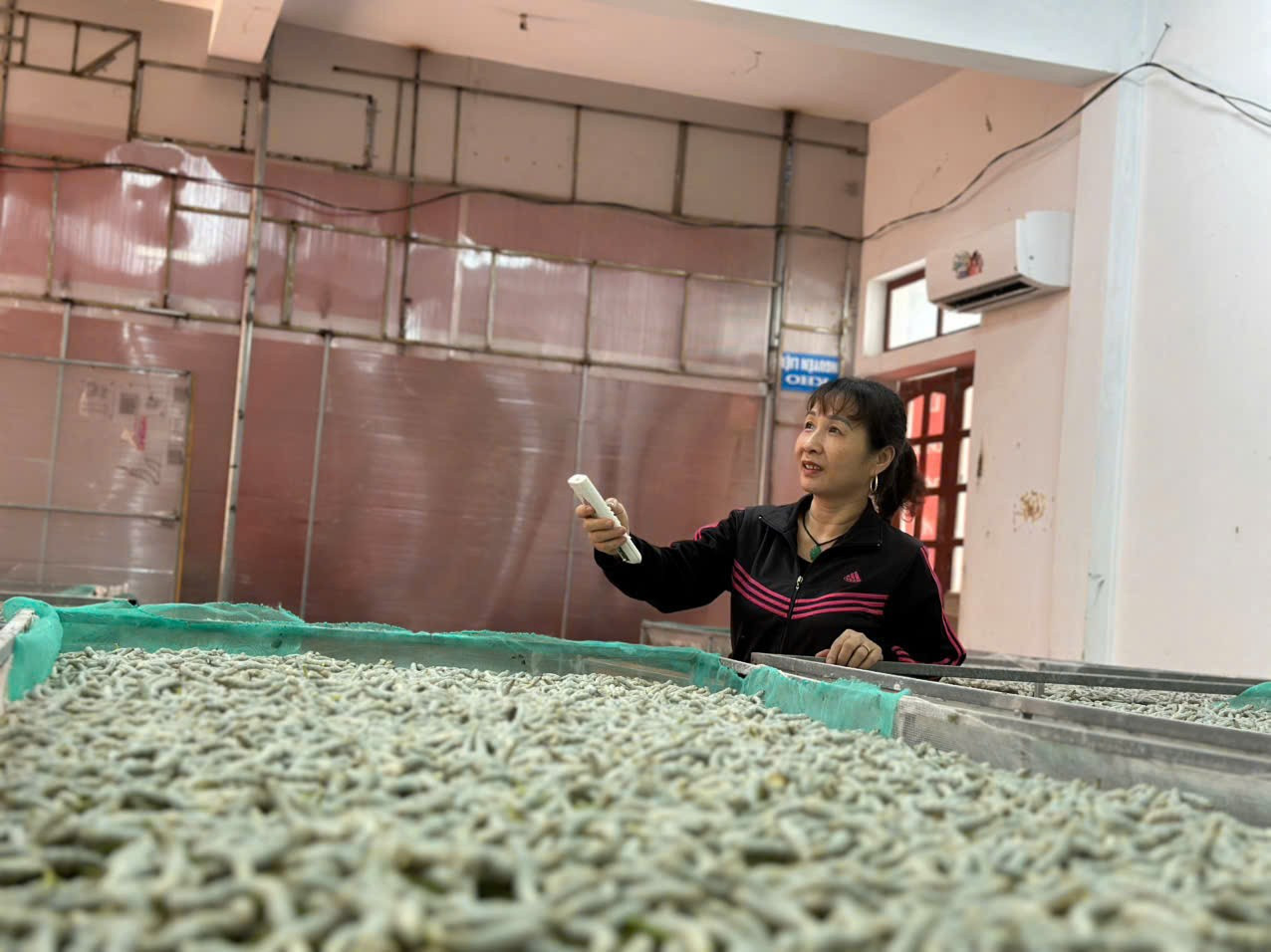
According to Mr. Cuong, silkworm farming is not difficult, but it requires meticulousness, carefulness, and attentiveness from the farmer. The most arduous part is during the three days when the silkworms feed incessantly; workers must constantly monitor and carefully observe them to promptly detect any abnormalities. If there is any carelessness in this stage, all efforts will be wasted.
The model not only helps increase family income but also creates stable jobs for many workers, mainly the elderly or those in difficult circumstances. Mr. Cuong said that if people want to raise silkworms to develop their economy , he is ready to transfer the technology and guide them on how to care for them to achieve the highest efficiency.
According to the leaders of Son Giang commune, silkworm farming once flourished in some communes along the river, but has declined for many years. The success of the cold-storage silkworm model has created a new direction, restoring the traditional craft and replicating an effective poverty reduction model.
From converting inefficient land and applying scientific and technical advancements to linking businesses, Mr. Nguyen Van Cuong's model demonstrates a sustainable approach to poverty reduction. This is especially true for silkworm farming, which previously depended heavily on weather conditions, resulting in unstable incomes for farmers. Since adopting the air-conditioned silkworm farming model, farmers have achieved success, opening up a new direction, helping silkworms thrive, produce more cocoons, and generate higher incomes for the people.
Source: https://tienphong.vn/nghe-nuoi-tam-huong-di-lam-giau-moi-cho-nguoi-dan-ha-tinh-post1802529.tpo
![[Photo] Prime Minister Pham Minh Chinh holds a phone call with the CEO of Russia's Rosatom Corporation.](/_next/image?url=https%3A%2F%2Fvphoto.vietnam.vn%2Fthumb%2F1200x675%2Fvietnam%2Fresource%2FIMAGE%2F2025%2F12%2F11%2F1765464552365_dsc-5295-jpg.webp&w=3840&q=75)
![[Photo] Closing Ceremony of the 10th Session of the 15th National Assembly](/_next/image?url=https%3A%2F%2Fvphoto.vietnam.vn%2Fthumb%2F1200x675%2Fvietnam%2Fresource%2FIMAGE%2F2025%2F12%2F11%2F1765448959967_image-1437-jpg.webp&w=3840&q=75)









































![[OFFICIAL] MISA GROUP ANNOUNCES ITS PIONEERING BRAND POSITIONING IN BUILDING AGENTIC AI FOR BUSINESSES, HOUSEHOLDS, AND THE GOVERNMENT](https://vphoto.vietnam.vn/thumb/402x226/vietnam/resource/IMAGE/2025/12/11/1765444754256_agentic-ai_postfb-scaled.png)










































Comment (0)