


Preserving the craft amidst the whirlwind of change.
Lam Dong province is developing rapidly, connecting the highlands with the plains and the sea, opening up a larger market for agricultural products, handicrafts, and cultural tourism . For traditional crafts, this is a valuable opportunity: expanding markets, linking regions, and exploiting the tourism potential of craft villages.
According to Decision No. 1766/QD-UBND of 2022, the province approved the plan for the preservation and development of traditional craft villages for the period 2022-2030, setting a target of preserving 17 traditional craft villages by 2025, developing 4 new craft villages, linked with the "One Commune One Product" (OCOP) program and community tourism, aiming for 39 craft villages by 2030. However, currently, the entire province only has about 30-35 active craft villages, employing over 9,200 workers. Many craft villages are facing the risk of decline due to a lack of successors and uncertain product markets. Urbanization has swept the younger generation to the cities, leaving behind dusty K'ho looms, the infrequent sound of blacksmiths' hammers from the Ma people, and the cold, aging traditional pottery kilns. "Can the craft sustain us?" - A simple, yet poignant question from a young artisan, stirring up the deep-seated anxieties of the highlands.
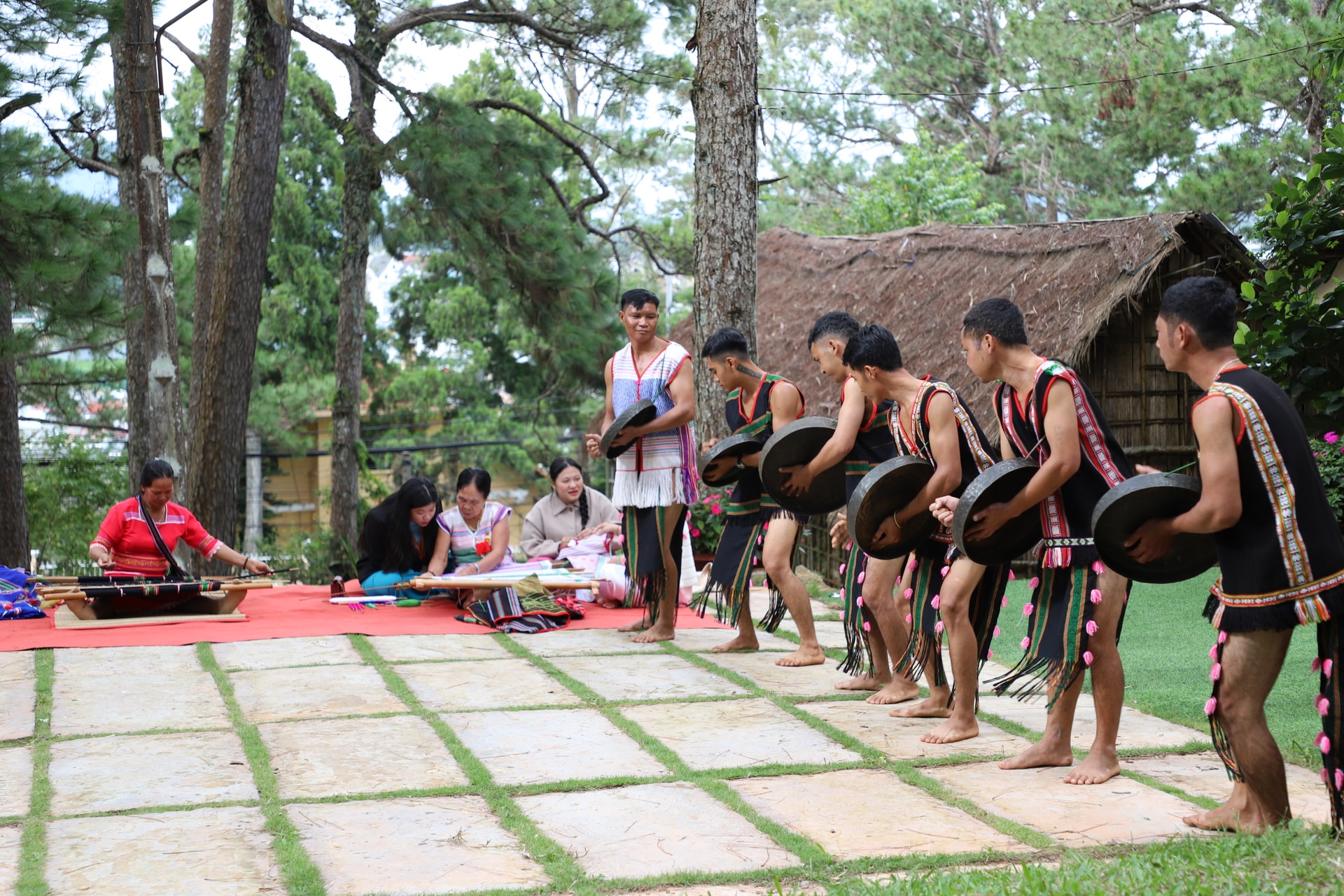
However, in the craft villages stretching along the South Central coast and the Central Highlands, women are still diligently working at their looms, spinning forest yarn, weaving brocade fabrics imbued with the legends of Mother Earth and the breath of the mountains and forests. Each line, each pattern is not just an ornament, but a heroic epic in fabric: preserving ancestral memories, conveying hopes for bountiful harvests, and reflecting the balance between humanity and nature. Similarly, in pottery workshops, blacksmiths' forges, or traditional weaving villages, craftsmen meticulously select mature bamboo for durability and forge with just the right amount of fire to preserve the spirit of the earth and sky in each product. For them, the craft is not just a means of livelihood, but a sacred thread connecting the community to its roots. When the craft fades, not only will livelihoods be jeopardized, but the cultural soul of the land will also gradually diminish.
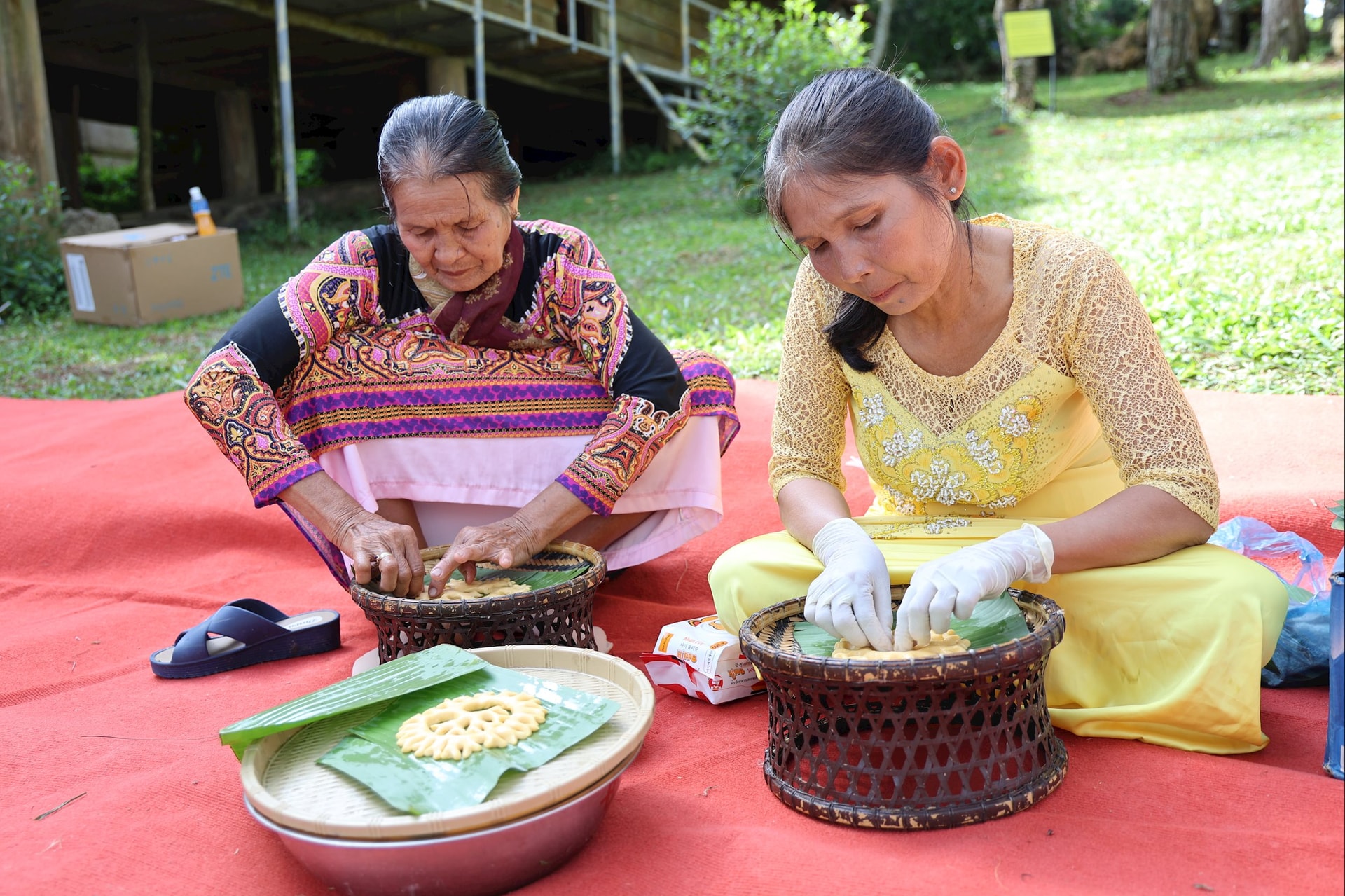
Facing the threat of traditional crafts disappearing, in the region where the coast and highlands meet, the traditional Cham ginger cakes are still hand-molded in the shape of ginger roots and offered as sacrifices during the annual Katê Festival in October. Made from fragrant glutinous rice, chicken eggs, palm sugar, and fresh ginger juice, and baked over charcoal, each cake is not only a simple folk food but also a slice of memory about ancestors and the spiritual beliefs of the entire community.
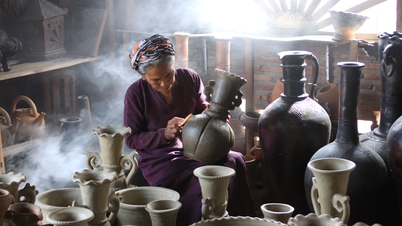
Artisan Dang Thi Ngoc Ha from Bac Binh shared: "Ginger cake is not just a dish, but a memory of our ancestors." However, the worrying thing is that fewer and fewer young people in the village know how to make the cakes, many have left their hometown to work far away, and the traditional ovens are no longer burning. In 2025, the Katê Festival will still attract thousands of tourists to experience making cakes and listen to stories of the ancient craft; but amidst the bustling crowds, the worry of the craft disappearing and the culture fading still smolders like the embers in a gradually cooling oven. Meanwhile, in Binh Duc pottery village, the Cham pottery craft, a continuation of the Bau Truc tradition, is still persistently preserved by artisan Truong Thi Gach, now over 80 years old. She molds clay mixed with river sand, shaping it entirely by hand, then fires it in the open air using forest firewood; each product takes 7-10 days to complete, bearing a deep black color as a prayer sent to the goddess Po Inu Nagar.
People like Mrs. Gach, Mrs. Ha, and countless other artisans are the lifeblood of local culture. But they too are troubled: “Our ancestors sustained their craft because it nourished their souls. Now that their descendants no longer make a living from it, where will that soul find refuge?” lamented artisan Truong Thi Gach. When a craft fades away, it's not just a means of livelihood lost, but also a part of the cultural soul, a priceless asset that neither time nor money can compensate for.
Technology preserves the soul of culture.
While technology and urbanization were once considered major challenges to traditional crafts a few years ago, the digital age has now opened a new path to revival. From the looms in K'long village (Duc Trong commune), where a group of K'ho youth are breathing new life into traditional weaving by bringing brocade to e-commerce platforms and promoting experiential tourism such as "A Day as a K'ho Weaver," to the bamboo, rattan, and wood workshops in Di Linh, where artisans still diligently create, imbuing the spirit of the highlands into each handcrafted item; all are together creating a new face for traditional crafts in the digital age. Along this same path, in Gung Re village, artisan Ma Lieng, often called Mrs. Ma Li, continues to steadfastly keep the flame of traditional pottery burning, welcoming tourists to experience pottery making, listen to stories of the craft village, and take home a small gift steeped in the soul of the highlands. More specifically, today, K'ho brocade can be transformed into modernized ao dai (traditional Vietnamese dress) on the runway; Churu pottery into high-end souvenirs; and bamboo and rattan weaving into export-quality furniture. Craftspeople need not only skillful hands but also a connecting mindset, knowing how to tell the story of their culture using market language and technology.
These changes demonstrate that technology has become a bridge, helping craftspeople bridge the gap between tradition and modernity, spreading the spirit of traditional crafts amidst the new rhythm of life in the highlands. According to Ms. Nguyen Thi Bich Ngoc, Deputy Director of the Department of Culture, Sports and Tourism of Lam Dong province: “We identify culture as a driving force for sustainable development. The province is implementing support for artisans to train digital skills, providing preferential loans for craft villages, and integrating it with the OCOP program and community tourism. Technology has now become an extended arm helping those preserving traditional crafts find their place in modern life.”
Preserving a craft today doesn't mean clinging to old methods, but rather preserving its essence while adapting and changing the way it's done. Traditional crafts must adapt, digitize, and connect with the world. At this crossroads of the times, what needs to be preserved is not just the craft itself, but its soul. And perhaps, in the rapidly changing land of Lam Dong , the sounds of looms, blacksmiths' hammers, and pottery making will continue to resonate, not as a memory, but as the heartbeat of the future.
Source: https://baolamdong.vn/nghe-truyen-thong-giua-nga-ba-thoi-dai-398461.html































































































Comment (0)